


Page 10 of 17
Change is encroaching upon an art medium famous for its stagnant nature. Someone else has explained it with more eloquence and authority than I. “Printmaking in the twenty-first century…simultaneously relies on and explodes tradition; welcomes the incursions of other mediums and materials; and adopts traditional techniques into a larger practice to suit formal, technical, or conceptual concerns. This sense of fluidity is seen in other quarters, as publishers and printers adapt to the changing needs of both artists and the market, and as formerly codified roles are circumvented to allow for reinvigorated do-it-yourself production. Within these multiple channels of activity, there is both an embrace of tradition and an openness to expanding the boundaries, a desire to maintain and acknowledge print’s specificity and to position it within a larger discussion that will keep the print world — and the print people — central to contemporary art” (Suzuki 24). Suzuki, here, captures the irony of evolving printmaking. There are things to preserve and there are things to push forward — printmaking falls under both categories, and there is something almost eerily poetic about that.
My project has remained relatively unchanged throughout the course of this course; the motive behind it, on the other hand, have multiplied and become more energized. Among numerous other possibilities for increased artistic precision through computer-aided printmaking, is the potential for multi-layer stamps (meaning color). Running parallel to my digital road-less-traveled are the subjects of Patric Prince’s article, Imagining by Numbers: A Historical View of Digital Printmaking in America: “Printmakers have historically used ‘states,’ examples taken at long intervals along the final process, when analyzing and completing a work. When artists use the computer, they no longer need be afraid of alterations and worry about when a work is finished…this also changed the concept of a work-in-progress” (Prince 97). I found solace in these stories of artists who gained a valuable tool without losing what it is that breathes life into art. In order to not mislead the reader, I should disclose that Prince’s definition for “digital printmaking” is not the same as mine. To him, it is any work of art created on the machines, but he focuses on painters and other visual artists who decided to switch to computers when Macintosh’s desktop first came into existence in 1984. I like my definition better, and for one reason: my concept of digital printmaking facilitates limitations, and limitations breed creativity.
When there are restrictions placed upon a piece of art, the potential for innovation is often increased. This, I believe, is what first attracted me to relief printmaking. And pushing these limitations are what keeps it as a recurring theme in my life. It leads to artistic experiments I could have never otherwise conceived. Jennifer Smith’s critique of an art show at the Chazen Museum of Art that exhibited two prolific relief printmakers demonstrates the different directions these limitations can push people in. “This small show illustrates how printmaking diverged, some artists adhering to more traditional techniques and subjects and others moving in a more experimental direction. Take two prints with similar subjects, Hashiguchi Goyo’s Underrobe (1920) and Mitsutani Kunishiro’s Nude Woman on Blanket (c. 1935). Although only 15 years separate them, they’re worlds apart stylistically. Underrobe is meticulous and elegant in its composition. As a woman ties her patterned robe, the sash momentarily held in her mouth, the strands of her hair are remarkably detailed. The dusty red butterfly-and-floral pattern on the robe contrasts with creamy expanses of skin that are formed by unprinted areas on the paper, a nifty and economical design solution. Nude Woman on Blanket, although also a color woodcut, has a loose, free quality that makes it seem more like a lithograph. Both the flowing lines and the informality of the subject call to mind European artists like Matisse. Instead of Goyo’s fine detail, Kunishiro depicts his woman elementally: slits for eyes, a single slash for a nose, two lines for a mouth” (Smith 16).

Nonetheless, these two artists are still decidedly thinking inside the alleged box, while there are artists out there who have torn that box apart. In 2011, Erik Brunvand and Al Denyer developed a method of “micro-scale printmaking” where materials that would normally go into creating micro-chips are used instead for tiny, tiny printmaking. This takes unique factors typically revolving around developing hardware with no aesthetic value, and turns them into restrictions for a new art form. This is the model I would like to use for my project. Using the filament and the printer we have, along with the inevitable warping and dis figuration, my limitations are already more-or-less non-negotiable.

After thinking about all of the aforementioned thought-tangents, I look at the smiley face I printed as a toe-dip in the water and I see only potential. “Technical achievement in its true form is significantly a positive process. The excitement outweighs the apprehension, and I am ready to jump. And in light of all this, I must still admit that this project is a sidetrack rather than a leap forward. Because authenticity can not be duplicated. “[W]hen one’s desire for creative expression is dominated by imposed disintigrative techniques, practiced in isolation, expressions become inane and the technical process is a negative one” (Andrews 25).
Works Cited:
Suzuki, Sarah. “Print People: A Brief Taxonomy of -Contemporary Printmaking.” Art Journal70.4 (2011): 6. Web.
Prince, Patric D. “Imaging by Numbers: A Historical View of Digital Printmaking in America.” Art Journal 68.1 (2009): 90. Web.
Smith, Jennifer A. “Two Roads Diverged.” Isthmus 25 Nov. 2011: 16. Web.
Brunvand, Erik, and Al Denyer. “Micro-Scale Printmaking on Silicon.” Leonardo 44.5 (2011): 392–400. Web.
Andrews, Michael F. “The Art of Creative Printmaking.” Art Education 17.4 (1964): 23–25. Web.
What is the relationship between 3D printing and food production? My question has changed, but my plan is still the same; to print a completely edible 3D object. I’m doing this because I believe that it eliminates the use of plastic, even a biodegradable plastic substitute, and creates an item that can ultimately be returned to the earth without doing extreme damage. I’m also interested in why the shape of an item reflects the action that we feel we should take. I have a feelings of insecurity, I’m afraid this experiment won’t work. There are fully functional 3D food printers on the market, but because of money, I’m forced to approach this project in a do-it-your-self fashion. It is rewarding to be completely hands-on in the process of creation, experimentation and success/failure, it also makes everything so much more personal. I feel like I’m pregnant and the possibility of a miscarriage is constantly on my mind. Even if the extruder that I’m downloading and printing from thingiverse doesn’t work I will just go back to the drawing board and try again, or manipulate the design that I downloaded. The reason I’m using thingiverse is because I have no idea how to create an extruder, I really appreciate the design that I have found and really hope it works. This will not affect the learning process because the core focus of my project is to print food. I’m using the design to support my final product, you can find the extruder that I’m trying to building and printing by following this link http://www.thingiverse.com/thing:20733
I’m curious about the production of food and how it’s made, and how I might feel more connected to what I’m eating because I designed it. Will other people feel a different connection to my item because they know that I made it? Because they know that they can eat it? Some food, like beer has deep roots to cultures across the globe, although its birth is hard to place in a timeline there was a beer goddess in Sumer called Ninkasi (Kim). What is the history of the filament I’m going to use? What culture is it connected to? These questions arose as I furthered my research, it’s surprising going through Kim’s history of processed food and reading its cultural origin. “My definition of ‘fresh’ is something that’s rushed from the garden straight to the kitchen, which is when food is going to look and taste best. (Clydesdale 6).” I’ve been asking a lot of questions but these questions took shape while I was doing my research. Clydesdale made me wonder; will my 3D printed edible objects be considered, “fresh?” I am actually excited to say, “here is your freshly printed (insert random object here).” Maybe 3D printing could be used to fight the obesity epidemic, a program could be made that will, “Change the way people buy food, it will change the way they consume food, and it will change the way they think about food (Claudia).” What’s most surprising by my research and how it compares to the research I had done initially is that there are already 3D food printers on the market.
Most of my sources didn’t directly tie into my question, although there was some interesting sources I found on peoples opinions of processed food and the history of it. Processed food originated from trying to find a way to preserve food (Clydesdale 6), which has an interesting relationship to my idea. I’m thinking about using a filament that will not be processed already, something organic and surprising. Finding a filament that I find personally important has been difficult for me, chocolate seems like the clear-cut answer but I would like to use multiple filaments.
Overall my research unearthed that 3D printed food is alive and well, and that it has a market. As to some of my earlier questions mentioned in paragraph two, I was unable to find a solid answer. I now know that what I’m doing isn’t as revolutionary as I once thought, but I’ve found inspiration in what I’ve read. There is new and emerging technology surrounding my idea , I can’t wait to see where it will be headed. My original idea still remains the same after all of my research. I’ve become more interested in food production but I believe that’s due to the progress of my project; I’m slowly identifying as a, “food processor.” This identification also makes me feel like a preservationist, which is interesting because my objects will be eaten. Is 3D printing essentially about preservation? I’m both excited and afraid of what will happen next in my 3D printing journey, hopefully I’ll be able to print edible objects that will visually and tastefully delight people.
.Works Sited
Kim, Evelyn. “The Amazing Multimillion-Year History Of Processed Food.” Scientific American 309.3 (2013): 50-55. Academic Search Complete. Web. 3 Nov. 2014.
Clydesdale, Fergus M. “Food Processing Demystified.” Consumer Reports On Health 23.11 (2011): 6. Academic Search Complete. Web. 3 Nov. 2014.
Claudia, Puig, @claudiapuig, and TODAY USA. “Food for thought from Katie Couric.” USA Today n.d.: Academic Search Complete. Web. 3 Nov. 2014.
Kim, Sandra, Matt Golding, and Richard H. Archer. “The Application Of Computer Color Matching Techniques To The Matching Of Target Colors In A Food Substrate: A First Step In The Development Of Foods With Customized Appearance.” Journal Of Food Science 77.6 (2012): S216-S225. Academic Search Complete. Web. 3 Nov. 2014
What We’re 3D Printing Now: Valentine’s Day.” Architect 103.2 (2014): 30. Academic Search Complete. Web. 3 Nov. 2014.
“I really don’t know why it is that all of us are so committed to the sea, except I think it’s because in addition to the fact that the sea changes, and the light changes, and ships change, it’s because we all came from the sea. And it is an interesting biological fact that all of us have in our veins the exact same percentage of salt in our blood that exists in the ocean, and, therefore, we have salt in our blood, in our sweat, in our tears. We are tied to the ocean. And when we go back to the sea – whether it is to sail or to watch it – we are going back from whence we came”. (JFK, 1956, http://www.aclibrary.org)
My question which is how can I be a figure that helps connect people back with the sea, basic elements, and the unitive light of nature, while spread the thrill of the art of surf while helping spread the understanding that it is such an aesthetic/energetic delight at the same time? My idea that Im going to stick with is various surfboard fins. It seems like such a novel idea to me for I’ve always enjoyed the imagination catalyzing, humbling, enlightening, and nerve tickling experience of being in the sea. For my imaging I have done a lot of sketching and researching especially old childhood heroes to try and create a fin design thats a blend of all of there favorite styles. I’ve also found inspiration from orcas mostly, if you look at there fins I’m sure you would agree as well that nature provided them with a top notch fin technology. Great Whites surely impressed me as well but I find myself as of late favoring the classic orca design. Each fin I print will also be hand painted by me, either with an abstraction of colors and patterns or a simple timeless symbol such as the aesthetic symbol such as the “Enso”, or maybe even e=mc2 or James Maxwells wave equations. Fins may not save the earth or be a cosmic secret unlocking invention but they do have great meaning to me for its always been an activity in which I come back with answers I hadn’t even thought of asking before paddling out. One of my best memories was of a night camping out in Northern California when me and my friend tried to surf under the stars and moon, we were rather unsuccessful but there were moments the water was so still you could see the stars above reflecting perfectly twinkling above and off the water. It truly was enchanting to me and my friend Shanelle. As we sat just purely observing what was, I couldn’t help but be overcome by feelings of selfless joy and wholeness it was like I could totally sense the unknown and unspeakable and was almost overwhelmed by feelings of more implicit levels of reality and I remember thinking the universe or multiverse whatever it is must be a cosmic joke for something to be as perfect as those instances were. Im oh so grateful for these kinda memories I just wish it was easier to explain and stay in that optimally clear timeless and aesthetic voyager like consciousness all the time not just when Im way out in wilderness. This idea is meaningful to me for I’ve had this weird enchantment towards the sea and force of nature since I was young that only seems to expand the more I grow and learn. Every time Im in the ocean its like I have cosmic consciousness it truly feels like planetary magic to me. These absolutely enlightening moments I’ve experienced out in the natural world not only are the best of my young life but they also left me with a tremendous passion to really push the environmental activist envelope and do whatever it takes to stop all the biospheric harm and rubbish our collective habits, un-mindful technological use, and industrial growth have caused. This project also has meaning to me for it gives me a chance to give back to all the surfing, wilderness, and aesthetic junkies out there by creating an eco friendly custom surfboard fin designs that people could actually learn to print for themselves. The idea of a fin and the sea overall intrigues my intellect in various different ways, well for one thats basically where planetary creation began for all organisms were all made up of those essential elements so clearly thats why some of us have a great longing to keep returning back to from where we once came. It also intrigues my intellect because throughout history the ocean has had such an archetypal effect in some of the worlds greatest works and thinkers. Everybody from painters to poets “You are not just a drop in the ocean, you are the mighty ocean in the drop”.(www.poets.org/poetsorg”) To historical texts such as the Bhagavad Ghita in which the infinite is basically described as like a unified field or multiverse an abyss or dreaming cosmos or sea of energetic potentiality in which universes are forever bubbling, expanding, unfolding and enfolding out of so various simultaneous realities can evolve allowing for anything and everything to happen. Theres many other greats too inspired by the sea like Shakespeare, Richard Feynman, Aldous Huxley, Herman Melville, James Joyce, and Terence Mckenna who in this example I think uses the ocean as a marvelous metaphor for receiving ideas, “The creative act is a letting down of the net of human imagination into the ocean of chaos on which we are suspended, and the attempt to bring out of it ideas. It is the night sea journey, the lone fisherman on a tropical sea with his nets, and you let these nets down – sometimes, something tears through them that leaves them in shreds and you just row for shore, and put your head under your bed and pray. At other times what slips through are the minutiae, the minnows of this ichthyological metaphor of idea chasing.But, sometimes, you can actually bring home something that is food, food for the human community that we can sustain ourselves on and go forward.”(http://www.vasulka.org/Plan, Plant, Planet). The list could go on endlessly but its clear that the sea effects our collective unconsciousness, perhaps because its so essential to life and evolution or perhaps because it makes us ponder mystery and the subtler levels of reality. Or maybe it just purely reminds us of our universe and deep down thats what we are so perhaps thats why the chaotic sea is such recurring theme in past literature and artwork.
Now the slight problem that arises with my project, is that there really is no market yet for 3d printed surfboard fins, so I don’t really have a large spectrum of figures I can reference from and see who they are in conversation with. Which is fine for on top of learning from the dimensions of an orca fin, I’ve been studying some of my favorite childhood surfers to understand the different specks and styles of fins they most enjoyed, with the aim to create one of my own which is a result from all of there various insights from years of intense surf. The surfers I am looking to for inspiration are Larry Bertlemann who basically was a aesthetic god in the water and was apart of surfs golden years throughout the 60s and Kelly Slater who’s like a modern Jedi practically. Ive read basically any material those two have written (Pipe Dreams, Kelly Slater, 03) and they have influenced my imagination greatly just by understanding how they feel in the sea, there both such sensitive,attentive, and sharp reactive people so they make me want to create a fin with just enough flex so the rider has to stay low and there center of gravity is low so than they can really feel the fin flex and give the water attention as you turn. The more I study and discover the more I’m beginning to feel confident that I’m designing a novel fin technology and developing my own style along the way.
http://www.aclibrary.org
http://www.vasulka.org/Plan, Plant, Planet
(Pipe Dreams, Kelly Slater, 2003)
((PRELIMINARY Q’s))
Changes may be made to these before I record the final audio interviews w/my housemates. They will be conducted slightly informally (because of our closeness w/ each other) but taken very seriously. I have provided them with these questions in advance so that they can work with them//think about them thoroughly before the interview takes place. These are questions I have actively been trying to ask and answer myself as I have worked my way through my project’s ideas.

I N T E R V I E W Q U E S T I O N S : : : : :
: : : : : : : : d e m y s t i f i c a t i o n / / c r e a t i n g a h u m a n i z e d e x p e r i e n c e : : :
o Who are you? Tell me about yrself (lol examples:: what is your name, how old are you, where are you from, what do you study, what are something things that are important to you at the moment?)
o Because of the nature of this project, and its specific interest in the function of female pleasure, it is important for me to create an awareness of all bodies along lines of race, class, gender, and sexuality. Would you be comfortable sharing with me some of this information in an attempt to orient our individual & collective identities in response to our very white-capitalist-imperialist-heteronormative-patriarchal society?
o How have you benefited from certain//specific types of privilege? (i.e. the experience of whiteness//white-passing, cis-gendered-ness, middleclass-ness, heterosexuality, etc.) Please address all that apply to you.
o Simultaneously, how have you also been exploited because of your body? (i.e. the experience of female-bodied-ness, gender-queerness, bisexuality, homosexuality, etc.)
o What spaces do you feel most comfortable in?
o How important is it for you to maintain privacy within your intimate life? Does intimacy with yourself or someone else need to remain private in order for you to feel comfortable and//or safe? At what point do you decide what can be shared and what cannot?
o How often do you masturbate on a weekly basis?
o What does intimacy with yourself feel like? Do any compromises exist when you are alone with yourself?
o What are the limits of pleasure? > >>>When does something that was once pleasurable turn into something not pleasurable? What makes this change? Do you think limitations for giving//receiving pleasure are important? Unavoidable? Already in place for us? Decided by ourselves? By someone else? By who?
o What are your body’s limitations? > >>>How do either internal or external forces limit you and what you are capable of ? ? ? < <<< (when you are walking down the street, when you are interacting with a stranger, when you are with someone you care deeply about, when you are alone, when you are touching yourself, when you are making judgments about yourself, when others are making judgments about you, when others expect something from you that you cannot give…e.t.c..)
o What gives you power//makes you feel powerful?
o How do you think sex objects disrupt power?
o How do you think your sex object ((specifically)) disrupts something? Is it disruptive because of the way it looks ((non-phallic)) or because of the way you will use it?
o Why are you excited to be a part of this project?
o What do you want your sex object to look like? Be as specific as possible….
Anthony Stallsworth
Sarah Williams and Arlen Speights
Making Meaning Matter
3 November 2014
Blue Rabbit Iteration #2
As all great or amazing things invented in this world, they all start off with just an idea. Whether this is a good idea or not, we do not always know. I question what creates a good idea, is it the complexity of deep thought that was put into an idea, the intentional motivations behind it, or is it simply how great the use of the idea plays a role in people’s lives? I believe that these roles play a key part in the machine that is “idea-making.” Sometimes the idea we come up with are already invented. As for my idea, I am copying something that nature has created many times over and over again: The beehive. My intentions are not to innovate the beehive, or make it better by any means, but only to recreate the beehive to help people think about the environment they live in, in a new way. This is the intentional motivation behind my idea.
I would only like to create this beehive in a way that it may be able to possibly sustain a hive of inhabitants that may so choose to move into it, but also resemble the shape of something meaningful so that I can innovate the way people think. As of now, I am not sure entirely what that shape will be, because there are many different meaningful shapes I could choose. Shape ideas could range from the shape of the world with all of its continents plateau’d into it, to the less complex shape of just a heart. Even though both of these shapes symbolize the relationship between honeybees and their care for the world and the nature in it, there are still many options to choose from. Another idea to consider in the creation of my project is the filament that I choose to print it out with. PLA is your standard, biodegrade-able filament that you can use if you want the Earth to inherit more plastic. I do not wish to do this, so I want to use a more natural filament to create my beehive, one that is created from recycled wood. This filament is called “Laywoo-D3.” Although this filament is not as good as the beeswax filament, we do not have the extruder needed in order to print beeswax.
Although parasites and harsh weather environments are not the only enemies of the life pertaining to a bee, they are still part of the number of the natural elements that can kill them. By natural elements, I mean ways humans have not destructed their lives by force of the honey production businesses in today’s modern era. “Honey-bees inadvertently come into contact with a wide array of inorganic and organic pollutants, and these are often taken back to the colony.” (Devillers, Preface) As seen in texts written by those who study bees because of their role in the agricultural aspect of the world, they are affected by the way us humans are affecting the environment that they are living in. To show the importance that Genus Apis (honey bees) play in our agriculture, there have been many studies done, and I would like to portray them to you. The U.S Department of Agriculture wrote an article stating that “the bumblebee is regarded as one of the most efficient pollinators of many crops.” They wrote this article in response to the decline in population of honeybees in 1976, and since then, the bee population in the United States has only gone downhill.
“The first human-constructed hives were variations on the theme of the hollow tree.” (Jacobson 25-26) The earliest known man-made beehives were found in Israel, which dates back to around the year of 900 B.C. This is a very early time in human history that honeybees even became important. In the tombs of Egypt, archaeologists discovered honey buried with the important figures of that time, which means it held either a medicinal value, a spiritual value, or high standard-value to their culture (That is to say it was worth a couple dollars). May I also add the fun fact that when they found this honey, even after thousands of years, it was still edible because honey never goes bad. Honey is also a form of antiseptic. One that is considered a “slow-release antiseptic, one that does not damage tissue as other antiseptics sometimes can.” (Buchmann 120)
There has been many ways that honey is used throughout the world. The most important part of this use is the creation of it. To create it, bees must first find the pollen from flowers to create it. During this time is when they pollinate flowers and keep the flowers alive, because most flowers would not survive without the bees there to pollinate them. “Without honeybees, you would be limited to eating oats, rice, and corn.” (Markle 6) Although some of us would live happy eating just oats, rice, and corn, many people would probably not be so happy doing that. We have many vegetables and fruits that we need to eat to have our daily intake of nutrients in order for us to stay healthy. Without this, the world and the people in it would look much different, and we would have to change the technologies we use just to be able to survive.
Although all of these facts and textual support relate to my project, my project is not made with the intention to save the bees. Again, my project has only one soul purpose of just helping innovate the way people think about honeybees. My goal is to change people’s minds next time they decide to step on one when they see it collection pollen from a flower, because even one honeybee lost can create a big difference to its hive. I think think that the goal of everyone’s projects is to make people think in a different way, or to gain some knowledge behind the meaning of our project. Although we may not be able to change the world, we may be able to change the way people look at certain aspects of it, if not a certain aspect of the world entirely. And who knows, maybe we can even change the way people live on the world as well.
Works Cited
Buchmann, Stephen L. Honey Bees: Letters from the Hive. New York:
Delacorte, 2010. Print.
Devillers, James, and Minh-Hà Pham-Delègue. Honey Bees: Estimating the
Environmental Impact of Chemicals. London: Taylor & Francis, 2002.
Jacobsen, Rowan. Fruitless Fall: The Collapse of the Honey Bee and the
Coming Agricultural Crisis. New York: Bloomsbury, 2008. Print.
Markle, Sandra. The Case of the Vanishing Honey Bees: A Scientific
Mystery. Minneapolis: Millbook, 2014. Print.
“Pollination and the Honey Bee.” (1976): 1-20. Web. 3 Nov. 2014.
<http://books.google.com/books?
id=gWwvAAAAYAAJ&pg=PA17&dq=honeybees+agriculture&hl=en&sa=
X&ei=eiZYVMv7KYLtoASUpYGQAQ&ved=0CDgQ6AEwAw#v=onepage&
q=honeybees%20agriculture&f=false>.
“Our stories are about the world, so our stories are about people figuring out what’s causing their troubles and changing stuff so that those causes go away.” (Doctorow 176-177)
This week in class was interesting. I learned a lot more about 3D printing and what I need to be preparing for when I am actually ready to print. I realize that I need to start thinking about time and how long its going to take to make my print. I also need to decide what color of filament I will use. I was really excited to learn about adobe illustrater, and I’m excited to begin testing with my project.
“That’s the point. You can’t print or fab these. They’re wonderful because they’re so well made and so well used!” (Doctorow 188)
We have talked a lot about what we gain in the shift to desktop industrialization. But what do we lose?
And is there anything more beautiful than a sweater? You wash it once a season. It collects smells. It gains holes and loses buttons and the cuffs stretch out, but it is never really trash. This is so unlike three-D printed objects for obvious reasons I need not even recite.
So are we going about our projects wrong? Should we take Katie Hatam’s lead and make items that involve true craftsmanship, and use three-D printed objects only for the parts that could never otherwise come to fruition?
A ranting inspired by Sitting, Writing, Speaking, Yearning: Reflections on Scholar-Shaping Techniques
“The human body can no longer be figured either as a bounded entity or as a naturally given and distinct part of an unquestioned whole that is itself conceived as the “environment.” The boundaries between bodies and their components are being blurred, together with those between bodies and larger ecosystems” (Smelik, Lykke x)
-Bits of Life
In seminar last week, I noticed the way we talked about the technological community at a distance- “they” and we spoke about American culture as a whole, a broad America, and about the relationship between technology and human interaction in pedagogy. The only thing missing in our conversations was our own presence, our own insertion of self and therefore self awareness, into the dialogue. We spoke as if we were not in the technological community ourselves dispite our constant engagement with it in and outside the classroom, as if Americans were animals in a zoo we had recently visited and not in fact our own culture, and we spoke of learning as if we ourselves are not students. It was quite strange.
You may have notices that sometimes I roll around on the floor. I stretch my legs over my head, I twist my back and reach my arms up and up and up overhead. Sometimes people stare at me. Maybe they don’t know why I am rolling on the floor of the classroom? Well I am doing it because it feels good, it circulates my blood, it brings energy into my brain. Referencing the body so overtly in a room designed for intellectual exercise only- seems to make people uncomfortable, embarrassed, or at the very least, interested.
This comes back to the moment where a man holding a scanner, leashed to a computer dutifuly held by another (man) circle my body in the corner of a computer lab. Circling while I stand with out moving. Circling while others stream over to watch. Circling while me behind, where I am aware of my body in the classroom, my body on the screen, that I am a woman, the contours of my ass, the shape I am becoming, the fact I didnt brush my hair. This is the literal process of creating plastic reproduction- the DNA of my miniature 3D plastic self. There is something uncomfortably physical about the copulating of digital and physical world to create another person- the lifeless and plastic mini self that is birthed through 3D printer. My classmates, witness to this dance, are drawn to reproduction in the way, and get scans of themselves in turn.
Sources:
Lykke, Nina. “An Introduction.” Bits of Life: Feminism at the Intersections of Media, Bioscience, and Technology. Ed. Anneke Smelik. Seattle: U of Washington, 2008. X. Print.
When using Adobe illustrator I found it to be more interesting and fun to create something. I loved being able to draw something super fast and more freely. It felt less complicated to create something the way I saw it in my mind versus having to make exceptions over Tinkercad. After drawing my piece and placing it on Tinkercad all I had to do was adjust the size of it and then see if I could print it. I was super exited to have it printed , but found out that it wasn’t actually going to be able to print. I would like to experiment more with Adobe illustrator to see if I can figure out a way to print the object that I wanted to print. I like very detailed things and it seems like it might be more complicated than I thought to get all those detailed lines printed out over the machine. I figured it wouldn’t come out exactly how I saw it on the screen because there were certain parts that were not all connected together but I was curious how it would turn out at all.
“That body schema locates us within the perceived world; it forms the basis for our sense of our boundaries, where I stop and you begin; how responsive I am to outside information and how permeable to human intercourse. The shaping process is defined and transmitted in our social institutions: religion, the military, fashion and the media, sports, art, orthopedics. They reflect the tenacious forces of gender, ethnicity, and social class. Styles of shaping bodies parallel other expressions of a society’s tastes in such forms as architecture, music, dance, and art.”
(Johnson)
Last monday, I’d be lying if I said our class was productive. Perhaps people may have been antsy from the weekend’s activities, we had a hard time transitioning our collective focus, and productivity seemed to be sparse. Although there was the exception of the addition of the scanner that Jon and Michael brought in. I think the addition of this tool will bode well for interrogating virtuality versus materiality because it really captivated everyone’s attention. I have been meaning to get .stl scans of my body because of the possibilities of the creation of objects that interact with the body’s structure. At least in my observations people found difficulty in getting the scans of their bodies to co-operate in the Blender software when changing the position of limbs, which makes me question the feasibility of working with scaled models of the body in order to make material to interact with it outside of the virtual. I have been very obsessed with the idea of totems and how they relate to the makeup of the ever evolving+advancing mind and body, so I would like to get a 3d rendering of myself, send it to shapeways and turn it into a usb of my memories in the forms of .jpegs, .mp4s, .mp3s, and .stls, making a physical totem for my virtual totems.
“Time flies like an arrow, fruit flies like a banana. This was funny in just that way: you expected one thing, you got something else”….What happens when your expectations fall apart?
(Doctorow 172)
This past week during the Tuesday CST lab we explored Adobe Illustrator. My partner and I discovered that it was simple to draw and connect lines, make unusual curvature and then export the shape to TinkerCAD. It was very exciting and cool to see a shape, or in our case a mess of lines and waves, move on the screen from flatland to the Tinkering platform, taking full bodied shape.
We then found out that the design could not be printed. This was an important moment, because although I have witnessed many designs fail in the print phase, whether by design or printer error, I have not heard or seen a design that was denied before it even got to the printer. The print design almost looked like some of the scrap folds I’ve been pulling out of the trash boxes. This was very interesting as this design was representational of what cannot be done, or at least representational of what is too risky to be attempted, but also representational of what happens in the printer all the time.
“But Perry’s dad almost never made chords: he made anti-chords, sounds that involved those mysterious black keys and clashed in a way that was precisely not a chord, that jangled and jarred.”
“The anti-chords made up anti-tunes.”
(Doctorow 172)
Vendors from the shantytown headed home and came back with folding tables and blankets. These guys were business people. They weren’t going to let the law stand in the way of putting food on the table for their families. (Doctorow, 216)
What will the motivation be that encourages my classmates and I to continue on our projects, even as some of our first iterations fail? In Doctorow’s book he describes the motivation of the street vendors being propelled by their families; businessmen who know that their continuation to sell is correlated with their families eating. The meaning that we have all found in our projects has begun to be the driving force in our class to continue working. My peers and I seem to think less of credits or class hours and more about workplace time and troubleshooting. For example from the first, to the second iteration, my glasses frames have improved but are still not the perfect fit for anyone’s face. I have this need to successfully print a pair of glasses that I made from the beginning to end, and like the vendors, there is nothing that is going to stop me.
“We don’t care about what you did yesterday-we care about what your going to do tomorrow.” (Doctorow)
This quote from our readings seems to resonate with me the most. For when reflecting on my notes from last weeks time strolling around observing and interacting with my fellow students, I noticed a sense of timeless focus where each student was totally engaged in what they were doing in that here and now. Seeing the students forget about themselves, calendars, and clocks is a lively creative feeling. So it really is cool we have been assigned a project that really requires some mindful work and tends to make time dissolve, which time dissapearing is splendid for the present moment is really what there is and all there is.
“Since Fatkins, I’ve felt like—I don’t know—a real person.” (Makers, 207) “The nature of a…
“Stories are how we understand the world, and technology is how we choose our stories.” (176)
In the talk that Jed gave on tuesday, he said that “when you are immersed in language, you don’t pay attention to it.” How then, might we apply that to this notion that technology is how we choose our stories? We are arguably very immersed in our technology, and it would be a departure from the norm to step back and look at how those stories are made, or what they are even. Jed talked about language becoming palpable when you are forced to pay attention to it, and I would like to end this thought with a quote from a linguist referenced in both my and Jed’s bibliography: “The artist-innovator must impose a new form on our perceptions, if we are able to detect in a given thing those traits that went unnoticed the day before. He may present the object in an unusual perspective, he may violate the rules of composition canonized by his predecessors.” The key to making meaning palpable is through ostranenie, or defamiliarization-or Ezra Pound’s “make it new”. Why then, does the word “weird” have such a negative connotation?
“The next morning Perry found himself desperately embroiled in ordering more goop for the 3-D printers. Lots more. The other rides had finally come online in the night after indeterminable network screw-ups and malfing robots and printers and scanners that wouldn’t cooperate” (Doctorow 201)
Perry and Lester are two people who are constantly solving problems like this only to be replaced by two more, and their struggle kind of reminds me of how we, even through our class’ hardware and software uses (e.g. projectors, printers, networks), are constantly developing and troubleshooting. This and the development of our Blue Rabbit projects have been great learning experiences to watch as well as participate in, as our concepts become complicated in their slow transition to the real world. I was really interested in this weeks class discussion about the possible ways to make a yurt skeleton with our subtractive tinkercad software, and hearing around four or five entirely different solutions that all work well. Examples like this only strengthen my resolve that our group oriented classes are beneficial l;earning opportunities. My project developed this week in the sense that my required parts list for my scanner expanded. I find this reminiscent of the quote I took about Perry from this weeks readings.
“This ambulant form of scholarship thus acknowledges an object of study that is always in the making and also always vanishing.” (Johnson Chapter 4)
“Technology is how we choose our stories.” (Doctorow 176)
“Our stories are about the world, so our stories are about people figuring out what’s causing their troubles and changing stuff so that those causes go away.” (Doctorow 176-177)
How can expressing body-friendly academic movements lead to a different outlook on the way proffessors teach? The human body’s constant change relates to that of technologies’ constant change, in which we are never at a state of un-changed devolopement or shapeless design. Even when we express our emotions through body movements we seem to change our outlook on education, which leads me to ask if this is an internal feeling diverged deep inside of all of us, or a feeling that gets worked out and shifted into form by us through our expressive body-movements, also known as “emotion dances.” This relates to Malafouris’s studies on the shaping of clay, except the clay may be our own feelings or emotions. I too can be able to find internally, something to be angry at, and express that anger through the frustration of the educational system that we all feel.
“Weird, yeah? And the driving! Anyone over the age of fifty who knows how to drive got there by being an apparat in the Soviet days, which means that they learned to drive when the roads were empty.” (Doctorow 167)
I was pleasantly surprised at the work that Daniel Loose is doing. He was working on creating chain mail in tinkercad. I didn’t want to disturb him too much with questions but I watched as he replicated the empty circles and stuck them inside one another. I know his idea for the Blue Rabbit project to create a bra for his trans friend that can grow and change with them on their journey. Not only is this a pleasant thing to do for a friend but it would look amazing in chain mail. I cant wait to see the finished product.
” ‘Dahling,” she said, ‘burritos are so 2005. You must try a papusa – it’s what all the most charming Central American peasants are eating now.’ ” (Doctorow 168)
“But you made it, right? It didn’t just. . . happen, did it? (Doctoro 190)
What happens in a creative collective, especially when the whole is only a reflection of its parts, truly is exciting. We are all creating one small piece, of which I’m sure a statement could be drawn from the collective. I wonder what all our projects sitting side-by-side will look like. A reflection of the course, our studies, our views of the world, our fears, our love?
“No, it just happened” (Doctoro 190)
Musically, I’ve always been a sucker for reverb, or an echo that returns quicker than the completed utterance of the origin sound. Here’s a clip of people singing together.
“You want to encourage this?”
“Don’t you?”
This week I spoke with Chrissy about how we need to go through the CAL staff to actually 3D print something. While I understand why such measures are in place, this is a little bit frustrating. One of Chrissy’s frustrations came from the fact that we aren’t really getting any experience with one of the biggest steps in 3D printing. It seems strange for us to have no interface with the printer. Each step removed from the process takes away from the feeling of actually creating what we are printing.
Chrissy
CST Week 5
“What might it be like to sense more fully and to move more freely in classroom space, to stand, to turn and look around, to sit in different configurations, to speak with each other with a more refined sense of each other’s faces, movements, the felt sounds of each other’s voices?” (Johnson)
“This is what the New Work was all about: group creation!” (Doctorow 177)
print
verb
1. produce, especially in large quantities, by a mechanical process involving the transfer of text, images, or designs to paper.
noun
2. an indentation or mark left on a surface or soft substance by pressure, especially that of a foot or hand.
make
verb
1. to bring into existence by shaping or changing material, combining parts
2. to produce; cause to exist or happen
What are we collectively producing? Is it thoughts, words, ideas? Or is it images, shapes, things? It’s week 5 and the machine still has a low hum in it’s engine. CST/3D lab seems to be less about learning how to 3D print things (making), and more about why you should 3D print things (matter).
Making is just imagining if you’re not actively messing up. Ideas are silly without mistakes. And it’s naive to think that what’s on the screen remotely embodies the final product.
When a print is made, how much of it is made by us? In the human:technology dichotomy, is there a certain extent to which we can claim our own? Perhaps what is holding us back from printing/making/producing is the lack of impression from us onto the printed object.
It doesn’t matter. It’s time to put those printers to work.

“The extent of mutual comprehension can only be ascertained through social constructs of tests and consensus” (Johnson, Body Movements).
“He had the work and the people, and who needed anything more?” (Doctorow, 230)
Can comprehensive group learning ultimately be attained through the use of a single strategy relative to cognitive teaching and instruction?
Is the concept of structured isolated learning rendered completely useless in the process of acquiring a more critical understanding of a problem or social occurrence?
The classroom experience in relationship with a pursuit and yearning for more knowledge, can sometimes be subjected to disengagement and motivationally draining requirements within a group setting. As the current state of the U.S education system is in rapid decline it is becoming harder than ever before to promote anti-assimilation towards pre-imposed cultural settings operating within the atmosphere of a modern classroom. I find it very problematic however, to justify a unified commitment to a single directing structure for taught curriculum. Are the constructs of social interaction beneficial to the creative thought process, or can embracing isolation and the process of thoughtless obedience be just as important to the developing mind? Are classroom “distractions” really justified as distractions at all when referring to subtle changes is physical positioning?

This week my tinkercad account was having some problems and I thought that my account had gone offline along with all of the other stuff I had designed. This really got me thinking about the connection that I had with the objects that I had designed. To me the objects were one step away from being real, so I always considered them to be real. Then to almost lose all of the work, all of the objects really was a shock to me. It really helped remind me of what was real and what was not.
“As a body in motion, the writing-and-written body puts into motion the bodies of all those who would observe it. It demands a scholarship that detects and records movements of the writer as well as the written about, and it places at the center of investigation the changing positions of these two groups of bodies and the co-motion that orchestrates as it differentiates their identities. This ambulant form of scholarship thus acknowledges an object of study that is always in the making and also always vanishing. It claims for the body, in anxious anticipation of this decade’s collapse of the real and the simulated into a global “informatics of domination,” an intense physicality and a reflexive generativity.” (Foster 16)
What are the patterns that we remember? Why do we return to them in moments of making? Of vanishing?
( r e p e a t / / R E : P E A T )
( r e i n s c r i b e / / R E : I N S C R I B E )
( r e p r e s e n t / / R E : P R E S E N T )
In performing an either expected or unexpected act of failure, how do we observe a separation of self? Between mind and body, the internal and external, movement and stillness?
Where are we left in the (sea)rch of re:flection?
At the edge of a shadow?
Or directly in the shadow’s darkness?
During week five’s CST lab I observed 3D printing//scanning of the body. I watched as student J scanned student L. I watched as student L stood in front of me, and then again as student L appeared on the screen in student J’s hand… as a green mass, in stillness, repeating… a reflection. I imagined then the possibility of reinscribing the body through the process of 3D printing. What would it mean to take the body outside of its “natural” setting and “perceived” world? How would it effect our sense of boundaries, between where I stop and student L begins? Between where student L stops and the scanner begins? Between where student L stops and the re:plicated object begins?
How is this “shaping of the body” parallel to the expression of the technology itself? What do we do with our knowledge of this parallel? When physically turning ourselves into objects (to later be manipulated, transformed, misinterpreted, held in the palm of a hand) what can we do to maintain a sense of self and safety?

http://www.raspberrypi.org/pi-3d-scanner-a-diy-body-scanner/

http://www.cyberfx.com/3d_laser_scanning.htm
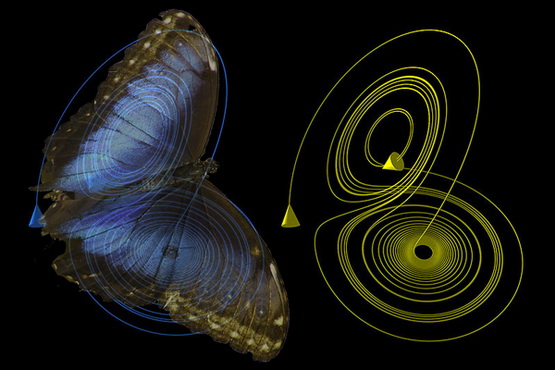
Sometimes he grunted or scatted along with his playing but more often he grunted out something that was kind of the opposite of what he was playing, just like sometimes the melody and rhythms he played on the piano were sometimes the opposite of the song he was playing, something that was exactly and perfectly opposite, so you couldn’t hear it without hearing the thing it was the opposite of” (Makers, 172).
Today we understand a little more about the world, so our stories are about people figuring out what’s causing their troubles and changing stuff so that those causes go away. Causal stories for a causal universe. Thinking about the world in terms of causes and effects makes you seek out causes and effects–even where there are none…It’s not superstition, it’s kind of the opposite–it’s causality run amok” (Makers, 177).
My experience in the CST lab this week was sparse to none. I was distracted from my ethnographic responsibilities by my sick child. But, as I reviewed my reading of Makers this week I was struck by Perry’s memories of how his father would play music for him when he was sick. Despite the coincidence, it wasn’t because I was also home with my sick child; it was for Doctorow’s italicization of the word opposite in both this scene, as well as the scene when Lester and Perry are attempting to articulate the evolution of the ride. Causality run amok. How many of our projects will fulfill anything remotely close to the original intention? Will it even matter? Perhaps, what matters is what we discover about ourselves during the process. No causality happening here, just a story.
“‘Bored,’ ‘Stiff,’ ‘Wanting to leave,’ ‘Intimidated,’ come the typical responses. It never occurs to them to change this very old school form unless they are explicitly invited to do so.” (Shapiro)
“So that the students see only a few backs of fellow students and the lonely expert in front” (Shapiro)
While reading the online article (especially the top quote), I found myself picturing a seminar where everyone is standing (or sitting if they choose to) and casually walking around shmoozing with each other as friends, discussing readings. Maybe with a snack table and some punch. I doubt there would be the seminar tension that comes from the tables and chairs. It would most likely feel like a book club. It makes me wonder if it would be as productive as a seminar. When seminar gets off topic, however, it is one conversation that can be redirected. With many people discussing the readings amongst themselves, it would be hard to notice or take action if conversations stray.
Then I think of this quote:
“The chairs were so ergonomic that they had zero adjustment controls, because they knew much better than you ever could how to arrange themselves for your maximum comfort.” (Doctorow 195)
In relating this scene in my head to the scene of the previous quote, I wonder if there will someday be a technology that knows how to arrange learning environments according to the individuals in the room. Can technology really know us that well? Is there any way for us to make it know us that well?
Can there be technology that listens to your body more than you do. Making decisions for us by understanding us better than we do, that looks like inventions/technology evolving past its makers.
An interface with ease in mind
Logic has long had the reputation of being one of the deepest, but most challenging DAWs to use. Since Apple acquired Emagic (the German company that developed it), it’s set about making Logic easier to use. Logic Pro X takes a major leap in that direction. [http://www.macworld.com/article/2044283/logic-pro-x-loses-none-of-its-power-gains-great-new-features.html]
As I watch people struggle with tinkercad, I wonder to myself if this technology is hindering or inspiring creativity. It seems that there should be easier software to use for making objects that mimics the way we form actual materials such as clay and wood, and there should be software designed to make specific types of 3-D objects such as a “design your own electric guitar body” program that had all the technical information programmed into the infrastructure so that all one has to worry about is creating a design. Logic Pro 9 used to be a professional audio recording software that was very detailed and took a person that had specific knowledge of advanced audio recording software to use. Then they came out with Logic Pro X which anyone with basic computer skills could use and understand and also kept the functionality of a professional software. Until the day comes when a CAD software becomes intuitive and user friendly, the creativity of the masses will be hindered because of technical difficulties.
{I decided to reflect on Jed Rasula’s talk because our CST session did not have time to observe on Tuesday}
What is meaningful about this: “But Perry’s dad almost never made chords: he made anti-chords, sounds that involved those mysterious black keys and crashed in a way that was precisely not a chord, that jangled and jarred”? – Makers, 172.
“(Y)ou expected one thing, you got something else, and when your expectations fell apart like that, it was pure [ _____ ].” -Makers, 172.
“Periodicity is recognizing the challenge of any organism to go along in any continual flow.” – Jed Rasula
Last week Jed Rasula spoke of the possibilities and pitfalls of language. Indeed, language shapes what is known and potentially controls what can be known. In this, language is the color of our ordered world and is subsequently tied up with our expectations.
DOES A SHIFT IN LANGUAGE NECESSARILY DENOTE A SHIFT IN PERIOD?
(Can we shift our structures of engagement with each shift in language?)
If we are approaching each new language in the same manner, does anything really change?
cognizant inhabitor of thresholds:
Is it possible to always be between periods,
in a continual state of becoming?
In this inhabited state,
improvisation would be our language (the body), and our use of it (the enactment).
Can we reflect experimentally?
Why do I keep communicating with the process of 3Dprinting in familiar ways?
By embracing the weird, the queer, the “jangled and jarred”, I open myself up to that space between places,
between what is known and what will soon be known.
Yarden Solomon
(Kettlwell and Suzanne)
“God I miss it,” he said. “Oh, Suzanne, God, I miss it so much, every day.
Her face fell, too. “Yeah.” She looked away. “I really thought we are changing the world.”
“We were,” he said. “We did.”
“Yeah,” she said again. “But it didn’t matter in the end, did it?” (Doctorow, 169) In this world of constant innovation, do the innovations in the end matter? We want to create, but is it about the end product, or about the creation process itself? In this class, we are spending most of our time on the process of discovering our project and what that means to us, and learning the journeys others took to reach their destination. In Makers, one of the intentions Doctorow may have had in failing Perry and Lester’s project, is showing that we grow most from the journey, and it is the journey that matters more then the end, material product.
“What was the sorrow? The death of the new work. The death of the dotcoms. The death of everything he’d considered important and worthy, its fading into tawdry, cheap nostalgia.” -Kettlebelly
Doctorow, C. (2009). Makers (p. 169). New York: Tor.
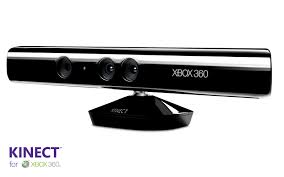
I help John scan a 3D virtual image of our classmate Loren’s body using an x-box kinect that will take the 3D model scan and transfer it to Johns labtop and save the virtual model with skanect, a free program that can save files as an STL for 3D image designing programs like tinkercad, blender, or 3D printing in makerware. After designing the scan box platform and getting Loren within its parameters, we slowly circle her, scanning every angle to create a 3D model, literally objectifying her. The potential for scanning and sharing downloadable, printable “things” is mind boggling. Soon online clothes shopping you will be customizing everything to your specific body and downloading it to 3D print. This gives me the idea to get an x-ray of my own body part, such as my hand, and transfer that image into a 3D model for printing to get a replica of my own bones to tinker with!
Chuck Neudorf
Week 6
“Do you mind if I take notes?”
He gulped. “Can this all be on background?”
She hefted her notebook. “No,” she said finally.
This week in print lab we took a slightly different tack. As a group, we tried to find a way to implement a particular design. It was interesting because a lot of ideas were attempted before a solution was found, but the issue I had was that it wasn’t my design. I had just made some headway with the project I’m working on so it was difficult for me to focus on something else. Of course, when I try to split my attention between two threads, I lose both of them. I’m always amazed at how many times I have to see something before I really own it.
“What happened?”
“Oh Christ. Who knows?” (both from 113, Makers, Doctorow)
It feels like a lot of us are losing control of our thoughts. People are still playing around in TinkerCad, but now that they have an idea of where they’re trying to go, they’ve started trying to get there. The trouble is they don’t know how to do that entirely. I‘ve noticed that due to the increasingly dystopic nature of Makers, many students are having trouble relating the novel to what we’re doing in class, myself included. This leads to many of us not knowing what to ask ourselves or others while doing observations.
“What would Suzanne do if there wasn’t anything going on?”
-Sarah Williams
“She would leave and move on the next great story.”
-John Grieco

This week during our observation period I felt as thought there was a lack of motivation and creative energy amongst my peers. Perhaps this was due to the fact that we had just reached the halfway point of the quarter and the information that once inspired us had become stagnant. After bringing this up with Sarah, she recommended that instead of complaining about the lack of inspiration I should become the inspiration. The role of the observer quickly switched to being the observed. I decided to introduce a new concept of 3d scanning as it relates to our program to those interested and this created an inspirational spark many needed to fuel their Blue Rabbit project.