
This week Suzanne made a comment ” No harm no foul”. I like that because it makes sense. Everyone is always working together in class, no matter the task. Its nice to see everyone learning from each other. I think that is a really awesome thing. Even if there’s ever a disagreement in seminar its not a worry, everyone gets through it. We agree everyone is entitled to their opinions and when we disagree no harm no foul right.
Page 11 of 17
“The Carballos do not feel particularly safe, secure, or comfortable. Now they’ve been robbed twice and are scrambling economically and have moved around so much that they feel like they have few friends. Times are hard; they have had to move in with Marta’s aunt. Juan Carlos pinned his hopes on a Kreonite machine that could develop large transparencies for commercial use – the only machine like it in their town of Salta.” Material World p. 125
Simple technologies put in the hands of an individual with a creative mind and a creative goal can change the world. Give people the skills and tools to affect their environment and they will, especially if some impasse had impeded them without those skills or tools. Restrictions and setback strengthen the foundations of a process like the tempering of a blade. Observing the opposite group tinkering with 3d design programs throughout these weeks I have been witnessing people engaging oppositions to their success with tools previously unavailable to them: computer knowledge, 3d printers, and experts. How frequently are one’s dreams of creating something, doing something, building something deemed impossible when the tools or the expertise are not present? Do the tools necessitate the dreams or do the skills necessitate the dreams? In a story I wrote last year called “Space Pirate” I explore a scenario where a man’s singular vison of spaceflight overcome his lack of tools, expertise and finance. Here’s an excerpt:
“Day and night were spent drawing up diagrams and schematics, making lists of parts to acquire and books to steal from the library. Fred was the first space pirate. Students noticed a man at universities sneaking into lectures by chemical propulsion specialists, aircraft engineers, rocket scientists. Campus guards were told to watch for a man watching through windows as students were taught welding, riveting, carpentry, woodworking and forging in community colleges, but they didn’t know that he was sure to tape the latch as they left so he could practice at night. Wrecking yard security officers were on the lookout for an average build man who was seen in surveillance records hitting junk yards in the area nightly, tossing whatever he could over the chain link fence before the dogs got to him. Librarians all over the city remember a man inquiring about books containing information about electrical engineering, home improvement and astrophysics and when they went to check on his progress they found whole sections of the library cleaned out. The news of a local television station reported that a salvage boat captain allegedly had his vessel stolen out the marina near the waters where expended rocket boosters from an Apollo mission had been jettisoned before exiting the atmosphere. The manager from a novelty food store found his entire stock of Food-in-a-Tube, all six flavors including mashed potatoes and gravy, spaghetti with meatballs, chicken noodle soup, even waffles and maple syrup had completely disappeared from the minute backroom warehouse of his small specialty grocery. Wholesaler and local grocery stores alike would be stuck ordering twice the amount of plain sugar and potassium nitrate (stump remover) week after week without anyone putting together that these are the exact ingredients for homemade rocket fuel.”


“Do you really have to ask me what’s wrong?” – Suzanne Church Doctorow, Cory. Makers. New York: Tor, 2009. 250. Print
This week someone yelled at me in the Cal to “quit with my hippy bullshit.” A student in another class outside of Making Meaning Matter had submitted to the CAL are large order for 3d Printing. I say order because he had no interest in the technology producing the item, simply using the 3d Printers to produce a mask based on the video game series Halo, in which he hopes to sell as costumes. The time it would take to print all seventeen of the files topped over 60 hours, not including the trial and error that was associated with someone who knows nothing about the technology forcing his way into the cue. I also watched a student with a goal of printing glasses, leave their prototype unclaimed along with coins from the first week and another students “extruder” until their attention was brought to the fact it had been complete, while going out and grabbing a “remix” of an idea off Thingiverse. This is all just how it seems its going to be as this week I was also informed I was being a disruption to the class and in violation of the class covenant.
Enjoy making other peoples ideas, I’m confused at the source of satisfaction but who am I?
Water dripped all week and over last weekend as working last Friday night I called the Police because water has continued to drip through the roof from the construction on the second floor and an improper fix the first go around. This culminated on Thursday when one of the machines had to be made inoperable because water is still leaking.
“You’ve got people all over the country depending on you and you are just abdication your responsibility to them” Doctorow, Cory. Makers. New York: Tor, 2009. 251. Print

Why are Rubber Ducks important to people? At first glance, they’re clearly not. Nobody obsesses unnecessarily about rubber ducks. However, if they weren’t important for some reason, we would have stopped making them. There’s something about rubber ducks that captivates people and society. Obviously, I started from their usage in programming. Other people find interest in the way they might float in oceanic currents. Still other make giant sculptures of them, write songs about them for child television shows, or do studies about how the chemicals used in rubber ducks were killing us. In order to learn about rubber ducks, we have to look into them in a broad sense. How are they looked at by other people? Why did they choose rubber ducks?
On the 1st of May, 2013, Rubber Ducks re-entered popular consciousness when a dutch sculptor name Florentijn Hofman made the world’s largest rubber duck, and put it in the bay of Hong Kong as an art exhibit (Whitehead, Hong Kong’s giant rubber duck). He had made several others before that, but they had not been so popular as the one in Hong Kong. In total, so far, Hofman has put up 22 rubber duck sculptures in various ports around the world, with the most recent being in Shanghai, China. The one in Hong Kong, however, remains the most well-known. Hofman says that he made it for adults, although rubber ducks are traditionally seen as childish. “I see it as an adult thing. It makes you feel young again.” Largely, he hopes the sculptures brighten people’s days by making them nostalgic.
I will touch briefly on the usage of rubber ducks in The Pragmatic Programmer, as I’ve spoken about it a number of times, but still believe it to be important. The book is about software engineering, and is more or less my gateway into the universe of rubber ducks. It features a story about a programmer who would carry a rubber duck with him while he worked. When he was coding, he would explain the code, line-by-line, to the duck as a means of problem solving. This has since evolved into a common practice among programmers, and in several other instances, with a variety of stand-ins used in placement of a rubber duck. However, the rubber ducks remain the most popular item for usage in this fashion. “Place a rubber duck on your monitor and describe your problems to it. There’s something magical about stating your problems aloud that makes the solution more clear.” The authors have not said why the programmer used a rubber duck.
The way rubber ducks used to be created involved a number of toxic chemicals. Most rubbers did, and in the heavily pollution-affect age that we live in, it’s difficult to not talk about the chemicals we face all day and every day. In Slow Death By Rubber Duck, Rick Smith and Bruce Lourie talk about this, however, they do not specifically focus on rubber ducks as much, instead using rubber ducks as an example of dangerous chemicals being heavily present in society. They chose rubber ducks because rubber ducks are so present, and so connected to innocence and childhood. Arguing that “the image conjured up by the word ‘pollution’ is just as properly an innocent rubber duck as it is a giant smokestack.”
Rubber ducks have an effect of drawing people in, I’ve noticed. Perhaps it’s the novelty of rubber ducks, perhaps it’s the nostalgic effect rubber ducks are so famous for conjuring up. “I just wanted to learn what had really happened, where the toys had drifted away and why…I especially loved the part about the rubber duckies crossing the Arctic, going cheerfully where explorers had gone boldly and disastrously before.” This is a short bit from the opening of the book Moby Duck, by Donovan Hohn. Hohn got pulled in by rubber ducks, and found himself traveling the world learning about the story of 28,000 rubber ducks that got pulled from a cargo ship in the middle of the pacific ocean. This brings up a lot of questions about materiality and having too much stuff as well, as many of the ducks certainly ended up in the north pacific garbage patch, which is now twice the size of the state of Texas. The book ended up being about the huge amount of garbage in the pacific ocean. Hohn worked on rubber ducks because it’s where he started from.
The popularity of Rubber Ducks can be attributed from many things, among them, the famous song from Sesame Street. It is absolutely a hit song, reaching the top 40 in 1970, where it stayed for six weeks, peaking at number 16. This song comes up whenever ducks are mentioned. I heard students talking about the rubber duck song, simply because Sarah mentioned one of my blog posts about it before the CST workshop one day. There isn’t much to say about the song, unfortunately. It was written for children, so it doesn’t make any deep arguments or have any underlying political propaganda. It’s a song for children about a child’s toy. What, however, that’s all the significance it needs?
“Rubber Duckie”, in a fashion similar to Hofman’s sculptures, is popular because it’s silly, it’s meant to brighten people’s days. Certainly rubber ducks mean different things to different people, to some they symbolize declining environmental sustainability, or the lack of caring over the amount of toxic chemicals presented to us every day. Rubber Ducks are a strange “rabbit hole” of sorts. People like me, or Donovan Hohn get pulled in by silly stories we hear about them, and find questions on top of questions. Even thought they have toxic chemicals in them, and they are contributing to environmental decline, it’s impossible not to think it funny and talk about rubber ducks in anything but a light-hearted fashion. If rubber ducks end up as the symbol of the end of human civilization, we’d still be laughing about to the point of our extinction. There’s a reason for that. I found a website called rubaduck.com, it has a page entitled “why we love rubber ducks”. It argues several things about the simplicity in design of the rubber duck, but argues, at the end of the day, that rubber ducks are nostalgic for so many of us. They’re symbols of childhood and innocence. The reason we still talk about rubber ducks, and why we’re drawn to articles about thousands of them being lost at sea, or by books entitled “slow death by rubber duck” is that rubber ducks are symbols of nostalgia itself. I never even played with rubber ducks as a kid, and they’re still nostalgic to me. It’s that widespread nostalgic feeling we get when talking about rubber ducks that makes stories about programmers, and songs about childhood toys become popular and well-known. To sum up, Rubber ducks are important to people, because they make us feel like children again, and because it does that for so many people.
Bibliography
Hohn, Donovan. 2011. Moby-Duck: The True Story of 28,800 Bath Toys Lost at Sea and of the Beachcombers, Oceanographers, Environmentalists, and Fools, Including the Author, Who Went in Search of Them. New York: Viking.
“Hong Kong’s Giant Rubber Duck.” 2014. CNN. Accessed November 2. http://www.cnn.com/2013/05/02/travel/hong-kong-giant-duck/index.html.
Hunt, Andrew. 2000. The Pragmatic Programmer: From Journeyman to Master. Reading, Mass: Addison-Wesley.
Smith, Rick, and Bruce Lourie. 2011. Slow Death by Rubber Duck: The Secret Danger of Everyday Things. Reprint edition. Berkeley, CA: Counterpoint.
“Why We Love Rubber Ducks!” 2014. Accessed November 2. http://www.rubaduck.com/articles/why-we-love-rubber-ducks.

“So, too something about the collecting urge, the need to get every card in a…
“I thought we should get you an antique tool, something so well made that it was still usable.” (187)
I was thinking a lot about where the crossroads between wood, metal, 3d printed stuff, and our bodies lie. In order to make the 3d printer a more sustainable and economic tool, we may want to utilize older things to use as parts of tools or instruments. The question is, what is so well made that it is still usable? It would be quite the project to print only what was absolutely necessary and use recycled materials for the rest. You could print the body of guitar and use strings and parts from an otherwise broken one, or instead of using precious time and filament to print a handle for a tool, you could use a piece of wood.
“Rides are a lot of fun, Perry. Your ride, it’s amazing. But I don’t want to ride a ride for the rest of my life, and Landon is a ride that doesn’t stop. You can’t get off.” (140, Makers)
This week my observations of the CST made me question the feasibility of my own design, as well as those of my classmates. The constraints of working in a very basic program like TinkerCAD and using porous PLA filament are starting to manifest themselves. Particularly projects that are based around musical instruments: how can bearings/beads be added to a percussive shaker that will materialize as a solid object with no hinges in which to place the beads/bearings? How can a 3d printed flute adequately carry a channel of air through a porous material as well as maintain its structure in a material that is heat sensitive while receiving a channel of air? How can a 3d printed PLA bell create a ringing noise in plastic rather than metal? Possibly these items could be prototypical in the PLA format and could later be rendered in metal by a business like shapeways? How do businesses like Shapeways develop strongholds on the commercial industry of 3d printing? How close are we to a commercial metal 3d printer?
Lauren
CST Week 5
10/27/14
“In VEs (Virtual Environments), a quasi merger of embodied perception and externally transmitted conception happens at the level of sensation. The appeal of this electronically facilitated merger is reflected in the current grown of cultural and academic interest in the cyborg- the human-machine…”
-Digital Sensations: Space, Identity, and Embodiment in Virtual Reality
Where do we end and machine begin?
Technology is striving to shrink or exterminate the gap between human mind and computer capability. Parallel to this is the play between artist/artisan and computer science as a new tool in the artists toolbox. From my observation of the class’s way of interfacing with Tinkercad, the transition is in its young adult life, but by no means matured. There is the angst of wanting. A yearning for the product to be a refined work, and yet the actuality is an experimental shout into the material world. A culmination of basic shapes into slightly more complex structures that are seeking to be fully formed. But how can a (sub)culture already critical of plastic reproduction take printmaking seriously? Only when our identities become involved, or personal investment in the object itself, can we overlook the tackiness of young adult plastic. So where are we headed? As our class becomes for fluid with Tinkercad, and our theoretical ideas progress, we are headed in the direction of modern sculpture and biographical objects.
“Businesses are great structures for managing big projects. It’s like trying to develop the ability to walk without developing a skeleton. Once in a blue moon, you get an octopus, but for the most part, you get skeletons. Skeletons are good shit.” (Doctorow 140)
Why is Evergreen so great at churning out internally-motivated entrepreneurs? Are the structures with which students develop their projects parallel to business structures, making the transition organic? Talking to people about their blue rabbit projects often seems to be the echo of a business pitch. Profitability and potential for problem solving seem to be huge motivators. Even the more artistic projects address these. ‘Murica!
After Piracy: Reflections of Industrial Designers in Taiwan on Sustainable Innovations

This article review is one geared towards those interested in cultural studies surrounding piracy, intellectual property and design. The article, After Piracy, is written by Yi-Chien Jessica Lin, the author of Fake Stuff: China and the Rise of Counterfeit Goods, and examines the piracy of goods and ideas within Taiwanese culture. Is there such thing as an original idea anymore? Does piracy or the imitation of others ideas help fuel creativity? How is piracy being used to help advance the modern cultural identity of a peoples often forgotten in pop culture? These are the main questions I will explore in the following paragraphs.
Intellectual property or creation of the mind is something that is protected by law against copying or imitation. The reasoning behind Intellectual Property laws is to advance creativity and innovation. If you cannot make money off of an existing idea, this should motivate you to come up with your own original ideas. Our author traces Trademark Laws back to the US industrial revolution and argues “that the introduction of such laws generate conditions for struggles over culture, ownership and property.” Most likely I believe to encourage the capitalist way of life.
This brings up the question of what an original idea is and if the concept even exists anymore. Mark Twain would argue that there are no original ideas, “For substantially all ideas are second-hand, consciously and unconsciously drawn from a million outside sources, and daily use by the garnerer with a pride and satisfaction born of the superstition that he originated them; whereas there is not a rag of originality about them anywhere except the little discoloration they get from his mental and moral calibre and his temperament, and which is revealed in characteristics of phrasing.” This means that every new idea is essentially just a pirated version of a number of previous thoughts and ideas.
Piracy in Taiwan, as examined by Lin goes hand in hand with innovation and the creative process. Young Taiwanese designers, when reflecting on piracy, “argued that copying facilitates new ideas of creativity from everyday life experiences.” I believe this to be true and if everyone can get past of the idea of Intellectual Property more innovation will occur.
Piracy is not only being used as a facilitator for new innovation but also as a way of advancing cultural identity within the often forced western influences. “In popular music, the remixing of lyrics with Chinese cultural references and western rhythms is more and more popular and widely accepted by the younger generation in Taiwan, Mainland China and even the population on the west coast in North America.” By making these ‘remixes’ of western influenced songs and making them relevant to their own culture, this allows them to preserve their culture instead of falling victim to western globalization.
Piracy is not a black and white issue and I now feel well informed on the positive effects that piracy may have on cultures outside of my own. I have attached the original article to this post and hope that my efforts will encourage you to read it.
Citations:
“There Is No Such Thing as An Original Idea | …In the Meantime.” N.p., n.d. Web. 27 Oct. 2014.
“After Piracy: Reflections on Sustainable Design by Taiwanese Designers | Yi-Chieh Lin – Academia.edu.” N.p., n.d. Web. 27 Oct. 2014.
Image from:
“Music Piracy Study Finds No Link to Decreased Digital Revenues | BGR.” N.p., n.d. Web. 27 Oct. 2014.
October 27th, 2014
“You can use evolutionary algorithms in the sim and come up with really efficient designs, in theory. And computers are cheaper than engineers.” “Is that why you were laid off?” Suzanna said. (Doctorow,73)
One of the Questions i choose to ask the fellow Makers in my class last week was “If they thought that the 3d printer could one day become transparent?”
Chuck Neudorf answer to my question was the one that got me thinking most. “The current mechanical limitations are the only thing holding it back from becoming ‘transparent’ .”
I believe this to be true and it lead me to another Question. If the 3d printer does become transparent what would be the implications of this? What jobs might we loss and might we gain? How might the labor force be affected? Can this be a good thing?

“Something about the collection urge, the need to get every card in a set, and…
“We don’t care about what you did yesterday-we care about what your going to do tomorrow.” (Doctorow)
During this week, I enjoyed seeing everyone’s post and how different everyone took out of what we were doing and what everyone was working on for there project. It made me think deeper about my project culturally and how bells had a different starting off point and meaning in a lot of different parts of the world. While tinkercad wasn’t working I found the other program that we were using to replace it for the time being way more difficult for myself to navigate around , but figured it out eventually with more time. Each day I feel as though more and more thoughts pop into my head about my project and very glad there are options to us for more materials to use for our ending idea. Sarah pointed this website out to me called emerging objects which I found to be very fascinating to look at .I loved seeing what people had made out of edible materials. This week I plan on finding out where I can go to make my project out of metal .
“What the hell do you get two guys who not only have everything, but can make everything” -Suzanne & Kettlewell
“The only way to make a glove this good would be to fab it and then give it to several generations of baseball players to love and use for fifty to a hundred years.”
The question Kettlewell and Suzanne had to ask themselves when looking for a present for Perry and Lester struck a chord with me. In this near future novel, practically everything that exists can be made and reproduced on the cheap. This got me thinking about our blue rabbit projects, the more love and ‘meaning’ that is put into every project the more value it will have. A persons project has a chance to carry generations of meaning if it lasts and can be used and reused, just as the old baseball mitts were so precious, because the love and meaning that each glove held, was much bigger than fabricating the glove its self.
Chrissy
27 Oct 2014
Does Tinkercad give us “the ability to subtract the stuff that [feels] wrong and reinforce the stuff that [feels] right”? How does this technology tell a “story [about how] we understand the world?” (Doctorow 176)
“Today we understand a little more about the world, so our stories are about people figuring out what’s causing their troubles and changing stuff so that those causes go away. Causal stories for a causal universe. Thinking about the world in terms of causes and effects makes you seek out causes and effects–even when there are none” (Doctorow 177).
I wish there was a Tinkercad for Tinkercad. It would come with a pair of scissors, hot glue, and a pencil with a giant eraser.
The problem is learning how to manipulate physical forms without your physical body. There are limitations while making a 3D printed object. We have so little control over how something is actually made because of the language barrier between ourselves, Tinkercad, and the 3D printer. Their language is 0’s and 1’s and I’m trying to tell them a story. How can I put my words into form?
The solution is attempting to learn the way that Tinkercad talks. It’s about becoming more acquainted with making from the mind instead of the body. This means turning limitations into opportunities to make something you couldn’t without 0’s and 1’s.
“Using computational simulations as a method for gaining information about the human mind, you might learn a few things about the representational structures that support inferential logic and problem solving, but you will certainly also end up with a distorted picture of how those structures relate to the environment…” (Malafouris 29).

“So what’s going on here? It sounds like you’re whipped. Why aren’t you fighting?” -Suzanne Church, Makers p.114
“I’ve been standing on the bridge of this sinking ship with my biggest smile pasted on…. Just because I’m giving up doesn’t mean I gave up without a fight.” -Kettlewell, Makers p.114
“Yet despite persistent mechanical failures, biometric technologies still accomplish a great deal for state and commercial actors whose interests are tied to contemporary cultures of security and fear. In this sense, biometric technologies succeed even when they fail. On the other hand, even when they function technically, biometrics do real damage to vulnerable people and groups, to the fabric of democracy, and to the possibility of a better understanding of the bodies and identities these technologies are supposedly intended to protect. In this sense biometric technologies fail even when they succeed.” -Shoshana Magnet, When Biometrics Fail p.3
FAILURE, PERFORMANCE, FEAR + CREATIVE/RESISTIVE PRACTICE
This week, I began my observations with a question about the different performances we each enact. Student, to artist, to designer, to audience member… even our gender (as Judith Butler would say) is a performance.
(What performances are enacted through the other agents of 3D printing?)
Thinking of performance inevitably led to questions of function and failure. The generative nature of failure lies in its ability to engage us with the imperfect messiness of both experimentation and creation. In a capitalist, heteronormative, racist, sexist, ableist culture, failure itself becomes a form of resistance. A denial to perfectly smooth compartmentalization.
As Student B was describing their student performance anxiety over their shoulder to me, I began to think about how our histories are inscribed upon us. Student B, recently deployed from the service, conveyed an utterly stultifying sense of anxiety and fear about his work. About being “good enough”. I wonder if the regimented behavioral program of the US military had ingrained this fear of failure. Or perhaps when lives are at risk, failure and experimentation become impossibilities.
How do our histories peer through our performances?
How do they shape what we “decide” to make?
“Well what are you going to do about it?”
“What am I going to do about it?”
“Sure, this is your thing, Perry…”
This week in our CST lab I got to witness so many projects shaping into their first stages of fruition, as well as a few that were well beyond the “idea” and already taking shape. The variety of learning methods I have seen throughout observations is refreshing, and I think that this creative freedom will allow for development of our ideas in a way that a controlled environment would never support. The excerpt I chose this week reminded me of the teachers’ observer role in this project, noting that although they are actively here to help us, it is our goal to create our own “thing”.
” No one cares about made things anymore, Les”
(Doctorow 137)
This is a curious statement made by Perry. It seems that many people care a whole lot about things anymore. What would it take, what would it look like for people to stop caring about made things? Does Perry’s statement imply that there is a difference between things and things made?
In the CST lab this week I was thinking about how the 3D printed objects we are making are distinguishable and possess specific defining characteristics, whereas some of the objects we saw online, printed from metal other materials, do not. I talked to Student B about making rubber ducks with the MakerBots in the lab, and got to thinking that we wouldn’t necessarily be able to call them rubber ducks anymore if they were printed out of plastic…
The objects printed by the team using grocery bags had a unanimous color that was definitive of the material used to produce them. What if color was consistently used in 3D printing to convey information and meanings? What if color codified material, strength, lifespan, origin, or worth of 3D printed objects?
“These are art, or community, or something”
(Doctorow 141)
“The thing that we need to do is make these people the authors of their own destiny.”
(Doctoro, 93)
This week in class I have been paying a bit more to others than myself, which isn’t a bad thing. I’ve actually gained some more perspective on 3D printing and was able to get more ideas for my project. It’s interesting getting and giving feed back on each others projects.
I find everyone’s ideas very different from all the rest, even Emma, who is also designing a pair of glasses to be printed out in 3D. Although the ideas are similar, Emma took a really different approach than me, so looking at that was really interesting.
I like this quote a lot, I think its an important lesson to learn in life. It strikes me as something to be very true and even words to live by. We are the authors of our own destiny, we can do anything we put our minds to, we control how we feel.
“If the human mind is not the clearly demarcated information-processing representational device so neatly objectified in the familiar exemplar of a computer, what is it?” Malafouris p. 31
Our mind has developed to be the vehicle that keeps us alive. Looking at it in a way in which one categorizes it as separate from the body or the external world fails to acknowledge the role that other aspects have had in shaping who we are. The brain is only a particular function of the body and is not the sole embodiment of our system of life and propagation. In our anthropological studies of 3d printing how can we keep this in mind when studying our fellow students? Should we not ask the hands questions? The eyes? Or have we only really ever been communicating with our mouths and not our brains at all?
“the thing that we need to do is make these people the authors of their own destiny” (Doctoro 93).
I came across this video last week on emptiness via my roommate. “Where does the espresso end and my body begin?” In creating at computers, where does our body/creativity/input/consciousness end and the computer, or product, begin? Is art the proficiency of tools to a point where there is no absence of yourself in what you create? I think I’m beginning to believe so. I keep thinking of this when I walk around and am constantly surprised at everyone’s ability to do something new and complex on Tinkercad, were putting more of ourselves in to get more of ourselves out.
“The mind is to the brain as a computer program is to the hardware of the computer on which it runs.” (Malafouris pg. 26)
“We don’t care about what you did yesterday—we care about what you’re going to do tomorrow.” (Corey Doctorow)
After this weeks observations, I started to really pay witness to how the computer is an extension of our minds and imagination. It got me pondering where our evolution with technology might be leading us to some really connected collective omega point or something of the sort? A point where our technologies become so advanced and capable of processing such overloads of rich info that it causes our own evolution to make a mega change just to keep up with the complexity of our own creations. Also while pondering the dynamic between us I could help but feel that technologies evolution has been and can be such a force behind continuing to create a better globe. For technology is only dangerous in the hands of those who feel like alienated egos in a shell of skin and bones . For as the author/speaker terence mckenna once stated;“It’s clearly a crisis of two things: of consciousness and conditioning. We have the technological power, the engineering skills to save our planet, to cure disease, to feed the hungry, to end war, create paradise; But we lack the intellectual vision, the ability to change our minds. We must decondition ourselves from 10,000 years of bad behavior. And, it’s not easy.”
“The idea of representation furnished a simple mechanism by which we could feed our cognitive apparatus with facts and information from the ‘external world’; it also suggested how we materialize and externalize our mental contents by way of behavioral output into the world” (Malafouris, 26).
What conditions relative to the development of written languages have enabled us as human beings to establish and preserve the construct of material representation? Can “behavioral output” and cognitive materialization be consciously controlled by all individuals regardless of social or economic class?
Individualism is often sought after in the human quest for self-recognition. Personally, it is interesting to observe differing communicative aspects of modern subcultures and comparing and linking their roots to great social movements of history. There is much wonder about the relativity of material representation and I believe that the internal self does not in many instances, get to control the representation/manifestation of external interaction. Experiencing new or undiscovered cultural mechanics of human nature appear crucial to the development of personal integrity and awareness of self, but just how transparent and interactive are differentiated cultural makeups? the process of providing linguistic labels to associate with external interactions is a remarkable human quality and is intentionally diverse by nature. Becoming aware of physical and emotional surroundings through a bank of cognitive representation gives the natural task of identification a purpose, a meaning. It is however, naturally easy for me to subconsciously iterate and embrace subjective language in a an unintentional form without proper consideration of differing cultural value.
“That is to say, mind was viewed as a storehouse of passive internal representational structures and procedures—a ‘filing cabinet’ capable of receiving and manipulating internally the sensory information received from the ‘outside’ world.” (Malafouris 26)
What is the product of internal representational passivity? In what ways do our creations embody internalized-thought-passiveness? In an attempt to give something representational value, what differences (between internal and external//mind and body) must be mediated first?
In combining week four’s readings with my week four CST observations I found myself over and over coming back to this idea of “passivity” in relation to representation (our attempts to mark something as valuable). It is interesting to me to challenge this idea, and to try to think of ways in which I am capable of stepping into and out of “passive” and “active” roles//modes.
(sry for not including a suzanne question, this quote from how things shape the mind seemed particularly relevant to my cst notes & questions of my own)
“Look, I just want to write about this in a way that honors what you’ve done over the past two years. I’ve never been present at the birth of anything remotely this important. It deserves to be described well.” (Doctorow 114)
“You’ve been amazing, Suzanne. We couldn’t have done it without you. No one could have described it better. Great deeds are irrelevant if no one knows about them or remembers them.” (Doctorow 114)
Suzanne questioning how to properly write about things, and Kettlewell’s response makes me wonder what “great deeds” could be going undiscovered in the CAL. I make my way around the room and the most interesting things I hear are not about people’s work. Why am I more interested in critiques of Tinkercad and how we are able to use it? Perhaps I need to pay attention to the things that don’t grab my attention. Could I be missing something similarly to how Suzanne missed Kodacell failing?
“We don’t care about what you did yesterday—we care about what you’re going to do tomorrow.” (Doctorow)
One thing I noticed and realized this week is that nobody came into this class with a clear idea of what they wanted to do. Eventually, however, their ideas took form, both in the abstract and in modeling. I also noticed that a lot of people, myself included, usually spend a fair amount of time constantly tweaking their designs, whether it’s for aesthetic or practical purposes. No two designs, ideas, or rationales are the same, however.
“Don’t do what I’ve done. Don’t hang grimly onto the last planks from the sinking ship, chronicling the last few struggling, sinking schmucks’ demise. It’s no fun being the stenographer for the fall of a great empire. Find something else to cover.” (Doctorow 115)
This last week I’ve become interested in a specific project that Kris is doing. She is making a library, which in a way is becoming obsolete. Everything is going digital these days, even books. Her library is a symbol of what the future could become. Libraries might be featured in museums as an old technology, they could become something that people gawk and laugh at. In many ways this relates to 3D printing and the implications that the technology represent. What will 3D printing replace? Things are always being created, invented, re imagined and refurbished.
“Tjan had sent her a guide to the hotels and she’d opted for the Pribaltiyskaya, a crumbling Stalin-era four-star of spectacular, Vegas-esque dimensions. The facade revealed the tragedy of the USSR’s unrequited love affair with concrete, as did the cracks running up the walls of the lobby.”
“The mind is to the brain as a computer program is to the hardware of the computer on which it runs.” (Malafouris 26)
“Besides, you don’t have to sell stuff you download. You can invent stuff and print that.” (Doctorow 135)
“He put nine golf balls, a ping pong ball, and another nine golf balls in the machines input hopper. Two and a third seconds later, eighty-one M&M’s dropped into the output hopper.” (Doctorow 137)
During my reading of “Makers” and “How Things Change the Mind,” I found one similar message throughout both the texts. This is the way computers process thoughts and the world, compared to how humans do. Last week I looked at how the input of commands given from a human to the 3D-Printers worked. The computer does most of the thinking so that we do not have to. This was making me wonder how this affects our knowledge. Have our minds been evolving with the evolution of technology itself? Or have our minds been “dumbed down,” because the technology is doing all the work for us?
“You miss it,” he said to himself […] “you want to be back in the shit, inventing stuff, making it all happen” (Doctorow, 132)
People are now progressing and now it seemed that most of the ideas have surfaced into the conscious mind of each individual. The symbols and images are now starting to be understood. There is an excitement in many of the students about creating and designing their project. I also sense that the greatest challenge most are facing is the ability to take the idea from the mind and get it into the digital design.

Chuck Neudorf, week 5
“You say ‘they’ – aren’t you ‘they’?”
It was too dark to see his face now, but she could tell the question made him uncomfortable.
“No. Not anymore.” (Makers. 359)
A new question arose this week when Tinkercad became unavailable. What happens to the human/machine interface when the machine breaks? In this case the problem was obvious, access to the software was denied. Some people found work arounds that ranged from signing in to Autodesk to going to an entirely different design program. But what would happen if the system were complex enough so that errors were beyond our senses? If operators rely on the system to self-diagnose, are they responsible for creating the diagnostic strategy? This question is important to me as a maker because I hope to make increasingly complex projects and I need to have a feeling for the limitations.
Yarden Solomon, CST post week 5!
‘”…I think everyone’s waiting for the next big thing.”
“You think?”
This week in our maker space there was a much more active and positive energy. People were 3d printing excitedly, I noticed huge transformation in projects and ideas, and a new found confidence and optimism. It’s interesting how creating things gives us a strong sense of purpose and makes our lives more meaningful. People find such an importance in innovating and creating that they often feel “useless” without it. I wonder if this is something that is taught to us, or if animals and plants also have this inner drive to create and make.
“Perry, New Work is the most important thing that ever happened to some of those people. It was the high point of their lives. It was the only time they ever felt useful.”‘
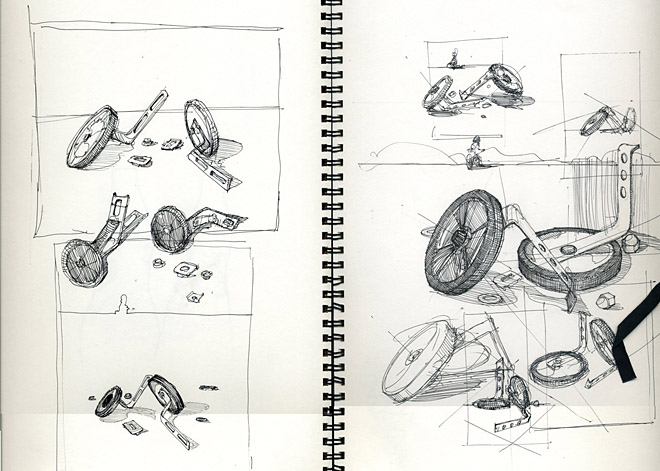
But that’s why I agreed to do the ride—not to freeze the old projects in amber, but to create a new project that we can all participate in again” (Makers, 143).
Participate. Also one of the aims of The Maker Movement Manifesto. As well as learning, which all the students in Making Meaning Matter do every week; participate and learn. It seemed the first weeks were spent getting over the initial learning curve, but perhaps it was more about gaining the confidence that they could make something that would make a difference for others. Not because of what they were making, but because of who they got to be in the process. Makers. It could be said that anyone doing anything other than participating and learning might be missing the point.
He could never convince his bosses in Orlando to let him build anything remotely like this, and given enough time, it would surely overtake them…He’d seen the future that night and he had no place in it” (Makers, 151).