Making Meaning Matter

The Evergreen State College

Page 12 of 17

Week Four Reflection (Forbes)

“It made him smile.  Someone had invented this thing.  It could have been him.  He knew where you could download vision-system libraries, and force-feedback libraries.  He knew where you could get plans for the robotics, and off-the-shelf motors and sensors.  Christ, these days he had a good idea where you could get the ice cream wholesale, and which crooked vending-machine interests he’d have to grease to get his stuff into truck stops.” Doctorow (132)

In thinking about “the mind behind the artifact” (in this case the ice cream vending machine), we must think about the life of a person.  The quote above demonstrates so many pieces of prior knowledge.  This demonstration leads me to wonder about the instances in the maker’s life in which he learned these pieces of knowledge.  In order to make something do you have to know something?  Are these things slowly learned over time or can they be picked up quickly?  Is the knowledge information? skill? both?  Probably both and beyond.

CST Post #3 -Shaye Riano 10/27/2014

“What had prompted him to sabotage the ride? It was something primeval, something he hadn’t been in any real control of.”

Doctorow, C. (2009). Makers (p. 150). New York: Tor.

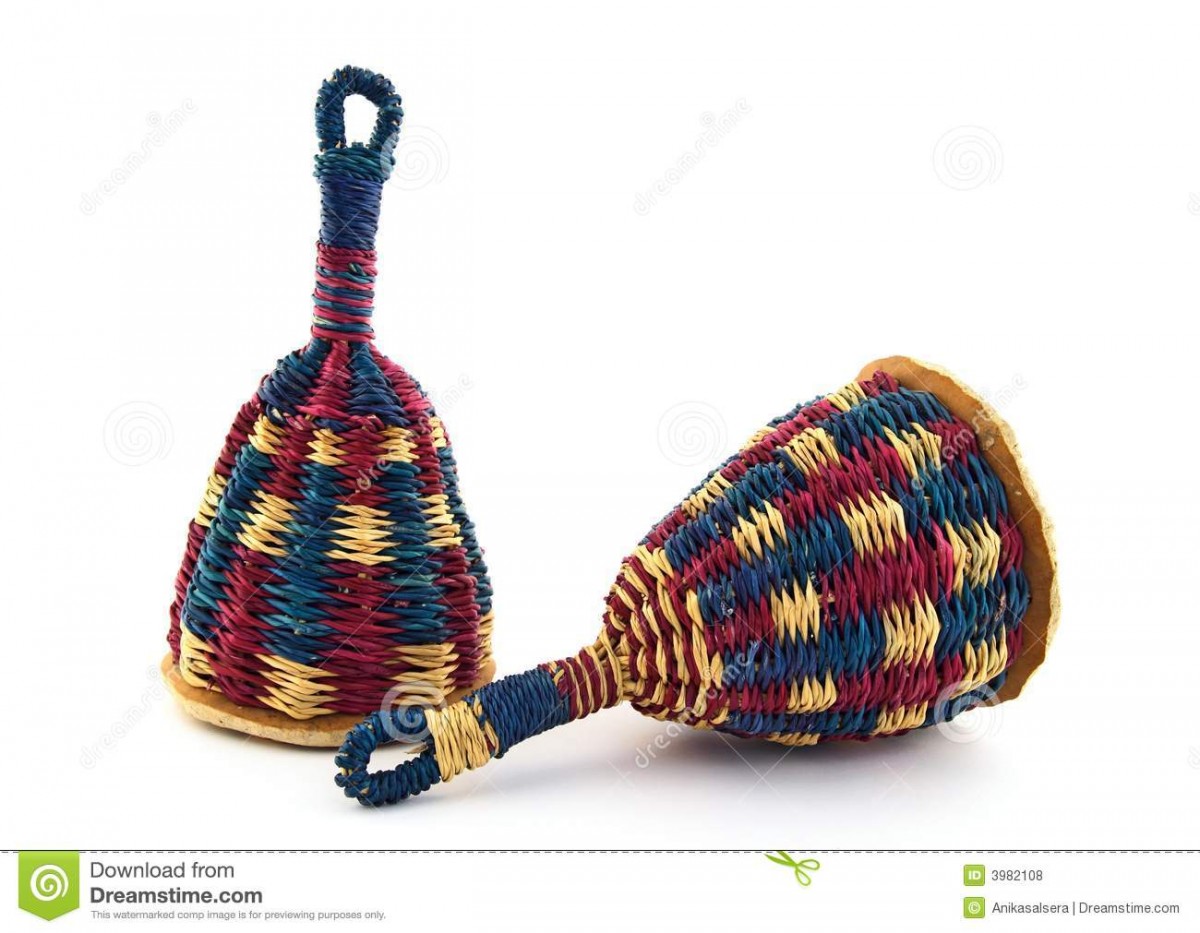
caxixi-afro-brazilian-percussion-instrument-3982108

Graham is really into music, drumming in particular. In this class he wants to create small percussion instruments  to add to his musical arsenal.

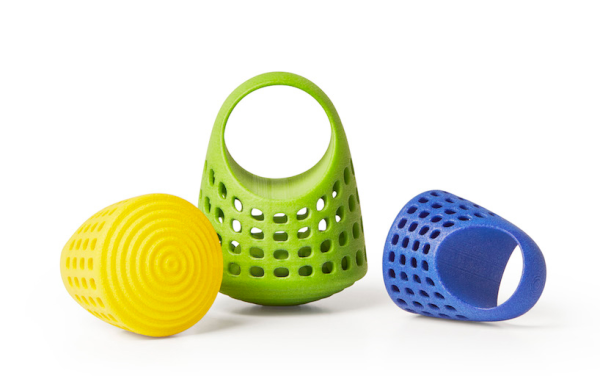
I watch him design a 3D image of a Brazilian Caxixi in Tinkercad, an instrument that you use to hit a drum, creating a “shaker” like noise. Hes never held or used a Brazilian Caxixi before, he found virtual images of it online and decided to 3D print his own. They cost about 50$ if you wanted to buy one. Probably easier and less time to buy one, but when I asked Graham he said making one would lead to a more meaningful product because of the effort put into the learning and making process. Also he can share the music the instrument he created can make.

brazilian-caxixi-instrument-kxx-3d-printed-rattling-rings-2

CST wk 5

In reading this week Suzanne had a thought. ” Taking big chances had gotten her this far and it would and it would take her farther she knew.” In class it was good to see everyone making progress. Everyone developing their own little routine. Everyone is making progress on their blue rabbit so to speak.  Everyone taking chances on what they want to make. I realized something this week that I can be my own worst enemy. Instead I’ve decided to get out of myself’s way take those chances. Isn’t that what life is about we have to live and learn to become stronger.

CST Week #4

“Can I allow my focus to stray from this?”

This week, I was noticing a tendency for people to be working on things not necessarily related to their design. Certainly, everybody was working on their designs at some point. However, there were also moments when students would stray away from their designs, sometimes for things unrelated, but often for related and important things. Graham, for example, was having troubles getting his designs to save. Michael often had to stray from designing to work with the 3D printers. However we all seemed to come to the conclusion that our designs were bound to get better, and didn’t need focus constantly.

“New Work isn’t going anywhere, Suzanne.”- Doctorow, Makers, 108

Week Four Entry

John Grieco

10/26/14

Week Four Entry

“Have you managed to fill the flea market?” It had taken Perry a long time to fill his, and still he had a couple of dogs—a tarot reader and a bong stall, a guy selling high-pressure spray-paint cans and a discount porn stall that sold naked shovelware by the petabyte.”[356]

Excerpt From: Doctorow, Cory. “Makers.” iBooks. https://itunes.apple.com/WebObjects/MZStore.woa/wa/viewBook?id=53FBC78B36F00BF389830E420322DA54

“Yeah, I got proteges up and down New England. A lot of them settled here after the crash. One place is as good as another, and the housing was wicked-cheap once the economy disappeared. They upped stakes and came to Boston as soon as I put the word out. I think everyone’s waiting for the next big thing.”[356]

Excerpt From: Doctorow, Cory. “Makers.” iBooks. https://itunes.apple.com/WebObjects/MZStore.woa/wa/viewBook?id=53FBC78B36F00BF389830E420322DA54

video.yahoofinance.com@3bcfac20-8f43-37ec-9953-38e6cd43ac92_FULL

While observing my classmates this week, with the assigned readings fresh in mind, I am reminded of the creative flea market Cory Doctorow described in Makers.  As I walked around the room I observed small groups of people sharing with one another the projects they have been working on.  Musical instruments, Sunglasses, Bells and Vases among many other designs ready to be turned into physicals object at any moment.  Right before my eyes was the Making Meaning Matter flea market of what I am confident is filled with meaningful things; much different from any flea market I had ever attended.

Going ‘Viral’


Screen Shot 2014-10-24 at 2.16.15 PM


IMG_20141026_151550541_HDR“I’m not delivering any news if I tell you the world is a piece of hell for millions of people. There are always a few who manage to find a way out, humans are capable of the best as well as the worst, but you can’t change human destiny. We live in a dark age, when freedoms are diminishing, when there is no space for criticism, when totalitarianism — the totalitarianism of multinational corporations, of the marketplace — no longer even needs an ideology, and religious intolerance is on the rise. Orwell’s ‘1984’ is already here.”

-Eberstadt, Fernanda. “José Saramago, the Unexpected Fantasist.” The New York Times. The New York Times, 25 Aug. 2007. Web. 26 Oct. 2014.

“A new powerful metaphor was spreading rapidly: that the mind is to the brain as a computer program is to the hardware of the computer it runs.”

-Malafouris, Lambros. How Things Shape the Mind: A Theory of Material Engagement. MIT, 2013. 26. Print.

Things are getting more involved this week as the class presented its’ ideas for their unique ‘Blue Rabbit’ projects. The diversity amongst the group is astounding yet there do remain some overarching concepts that seem to be present in all of the designs. Specifically in reference to the following: everyone plans to use the schools MakerBots to produce their items, their own path through life has inspired their design, and that the target market is not just the individual, meaning that the sphere of influence for these ideas hopes to effect peoples globally. Interest also appears to be growing towards expanding past the current software that is the class standard, as many struggled with the Tinkercad website as its corporate owner shifted the login procedure as well as the limits of the website itself.

(note how Shapeways used my design as targeted advertisement back at the designer…)

I also made this ;)

IMG_20141024_153735248

Screen Shot 2014-10-25 at 7.20.20 PM

week 4 observation CST

This week I learned more about the importance of things that serve some utilitarian purpose. For example Tom is making a rubber duck (plastic duck) that he can explain his problems to. This is because it is proven that if you explain your problems, even to an inanimate object, then you can understand your problem and find the answer easier. Now of course you could explain your problem to nothing at all and not have to print out anything but as Tom explained it helps to have a material object. I look forward to learning more.

test

(, , 2010)


References

Outi Remes, and Pam Skelton. Conspiracy Dwellings : Surveillance in Contemporary Art. Newcastle: Cambridge Scholars, 2010. Print.

Zotero Testo Numero Uno

This is a book I want to use on my Blue Rabbit Project: (, )

References:

Fruitless Fall: The Collapse of the Honey Bee and the Coming Agricultural Crisis. N.p. Web. 22 Oct. 2014.

Test Citation Post

This is some random text (assuming the idea of randomness even exisits…) (Lipson, 2013, 36) Also see how we extended ourselves into our Zotero web-based program. (Malafouris, Renfrew, 2013, 36)

References

Lipson, Hod. Fabricated: The New World of 3D Printing. Indianapolis, Indiana: John Wiley & Sons, 2013. Print.

Malafouris, Lambros, and Colin Renfrew. How Things Shape the Mind: A Theory of Material Engagement. Cambridge, Massachusetts: The MIT Press, 2013. Print.

Test citation

Suzanne, Lester, and Perry (Doctorow, 2010, 100)

Mark Hatch (Hatch, 2013, 300)


References 

Doctorow, Cory. Makers. First Edition edition. New York: Tor Books, 2010. Print.

Hatch, Mark. The Maker Movement Manifesto: Rules for Innovation in the New World of Crafters, Hackers, and Tinkerers. 1 edition. New York: McGraw-Hill, 2013. Print.

“Failable and Scalable”

"Economies of scale drive down the consumer price of mass-produced products and increase profits for a company. However,
 to earn back the upfront investments in design and production, companies must sell large volumes of the same product. 
Only after a significant number of identical products are sold does a company begin to profit from its initial investment."
(Lipson, Kurman, 2013, 26)

Iteration #1: The Idea

glasses


Is this world really worth seeing clearly?

Six months ago, my seeing eye glasses were lost. Due to lack of funds, I have yet to go buy another pair. Because of my need for these glasses, I thought this was an appropriate project to embark on.

Although for some it may be simpler and more reasonable to just go out and buy a pair of glasses, it might even be simpler for me, but I dont feel like it would be more reasonable. I am printing these in 3D because I dont feel like I am creating anything useless, or without purpose. It doesnt seem destructive or wasteful, and will hopefully be a challenging and rewarding process.

Around 1000 AD, the first vision aid was invented, called a reading stone, which was a glass sphere that was laid on top of the material to be read that magnified the letters. Evidently, the first eye glasses were made in Italy in 1286.

“It is not yet twenty years since there was found the art of making eyeglasses, which make for good vision…And it is so short a time that this new art, never before extant, was discovered…I saw the one who first discovered and practiced it, and I talked to him.”  Ilardi, Vincent (2007), Renaissance Vision from Spectacles to Telescopes, Philadelphia, PA: American Philosophical Society.

My idea is to make frames similar to the pair pictured above. I want the frames to be strong, and to hardly look like theyve been 3D printed, (not stringy like the printers can sometimes do.) I am going to try and make that not happen, or happen less, by choosing a color like brown or black. Also it will just consist of how wide I design the frames on the computer.

153 million people (2% of the world’s population / 23% of the total number of those who are visually impaired) cannot see properly because they are short- or long-sighted – conditions that can easily be treated with a pair of prescription glasses. I happen to be long sighted, or near sighted. This affects me by making objects, signs, people, mostly everything thats far away very blurry. When I put my prescription glasses on, things become much less blurry and I am able to see far away things far much better.

1133887651605

This is a picture of the first known seeing eyeglasses. These were known as “bow spectacles” and were used from the first eye glasses on into the 1700′s. “Spectacles Gallery”Museum, British Optical Association.

The amount of growth that glasses have seen throughout these hundreds of years has been astronomical. Going from tiny metal frames without even anything to hold them onto your face except your nose, to glasses with all different sizes and shapes, theres even glasses with computers in them now.

Beyond that, I am about to print in 3D a pair of glasses frames, which is insane if you think about the time lapse. Its very exiting and almost a bit frightening honestly to think about how advanced technology has become.

Without eyeglasses, or without the lenses, our world would be a much different place. It would be harder for some to make out any words or objects far away, but also thinking about magnifying glasses, telescopes, lab tools to see tiny molcules. All of these things would be much different in a world without bifocals.

I am excited to jump into my project and create something that will be very beneficial for me. It will be rewarding to create something that will help me in the long run, and that I can hang onto for awhile. It will also be rewarding to be able to wear something that I designed and had the opportunity to print in 3D.

“Rose had the sort of eyes that manage perfectly well with things close by, but entirely blur out things far away. Because of this even the brightest stars had only appeared as silvery smudges in the darkness. In all her life, Rose had never properly seen a star.
Tonight there was a sky full.
Rose looked up, and it was like walking into a dark room and someone switching on the universe.” 
― Hilary McKayIndigo’s Star

Blue Rabbit Project Iteration 1

Daniel Loose
Sarah Williams
Making Meaning Matter: The Ornament of Materiality
10/20/14

BLUE RABBIT PROJECT ITERATION ONE: CONFRONTING THE APOCOLYPTIC HORIZON THROUGH QUEER AESTHETICS AS A MEANS OF SURVIVAL

“Matthew 5:5 Blessed are the meek, for they will inherit the earth. Blessed are the meek, for they will inherit the earth. God blesses those who are humble, for they will inherit the whole earth.”

Which will end first: society or capitalism? The answer to this question may be too far off in the distance to definitively answer, however the horizon of the collapse of society looms over the heads of the millennial generation who are in the midst of confronting the energy crisis, global warming, overwhelming gendered violence, tensions between marginalized people and the police, being the largest holders of financial debt due to student loans (which were intended for survival in the capitalist economy), and a disassociation between the consumers and the producers of food and sustenance. Apocalypse may not necessarily be imminent, however millennials must constantly consider preparations for a future that we know will not be kind to us, and that living will not be merely living: life will be survival.
How do we confront the apocalyptic horizon? Informing this question, I draw upon the work done by queer and trans* artists and theorists whose practices are simultaneous negotiations of existence and survival. To inform this we turn to Queer theorist Jose Esteban Muñoz in his book “Cruising Utopia” discussing the relationship of queer aesthetics and futurity in his explanation of the concept of “queerness as horizon”:

“Queerness is that thing that lets us feel that this world is not enough, that indeed something is indeed missing. Often we can glimpse the worlds proposed and promised by queerness and the realm of the aesthetic, frequently contains blueprints and schemata of a forward dawning futurity. Both the ornamental and the quotidian can contain a map of the utopia that is queerness. Turning to the aesthetic in the case of queerness is nothing like an escape from the social realm, insofar as queer aesthetics map future social relations. Queerness is a performative because it is not simply a being but a doing for and toward the future. Queerness is essentially about the rejection of a here and now and an insistence on potentiality or concrete possibility for another world” (Muñoz, 1)

We can understand that the “world promised” informed by the “something missing” is the alternative to the current society in which we live: queerness could be that alternative to a society where efficient capitalism is supported through the hegemonic family unit and gender binary. Muñoz’s theory of the “not-yet-here” of queerness as horizon can act as the counterpoint to the impending “not-yet-here” of apocalypse. This thesis provides the conceptual framework for the work I intend to do in the following weeks.
In the discussion of specific queer artists working on the concept of post-apocalypse and futurity I draw upon a specific form that must survive in the capitalist market in order to have succeed to stay alive and to generate material: fashion. The contemporary fashion market is embracing technology without trepidation as seen in Iris Van Herpen’s 2015 SS collection featuring industrially 3d printed garments and Vogue Japan’s recent front page featuring the Apple iWatch, yet the contemporary fashion market’s younger houses are confronting the future and technology in a more abrasive and conceptual way. Specifically the fashion houses of Hood by Air, Luar Zepol, and TELFAR (all headed by QPOC designers) are negotiating a future less bright, armed against the horizon of apocalypse with the horizon of queerness.
It is with the work and presentations of the aforementioned artists and designers I shall counterbalance my current project that I find to be in alignment with the queer post apocalyptic aesthetic movement in contemporary fashion. I intend to construct a 3d-printed bra that can be added onto over time as a body’s breasts changes over time, thus contravening the inherent design flaw that that once we outgrow clothing the garment becomes useless for the owner. The model I am using for this project is my dear friend Kat, a Cornish College of the Arts student, whose work incidentally deals with post apocalypse. Kat is a trans woman, who is early in her transition, and the development of her breasts from hormone supplements is a key part of her developing a stronger sense of bodily autonomy. I believe that the way one dresses and adorns themselves is pivotal to developing a healthy sense of autonomy, an attribute necessary for surviving the current social atmosphere as well as the unforeseen ones.
I know that in regards to the question: “in a world full of too much plastic what are ideas worth materializing?” many would object to my answer being clothing considering that large-chain clothing gets dumped in massive quantities when it goes out of season or runs out of outlet circulation. However I am attempting to materialize a garment that thwarts the problem of clothing becoming un-wearable or becoming waste after bodies can no longer fit in it by creating a fabric structure that can be added onto or subtracted from over time depending on the constraints of the body it houses. I plan to juxtapose the work I am doing in this project with those of queer and trans* identified artists and theorists working in the realms of post apocalypse and utopic queer theory and put my work in conversation with the sources that helped inspire this project. The task of constructing a one of a kind garment is a project I have never attempted before and hopefully the outcome will prove worthy of comparison to the likes the aforementioned artists as well as helping a close friend on her journey through womanhood through a process of adorning her with personalized armor. I assert that the work I intend to do serves a utilitarian and feminist purpose while working within the constraints of the capitalist medium of fashion in order to fix the gaps in which the marginalized fall through.
I do not know what lies in the future, but I am positive that we will be well dressed for it.
BIBLIOGRAPHY:
Muñoz, José Esteban. “Feeling Utopia.” Cruising Utopia: The Then and There of Queer Futurity. New York: New York UP, 2009. 1. Print.

Brown, Jacob. “Post-Apocalyptic Warriors and Voguing on the Runway at Hood by Air Men’s Fall 2014.” Vogue. Conde Naste, 9 Feb. 2014. Web. 20 Oct. 2014.

“Stylee Fridays: Telfar Spring 08.” The FADER. The FADER Inc, 07 Dec. 2007. Web. 20 Oct. 2014.

@lilgovernment. “NYFW: Luar Zepol SS14 Was Refreshingly Filler-Free.” Bullett Media. Bullett Media, 11 Sept. 2013. Web. 20 Oct. 2014.

BR1 – What Happens When You Follow a Blue Rabbit Down a Black Hole?

geometricrabbithole

We were instructed to begin our posts with our question. Singular. But my project is the culmination of many questions, some of which drew me to Making Meaning Matter to begin with. How can we each discover our own value out of seeing our thoughts materialize before our eyes? Is it possible to not just imagine but witness the transformation of our ego-consumer-driven age to one that learns from, engages with and contributes to the life of and on this planet? How can we use language, our language, to birth our ideas, the delicate, vulnerable, innermost beauty of our being, when we experience daily the limits and inconsistencies our language imposes on us? How can we use 3D printing to get in touch with what it means to be a human, on this planet, in this time?

The question for this project is: Can a 3D printed object be responsive to its environment and to the dynamic energies of the people and processes that interact with it?

Yes, I want to create something that is alive, responsive, intuitive, and vulnerable. I want to create an object that will interact with its environment. The 3D object will either itself be made from magnetic materials, or will contain conductive filament such that it can interact with a magnetic force to create a magnetic field in and around the 3D object. Whether I can create a magnetic 3D object or a 3D object with conductive filament will determine the next phase of my project.

If the 3D object is made with a conductive filament then I will introduce a ferrofluid which will demonstrate how the 3D object is interfacing with the magnet and its environment by following the flux lines of the 3D object (Ferrofluid). The particular shape of the 3d object has yet to be determined, and I will experiment with various shapes that mimic the fundamental shapes found in many patterns throughout the world; torus, vector equilibrium (cuboctahedron), 64 tetrahedron grid, flower of life, and others.

If the 3D object is itself magnetic then I will print a number of smaller 3D objects and experiment with a series of smaller magnets. In this case, I will 3D print a number of small flying birds, and attempt to mimic a murmuration of starlings (Keim), what I would consider a 4D version of Indra’s Net.

The shapes I spoke of earlier have been found by many scientists, inventors, innovators, and philosophers to be the basic building blocks of the world we live in today. The structural shape of the vector equilibrium and the torus shape of the magnetic energy field that surrounds every living thing at every scale in the universe, have shown up throughout written history and across nearly every major culture spanning the earth. These shapes are considered the code for a sustainable and ever-evolving cosmology that, when adopted, could mean the end of the myriad concerns enveloping our consumer driven world today (Thrive).

Buckminster Fuller said “The VE represents the ultimate and perfect condition wherein the movement of energy comes to a state of absolute equilibrium, and therefore absolute stillness and nothingness” (Cosmometry).  When the eight tetrahedra of the vector equilibrium are expanded out to the next scale, the 64 tetrahedra grid is built. When spheres are drawn around each of the individual tetrahedra, the tetrahedra removed, and the image of the spheres turned two dimensional, the flower of life appears in the overlapping circles. The flower of life has been found in the ancient Temple of Osiris in Egypt as well as The Forbidden City in China, both of which were built centuries ago (Thrive). Even Leonardo da Vinci contemplated on the flower of life in his drawings and used the torus energy shape in some of his inventions (The Secret to How the Universe Works).

You say, so what? What difference will it make to spend a quarter exploring this idea and its manifestations? It will make absolutely no difference if what happens during the unfolding of this idea is not documented, reflected upon and critical discoveries made known. This question could better be answered by Lambros Malafouris’ argument “that by knowing what things are, and how they were made what they are, [we] gain an understanding about what minds are and how they become what they are – and vice versa (Malafouris, 9).” I hope his argument coupled with my curiosity will give me a clear insight into my overarching question: what does it mean to be human?

Works Cited

Cosmometry: Exploring the Fractal Holographic Nature of the Cosmos. Retrieved October 20, 2014, from http://www.cosmometry.net/overview-of-cosmometry

Ferrofluid on the track of a Meatgrinder. (2008). Retrieved from https://www.youtube.com/watch?v=OE2pB1pyZN0&feature=youtube_gdata_player

Keim, B. (2011, November 8). The Startling Science of a Starling Murmuration. Retrieved October 20, 2014, from http://www.wired.com/2011/11/starling-flock/

Malafouris, L. (2013). How things shape the mind: a theory of material engagement. Cambridge, Massachusetts: MIT Press.

THRIVE: What On Earth Will It Take? (2012). Retrieved from https://www.youtube.com/watch?v=lEV5AFFcZ-s&feature=youtube_gdata_player

The Secret To How The Universe Works Lies Within This Geometrical Pattern. What Is The Flower of Life? (n.d.). Retrieved October 20, 2014, from http://www.collective-evolution.com/2013/12/10/the-secret-to-how-the-universe-works-lies-within-this-geometrical-pattern-what-is-the-flower-of-life/

Sarah’s Blue Rabbit Iteration I

Sarah Redden

Blue Rabbit Iteration I

Week 4

10.21.2014

The work of Shane Hope

The work of Shane Hope


What is not worth not making?

                  My idea is to work primarily with pieces taken out of the 3-D misprint box in an attempt to make some thing that does not necessarily resemble any thing. In this process I want to experiment with printing methods, and manipulation of printed pieces. I am curious about our relationship to beauty, ornament, decoration, perceptions of “trash”, and “uselessness”. What can be made of the objects that come out of the 3D printers that are “ugly” and useless? In order to explore these ideas I would like to approach the Blue Rabbit project through tactile engagement, using my hands to work with a material that isn’t necessarily made for it, a material made for “computer’s hands”.

                 Most all of us are all are touched one way or another by the hands of computers. Yet, if things shape the mind, what effect is the un-touchable digital world of “things” having on us in the physical world of multi-dimensions? Through technology, theoretically anyone could make almost anything without touching much. It is important to question this rapid production? Is it important, now more than ever, to attempt at making no-thing? If nothing doesn’t or can’t exist, can it be made to exist?

In both art and science there is much to be seen, but there is also a great deal, and sometimes a great deal of meaning, in that which cannot be. This is a principle explored often in Modern and Post-Modernist art, and also by the four individuals I have found whose work relevantly embodies, plays with, and speaks about, material, abstract 3D printing, trash and Post-Internet art. These folks are Shane Hope, Edward May, Tim Noble and Sue Webster.

            Edward May has a WordPress site just like all of us, and that is about the only thing I could find out about him. The website is called “Anti-Composition within Objectism and Post-Internet art”. May writes about many different mediums in relation to Post-Internet art, with one of the unifying themes being the exploration and propulsion of anti-composition. Anti-composition is defined by May as occurring “within post-internet art and new media when something that cannot or does not resemble nature is assembled in a way which is meant to look disturbed.. It is an exploration of nature in a way that is not natural and is a reaction to the use of objects within society.” He goes on to add, “[a]nti-compositionist art cannot resemble natural objects or manufactured items but instead explores the things we cannot see.” (May).

Cue Webster and Noble. In 1998, Tim Noble and Sue Webster made a piece called “Dirty White Trash (With Gulls)”. The piece is made up of trash the artists’ collected trash over a period of six months. Photographs of the piece depict illuminated trash that has been arranged in what appears to be a random heap in the corner of a gallery-type space, but created in the shadow of this trash is a perfect outline of two individuals sitting back to back, drinking and smoking. They have taken a waste object(s) that reveals nothing in itself, only in what it “leaves behind”.

With an interest and skepticism in molecular manufacturing, Shane Hope raids a protein bank database looking for organic shapes of interest, and when they aren’t quite what he was looking for he writes Python script to skew them even further. The designs are then 3-D printed and wildly manipulated in the process. All of the shapes are then amassed and assembled together in a beautiful, chaotic mess. Wired magazine calls Hope’s pieces “paintings”, (Flaherty. Wired) which is another interesting relation to the idea of returning to traditional mediums of art in highly unconventional ways, which is one component of Post-Internet art (May).

I feel that the principles of anti-composition with the relationship to technology and objects, the execution of the British duo’s piece, the technique of Shane Hope, and the influences of many more to come will greatly inform and weave almost seamlessly into the context and exploration unraveling before me. In spending a quarter exploring these ideas I hope to gain a better understanding of my relationship to objects, materials and meaning. Hopefully I will gather greater perspective of the unique ways in which objects carry meaning, or more specifically don’t, and how this is decided and understood, consciously or otherwise. I also expect that I will become quite familiar with PLA as a material and medium of creation, while simultaneously becoming familiar with the physical iterations of student work in class through their trails of printed trial and error, and beautiful mistakes.

Bibliography

Flaherty, Joseph. “3-D Printed Paintings Make Jackson Pollock Look Plain | WIRED.” Wired.com. Conde Nast Digital, 8 Oct. 13. Web. 20 Oct. 2014. <http://www.wired.com/2013/10/3-d-printed-abstract-expressionism/all/1#slideid-256431>.

 May, Edward. “Anti-composition within Objectism and Post-Internet Art.” Edwardmayobjectismanticomposition. 5 May 2014. Web. 20 Oct. 2014. <http://edwardmayobjectismanticomposition.wordpress.com/2014/05/05/anti-composition-within-objectism-and-post-internet-art/>.

 Noble, Tim, and Sue Webster. “Tim Noble & Sue Webster.” Tim Noble & Sue Webster. 1 Jan. 2011. Web. 20 Oct. 2014. <http://www.timnobleandsuewebster.com/>.


Otis 2014-10-21 08:53:34

Blue Rabbit Assignment – 1st Iteration Otis Lambert   In a world where entropy is increasingly fought against with the goal of its removal; how does that affect creation and the creative process?   In the essay Michel Mendès France and Alain Hénaut wrote for MIT Press, titled Art, Therefore Entropy, they put forth the … Continue reading »

Blue Rabbit – The Idea: Printing Musical Instruments

Printing tools to make art: Can instruments built using additive manufacturing have place and meaning alongside their wood and metal counterparts? 


3D printing, though new on the block, has so many potential uses, but perhaps what interests me most is creating the tools to create art and in this case, music.  I’m fascinated by the concept.  While most previous methods for creating an instrument require the removal of material from an object to reach a finished product,  additive manufacturing is practically waste free, printing only what you design.

I’m interested in printing an Irish flute.  I chose this because of its simplicity, small size and relative ease of play.  The greatest challenge will be in tuning, which ideally would be in the key of D.  After speaking with Arlen though, I’m now considering alternatives, such as just intonation, following an algorithm or even random hole spacing.

soprano-folk-flute-2_preview_featured

Beyond a specific instrument, the practicality of printing any instrument would be huge.  Though I have little to no experience with the Irish flute, I find it fits best then my goal of using 3D printed instruments for educational purposes.  This is a cheep and quick way of producing a gateway to a new art for many people, especially in a classroom setting where budget and supply may be short.

Being able to print an instrument allows for faster prototyping that doesn’t require the time and tools that say wood working does, nor the expertise of a practiced luthier.  In addition, any tinkerer would have the ability to fully customize any piece they wish to print.  Making the instrument suit his or her needs specifically, whether that be in pitch, color, shape, size or tamber.  Arvid Jense states that, ‘While all of these things are cool, they’re all replications of existing traditional instruments, and aren’t touching the new geometrical and structural possibilities of 3d printing. (Though, this quite mirrors early electronic instruments, which were mostly trying to emulate existing instruments in sound).’  He implies that the real ingenuity of this technology will come with experimenting with new and unfamiliar designs, something that that is already being explored on Thingaverse.

Olaf Diegel, a professor at Lund University in Sweden, recently created what he calls the world’s first live concert with a ’3D printed band.’  He has designed and printed electric and bass guitars, keyboard housing and even a drum kit (all of which are for sale, none of which are affordable).  In a video featured on digitaltrends.com, you see his students playing the track ‘Relax’ by Frankie Goes To Hollywood on printed instruments (Mugatu’s brainwash theme from the film Zoolander).  Diegel’s instruments are under the brand name Odd and you can find them for sale at www.odd.org.nz.

‘No two instruments sound exactly alike, and players frequently have widely differing opinions about what constitutes a good sound. There are many factors which contribute to the sound of any given traverso, among which are embouchure size and shape, interior dimensions of the bore, and type of material from which the instrument is made’ (Solum, 67). John Solum, in his book The Early Flute, outlines what goes into making a flute, what the factors involved are and why they’re important to the finished product’s sound.  I wonder about these effects with PLA.  Since the instrument is less dense and softer (in regards to the overall material strength), how will a printed flute sound in comparison to one made of wood?

It’s most important to students and people looking to experiment with new instruments.  Students, because they could in theory have access to a 3D printed instrument for very cheep and be able to learn the basic techniques.  Take a 3rd grade music class for example, if the school wanted to try teaching the recorder, but didn’t have the funds, they could order a batch of 3D printed models for much cheaper.

Printing instruments empowers people that want to explore sound.  With prototyping taking a matter of hours, instead of months with traditional practices, musicians and students can create, test and perfect any idea they choose to design.  I don’t believe that such technology will find it’s way into concert halls anytime soon, but for the curious musician of the future, this world of 3D printing opens many doors.

  • John Solum. The Early Flute. New York: Oxford University Press, 1995.
  • “Shands_2010_HowToBuildASimpleNorthAmericanStyleFlute_2010_03_01.pdf.” Accessed October 20, 2014. http://www.flutopedia.com/refs/Shands_2010_HowToBuildASimpleNorthAmericanStyleFlute_2010_03_01.pdf.
  • Tretbar, Alex. “Take a Listen to the First Ever Concert Using Only 3D-Printed Instruments.” Digital Trends. Accessed October 20, 2014. http://www.digitaltrends.com/music/students-hold-first-concert-with-only-3d-printed-instruments/.


Aphasia- A Language Disorder

“A painting can display and juxtapose its elements at the same time, but verbal utterance lacks that kind of simultaneity and is forced to deliver its elements in a certain order of sequence…”(Hawkes 25)
A strongly worded assertion about language like the one above may seem to burden the whole concept of language with a negative light, implying that the lexical framework we use to communicate obeys a deliberately created, confining structure, and does not allow linguistic expression to arise freely. One example of language arising freely would be an individual expressing something with words is not thetic, something that not build toward a thesis. However, language is used as a tool in the most literal sense of the word, which leaves little room for experimentation, when both the addresser and the addressee try to cipher a satisfactory meaning into an unsatisfactory code. This concept of an unsatisfactory code, however, is not reason for despair, but rather the aperture for capturing a way to keep words from becoming a mere currency of meaning.

The closed structure of language is made even more problematic by the popular method of transcribing words onto a page. One problem is the fact that we rarely stop to think about the sound of sounds, the shape of sounds, or the shapes that form the shape we call a word, which we eventually turn into a sound. Another is the ephemerality of words on a page, the concept that as you continue reading this paper you throw away each word the split second before you read the next; once you harvest the signified, you throw away the husk of the signifier, leaving it lonely and forgotten on the page. The Tralfamadorians, a species of aliens in Vonnegut’s Slaughterhouse 5, are able to access any point in time. To me, this concept is achieved by a Tralfamadorian trapping the moment while they are simultaneously aware of the fact that time continues moving in any and all directions, even while they have their moment. How might I use a 3d printer to resist the tendency of the reader to either be flurrying through text without thinking of the words, or fixated on one word for an extended period of time? How may I use it to make an expression such that “there isn’t any particular relationship between the messages,” and “it is seen all at once?”(Vonnegut 112)
The space that language takes up is taken for granted, as it is usually transcribed onto a screen lacking 3d space, or onto a page which is essentially 2d. Language was originally carved onto tablets, where it remained imprinted for the hand’s touch and the mind’s eye to feel. Not only does 2d inscription cause shortcoming because of its ephemeral nature, the physical aspects pose significant constraints as well. Pretend you are in charge of a postmodern childrens’ museum exhibit: how do you familiarize a young child with the notion of the poetic function? How do you reconnect them with Julia Kristeva’s idea of the semiotic, which evokes “the sound produced by the rhythmic babbling of small children who cannot yet speak”?(Belsey 16) One strategy would be to expose them to material forms of words, cementing the immense role language has in shaping both life and mind. The physical constraints of the page are irrelevant when one ventures to 3d print words, and any number of configurations could be utilized to create a 3d printed poem/sculpture/puzzle.
An interlocking series of words printed in all different shapes and sizes, configurable in an infinite series of “choose your own semiotic adventure.” It could simultaneously be thought of as interactive book art, or a poetry machine.
I once found an old chapbook at an estate sale I was working at, and inside were some very curious pages and signatures. Before my boss took it away to get it appraised, he let me skim through it to see what I could find out about it. Apart from accounting and some calligraphy practice, the only thing interesting in the notebook was one poem, the corners seeped with ink and obscuring the title. I wrote it down, as it captured perfectly for me he type of linguistic expression I am thriving for. I hope to create something of the same caliber, with maybe less words, and more possibilities for combination.

bippelofutpud

The “O” in his/her middle name was obscured by ink, never giving me a certain name, and making it unable to google or find more poetry of theirs. This absence of an author is also exciting to me, because i am focused wholly on the quality of the work and not on who did it. This poem has no pragmatic function, it could not be used to help someone answer a question or to help some complete a task, but it does a great job at showing us an example of the non-function of poetry, especially the type of Semiotic-invoking poetry I am striving to create.


Works Cited:
Hawkes, Terence. Structuralism & Semiotics. London: Methuen, 1977. 25. Print.
Vonnegut, Kurt. Slaughterhouse 5. Vintage: n.p., 1993. 112. Print.
Kristeva, Julia. Post-structuralism: A Very Short Introduction. By Catherine Belsey. Oxford: Oxford UP, 2002. 16. Print.

Blue Rabbit Project: Iteration 1

Chrissy Giles
October 21, 2014
Week 4

In what ways does our “home” shape the way we live and how does this connect us to our environment?

My idea explores the concept of living spaces. I want to explore the relationship between the outside world and the spaces which we claim as our own. How does the concept of “home” affect the way we treat our non-home? For the past century, there has been a general disconnect between the spaces we choose to live in—that is, the spaces where we spend most of our time…our “home”—and the environment. Our environment is under threat because of our current methods of survival. We are taking from the planet without giving back. How can our living spaces change our relationship to the earth, and ultimately change how we are treating our environment?

In this project, I want to use 3D printing to create a model of my home, a Pacific yurt nestled in the woods of Northeast Olympia. I want to re-create my yurt with the intention of learning how to build it.

photo-25
I will explore why yurts have been used for thousands of years as the primary shelter for nomads. I hope to gain an understanding of physical structures and the purpose they serve for our needs, both functional and aesthetic. Furthermore, I want to study the link between lifestyle and the concept of “home,” and use this analysis as a means to explore our current method of survival.

My overarching goal is to find out how 3D printing can help build cheap, accessible, and sustainable homes for people. Reaching beyond my motivation to learn how to build and design prototypes for simple, small-scale homes, I also want to teach others how to be more appreciative, creative, and aware of their natural surroundings.

“When one buys a house today, he/she is essentially going on a voyage on planet Earth for the next thirty or forty years. Considering the condition of the planet (due to years of abuse), our [homes] must now be self-contained. Our numbers are too great for us to continue taking from the planet—we must now stand with it” (Reynolds 8).

Before 3D printing can guide us toward a more sustainable future, we must revisit how our ancestors “stood with the land”. Yurts are an ideal example of adaptability in a home and lifestyle. For thousands of years, they have existed in nomadic cultures of Central Asia. “The Mongolian pastoral nomads relied on their animals for survival and moved their habitat several times a year in search of water and grass for their herds” (Leicester 6).

An emphasis on mobility and non-permanence means that nomadic, Mongolian living spaces had to be built with transportability in mind. “Not only did gers [the Mongolian word for ‘home’] make this easy by being so fast to set up, they were also very light. Large family gers could be entirely dismantled in an hour and hauled on two or three pack animals” (Nat’l Geographic Education).

As a physical structure, Mongolian yurts were a response to a conversation with the environment. One could argue that perhaps they didn’t design the yurt, but their physical surroundings forced the yurt into existence. For example, “the dwellings for the nomadic cultures of the Central Asian steppe [existed in] a very windy biome, and the circular shape of yurts made them able to resist winds from any direction. The sloping, aerodynamic shape of the roof also meant that winds were unlikely to tear off roof beams” (Nat’l Geographic Education).

01-portisch-yurt_interior_wide_lense

The correspondence between the outside world and the inside world is the symbolic essence of our relationship with nature. As the environmental artist Andy Goldsworthy said, “We often forget that we are nature. Nature is not something separate from us. So when we say that we have lost our connection to nature, we’ve lost our connection to ourselves”.

In today’s world, yurts continue to symbolize freedom and connection to the outdoors. Beginning in the 1990’s, Oregon and several other states have incorporated yurts into their Parks Department as year-round camping facilities (Gauper). Yurts are, as they always have been, cheap, easy to construct, and aesthetically beautiful. Their circular shape represents a pattern in nature that we simply can not find in suburban developments. “Living in the round is a way of living more closely with nature. Everything around us is round- the moon, the earth, eggs in a nest, the trunks of trees. As a lifelong nature enthusiast, I want my home to connect me with nature, not separate me from nature” (Ross). The circle represents the unbroken cycle of stuff.

So, why would I want to make something that’s already been designed before? I believe this is the first step to understanding what “home” means. We have no way of understanding the context of the earth at large if we cannot draw relationships to our immediate surroundings, and look inside ourselves. Evaluating what is truly necessary for survival is essential to rewriting our destructive “current method of survival,” and creating a narrative of sustainability.

The tiny house movement is a beautiful example of how an increasing number of individuals are interested in reconstructing this narrative. By owning fewer things and living in a home as small as 80 square feet, mobility and non-permanence are thrust to center stage.  This way of living dismantles the American ideal that owning property, and allows people to live without having to buy or rent land.

photo-26

What is worth 3D printing in a world that is already loaded with too much stuff? We can use this technology to evaluate how we are making our bare necessities.

Works Cited:

Gauper, Beth. “Yippee for Yurts.” Yurts in Clear Lake and the Upper Midwest. N.p., 12 Sept. 2012. Web. Oct. 2014.
Leicester, John. “Mongolian Herders Struggling to Survive.” Mongol Tolbo(2001): 6-7. Web. 15 Oct. 2014.
Reynolds, Michael E. Earthship. Vol. 1. Taos, NM: Solar Survival, 1990. Print.
Ross, Rachel. “A Firsthand Look at the Magnolia 2300 Yurt – the First Energy Star Home in British Columbia.” Inhabitat: Design Will Save The World. N.p., 29 July 2012. Web. 21 Oct. 2014.
“Yurt.” National Geographic Education. Verizon Foundation, n.d. Web. 18 Oct. 2014.

Chuck: Iteration #1

Chuck Neudorf
20 October 2014
Blue Rabbit
Iteration #1

I would not be satisfied making trinkets with a 3D printer for my Blue Rabbit Project. There were several false starts while trying to decide what to make, but when I hit on the idea of making something that is functional and that might also work as a teaching aid, I knew I was on the right track. Because I have a background in navigation, it seemed logical to go in that direction. To choose which device to make was a matter of eliminating the impossible ones and then see what’s left.
The first to go were the electronic devices. GPS receivers are small and superbly accurate but far to complex for 3D printing. I could probably make a cover for my GPS unit, but that doesn’t seem like a proper challenge, nor does it provide a teaching opportunity.
Before there was electronic navigation, there was celestial navigation. Tools were used to measure the angular distance of celestial bodies above the horizon. That measurement, along with accurate time and either tabular data or formulas, allowed navigators to determine their position. Foremost among these tools is the sextant. Traditionally made of metal, there are some sextants available in plastic. While we may be getting closer, sextants are still too complex for 3D printing. They have many moving parts plus gears plus optics.Screen Shot 2014-10-19 at 10.09.31

The first device I actually tried to make was an astrolabe. This device is a precursor to the sextant and has far fewer parts. My design has only two parts, a base and a sighting ring. One of the issues I have with this unit is how to read the numbers it generates and another issue is sizing the two pieces so that they don’t bind on the one hand, and they don’t lose too much accuracy on the other. At this point the astrolabe is on hold while I work on the next design, but I fully expect to return to it.

It should be noted that every time we step backward on the technology scale, we lose some accuracy, but if we have to give up accuracy in order to get a tool that works, so be it. That is the deal I am making by creating a plumb bob sextant. This is the simplest design yet and I can guarantee that it will work but I won’t have any idea about its accuracy until it is tested. This device is simply a 3D printed plane with angular values marked at 10-degree increments. A weighted string is attached so that when the upper edge of the tool is angled above horizontal, the angular value of the rotation can be read where the string intersects the scale. (Burch, 149.).20141019_104051_Android

Assuming we can use these tools to measure how high in the sky the sun is (as an example), what can we hope to learn? The sun appears to rise in the sky throughout the morning, stops at its highest point for just an instant, and then begins its descent. The point where the sun appears to stop is very special to a navigator, that is the point when the sun is exactly on the same meridian of longitude as the observer. At that point, latitude can be calculated with just a little addition and subtraction. (Bowditch. 344.) The practical aspect of using these tools is being able to tell where you are. The slightly less practical but equally important aspect is that by looking closely enough at the world around us, we can understand how it works.

Of course, not every seafaring culture has a use for the tools that are so familiar to me. Hundreds of years before Europeans found their way to the Pacific Ocean, Micronesian navigators explored the entire Pacific basin. “Micronesian navigation, I realized, is also an integrated system; instead of being based on charts and instruments, it relies on a vast body of lore and the navigators own senses”. (Thomas. 75.) The test of the Polynesian navigators was their ability to find low-lying islands that are far away. Fortunately for me, my challenge won’t be that difficult.
The tools that I am building will measure angles, and they’ll work fine on targets other than the sun, moon, and stars. I propose that a fair test of the design and execution of my tools (and my math), will be to use them to determine the height of the clock tower on campus.

Bowditch, Nathaniel. The Marine Sextant: Selected from American Practical Navigator. New York: D. McKay, 1976. Print.
Burch, David. Emergency Navigation. Camden, Me.: International Marine Pub., 1986. Print.
Thomas, Stephen D. The Last Navigator. New York: H. Holt, 1987. Print.

Blue Rabbit Iteration One

Iteration One: The Idea

John Grieco

10/20/14


The idea that I have chosen to explore over the remaining seven weeks of Making Meaning Matter is how to produce 3d printable shapes and objects with the programming language Javascript. By the end of the quarter I hope to contribute to the open source community a number of shapes and objects submitted to the OpenJsCAD github examples page. I have been inspired by the DIY community to take 3d printing and design as deep as possible.

I see three levels of 3d modeling and design; the first level is finding a model already made on Thingiverse, and printing it. The second is creating your own model using one of the many 3d modeling programs like TinkerCAD or Blender. The third is pealing back the skin of a 3d modeling program and writing the code manually for the shapes and objects you wish to create.

3d modeling programs have many advantages over manual coding. Using a 3d modeling program to create a square is much quicker than programming a square. A square can be created and adjusted in TinkerCAD in a matter of seconds and programming the same object takes much longer. In Blender, you can create many shapes and objects that may take months or years to figure out how to do manually. The biggest advantage that 3d modeling software has over manual programming is the learning curve. A designer can spend a few hours with TinkerCAD and feel comfortable with the basic functions and design techniques as with programming it is practically like learning a foreign language.

This brings me to my question. Why would anyone want to take the time to program 3d models when the same thing can be accomplished in a fraction of the time using software already developed?

“If you’re not able to open and replace the batteries in your iPod or replace the fuel-sender switch on your Chevy truck, you don’t really own it,” Mr. Jalopy argues. “The terms of ownership are still dictated by the company that assembled it and glued the iPod shut so that you couldn’t get into it.”(Jalopy, NPR.org) The argument presented by Mr. Jalopy applies not just to hardware like your iPod but to software as well. While TinkerCAD is a great tool for design as is an iPod for playing music, the user often doesn’t know what is going on inside the machine or behind the UI (User Interface) of a web application or software package. This quote inspired me to take ownership of my designs and embrace the DIY mentality of the open source community through programming.

“To most, computers are a means to an end, not something you want to learn about. A doctor isn’t interested in how an EKG machine works; he just wants to use it and read the results. A structural engineer doesn’t concern himself with how his calculator works; he just wants to use it to calculate loads.”(Smith, PCMag.com) Programing may be a dying art. There is little motivation to learn how to program something when someone has already made an application that can do what you wished to accomplish. Technology can make us lazy. With spell check and auto correct on every computer and smartphone what motivation do we have to learn to spell words correctly? I don’t want to use computers as just a means to an end. I want to understand how shapes are generated and keep the dying art of programming alive within Making Meaning Matter.

I can only hope that my contributions to the open source design community will have a positive impact on future designs that could years later make a difference in world. An amazing thing about the open source community is that your code or design has the possibility of influencing someone in ways that you never imagined. It’s a piece of you, forever embedded to be used by all.

I also wish to provoke more conversations about what it means to have ownership of something and encourage others to understand how shapes and objects are generated in the 3d modeling software they use. A greater understanding of this software enables us to trouble shoot when things aren’t working instead of just being helpless victims of the application. “Computational thinking is a skill that everyone should learn. Even if you never become a professional software engineer, you will benefit from knowing how to think this way. It will help you understand and master technology of all sorts and solve problems in almost any discipline.”(Crow, TheGaurdian.com)

Screen Shot 2014-10-20 at 11.42.12 PM


 Citations

“Are You Sure You Own Your Stuff? : NPR.” N.p., n.d. Web. 21 Oct. 2014.

“Programming: A Dying Art? | Tim Smith | PCMag.com.” N.p., n.d. Web. 21 Oct. 2014.

“Why Every Child Should Learn to Code | Dan Crow | Theguardian.com.” N.p., n.d. Web. 21 Oct. 2014.


Iteration #1: An Expansion of Thoughtless Recovery

How can the process of cognitive archaeology refine physical understanding of subconscious imagery predicated on past, future, and present emotional constructs?

Possessing the human ability to be aware of a chronological division between past and present events relevant to personal experience is remarkable. Decision making, processing social interactions, and directing motivational purpose are all systemic of our inherent ability to compare the “then” and “now”. Rudimentary stages of idea creation and expansion fall into line beneath a subconscious organization of events and fragmented memories. Fabrication of my three dimensional object will follow the directional means of cognitive archeology, ultimately establishing a conglomeration of personally historic and momentous thoughts indirectly synthesized into the environmental aesthetic of a dream scape I have recently experienced. Involuntarily retaining observational memory of procedures or interactions made throughout the day is often a process that occurs without self-recognition or established agency(. How does the brain decide what is to be remembered and what is to be forgotten? Is the brain itself the singular deciding entity? The thought process can become synchronized with or through external influence, social representation, or material connection. Stimulation of memory can sometimes become apparent in an active cognitive state during the day. Reproductions of thoughts and daily events during a position of rest or sleep however, can be manifested in disorienting abstract patterns resulting in a personal desire for truth along with explanation for the indescribably unknown. Dream excavation can be credited with redefining interactions one has made during past or present life and assembling them with implications of social or emotional makeups relevant to present or future experience, “it is an open picture with permeable boundaries, and it is so for a good reason: it maps a cognitive landscape in which brains, bodies, and things play equal roles in the drama of human cognitive becoming (Malafouris, 2)”. Malafouris uses this explanation to define his observation of human interaction and cognitive exposition however, this elaboration is crucially relative to my own formulation and justification of dream excavation in relationship with cognitive archaeology.

I thought I knew

I thought I knew

The imagery and material validation of dreamscapes can become uncontrollably infinite, providing a distorted development of confusing questions, obligations, and indefinite answers. Complete control of decision making in dreams is not easily attainable and a much more instinctual, almost primitive thought process emerges. Repurposing, or discovering purpose for fragmented thoughts swarming my subconscious mind could potentially provide a new conceptualization of environmental stimulus and anthropological constructs relative to subtly disowned creativity. Emotional convictions and confrontation can be replicated then reorganized within a dream state also parallel to REM sleep. Guo Yuxian, a woman recognized in “women and the Material World” briefly summarizes the life of her mother in comparison ot her own, bringing forth great emotional conflict and discomfort, revisiting the personally imposed question of “why didn’t I help her when I could”? Annotations of detail embedded in the interview text indicate that Guo Yuxian’s most vivid childhood memory was that of her mother’s bound feet (Dowling, 50). This experience represents a very real cognitive interaction immediately reflected upon by shared human experience. What if She were able to interact with her emotion through a physical manifestation of her “most vivid childhood memory”? Would this be beneficial or detrimental? Uncovering and refining a subconscious image or idea promotes particular human endearment pertinent to the value of success or ownership. Allowing that same idea/image to manifest itself into physical form redirects the concepts back to ornamental value, reflecting the history of a thought process within the realm of contained static motion. Valued in acute vividness and intensity, a recent subconscious organization of memory and emotion implored me to interact with a personally irrelevant past acquaintance, a stranger, a bathroom, and a knife. My body was then a subject of impalement within the dream, slowly progressing to incision line-work moving vertically down the torso and ending at my waist line where I then existentially impeded further cutting imposed by the blade. While holding the tool delicately in my hand, it was then revealed by its user or opposing projection of thought, that the knife’s material identification was to be known as a “plumbing knife”, directed towards me as if I had posed the specific question. Consumed with the vivid aesthetic of the “plumbing knife” I intend to reproduce it physically along with its metaphysical properties of anxiety and fear. Subconscious compilations of distinct imagery along with recognition of language through explicit personal history have been synthesized into a false memory which will soon have new meaning physically. The knife itself will be designed and printed to the exact details vividly represented in my alternative innovative state of consciousness. The rust of the short and dull blade is crucial to the overall simplistic aesthetic of the tool. This will be a process of time travel in prospect of artifact recovery, an artifact that has been created by my own subconscious mind to be remembered by my conscious self, eliminating the boundary of the mental and physical, ultimately creating a blanket of transparency or bridge between two opposing states of mind.

Works Cited

D’aluisio, Faith. Dowling, Glenn. “Marriage.” Women and the Material World. Sanfransisco: Sierra Club, 1998. N. pag. Print.
Malafouris, Lambrose. “introduction”. How Things Shape The Mind. Cambridge, Massachusetts: The MIT Press, 2013. Print.

Iteration #1: Week 4; Seemingly Meaningless Objects

What determines if an object is meaningful?

tchotchke

My idea is to 3D print a tchotchke.  I was first inspired by the sign in the Computer Applications Lab above the 3D printers that reads “No Tchotchkes.”  Following this rule, I am not able to print most of the things that I really want to.  I question why we aren’t allowed to 3D print tchotchkes.  Does anything exist that is actually pointless, meaningless, valueless, and functionless?  I don’t think so.  I believe everything has some sort of meaning or value, regardless of how apparent it might be.

One thing about tchotchkes or trinkets is that one rarely buys them for oneself.  They are usually given or received as gifts.  When anything is given as a gift, it is automatically assigned meaning.  When I was 6 years old, I was given a Starbucks temporary tattoo by a relative who was visiting from across the country.  This was the first time I had ever met this relative, and I haven’t seen them since.  I thought they were the coolest person in the world, and I held on to that tattoo for as long as I could.  My dad asked me if I was going to put the tattoo on, and when I told him I wasn’t, he wanted me to throw it away, but I didn’t want to.  I didn’t care at all about what the tattoo meant to anyone else, or what its intended use was.  I didn’t drink coffee, I had no special affinity for temporary tattoos.  What mattered to me was that someone had been thoughtful enough to give it to me.  I don’t even remember the name of my relative or how I am even related to them now.  I would say that at this point, the idea of that temporary Starbucks tattoo means more to me than that relative does.  I don’t think that a giver even has to put a lot of thought, if any at all, into a gift for it to have a ton of meaning.  The children I work with will give me their artwork, and I highly suspect that a lot of these gifts come from a loss of interest in the activity and the need to get rid of the mess left behind.  This doesn’t make the art mean any less to me though.  One child gave me an empty envelope and I still hung it up on my wall.  That being said, a gift has the potential to have a great amount of intended meaning that might not be known to anyone but the giver and receiver of the gift.

There is also great meaning in objects that one can make for themselves.  We know a lot about making from reading the Maker Movement Manifesto, and how it just feels good to make things.  If you make something, I think that automatically assigns meaning to whatever it is that you make.  Even if the object turns out nothing like you wanted it to, it still means something that you made it.  When I was younger I attempted to make a cereal bowl that looked like a turtle out of clay.  It turned out totally non-functional and vaguely turtle-like.  Even though it’s pretty ugly, I have still kept it all this time.  Just because I made it.  Also possible with creating something for yourself is intentionally making something that has meaning embedded in the design of the object, whether apparent to all, or just the creator.

I intend to to print two objects, one to gift, and one to keep for myself.  I don’t have any ideas of what these objects might be, look like, or mean at this point, but I don’t intend for the meaning to be apparent.  They will have meaning.

Meaning in an object might not be apparent to more than one person.  I think this idea is important because even if an object is only impacting one single person, I think it is still worthwhile for this object to exist.

I was unable to find material on the meaning of seemingly pointless items, but I did find that there has been some movement against tchotchkes in the professional world.  There have been moves in the pharmaceutical industry to ban tchotchkes as a form of marketing. (Iskowitz; Pharmaguy, That’s Snot Funny!)  This brings up an interesting point that tchotchkes can serve a very blunt purpose by being used by companies to “offer clients an effective and efficient way to build loyalty to their brands.” (Pharmaguy, May Ban Tchotchkes)

I think this is worth studying for this quarter because exploring how and why objects hold meaning could be very useful.  Discovering and sharing how meaning can apply to one might change perspectives on we view seemingly meaningless objects.  Perhaps I will be able to use my learning to get the “No Tchotchkes” sign removed.


Works Cited

Iskowitz, Mark. “U-Pittsburgh Med Center Weighs Tchotchke Ban.” – Medical Marketing & Media. Medical Marketing & Media, 1 Aug. 2007. Web. 21 Oct. 2014.

Pharmaguy. “Pharma Marketing Blog: Duluth Bans Tchotchkes — That’s Snot Funny!” Pharma Marketing Blog: Duluth Bans Tchotchkes — That’s Snot Funny! Pharma Marketing Network, 8 Jan. 2008. Web. 21 Oct. 2014.

Pharmaguy. “Pharma Marketing Blog: EU Pharma Industry May Ban “Tchotchkes” Outright! Tchotchke Makers Threaten to Sue.” Pharma Marketing Blog: EU Pharma Industry May Ban “Tchotchkes” Outright! Tchotchke Makers Threaten to Sue. Pharma Marketing Network, 9 July 2013. Web. 21 Oct. 2014.


smith_blue rabbit 10/21

facial weaponization suite

http://www.zachblas.info/projects/facial-weaponization-suite/

Urme

http://www.urmesurveillance.com/urme-paper-mask/

CV Dazzle

http://cvdazzle.com/

“First meticulously censused, and then censored…. The more the word safe is repeated, the more our fears increase.” – Emily Abendroth

“Liquid surveillance is… an orientation, a way of situating surveillance developments in the fluid and unsettling modernity of today…. Surveillance spreads in hitherto unimaginable ways, responding to and reproducing liquidity. Without a fixed container… surveillance spills out all over.” – David Lyon, Liquid Surveillance


What are the possibilities for interacting with and/or refusing interaction with surveillance?


WHAT:

-My project will be an active exploration of surveillance, with particular focus on the advent and advantageous use of facial recognition software. What are our roles in this narrative becoming? Are we co-conspirators, assisting and promoting the surveillance of one another (even in the simple, yet dogmatically tended to, act of tagging our friends in a Facebook image)? Are we merely compliant data, passively permitting the aggressive aggregation of each opportunity of information? Are we/will we be a denial to this seamless system, this situated stockpile that recedes into evermore untraceability as we become irrevocably more findable, see-able, readable?

What do we do when visibility itself becomes compliance?

-With my work, I intend to trouble the increasingly asymmetrical transparency between the surveillers and the surveilled. The resulting material will be a series of wearables that deny facial recognition software accurate readings of the face. As technologies in surveillance progress, it becomes increasingly evident that the body is a contested site where negotiations with power are played out. With this understanding, how can we adapt our interface (our very bodies) and claim agency once again?

What control can we have over our Data Double?

What control does it have over us?

“Today we are witnessing the formation and coalescence of a new type of body, a form of becoming which transcends human corporeality and reduces flesh to pure information…. [T]his new body is our ‘data double” (Haggerty, Ericson 614).

-In short, the information collected about us (our credit score, employment history, criminal record, shopping habits, etc.) creates a virtual doppelganger, a “data double” of ourselves. In the refusal to be located/sorted/catalogued, can we induce dissonance with our data doubles? By adapting our appearance IRL, can we become alienated from the biometrically constructed “double”?

Who is hiding from whom?

-I intend to contextualize my contemporary enactment of camouflage with an understanding of its history; a history long and varied, with direct links to both violence and nature. Researching the historical uses of camouflage and the politics that surround it will clarify my own intentions for the form. Access to strategies of hiding appears to be of extreme importance in the years to come.

What are the politics of privacy?

-Is privacy a basic human right or merely a bourgeoisie concept? Who historically has had the right to privacy? Who hasn’t?


WHY:

-The recent launch of the FBI’s Next Generation Identification program (a “faceprint” system that intends to house over 52 million criminal and non-criminal photos by 2015), a horrifying increase in drone warfare (320 strikes with 2,400 killed within the first five years of Obama’s presidency alone), and the development and implementation of RFID microchips for identification purposes (the Northside Independent School District of Texas plans to implant them into student identification cards next year) are just a few of the reasons why presently exploring our relationship to surveillance couldn’t be more important.


Surveillance moves forward with or without our consent,

with or without our dissent.

-The question of the future of the civil liberties, human rights, and privacy of us and our “neighbors” is tantamount to the question of surveillance. If surveillance is a chain of closely watched links, each location recorded and maintained, every dimension organized according to fixed categories, how can the simple act of covering one’s face break that chain?


WHO:

Bauman, Zygmunt, and David Lyon. Liquid Surveillance. Malden, MA: Polity Press, 2007. Print.

Blechman, Hardy. Disruptive pattern material: an encyclopedia of camouflage.

Buffalo, N.Y.: Firefly Books, 2004. Print.

Haggerty, Kevin D., and Richard V. Ericson. “The Surveillant Assemblage.” British Journal Of Sociology 51.4 (2000):

605-622. SocINDEX with Full Text. Web. 21 Oct. 2014.

Warren, Samuel V., and Louis D. Brandeis. “The Right To Privacy.” Harvard Law Review 4.5 (1890): 193-220. Business

   Source Complete. Web. 21 Oct. 2014.


Tobias’s Blue Rabbit Project (Iteration #1: the Idea)

Tobias Hope Young

10/20/14

Making Meaning Matter

Blue Rabbit


Did you know every year in the United States we dispose of… 1.6 billion disposable pens (Resource Conservation and Recovery Act)

A “plastic soup” of waste floating in the Pacific Ocean is growing at an alarming rate and now covers an area twice the size of the continental United States, scientists have said. (The World’s Rubbish Dump: A Tip That Stretches from Hawaii to Japan)

I would have everything in the house-television, washing machine, stereo, water pump. I would be proud that I had everything that everybody else has. Then my life would go smoothly and I would be proud. I wouldn’t have any problems. (Women in the Material World)


When asked what to print my knee jerk reaction was to make some gadget like a clock or a special sort of puzzle box with a sophisticated lock or any number of sophisticated knickknacks which would be quick to get thrown onto the shelf and collect dust before, inevitably, getting thrown away. After all I have no need for a clock of any kind since I already own a watch and a cellphone just as I have no need for a puzzle box since I have nothing that needs to be locked away. My second thought was to create something with symbolic value like a cross or a good luck charm or a token that could remind me of the ideals and values that I hold dear to me now. But then it occurred to me that that the symbolic item would lose all value once it was passed onto the next person or once I moved on to a different stage in my life. After all what would happen to these objects after I have given them up to Goodwill? Some people might keep them to put on their shelves but most would get thrown away which makes you really think. The object that I am making needs to get used thoroughly before it enters the trash heap. This of course led me to think about the continent sized trash island and the wildlife that it was destroying in the middle of the ocean and I shuddered to think that I might contribute to that cycle. The thing I wanted to bring into the world would be less stuff, less junk, less plastic, which would mean that I would have to work on replacing some of the disposable things that I have in my life. This caused a problem for me as to what I could dispose of until it hit me that the one thing that I use every day is my disposable black pen.

My decision of what I would make was enforced by reading sections from the book “Women in the Material World”, because when I was reading some of the chapters I was able to really reflect on what it means to own something and how that might positively affect you. It has been generally accepted that owning more stuff is a source of pride but in today’s world of increasing global temperatures where every appliance and product we own contributes to our own carbon footprint more is not necessarily the answer. This is why I believe that we need to start moving towards a more minimalistic lifestyle.

Unlike Buaphet in Thailand I don’t consider myself particularly proud of the things I own (like my television). By that I mean that I try to embrace a more eco-friendly lifestyle by owning the least amount of stuff as possible. And the stuff that I do own is high quality. This applies to just about everything I own with the exception of one thing: the disposable pen that I replace every month. The more that I thought about it, the more I realized how irrational my choice of stationery was, and it really did violate my philosophy. This is because when you think about it, what is a disposable pen but a product that is guaranteed to break (run dry), at least once every two months. When this product does inevitably break the next step you take is to go to the store and buy another one which only perpetuates the cycle and adds more trash to the trash heap. The strangest part by far is that no one really questions it, that we just accept it as normal.

My goal is to create a pen with a refillable ink cartridge so that when the pen runs dry it will mean simply replacing the cartridge. This is preferable to buying a pen with a refillable ink cartridge at the office depot because the pen that I will make will be more tailored to my needs and will have a more personal feel to it since I designed it. It will also have added personal value because, as I know from experience, the things that we personally make have added personal value to us in contrast to the things that we buy from the store. With my 3D printed refillable pen I can start working towards staying true to my own philosophy and keeping in mind that the United States throws away one point six billion disposable pens per year I can slowly start adding less stuff to the worlds junk pile.

Citations

Fact Flash 6: Resource Conservation And Recovery Act (Rcra). FACT FLASH (n.d.): n. pag. FACT FLASH. EPA. Web.

Marks, Kathy, and Daniel Howden. “The World’s Rubbish Dump: A Tip That Stretches from Hawaii to Japan.” The Independent [London] 5 Feb. 2008: n. pag. Print.

D’Aluisio, Faith, and Peter Menzel. “Thailand.” Women in the Material World. San Francisco: Sierra Club, 1996. N. pag. Print.

« Older posts Newer posts »