Making Meaning Matter

The Evergreen State College

Page 14 of 17

CST Field Notes Week 3

Suzanne asked, “What would Tjan say about this?” pg79

(Eventually Kettlewell gave her the answer) “How many millions? How much money do they have to spend?How do you know that any of us will make a single cent? Where is the market research? Was there any? Or did you just invite a hundered hobos to pitch their tent out front of my factory on the strength of your half-assed guesses?” pg86

Looking around the workshop this week at everyone’s individual project ideas and the research they are doing, something hit me. Not one person in the class is using their time to profit off of three-d printing. Not one artist (in a class full of artists) is using this opportunity to create multiple pieces of art to sell, but instead we are all using this time to create and research something to improve or build upon peoples lives. The importance of the blue rabbit project seems not to be in how successful our bankroll becomes but how enriched we can become just in the process of creating something of meaning.

Chuck: Defining boundaries

“There is no boundary” said Perry, “if you see that design is an extension of the designer and that the build is an extension of the builder, the object exists in a shared space, a union.” Makers. (imaginary)

The thing that struck me as I moved around the CAL this week was that there was a lot of work going into the design of our projects. That makes sense because design can be time consuming, especially when it is done with unfamiliar software. It occured to me that most of us had help at some time with our projects, which might further blur some definitions I had been thinking about. If our mind exists beyond our physical being, how is it related to someone that is helping us. What happens when someone works against us? It would be convenient if it were a zero sum game, but somehow I think that’s not the case.

Week Three CST-Devin B

“Deciding what to make is always harder than making it.”

(Makers, Corey Doctorow, pg. 89)


This past week I seemed to notice there was a higher level of focus and inspiration in the lab than weeks prior as students were exploring the contents of the psyche for grand ideas to stick with for the quarter. You could feel waves of enthusiasm throughout the applications lab, and as I continued to stroll around and visited with students most seemed to be simply experimenting but also really were clicking with the software and had a good sense of the idea they want to bring from imagination to life. So hopefully our class will prove to be exemplars of how to mindfully use the technology by creating objects that are one creative and aesthetic but also are useful shareable and empowering.

Week Three CST Observations

observation notes … observations2

“‘How come no girls?’ ~*Suzanne
‘Girls aren’t interested in this stuff, lady’ ~*Jason
‘You think?’ There was a time when she would have objected, but it was better to let these guys say it out loud, hear themselves say it.” (Doctorow 94)

In performing the role of “ethnographer” for the first time I found myself to be ease. It felt somehow comforting to assume this role that I was given and told to act out… but why is it that I felt this way? Reflecting on it now, it seems so strange to me how effortless it was to perform the task of quietly observing and documenting others… but then, yet again, why does it only feel strange once I being to reflect? Are we not always quiet observers, silently documenting inside our minds? It is interesting to consider the ways in which I have been doing this work all my life.

“Put the notebook away, Suzanne, please?” ~*Kettlewell (Doctorow 87)

Week Three Entry

Week Three Entry 10/19/14

John Grieco

“ Could it be possible? Her first thought when Jimmy called was that she’d made a terrible mistake by leaving the Merc, but if this was what the paper had come to, she had left just in time, even if her own life-raft was sinking, it had kept her afloat for a while.”

Excerpt From: Doctorow, Cory. “Makers.” iBooks. https://itunes.apple.com/WebObjects/MZStore.woa/wa/viewBook?id=53FBC78B36F00BF389830E420322DA54

“He sucked air between his teeth. “That’s what the whole freaking chain does on a top story, Suzanne. You’re outperforming fifty local papers combined.”

Excerpt From: Doctorow, Cory. “Makers.” iBooks. https://itunes.apple.com/WebObjects/MZStore.woa/wa/viewBook?id=53FBC78B36F00BF389830E420322DA54

This week I observed many students really grasping the possibilities of the technology that has been presented to them.  There has been an increased interest in the actual 3d printers, observing them as they print and even the sounds the printer makes.  This has led to a greater understanding of how to create more efficient 3d models and answered many students questions about why some models fail and others succeed.  Modeling has evolved drastically since week one and students are designing more thoughtful designs in comparison to the trinkets of the previous week.  The main idea from my observations this week is understanding your value as an individual.  My classmates are beginning to realize that they, like Suzanne, have to ability to be entrepreneurs and potentially have rapid prototyping abilities just as powerful as an entire factory or large corporation.

CST Week # 3: Anthony Stallsworth

“Is 3D Printing the creation of a technology that can stop the failure of bodily action, and perfect the relationship between context and interaction?”

During this week I examined people trying to make wind instruments on Tinkercad. The problem with this is that the wind needs to go through a certain angle in a tunnel to make the correct noise. It is easy to see a flute in your head, but the creation process is rather difficult when it comes to using your hands. I believe that using the 3D Printer’s mechanical hand to print out the flute makes it easier to perfect the relationship between context and interaction, which is the failure of most experimental designs according to Malafouris.

Any one can Make.

Any one can Make.


The quote I chose from week 3 Suzanne reading was, ” How come no girls?” This week I observed the class becoming more familiar with Tinkercad. Our class is made up of  Man  and Woman each of whom are, using the skills they learned about Tinkercad and Makerbot to Make. It doesn’t matter Man or Woman if you have the will and the desire you can be a Maker. If we keep our heads up and apply what we know to life. We might be what this little world needs to hold on and survive. Man or Woman we all have a role in our survival.

smith_week 3

“Is that safe?”- Suzanne Church, p.104 Makers

“The being of the potter is co-dependent and inter-weaved with the becoming of the pot.” -Lambros Malafouris, p. 212 How Things Shape the Mind

TOOL and GESTURE (What is your relationship to your mouse?)

conversation w/Student C:

“I prefer a wired, analog mouse… it feels like a physical presence is there”

there isn’t a lot of connection with more “delicate” tools

there’s less there,

[changes(/advances?) in design make your interactions with computers feel less and less mediated]

w/an older mouse, you can hear + feel it -> the tool responds back to you

(this is not a one-way channel)


What’s important about a mouse fitting into your palm? Or your palm fitting over it?

conversation w/Student E:

“I use the mouse with my non-dominant hand; I think of it as having a shorter blind man’s stick.”

(What makes us cognizant of our extensions?)


Another Spectacular CST Post / Week 3

“They put a sign up on the door that night: Author of Your Own Destiny…” (Doctorow 93)

In a whirl of passionate (and perhaps necessitated) creativity, a concept manifests: widespread distribution of Three-D printers to communities on the lowest bracket of socio-economic standing. It’s an unmistakably revolutionary idea, but is it safe to assume that these printers will be used for the production of tools, fixtures, and marketable items? Is it not more likely that a majority of users will find it in themselves to create only useless objects? Our class, within its mission, could stand as a testament to either side of the argument, and I would bitterly have to argue that the items I’ve been watching people dedicate ten weeks to serve as antitheses to any form of problem-solving.

CST Week #3

“I have to write about this,” She said to Perry. “It’s part of the story.”

Makers, 81, Doctorow

Why do we tell others about what we’re working on? In the classroom, students would tell other students about their designs. There’s a method of debugging called “rubber ducking” in which a coder explains coding to a rubber duck, because coding is so logical a process that going through it allows the mind to pick up the errors. When we talk to others, explain to others, show our work to others, it’s part of thinking. It’s outsourcing our mental processes, and extending our mind into those we interact with, in order to think more efficiently and effectively.

Blue Rabbit Project: Making Mini Worlds


How can I make people feel more connected with the earth, with creativity, and with themselves in an easy, practical, and sustainable way? 


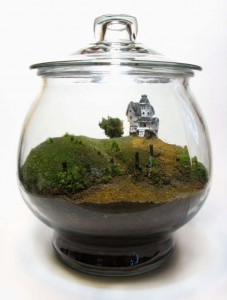
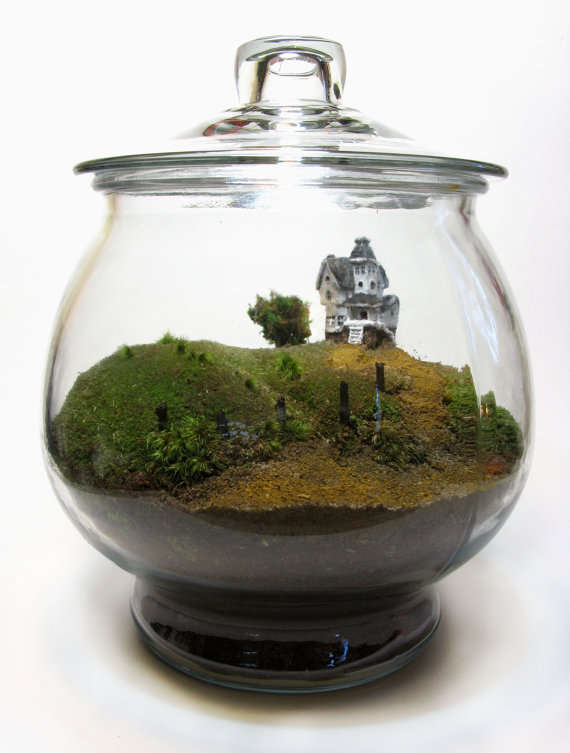
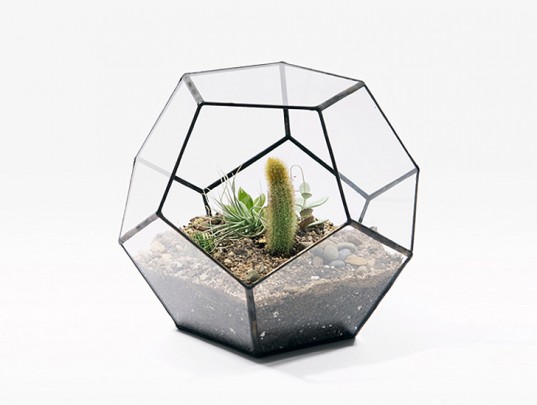
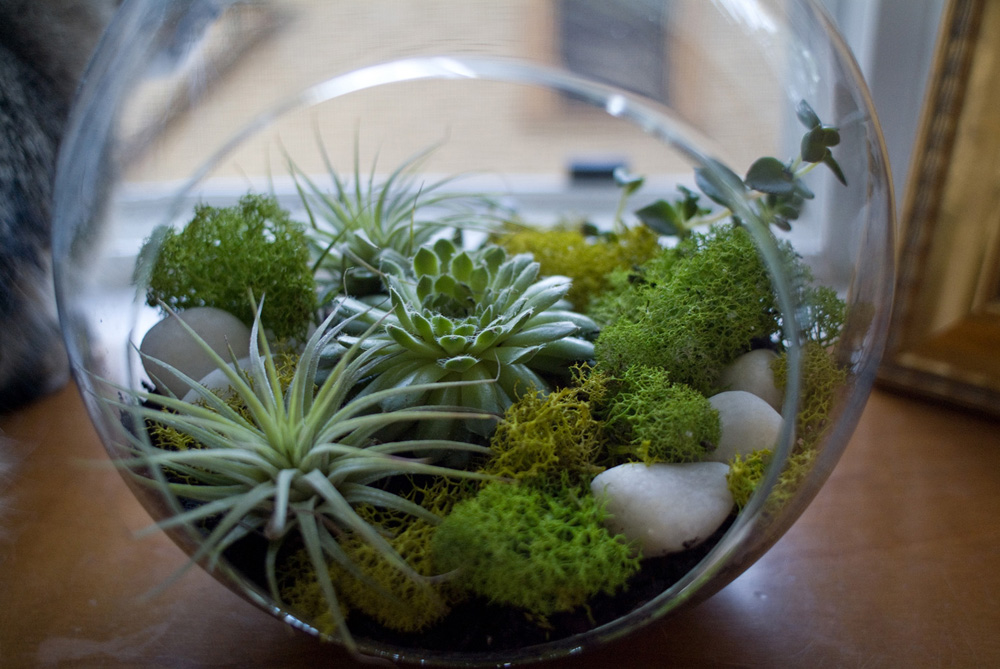
In a world of so much stuff, what idea is worth making in a 3D printer? This question threw my mind into loops and holes and took me into a new world of thought. I jumped around and toyed with many ideas, but I knew I wanted to create something that reminded people, or helped people realize their connection with nature, their connection with themselves as energetic beings, and connection with each other. I want to demonstrate in a beautiful way how we have moved into a makers world instead of a growing world, and how we need to balance our creations and our earths creations. Somehow, in the midst of a walking meditation in the woods with David Loy, I arrived at my idea, making terrariums. 

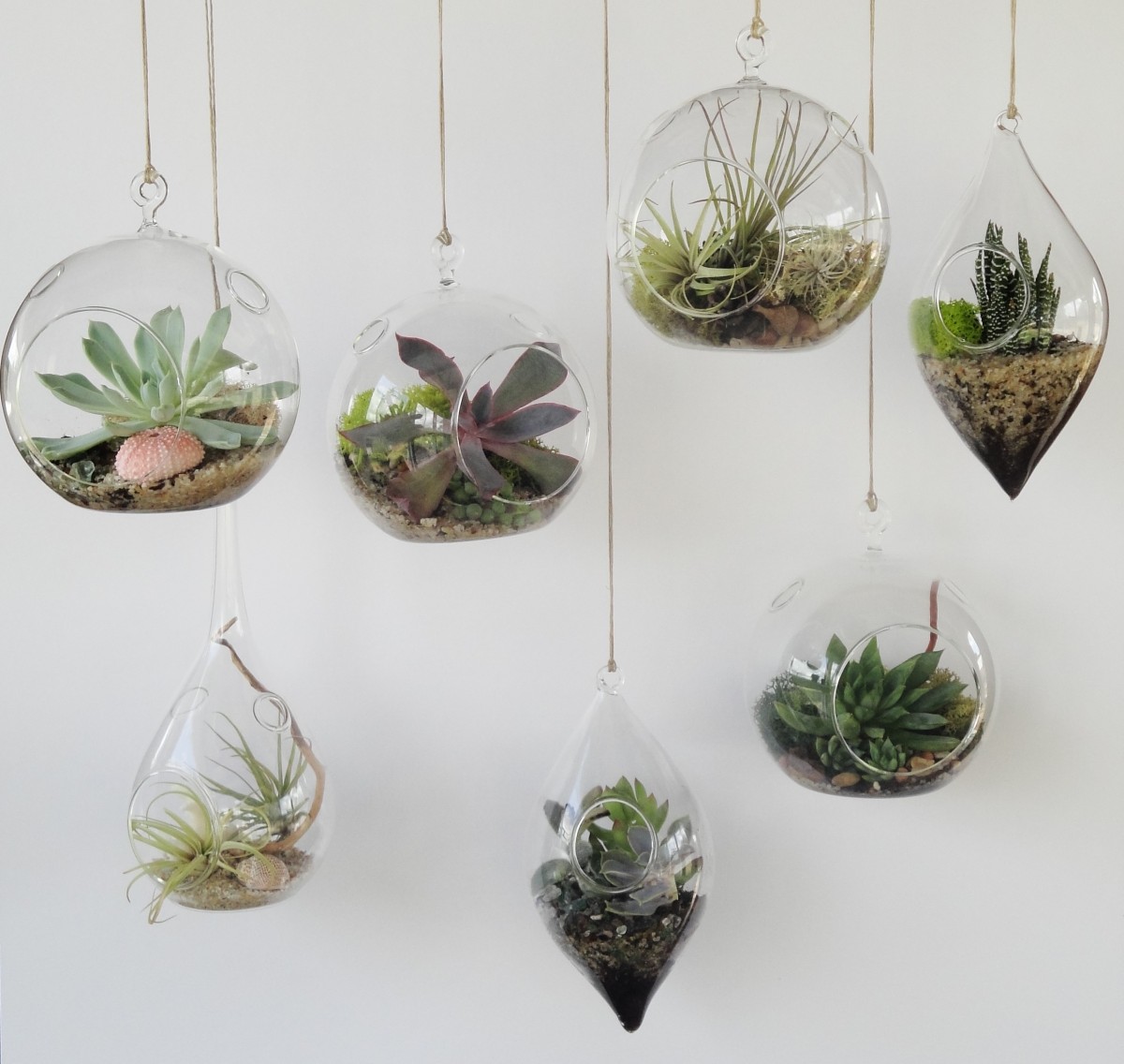
Hanging terrariums

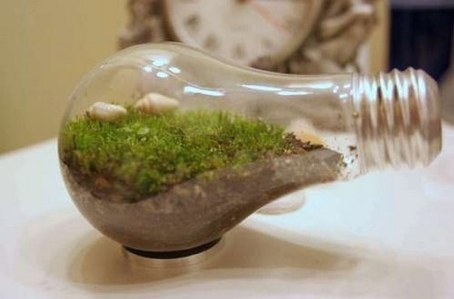
Terrarium in a Light Bulb
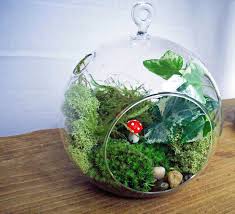
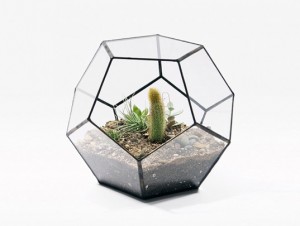
terrarium mushroom terrarium little world terrarium pentagonal 

  In a world of so much stuff, I think art should always be created, especially sustainable art. When I look into a terrarium, I look into a little world, similar to a snow globe, and feel myself a creator of the world, but also know that the plants are growing themselves and that I can only seed or transplant them, but I cannot physically create them. In my project, I want to create a series of three different terrariums; The first terrarium will be completely filled with plants and pieces from the earth, to shape a romantic natural setting. The second will be a mix of earth objects and 3D printed objects, to form a setting that we are more terrarium roundaccustomed too; the mix of plants and our man made objects. The third will be a terrarium of entirely 3D printed objects, creating an artificial and hopefully futuristic scene. Looking at the sequence of the three terrariums, I am hoping the audience will experience the beauty of the natural world and the man made world, and see we must stay in the middle terrarium, where balance between us and nature is present. 
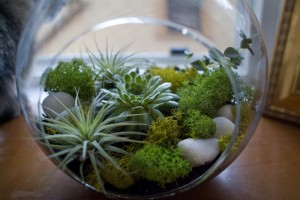
 

  Terrariums are a practical, easy way to bring plants into our homes with very little maintenance. The more people are able to work with the earth and connect with the growing nature of plants, the more they are able connect with the growing nature within themselves and within the earth. With a terrarium, you don’t need a garden, or a certain climate, or in the case of air plants, you don’t even need soil. For the basic terrarium all you need is a container of any size, soil (except for air plants), plants, water, and a spot near some sunlight, and boom! You have a little ecosystem growing! In some cases, people even put lizards or small animals in their terrariums.


  The way I am going to construct my terrariums  is by 3D printing the outside container, adding the soil and plants, and then 3D printing the objects inside. The first won’t have any 3D objects inside, but the container will be 3D printed. The second will have plants and 3D printed objects inside, and the third will be completely filled completely 3D printed objects atop soil. The great thing about terrariums is you can make them entirely out of found objects, but the 3D printer allows much more freedom and creativity for this project. I have not fully decided upon the exact scenes I want to portray in each terrarium, but I going to allow that to grow through practicing what I could actually make in the 3D printers. 


 Rudolf Steiner said. “Art is one of the healthiest, most direct ways to arm and strengthen ourselves against the harmful influences of modern life.” (Art as Seen in the Light of Mystery Wisdom. Lecture)  In the book The Secret Life of Plants, Peter Tomkin says, “The true matrix of human life is the greensward covering mother earth. Without green plants we would neither breathe nor eat.” (Tomkins, Intro viii) Scientists, philosophers, shamans, healers, and many more people agree that working with the land in any way increases healthier lifestyles, but not everyone has the time or space to work with, or even be near the land. For centuries people have seen art and creativity as a way to develop and heal, but not everyone has time or access to the arts. Terrariums are an easy way to blend gardening and art together, and can be done sustainably using recycled materials. While researching my project I found a Meditation and Ecology Center in Richmond, BC that is, “dedicated to inner and outer peace through meditation and to caring for our internal and external environments.” (http://www.sos.org/can/western/page/meditation-ecology-centre-richmond-bc.html). They are a multi faith organization that helps people better themselves through meditation and gardening. Their leader, Sant Rajinder Singh Ji Maharaj, has a poem on their website that described what I want my project to bring for me; a practice of meditation and transformation, while representing my idea in an artistic fashion. I want to show people an easy, practical, sustainable way they can incorporate this into their homes.


Ecology of the Soul


“There is a perfect balance in nature. Our
world, our environment, and nature itself form a
living interdependent system.

The perfect balance of nature which has
maintained life on our planet for millions of years
is being threatened by the very technology that
has transformed the world.

Concern for ecology has become one of the
main preoccupations of the world. Through the
simple process of meditation, we can bring peace
and ecological balance, not only to ourselves,
but to the whole planet.
It is my dream to bring about this harmony
on our earth.”

–Sant Rajinder Singh Ji Maharaj

Biblography:

  • Website Title: Meditation & Ecology Centre
  • Article Title: Science of Spirituality
  • Date Accessed: October 19, 2014


Tompkins, Peter, and Christopher Bird. The Secret Life of Plants. New York: Harper & Row, 1973. Print.

Steiner, Rudolf. “Art as Seen in the Light of Mystery Wisdom.” Switzerland, Dornach. 14 Dec. 1914. Lecture.


3d Printing Scaffolds for Bone Regeneration

3d printing of composite calcium phosphate and collagen scaffolds for bone regeneration

Article review by John Grieco

            This week’s post is a review of a primary research article I found relevant to our program and is a great example of making something that matters.  As many of you have figured out, the task of making something meaningful is not easy.  Also, you are the only judge of what is meaningful to you, no one can tell you that what you make this quarter isn’t meaningful or doesn’t matter.  With that said, I have come to the conclusion that for me, making something that has a positive impact on someone or something else i.e. the Environment, seems to be the most meaningful way of creation.  Not only does this week’s primary research article address how 3d printing can be applied in the medical field but also the possibilities of alternative filament.  I know many of you have expressed the want to make and use alternative filaments and I hope that this post will further inspire you.

The article in review examines the possible use of low temperature 3d printing of a custom filament made from calcium phosphate and collagen to produce synthetic bone graft alternatives.  The authors hoped that their efforts would improve the current techniques used for bone grafts and bone implants.  The technique of 3d printing used in this experiment is similar to what we are familiar with when using the makerbot in that individual layers create the object.  Their process differs with the type of printer and material used.

The printer used is a ZPrinter 450 and the material this printer requires is in the form of a very fine powder.  The ZPrinter 450 was modified to print a mixture of calcium phosphate and an acidic binding solution.  Calcium phosphate is a bioceramic used in reconstructive surgery due to its biocompatibility and similarities to real bone. After designing the specific bone replacement using 3d modeling software similar to what we are using this quarter, the part is processed and then coated in collagen.  Collagen is used to promote cell growth of the human cells cultured on the surface of the 3d printed object.  The authors also discovered that by adding collagen to the calcium phosphate and binding material before printing increased cell viability and strength of the final object.

The newly created artificial bones, in this case a femur, were used to replace broken femurs on a number of mice.  The mice then were monitored over a nine-week healing period and then euthanized so that their tissues could be harvested and then analyzed.  The results of this study found that the new technique used for generating bone scaffolds did not produce artificial bone that was sufficiently osteoinductive.  Meaning that the new 3d printed bone material did not react adequately with the actual bone of the subject’s body and was not able to completely heal.

I am interested in the future application of 3d printing in the medical field and studies like this are continually pushing the technology towards new ways of helping one another.  Attached is a video of the printer our author’s used in their experiment and how it differs from the printing we are familiar with.

Click here to view the embedded video.

source article: “3D Printing of Composite Calcium Phosphate and Collagen Scaffolds for Bone Regeneration.” N.p., n.d. Web. 19 Oct. 2014.

Unconscious Symbols

“What’s with the jungle gym?” It really had been something, fun and Martian-looking. (Doctorow, 100) 


As I was walking about and asking what people were making, the number one answer I got was pretty much, “I don’t know, I’m just doodling.”  As I was looking at all the different things that people were making, I saw many archetypical symbols in them.  The answer of “I don’t know” then became more clear.  People are creating art and much of the meaning/symbolism still lies deep within the unconscious self, such as Carl Jung used mandalas to access the unconscious.

Influence

“The problem is that all this stuff is too specialized, it has too many prerequisites,” Perry said, staring at a waterproof, cement-impregnated bag that could be filled with a hose, allowed to dry, and used as a self-contained room. “This thing is great for refugees, but it’s too one-size-fits all for squatters. They have to be able to heavily customize everything they use to fit into really specialized niches.” -Doctorow, Cory. Makers. New York: Tor, 2009. 93. Print.


As our world becomes more and more filled with those who are “hard on their luck” we should begin to realize that it is only a unique selected few whom are free of this kind of trepidation.  Our entire style of resource collection as been aggregated by several major corporations leaving all those who do not fit into the supply chain either underwater in debt or quite literally wearing the chains of capitalism. To treat those without or little as consumers is exactly why there are antitrust suites taking place in this country with concern to what is being refereed to as “the dollar store wars.”


3D Doodling

alex grey creating“Standing there amid the whirl and racket and undulating motion of the jungle gym as it reconfigured itself, she felt like she’d arrived at some posthuman future where the world no longer needed her or her kind. Like humanity’s creations had evolved past their inventors.” (Doctorow. 102)

This week what struck me was the strive for perfection in the makers.  As people tinkered away they struggled with the translation of the perfect image in their mind to the software. It seems that humans have always strived for perfection and improvement in their world, and this strive is one drive that causes humans to make. Making anything in a sense is a strive for perfection, or the perfection perceived in the minds eye. Everyone has different ideas of what perfection is, but in the world of technology, it seems to me that we are getting rapidly more advanced and thus closer and closer to technological perfection. I wonder if in our time humanity will create something that can surpass the perfection of of humanity itself.


Week 3 observations CST

This week I learned more about the importance of the 3D printer concerning how it will make new connections between mind and reality. For example in class I saw that one guy was able to draw an image on his computer and move the image so that it would be on the object that he was printing. Another guy was taking an idea that he had in his head and was making it on tinkercad. But most importantly I learned more about the correlation between trade and 3D printing. The connection being that in a world where 3D printer’s abilities have expanded and everyone has one trade will decrease and with it the connection between nations. I have yet to fully realize what that could mean.

CST Observations Week 3

This week, the class appeared to be more proficient in tinkercad, even to the point that some had developed prototypical iterations of their blue rabbit projects. The most impressive prototype had to be Steph’s vase, which was rendered with hexagons instead of triangles. Despite being unable to hold water, the printer’s flaws were easily recognizable and even workable into something productive. In the following week of coin making, it appears that the formula for the optimal coin involves the temperature veing between 190 C and 210 C. I am determined to figure out a way around the porousness of the material for future projects as demonstrated by Steph’s vase. As for my chain mail prototype: the temperature needs to be lowered and I need to find an alternative to circles being rendered via triangle patterns.

CST Week 3 – Fishing Fun

“Teach a man to fish, Francis, teach a man to fucking fish (Makers, 93).”

Tinkercad comes loaded with predetermined shapes that can be manipulated to get what you want. However, until one starts to play around with the different parameters, it can be hard to determine how to get your desired shape out of the predetermined shapes. You might have to put a lot of work into it to get exactly what you want, but it can be fun. Other programs have a larger assortment of shapes and you can get what you want with the click of a button. “Work smarter, not harder…” a classmate said, but when taught the fundamentals of Tinkercad, one can find the fun in the work, and become smarter while doing so.

3d Scanning and ‘The Evergreen Natural History Museum’

Michael Baur

Arlen & Sara

Making Meaning matter

16 October 2014

3d Scanning and ‘The Evergreen Natural History Museum’


With the mission of the Evergreen Natural History Museum being “an accessible educational and research environment for students and faculty of the Evergreen State College while developing and preserving the collection of museum specimens for future generations,” (The Evergreen Natural History Museum) 3D scanning technology implementation only seems like the next logical step in both expanding at low cost while preserving forever fragile and irreplaceable specimens. Students at the Evergreen State College produced this last summer a report and exploration into D.I.Y. three dimensional Scanning implementations crafting several models from DSLR cameras to Microsoft’s Kinects. Already this fall: lines of communication have been established and test scans have taken place in museum with one of these same students using some of the specimens. A focus on creating a digital library of scanned specimens and having the 3d models open to the public under our institution as well as printing out reproductions using the Computer Application Lab’s Makerbots.

John Grieco writes about the global ‘take a penny, leave a penny’ mantra of the open source and maker communities at large, how,” This idea of taking and giving within the maker community is based on the development of software and physical designs in which the original creator has purposefully given up ownership.” (Grieco) In this case the remains that have been preserved have already given life to so much education, with several of the most valued items dating from the early 1970’s, yet no amount of attentive care can truly preserve any physical object against the rigors of time. To use the collective time to document and preserve the items today digitally will ensure lasting files that will not corrode away and will be able to be recreated both digitally and physically in the form of 3d prints.

3D modeling with Microsoft’s Kinect is used from everything today,”[its] perfect for hobbyists, makers, artists, and gamers …[it] shows you how to build … with inexpensive off-the-shelf components, including the open source Processing programming language and the Arduino microcontroller.” (Borenstein) This intersection of talents and interests will also have an insatiable quench for knowledge especially that of the natural world. The creation of a library will make access to the current specimens available to anyone who has an internet access forever without having to charge the institution anymore because of the relatively small size of the files in comparisons to the overheads associated with the current ‘physical library.  This will be done with considerably care and skill as both the process of scanning the the handling of specimens are delicate in their very nature.

Key considerations such as lighting, scale of model to distance from scanner, system requirements of computer hardware and software all must be taken into account. While “the movie industry may afford a 3D modeling pipeline system with special purpose hardware and highly specialized sensors that require manual calibration,” the quality of images produced does not need to be limited. (Srivastava)  Patience and proper setup and preparation for specific scans will ease problems further downstream and avoid having to rescan and reengage with fragile items. A working report must remain established between the museum and the scanner as often the process does not avail itself to the individual.

With these challenges in mind the hurdles to cross in order to create a digital library at low cost should be quite feasible for the remainder of the quarter. The chance to engage with rare and exotic specimens from the globe is an alluring draw to this project, but will also provide some of the greatest learning opportunities that are immaculate examples of interdisciplinary work. Both the arts and the sciences have combined into an opportunity to not only expose the world to a small but beautiful corner at the Evergreen State college but also the ability to preserve and even retire seasons specimens will avail new space for new specimens to be collected and processed . Our ability to add to the global take a penny tray with the creation of a digital library was crafted by the same making communities that taught so many already how to create these 3d printers and scanners.


Works Cited

The Evergreen Natural History Museum (The Evergreen Natural History Museum)

http://blogs.evergreen.edu/naturalhistory/

Grieco, John. Physical Computing: Programing, Electronics and The Maker Community. Olympia, 0. Print.

Borenstein, Greg. Making Things See 3D Vision with Kinect, Processing, Arduino, and MakerBot. Sebastopol: O’Reilly Media, 2012. Print.

Srivastava, Daoudi Anuj. 3D Face Modeling, Analysis and Recognition. Remco Veltkamp, 2013. Print.

Token # 2

Michael Baur

Sara & Arlen

Making Meaning Matter

14 October 2014

Token # 2

:: They’re not the sole supplier. That’s what an ecosystem is all

l:: about, creating value for a lot of players. All this competition

:: is great news for you and me, because it’s already driven the

:: price of Home Aware goods down by forty percent. That means that

:: Lester and Perry are going to have to invent something new, soon,

:: before the margin disappears altogether—and that’s also good

:: news for you and me

– Email between Kettlewell and Church in Doctorow, Cory. Makers. New York: Tor, 2009. 75. Print.

One of the cool things is that CNC production capabilities will begin to increase an artisan’s fabrication capabilities, allowing him or her to more effectively compete with the larger manufacturer by increasing the artist’s productivity, and when that happens, everything changes.

Watch for IKEA or Ethan Allen to try to compete with this new ecosystem and to open up a “local” section in their stores and online catalogs. Watch for them to add more customization, local artists, and DIY sections where you can participate in the build or design process. They have to evolve, or, like the dinosaur, they will go extinct

-Hatch on CNC production Hatch, Mark. The Maker Movement Manifesto: Rules for Innovation in the New World of Crafters, Hackers, and Tinkerers. 66. Print.


Our time on this planet has never been more scrutinized and calculated with larger banks of data and new trends to analyze information progressively shaping our understanding of the ‘future.’ We see now more than ever the interconnectivity of public governments and private firms across a pejorative amount of important works of human focus and consciousness, with some but not limited to: media, energy, pharmaceutical practices, banking and commerce.

The crooks still seem to guide the sheep though, and as our stock market of capitalism crashes again this week and fears of Ebola give more power to already entrench institutions; where are our watchdogs? At a time where a company’s value almost doubles as our government claims: “The State Department added that it was getting supplies from “multiple locations around the world, and there are many suppliers.” (Lake)

Operating at the current margins has left us defect of a liquid currency and our current coinage is nothing more than mythical doubloons, dubious as this might sound what is the Federal Reserve to the American Public? Our ability to micro-specific our demands in the future, tailored to our ever whim and careless specification will make a local section at every major corporation a must. Employees will be forced to engage in creative practices just to contribute to the stockpile of ever growing recycled ideas. As it only becomes cheaper to store and analyze this information our creative processes might too one day become predicated and predictable.

As creators our own real advantage in this supposed revolution is that we know what we want supposedly. Yet it won’t be just the falling costs of production or the rise of available usage and access to machines that will drive the force behind this uprising but rather the thoughts produced by our societal leaders that synopsize our global callings. Will our ‘put a bird on it’ mantra of the new maker cities such as Portland really inspire those globally or will those who rise out of poverty with their clever creations be the true idols to be put on our pedestals? Only time will tell, and boy howdy will that time be looked over some fine tooth combs.

Works Cited

Doctorow, Cory. Makers. New York: Tor, 2009. 75. Print.

Hatch, Mark. The Maker Movement Manifesto: Rules for Innovation in the New World of Crafters, Hackers, and Tinkerers. 66. Print.

Hazmat suit maker’s stock up 50% on Ebola fears (CNNMoney)

By: (LAKE), Lakeland.

http://money.cnn.com/2014/10/09/investing/lakeland-hazmat-suits-ebola/


First Week

I have never spent much time experimenting with either 3D modeling or printing, so this first week has been very interesting for me. With the assumption that 3D modeling was a convoluted and difficult process, I had always stayed away from it, but using Tinkercad, I found the act of creation to be intuitive and … Continue reading »

Field notes- week two

Whats interesting about these first pages of the Maker Manifesto is that you really get a sense of how important “making” really is. Without anyone making anything, the earth would be a lot more of a spacious place. It was mans idea to make houses, roads, cars. Pretty much literally all that you see was made by man.

Its also important to look at sharing as a huge asset and necessity to the making community. Sharing these ideas has contributed to many ad-on’s and new and improved ideas. I am looking forward to expanding with my class and to continue to share and make.

Amateur Drawings Wanted!!

Michael Taussig’s “I Swear I Saw This”


This is my reflection on an article written about the underestimated value of drawing and sketching alongside field notes and how this very much relates to our studies this quarter.  Michael Taussig, the author of Pearls, released a book in 2011 titled, I Swear I Saw This: Drawings in Fieldwork Notebooks, Namely My Own and a professional Anthropologist earlier this year wrote an article highlighting some quotes from his book.  This article not only contains some inspiring quotes but also got me really exited about adding sketches and drawings to my field notes in the weeks to come.

This quarter in Making Meaning Matter, we each will be playing the role of an embedded journalist, tasked with observing our classmates as they experience 3d design and 3d printing.  As we observe, it’s important to document our observations inside of a journal or field notebook for later reflection.  This documentation can come in various forms and mediums and Michael Taussig encourages us to add drawings and sketches to our field notes as another ethnographic field method.  Below are a few quotes I found relevant to MMM, from the mentioned article, along with a short reflection.


“…the notebook is actually an extension of oneself if not more self than oneself, like an entirely new organ alongside one’s heart and brain, to name but the more evocative organs of our inner self. What this new organ does is incorporate other worlds into one’s own. Is this not obvious when Benjamin himself states that the genuine collector’s object do not come alive in him, but rather it is he who lives in them?” (105).


Where does one object end and another begin?  A journal is an extension of you, your thoughts and observations recorded to be summoned for later reflection.  Your journal is the connection between you and those you observe.


“…photograph is a taking, the drawing a making…John Berger certainly thinks so, with this enigmatic notion that a photograph stops time, while drawing encompasses it…” (21).

In a class where we will be ‘Making’ most of the quarter I thought that the above quote seemed appropriate to share.  Taussig explores the idea that photography is an act of ‘taking’ that stops time and drawing an act of ‘making’ that encompasses it.  By drawing an observation you are making a new interpretation of this observation instead of just taking an exact copy of it.


“We amateurs feel little hesitation in speaking, although we are not professional speakers, just as we run, although we are not professional athletes, make love, swim, or email, et cetera. Most of us even live life amateurishly. But drawing, for the amateur? off limits. Drawing is precious in every sense of the word, except for the Littlies” (33-34).


Many of you, like myself, don’t draw because we just don’t see ourselves as very good at it.  It is important to note that we do many things everyday that we may not be the best at.  Taussig reminds us that we speak although we are not professional speakers, we run although we are not professional athletes and in fact most of our daily activities are quite amateur.  Don’t deprive yourself or others of something that you may not think you are good at.  There is value in all expression, draw in your journals, as it is just another interpretation of your observation, an extension of your mind.


I hope this blog post inspires you all to go check out the article written about Michael Taussig’s I Swear I Saw This: Drawings in Fieldwork Notebooks, Namely My Own and explore the many other quotes from his book.  Lets get excited about our task as Ethnographers and enjoy the many creative methods of recording our observations.  A copy of the actual book will on reserve for our class at the library for those interested in the full text.

CST Week One

One fellow student, that I did not catch the name of, said that modeling using TinkerCad was like “sculpting on a computer.”  Are we moving further and further towards doing everything on  a computer?  We can grocery shop, communicate, do almost anything on a computer.  At what point do we decide that we prefer real-world activities more than their digital counterparts?  More and more things are becoming possible with computers, and while I personally love this, I know many others don’t.  Is seeing a bunch of teens with their faces glued to cell phones any different from a bunch of teens with their faces glued to a book?

Week Two Makers Quote

“… my problem isn’t piracy, it’s obscurity” 

This directly flies in the face of the fight that the music industry is fighting. Many artists, if they aren’t completely motivated by turning a profit, would like nothing more than to just have people listen to their music, rather than fading into obscurity. To them, piracy is free exposure, more people listening to what they have to create, people sharing their music with others. Some argue that piracy is a crime. I, and Doctorow seems to agree, that it is the opposite.

Learning the Limits

One thing I’ve noticed quite a bit as we all got started on our mini-projects was that we were running into limits with the machine right off the bat.  I, for one, was thinking that I could make a cool muti-color patterned coin. When I exported the coin, I realized that there was no multi-color preferences available.

I saw that many others had Ideas that they were working on, but the detail many people were perfecting just wouldn’t come out the same as what was designed.  I think that limits can be a wonderful tool to focus and inspire creative solutions and thinking.

Week 1 CST observations

Throughout observation of the Blue group, I got to observe people testing their ideas of what parameters they could practically print. I really enjoyed being able to first observe others create their coins, as this gave me a better scope on what to test for myself. I really found it interesting to see the personal interpretations of what each would have on their coin. And although the learning curve on something of this matter would seem to be very large, every person in the class had a good grasp of the general idea. Overall, I can’t wait to see what our class produces with their minds, as the printer does with its mechanical hand.

« Older posts Newer posts »