
“That body schema locates us within the perceived world; it forms the basis for our sense of our boundaries, where I stop and you begin; how responsive I am to outside information and how permeable to human intercourse. The shaping process is defined and transmitted in our social institutions: religion, the military, fashion and the media, sports, art, orthopedics. They reflect the tenacious forces of gender, ethnicity, and social class. Styles of shaping bodies parallel other expressions of a society’s tastes in such forms as architecture, music, dance, and art.”
(Johnson)
Last monday, I’d be lying if I said our class was productive. Perhaps people may have been antsy from the weekend’s activities, we had a hard time transitioning our collective focus, and productivity seemed to be sparse. Although there was the exception of the addition of the scanner that Jon and Michael brought in. I think the addition of this tool will bode well for interrogating virtuality versus materiality because it really captivated everyone’s attention. I have been meaning to get .stl scans of my body because of the possibilities of the creation of objects that interact with the body’s structure. At least in my observations people found difficulty in getting the scans of their bodies to co-operate in the Blender software when changing the position of limbs, which makes me question the feasibility of working with scaled models of the body in order to make material to interact with it outside of the virtual. I have been very obsessed with the idea of totems and how they relate to the makeup of the ever evolving+advancing mind and body, so I would like to get a 3d rendering of myself, send it to shapeways and turn it into a usb of my memories in the forms of .jpegs, .mp4s, .mp3s, and .stls, making a physical totem for my virtual totems.
Category: CST (Page 5 of 8)
“Time flies like an arrow, fruit flies like a banana. This was funny in just that way: you expected one thing, you got something else”….What happens when your expectations fall apart?
(Doctorow 172)
This past week during the Tuesday CST lab we explored Adobe Illustrator. My partner and I discovered that it was simple to draw and connect lines, make unusual curvature and then export the shape to TinkerCAD. It was very exciting and cool to see a shape, or in our case a mess of lines and waves, move on the screen from flatland to the Tinkering platform, taking full bodied shape.
We then found out that the design could not be printed. This was an important moment, because although I have witnessed many designs fail in the print phase, whether by design or printer error, I have not heard or seen a design that was denied before it even got to the printer. The print design almost looked like some of the scrap folds I’ve been pulling out of the trash boxes. This was very interesting as this design was representational of what cannot be done, or at least representational of what is too risky to be attempted, but also representational of what happens in the printer all the time.
“But Perry’s dad almost never made chords: he made anti-chords, sounds that involved those mysterious black keys and clashed in a way that was precisely not a chord, that jangled and jarred.”
“The anti-chords made up anti-tunes.”
(Doctorow 172)
Vendors from the shantytown headed home and came back with folding tables and blankets. These guys were business people. They weren’t going to let the law stand in the way of putting food on the table for their families. (Doctorow, 216)
What will the motivation be that encourages my classmates and I to continue on our projects, even as some of our first iterations fail? In Doctorow’s book he describes the motivation of the street vendors being propelled by their families; businessmen who know that their continuation to sell is correlated with their families eating. The meaning that we have all found in our projects has begun to be the driving force in our class to continue working. My peers and I seem to think less of credits or class hours and more about workplace time and troubleshooting. For example from the first, to the second iteration, my glasses frames have improved but are still not the perfect fit for anyone’s face. I have this need to successfully print a pair of glasses that I made from the beginning to end, and like the vendors, there is nothing that is going to stop me.
“We don’t care about what you did yesterday-we care about what your going to do tomorrow.” (Doctorow)
This quote from our readings seems to resonate with me the most. For when reflecting on my notes from last weeks time strolling around observing and interacting with my fellow students, I noticed a sense of timeless focus where each student was totally engaged in what they were doing in that here and now. Seeing the students forget about themselves, calendars, and clocks is a lively creative feeling. So it really is cool we have been assigned a project that really requires some mindful work and tends to make time dissolve, which time dissapearing is splendid for the present moment is really what there is and all there is.
“Since Fatkins, I’ve felt like—I don’t know—a real person.” (Makers, 207) “The nature of a…
“Stories are how we understand the world, and technology is how we choose our stories.” (176)
In the talk that Jed gave on tuesday, he said that “when you are immersed in language, you don’t pay attention to it.” How then, might we apply that to this notion that technology is how we choose our stories? We are arguably very immersed in our technology, and it would be a departure from the norm to step back and look at how those stories are made, or what they are even. Jed talked about language becoming palpable when you are forced to pay attention to it, and I would like to end this thought with a quote from a linguist referenced in both my and Jed’s bibliography: “The artist-innovator must impose a new form on our perceptions, if we are able to detect in a given thing those traits that went unnoticed the day before. He may present the object in an unusual perspective, he may violate the rules of composition canonized by his predecessors.” The key to making meaning palpable is through ostranenie, or defamiliarization-or Ezra Pound’s “make it new”. Why then, does the word “weird” have such a negative connotation?
“The next morning Perry found himself desperately embroiled in ordering more goop for the 3-D printers. Lots more. The other rides had finally come online in the night after indeterminable network screw-ups and malfing robots and printers and scanners that wouldn’t cooperate” (Doctorow 201)
Perry and Lester are two people who are constantly solving problems like this only to be replaced by two more, and their struggle kind of reminds me of how we, even through our class’ hardware and software uses (e.g. projectors, printers, networks), are constantly developing and troubleshooting. This and the development of our Blue Rabbit projects have been great learning experiences to watch as well as participate in, as our concepts become complicated in their slow transition to the real world. I was really interested in this weeks class discussion about the possible ways to make a yurt skeleton with our subtractive tinkercad software, and hearing around four or five entirely different solutions that all work well. Examples like this only strengthen my resolve that our group oriented classes are beneficial l;earning opportunities. My project developed this week in the sense that my required parts list for my scanner expanded. I find this reminiscent of the quote I took about Perry from this weeks readings.
“This ambulant form of scholarship thus acknowledges an object of study that is always in the making and also always vanishing.” (Johnson Chapter 4)
“Technology is how we choose our stories.” (Doctorow 176)
“Our stories are about the world, so our stories are about people figuring out what’s causing their troubles and changing stuff so that those causes go away.” (Doctorow 176-177)
How can expressing body-friendly academic movements lead to a different outlook on the way proffessors teach? The human body’s constant change relates to that of technologies’ constant change, in which we are never at a state of un-changed devolopement or shapeless design. Even when we express our emotions through body movements we seem to change our outlook on education, which leads me to ask if this is an internal feeling diverged deep inside of all of us, or a feeling that gets worked out and shifted into form by us through our expressive body-movements, also known as “emotion dances.” This relates to Malafouris’s studies on the shaping of clay, except the clay may be our own feelings or emotions. I too can be able to find internally, something to be angry at, and express that anger through the frustration of the educational system that we all feel.
“Weird, yeah? And the driving! Anyone over the age of fifty who knows how to drive got there by being an apparat in the Soviet days, which means that they learned to drive when the roads were empty.” (Doctorow 167)
I was pleasantly surprised at the work that Daniel Loose is doing. He was working on creating chain mail in tinkercad. I didn’t want to disturb him too much with questions but I watched as he replicated the empty circles and stuck them inside one another. I know his idea for the Blue Rabbit project to create a bra for his trans friend that can grow and change with them on their journey. Not only is this a pleasant thing to do for a friend but it would look amazing in chain mail. I cant wait to see the finished product.
” ‘Dahling,” she said, ‘burritos are so 2005. You must try a papusa – it’s what all the most charming Central American peasants are eating now.’ ” (Doctorow 168)
“But you made it, right? It didn’t just. . . happen, did it? (Doctoro 190)
What happens in a creative collective, especially when the whole is only a reflection of its parts, truly is exciting. We are all creating one small piece, of which I’m sure a statement could be drawn from the collective. I wonder what all our projects sitting side-by-side will look like. A reflection of the course, our studies, our views of the world, our fears, our love?
“No, it just happened” (Doctoro 190)
Musically, I’ve always been a sucker for reverb, or an echo that returns quicker than the completed utterance of the origin sound. Here’s a clip of people singing together.
“You want to encourage this?”
“Don’t you?”
This week I spoke with Chrissy about how we need to go through the CAL staff to actually 3D print something. While I understand why such measures are in place, this is a little bit frustrating. One of Chrissy’s frustrations came from the fact that we aren’t really getting any experience with one of the biggest steps in 3D printing. It seems strange for us to have no interface with the printer. Each step removed from the process takes away from the feeling of actually creating what we are printing.
Chrissy
CST Week 5
“What might it be like to sense more fully and to move more freely in classroom space, to stand, to turn and look around, to sit in different configurations, to speak with each other with a more refined sense of each other’s faces, movements, the felt sounds of each other’s voices?” (Johnson)
“This is what the New Work was all about: group creation!” (Doctorow 177)
print
verb
1. produce, especially in large quantities, by a mechanical process involving the transfer of text, images, or designs to paper.
noun
2. an indentation or mark left on a surface or soft substance by pressure, especially that of a foot or hand.
make
verb
1. to bring into existence by shaping or changing material, combining parts
2. to produce; cause to exist or happen
What are we collectively producing? Is it thoughts, words, ideas? Or is it images, shapes, things? It’s week 5 and the machine still has a low hum in it’s engine. CST/3D lab seems to be less about learning how to 3D print things (making), and more about why you should 3D print things (matter).
Making is just imagining if you’re not actively messing up. Ideas are silly without mistakes. And it’s naive to think that what’s on the screen remotely embodies the final product.
When a print is made, how much of it is made by us? In the human:technology dichotomy, is there a certain extent to which we can claim our own? Perhaps what is holding us back from printing/making/producing is the lack of impression from us onto the printed object.
It doesn’t matter. It’s time to put those printers to work.

“The extent of mutual comprehension can only be ascertained through social constructs of tests and consensus” (Johnson, Body Movements).
“He had the work and the people, and who needed anything more?” (Doctorow, 230)
Can comprehensive group learning ultimately be attained through the use of a single strategy relative to cognitive teaching and instruction?
Is the concept of structured isolated learning rendered completely useless in the process of acquiring a more critical understanding of a problem or social occurrence?
The classroom experience in relationship with a pursuit and yearning for more knowledge, can sometimes be subjected to disengagement and motivationally draining requirements within a group setting. As the current state of the U.S education system is in rapid decline it is becoming harder than ever before to promote anti-assimilation towards pre-imposed cultural settings operating within the atmosphere of a modern classroom. I find it very problematic however, to justify a unified commitment to a single directing structure for taught curriculum. Are the constructs of social interaction beneficial to the creative thought process, or can embracing isolation and the process of thoughtless obedience be just as important to the developing mind? Are classroom “distractions” really justified as distractions at all when referring to subtle changes is physical positioning?

This week my tinkercad account was having some problems and I thought that my account had gone offline along with all of the other stuff I had designed. This really got me thinking about the connection that I had with the objects that I had designed. To me the objects were one step away from being real, so I always considered them to be real. Then to almost lose all of the work, all of the objects really was a shock to me. It really helped remind me of what was real and what was not.
“As a body in motion, the writing-and-written body puts into motion the bodies of all those who would observe it. It demands a scholarship that detects and records movements of the writer as well as the written about, and it places at the center of investigation the changing positions of these two groups of bodies and the co-motion that orchestrates as it differentiates their identities. This ambulant form of scholarship thus acknowledges an object of study that is always in the making and also always vanishing. It claims for the body, in anxious anticipation of this decade’s collapse of the real and the simulated into a global “informatics of domination,” an intense physicality and a reflexive generativity.” (Foster 16)
What are the patterns that we remember? Why do we return to them in moments of making? Of vanishing?
( r e p e a t / / R E : P E A T )
( r e i n s c r i b e / / R E : I N S C R I B E )
( r e p r e s e n t / / R E : P R E S E N T )
In performing an either expected or unexpected act of failure, how do we observe a separation of self? Between mind and body, the internal and external, movement and stillness?
Where are we left in the (sea)rch of re:flection?
At the edge of a shadow?
Or directly in the shadow’s darkness?
During week five’s CST lab I observed 3D printing//scanning of the body. I watched as student J scanned student L. I watched as student L stood in front of me, and then again as student L appeared on the screen in student J’s hand… as a green mass, in stillness, repeating… a reflection. I imagined then the possibility of reinscribing the body through the process of 3D printing. What would it mean to take the body outside of its “natural” setting and “perceived” world? How would it effect our sense of boundaries, between where I stop and student L begins? Between where student L stops and the scanner begins? Between where student L stops and the re:plicated object begins?
How is this “shaping of the body” parallel to the expression of the technology itself? What do we do with our knowledge of this parallel? When physically turning ourselves into objects (to later be manipulated, transformed, misinterpreted, held in the palm of a hand) what can we do to maintain a sense of self and safety?

http://www.raspberrypi.org/pi-3d-scanner-a-diy-body-scanner/

http://www.cyberfx.com/3d_laser_scanning.htm
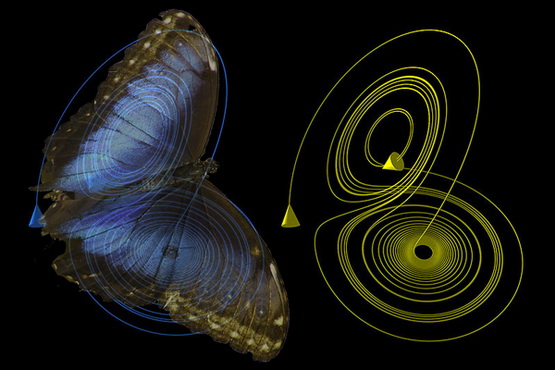
Sometimes he grunted or scatted along with his playing but more often he grunted out something that was kind of the opposite of what he was playing, just like sometimes the melody and rhythms he played on the piano were sometimes the opposite of the song he was playing, something that was exactly and perfectly opposite, so you couldn’t hear it without hearing the thing it was the opposite of” (Makers, 172).
Today we understand a little more about the world, so our stories are about people figuring out what’s causing their troubles and changing stuff so that those causes go away. Causal stories for a causal universe. Thinking about the world in terms of causes and effects makes you seek out causes and effects–even where there are none…It’s not superstition, it’s kind of the opposite–it’s causality run amok” (Makers, 177).
My experience in the CST lab this week was sparse to none. I was distracted from my ethnographic responsibilities by my sick child. But, as I reviewed my reading of Makers this week I was struck by Perry’s memories of how his father would play music for him when he was sick. Despite the coincidence, it wasn’t because I was also home with my sick child; it was for Doctorow’s italicization of the word opposite in both this scene, as well as the scene when Lester and Perry are attempting to articulate the evolution of the ride. Causality run amok. How many of our projects will fulfill anything remotely close to the original intention? Will it even matter? Perhaps, what matters is what we discover about ourselves during the process. No causality happening here, just a story.
“‘Bored,’ ‘Stiff,’ ‘Wanting to leave,’ ‘Intimidated,’ come the typical responses. It never occurs to them to change this very old school form unless they are explicitly invited to do so.” (Shapiro)
“So that the students see only a few backs of fellow students and the lonely expert in front” (Shapiro)
While reading the online article (especially the top quote), I found myself picturing a seminar where everyone is standing (or sitting if they choose to) and casually walking around shmoozing with each other as friends, discussing readings. Maybe with a snack table and some punch. I doubt there would be the seminar tension that comes from the tables and chairs. It would most likely feel like a book club. It makes me wonder if it would be as productive as a seminar. When seminar gets off topic, however, it is one conversation that can be redirected. With many people discussing the readings amongst themselves, it would be hard to notice or take action if conversations stray.
Then I think of this quote:
“The chairs were so ergonomic that they had zero adjustment controls, because they knew much better than you ever could how to arrange themselves for your maximum comfort.” (Doctorow 195)
In relating this scene in my head to the scene of the previous quote, I wonder if there will someday be a technology that knows how to arrange learning environments according to the individuals in the room. Can technology really know us that well? Is there any way for us to make it know us that well?
Can there be technology that listens to your body more than you do. Making decisions for us by understanding us better than we do, that looks like inventions/technology evolving past its makers.
An interface with ease in mind
Logic has long had the reputation of being one of the deepest, but most challenging DAWs to use. Since Apple acquired Emagic (the German company that developed it), it’s set about making Logic easier to use. Logic Pro X takes a major leap in that direction. [http://www.macworld.com/article/2044283/logic-pro-x-loses-none-of-its-power-gains-great-new-features.html]
As I watch people struggle with tinkercad, I wonder to myself if this technology is hindering or inspiring creativity. It seems that there should be easier software to use for making objects that mimics the way we form actual materials such as clay and wood, and there should be software designed to make specific types of 3-D objects such as a “design your own electric guitar body” program that had all the technical information programmed into the infrastructure so that all one has to worry about is creating a design. Logic Pro 9 used to be a professional audio recording software that was very detailed and took a person that had specific knowledge of advanced audio recording software to use. Then they came out with Logic Pro X which anyone with basic computer skills could use and understand and also kept the functionality of a professional software. Until the day comes when a CAD software becomes intuitive and user friendly, the creativity of the masses will be hindered because of technical difficulties.
{I decided to reflect on Jed Rasula’s talk because our CST session did not have time to observe on Tuesday}
What is meaningful about this: “But Perry’s dad almost never made chords: he made anti-chords, sounds that involved those mysterious black keys and crashed in a way that was precisely not a chord, that jangled and jarred”? – Makers, 172.
“(Y)ou expected one thing, you got something else, and when your expectations fell apart like that, it was pure [ _____ ].” -Makers, 172.
“Periodicity is recognizing the challenge of any organism to go along in any continual flow.” – Jed Rasula
Last week Jed Rasula spoke of the possibilities and pitfalls of language. Indeed, language shapes what is known and potentially controls what can be known. In this, language is the color of our ordered world and is subsequently tied up with our expectations.
DOES A SHIFT IN LANGUAGE NECESSARILY DENOTE A SHIFT IN PERIOD?
(Can we shift our structures of engagement with each shift in language?)
If we are approaching each new language in the same manner, does anything really change?
cognizant inhabitor of thresholds:
Is it possible to always be between periods,
in a continual state of becoming?
In this inhabited state,
improvisation would be our language (the body), and our use of it (the enactment).
Can we reflect experimentally?
Why do I keep communicating with the process of 3Dprinting in familiar ways?
By embracing the weird, the queer, the “jangled and jarred”, I open myself up to that space between places,
between what is known and what will soon be known.
Yarden Solomon
(Kettlwell and Suzanne)
“God I miss it,” he said. “Oh, Suzanne, God, I miss it so much, every day.
Her face fell, too. “Yeah.” She looked away. “I really thought we are changing the world.”
“We were,” he said. “We did.”
“Yeah,” she said again. “But it didn’t matter in the end, did it?” (Doctorow, 169) In this world of constant innovation, do the innovations in the end matter? We want to create, but is it about the end product, or about the creation process itself? In this class, we are spending most of our time on the process of discovering our project and what that means to us, and learning the journeys others took to reach their destination. In Makers, one of the intentions Doctorow may have had in failing Perry and Lester’s project, is showing that we grow most from the journey, and it is the journey that matters more then the end, material product.
“What was the sorrow? The death of the new work. The death of the dotcoms. The death of everything he’d considered important and worthy, its fading into tawdry, cheap nostalgia.” -Kettlebelly
Doctorow, C. (2009). Makers (p. 169). New York: Tor.
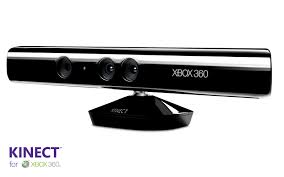
I help John scan a 3D virtual image of our classmate Loren’s body using an x-box kinect that will take the 3D model scan and transfer it to Johns labtop and save the virtual model with skanect, a free program that can save files as an STL for 3D image designing programs like tinkercad, blender, or 3D printing in makerware. After designing the scan box platform and getting Loren within its parameters, we slowly circle her, scanning every angle to create a 3D model, literally objectifying her. The potential for scanning and sharing downloadable, printable “things” is mind boggling. Soon online clothes shopping you will be customizing everything to your specific body and downloading it to 3D print. This gives me the idea to get an x-ray of my own body part, such as my hand, and transfer that image into a 3D model for printing to get a replica of my own bones to tinker with!
Chuck Neudorf
Week 6
“Do you mind if I take notes?”
He gulped. “Can this all be on background?”
She hefted her notebook. “No,” she said finally.
This week in print lab we took a slightly different tack. As a group, we tried to find a way to implement a particular design. It was interesting because a lot of ideas were attempted before a solution was found, but the issue I had was that it wasn’t my design. I had just made some headway with the project I’m working on so it was difficult for me to focus on something else. Of course, when I try to split my attention between two threads, I lose both of them. I’m always amazed at how many times I have to see something before I really own it.
“What happened?”
“Oh Christ. Who knows?” (both from 113, Makers, Doctorow)
It feels like a lot of us are losing control of our thoughts. People are still playing around in TinkerCad, but now that they have an idea of where they’re trying to go, they’ve started trying to get there. The trouble is they don’t know how to do that entirely. I‘ve noticed that due to the increasingly dystopic nature of Makers, many students are having trouble relating the novel to what we’re doing in class, myself included. This leads to many of us not knowing what to ask ourselves or others while doing observations.
“What would Suzanne do if there wasn’t anything going on?”
-Sarah Williams
“She would leave and move on the next great story.”
-John Grieco

This week during our observation period I felt as thought there was a lack of motivation and creative energy amongst my peers. Perhaps this was due to the fact that we had just reached the halfway point of the quarter and the information that once inspired us had become stagnant. After bringing this up with Sarah, she recommended that instead of complaining about the lack of inspiration I should become the inspiration. The role of the observer quickly switched to being the observed. I decided to introduce a new concept of 3d scanning as it relates to our program to those interested and this created an inspirational spark many needed to fuel their Blue Rabbit project.
This week Suzanne made a comment ” No harm no foul”. I like that because it makes sense. Everyone is always working together in class, no matter the task. Its nice to see everyone learning from each other. I think that is a really awesome thing. Even if there’s ever a disagreement in seminar its not a worry, everyone gets through it. We agree everyone is entitled to their opinions and when we disagree no harm no foul right.
“The Carballos do not feel particularly safe, secure, or comfortable. Now they’ve been robbed twice and are scrambling economically and have moved around so much that they feel like they have few friends. Times are hard; they have had to move in with Marta’s aunt. Juan Carlos pinned his hopes on a Kreonite machine that could develop large transparencies for commercial use – the only machine like it in their town of Salta.” Material World p. 125
Simple technologies put in the hands of an individual with a creative mind and a creative goal can change the world. Give people the skills and tools to affect their environment and they will, especially if some impasse had impeded them without those skills or tools. Restrictions and setback strengthen the foundations of a process like the tempering of a blade. Observing the opposite group tinkering with 3d design programs throughout these weeks I have been witnessing people engaging oppositions to their success with tools previously unavailable to them: computer knowledge, 3d printers, and experts. How frequently are one’s dreams of creating something, doing something, building something deemed impossible when the tools or the expertise are not present? Do the tools necessitate the dreams or do the skills necessitate the dreams? In a story I wrote last year called “Space Pirate” I explore a scenario where a man’s singular vison of spaceflight overcome his lack of tools, expertise and finance. Here’s an excerpt:
“Day and night were spent drawing up diagrams and schematics, making lists of parts to acquire and books to steal from the library. Fred was the first space pirate. Students noticed a man at universities sneaking into lectures by chemical propulsion specialists, aircraft engineers, rocket scientists. Campus guards were told to watch for a man watching through windows as students were taught welding, riveting, carpentry, woodworking and forging in community colleges, but they didn’t know that he was sure to tape the latch as they left so he could practice at night. Wrecking yard security officers were on the lookout for an average build man who was seen in surveillance records hitting junk yards in the area nightly, tossing whatever he could over the chain link fence before the dogs got to him. Librarians all over the city remember a man inquiring about books containing information about electrical engineering, home improvement and astrophysics and when they went to check on his progress they found whole sections of the library cleaned out. The news of a local television station reported that a salvage boat captain allegedly had his vessel stolen out the marina near the waters where expended rocket boosters from an Apollo mission had been jettisoned before exiting the atmosphere. The manager from a novelty food store found his entire stock of Food-in-a-Tube, all six flavors including mashed potatoes and gravy, spaghetti with meatballs, chicken noodle soup, even waffles and maple syrup had completely disappeared from the minute backroom warehouse of his small specialty grocery. Wholesaler and local grocery stores alike would be stuck ordering twice the amount of plain sugar and potassium nitrate (stump remover) week after week without anyone putting together that these are the exact ingredients for homemade rocket fuel.”
“So, too something about the collecting urge, the need to get every card in a…
“I thought we should get you an antique tool, something so well made that it was still usable.” (187)
I was thinking a lot about where the crossroads between wood, metal, 3d printed stuff, and our bodies lie. In order to make the 3d printer a more sustainable and economic tool, we may want to utilize older things to use as parts of tools or instruments. The question is, what is so well made that it is still usable? It would be quite the project to print only what was absolutely necessary and use recycled materials for the rest. You could print the body of guitar and use strings and parts from an otherwise broken one, or instead of using precious time and filament to print a handle for a tool, you could use a piece of wood.
Lauren
CST Week 5
10/27/14
“In VEs (Virtual Environments), a quasi merger of embodied perception and externally transmitted conception happens at the level of sensation. The appeal of this electronically facilitated merger is reflected in the current grown of cultural and academic interest in the cyborg- the human-machine…”
-Digital Sensations: Space, Identity, and Embodiment in Virtual Reality
Where do we end and machine begin?
Technology is striving to shrink or exterminate the gap between human mind and computer capability. Parallel to this is the play between artist/artisan and computer science as a new tool in the artists toolbox. From my observation of the class’s way of interfacing with Tinkercad, the transition is in its young adult life, but by no means matured. There is the angst of wanting. A yearning for the product to be a refined work, and yet the actuality is an experimental shout into the material world. A culmination of basic shapes into slightly more complex structures that are seeking to be fully formed. But how can a (sub)culture already critical of plastic reproduction take printmaking seriously? Only when our identities become involved, or personal investment in the object itself, can we overlook the tackiness of young adult plastic. So where are we headed? As our class becomes for fluid with Tinkercad, and our theoretical ideas progress, we are headed in the direction of modern sculpture and biographical objects.
“Businesses are great structures for managing big projects. It’s like trying to develop the ability to walk without developing a skeleton. Once in a blue moon, you get an octopus, but for the most part, you get skeletons. Skeletons are good shit.” (Doctorow 140)
Why is Evergreen so great at churning out internally-motivated entrepreneurs? Are the structures with which students develop their projects parallel to business structures, making the transition organic? Talking to people about their blue rabbit projects often seems to be the echo of a business pitch. Profitability and potential for problem solving seem to be huge motivators. Even the more artistic projects address these. ‘Murica!
October 27th, 2014
“You can use evolutionary algorithms in the sim and come up with really efficient designs, in theory. And computers are cheaper than engineers.” “Is that why you were laid off?” Suzanna said. (Doctorow,73)
One of the Questions i choose to ask the fellow Makers in my class last week was “If they thought that the 3d printer could one day become transparent?”
Chuck Neudorf answer to my question was the one that got me thinking most. “The current mechanical limitations are the only thing holding it back from becoming ‘transparent’ .”
I believe this to be true and it lead me to another Question. If the 3d printer does become transparent what would be the implications of this? What jobs might we loss and might we gain? How might the labor force be affected? Can this be a good thing?

“Something about the collection urge, the need to get every card in a set, and…
“We don’t care about what you did yesterday-we care about what your going to do tomorrow.” (Doctorow)
During this week, I enjoyed seeing everyone’s post and how different everyone took out of what we were doing and what everyone was working on for there project. It made me think deeper about my project culturally and how bells had a different starting off point and meaning in a lot of different parts of the world. While tinkercad wasn’t working I found the other program that we were using to replace it for the time being way more difficult for myself to navigate around , but figured it out eventually with more time. Each day I feel as though more and more thoughts pop into my head about my project and very glad there are options to us for more materials to use for our ending idea. Sarah pointed this website out to me called emerging objects which I found to be very fascinating to look at .I loved seeing what people had made out of edible materials. This week I plan on finding out where I can go to make my project out of metal .
“What the hell do you get two guys who not only have everything, but can make everything” -Suzanne & Kettlewell
“The only way to make a glove this good would be to fab it and then give it to several generations of baseball players to love and use for fifty to a hundred years.”
The question Kettlewell and Suzanne had to ask themselves when looking for a present for Perry and Lester struck a chord with me. In this near future novel, practically everything that exists can be made and reproduced on the cheap. This got me thinking about our blue rabbit projects, the more love and ‘meaning’ that is put into every project the more value it will have. A persons project has a chance to carry generations of meaning if it lasts and can be used and reused, just as the old baseball mitts were so precious, because the love and meaning that each glove held, was much bigger than fabricating the glove its self.