Making Meaning Matter

The Evergreen State College

Category: CST (Page 6 of 8)

CST Week 4

Chrissy
27 Oct 2014

Does Tinkercad give us “the ability to subtract the stuff that [feels] wrong and reinforce the stuff that [feels] right”? How does this technology tell a “story [about how] we understand the world?” (Doctorow 176)

“Today we understand a little more about the world, so our stories are about people figuring out what’s causing their troubles and changing stuff so that those causes go away. Causal stories for a causal universe. Thinking about the world in terms of causes and effects makes you seek out causes and effects–even when there are none” (Doctorow 177).

I wish there was a Tinkercad for Tinkercad. It would come with a pair of scissors, hot glue, and a pencil with a giant eraser.

The problem is learning how to manipulate physical forms without your physical body. There are  limitations while making a 3D printed object. We have so little control over how something is actually made because of the language barrier between ourselves, Tinkercad, and the 3D printer. Their language is 0’s and 1’s and I’m trying to tell them a story. How can I put my words into form?

The solution is attempting to learn the way that Tinkercad talks. It’s about becoming more acquainted with making from the mind instead of the body. This means turning limitations into opportunities to make something you couldn’t without 0’s and 1’s.

“Using computational simulations as a method for gaining information about the human mind, you might learn a few things about the representational structures that support inferential logic and problem solving, but you will certainly also end up with a distorted picture of how those structures relate to the environment…” (Malafouris 29).

002

steph, week 5 observations

“So what’s going on here?  It sounds like you’re whipped.  Why aren’t you fighting?” -Suzanne Church, Makers p.114

“I’ve been standing on the bridge of this sinking ship with my biggest smile pasted on…. Just because I’m giving up doesn’t mean I gave up without a fight.” -Kettlewell, Makers p.114

“Yet despite persistent mechanical failures, biometric technologies still accomplish a great deal for state and commercial actors whose interests are tied to contemporary cultures of security and fear.  In this sense, biometric technologies succeed even when they fail.  On the other hand, even when they function technically, biometrics do real damage to vulnerable people and groups, to the fabric of democracy, and to the possibility of a better understanding of the bodies and identities these technologies are supposedly intended to protect.  In this sense biometric technologies fail even when they succeed.” -Shoshana Magnet, When Biometrics Fail p.3

FAILURE, PERFORMANCE, FEAR + CREATIVE/RESISTIVE PRACTICE

This week, I began my observations with a question about the different performances we each enact.  Student, to artist, to designer, to audience member… even our gender (as Judith Butler would say) is a performance.

(What performances are enacted through the other agents of 3D printing?)

Thinking of performance inevitably led to questions of function and failure.  The generative nature of failure lies in its ability to engage us with the imperfect messiness of both experimentation and creation.  In a capitalist, heteronormative, racist, sexist, ableist culture, failure itself becomes a form of resistance.  A denial to perfectly smooth compartmentalization.

As Student B was describing their student performance anxiety over their shoulder to me, I began to think about how our histories are inscribed upon us.  Student B, recently deployed from the service, conveyed an utterly stultifying sense of anxiety and fear about his work.  About being “good enough”.  I wonder if the regimented behavioral program of the US military had ingrained this fear of failure.  Or perhaps when lives are at risk, failure and experimentation become impossibilities.

How do our histories peer through our performances?

How do they shape what we “decide” to make?

Week 5 CST Lab

“Well what are you going to do about it?”

“What am I going to do about it?”

“Sure, this is your thing, Perry…”

This week in our CST lab I got to witness so many projects shaping into their first stages of fruition, as well as a few that were well beyond the “idea” and already taking shape. The variety of learning methods I have seen throughout observations is refreshing, and I think that this creative freedom will allow for development of our ideas in a way that a controlled environment would never support. The excerpt I chose this week reminded me of the teachers’ observer role in this project, noting that although they are actively here to help us, it is our goal to create our own “thing”.

Sarah’s Week 5 CST post

” No one cares about made things anymore, Les”

(Doctorow 137)

This is a curious statement made by Perry. It seems that many people care a whole lot about things anymore. What would it take, what would it look like for people to stop caring about made things? Does Perry’s statement imply that there is a difference between things and things made?

In the CST lab this week I was thinking about how the 3D printed objects we are making are distinguishable and possess specific defining characteristics, whereas some of the objects we saw online, printed from metal other materials, do not. I talked to Student B about making rubber ducks with the MakerBots in the lab, and got to thinking that we wouldn’t necessarily be able to call them rubber ducks anymore if they were printed out of plastic…

The objects printed by the team using grocery bags had a unanimous color that was definitive of the material used to produce them. What if color was consistently used in 3D printing to convey information and meanings? What if color codified material, strength, lifespan, origin, or worth of 3D printed objects?

“These are art, or community, or something”

(Doctorow 141)

CST- week four

“The thing that we need to do is make these people the authors of their own destiny.” 

(Doctoro, 93)

This week in class I have been paying a bit more to others than myself, which isn’t a bad thing. I’ve actually gained some more perspective on 3D printing and was able to get more ideas for my project. It’s interesting getting and giving feed back on each others projects.

I find everyone’s ideas very different from all the rest, even Emma, who is also designing a pair of glasses to be printed out in 3D. Although the ideas are similar, Emma took a really different approach than me, so looking at that was really interesting.

I like this quote a lot, I think its an important lesson to learn in life. It strikes me as something to be very true and even words to live by. We are the authors of our own destiny, we can do anything we put our minds to, we control how we feel.

Graham Fisher CST post week 5

“If the human mind is not the clearly demarcated information-processing representational device so neatly objectified in the familiar exemplar of a computer, what is it?” Malafouris p. 31


Our mind has developed to be the vehicle that keeps us alive.  Looking at it in a way in which one categorizes it as separate from the body or the external world fails to acknowledge the role that other aspects have had in shaping who we are.  The brain is only a particular function of the body and is not the sole embodiment of our system of life and propagation.  In our anthropological studies of 3d printing how can we keep this in mind when studying our fellow students?  Should we not ask the hands questions? The eyes? Or have we only really ever been communicating with our mouths and not our brains at all?

Week #4 – CST

“the thing that we need to do is make these people the authors of their own destiny” (Doctoro 93).

I came across this video last week on emptiness via my roommate.  “Where does the espresso end and my body begin?”  In creating at computers, where does our body/creativity/input/consciousness end and the computer, or product, begin?  Is art the proficiency of tools to a point where there is no absence of yourself in what you create?   I think I’m beginning to believe so.  I keep thinking of this when I walk around and am constantly surprised at everyone’s ability to do something new and complex on Tinkercad, were putting more of ourselves in to get more of ourselves out.

Click here to view the embedded video.

CST #4-Devin Bender

“The mind is to the brain as a computer program is to the hardware of the computer on which it runs.” (Malafouris pg. 26)


“We don’t care about what you did yesterday—we care about what you’re going to do tomorrow.” (Corey Doctorow)

After this weeks observations, I started to really pay witness to how the computer is an extension of our minds and imagination. It got me pondering where our evolution with technology might be leading us to some really connected collective omega point or something of the sort? A point where our technologies become so advanced and capable of processing such overloads of rich info that it causes our own evolution to make a mega change just to keep up with the complexity of our own creations. Also while pondering the dynamic between us I could help but feel that technologies evolution has been and can be such a force behind continuing to create a better globe. For technology is only dangerous in the hands of those who feel like alienated egos in a shell of skin and bones . For as the author/speaker terence mckenna once stated;“It’s clearly a crisis of two things: of consciousness and conditioning. We have the technological power, the engineering skills to save our planet, to cure disease, to feed the hungry, to end war, create paradise; But we lack the intellectual vision, the ability to change our minds. We must decondition ourselves from 10,000 years of bad behavior. And, it’s not easy.”


10/27/14

“The idea of representation furnished a simple mechanism by which we could feed our cognitive apparatus with facts and information from the ‘external world’; it also suggested how we materialize and externalize our mental contents by way of behavioral output into the world” (Malafouris, 26).

What conditions relative to the development of written languages have enabled us as human beings to establish and preserve the construct of material representation? Can “behavioral output” and cognitive materialization be consciously controlled by all individuals regardless of social or economic class?

Individualism is often sought after in the human quest for self-recognition. Personally, it is interesting to observe differing communicative aspects of modern subcultures and comparing and linking their roots to great social movements of history. There is much wonder about the relativity of material representation and I believe that the internal self does not in many instances, get to control the representation/manifestation of external interaction. Experiencing new or undiscovered cultural mechanics of human nature appear crucial to the development of personal integrity and awareness of self, but just how transparent and interactive are differentiated cultural makeups? the process of providing linguistic labels to associate with external interactions is a remarkable human quality and is intentionally diverse by nature. Becoming aware of physical and emotional surroundings through a bank of cognitive representation gives the natural task of  identification a purpose, a meaning. It is however, naturally easy for me to subconsciously iterate and embrace subjective language in a an unintentional form without proper consideration of differing cultural value.


Week Four CST Observations

“That is to say, mind was viewed as a storehouse of passive internal representational structures and procedures—a ‘filing cabinet’ capable of receiving and manipulating internally the sensory information received from the ‘outside’ world.” (Malafouris 26)

What is the product of internal representational passivity? In what ways do our creations embody internalized-thought-passiveness? In an attempt to give something representational value, what differences (between internal and external//mind and body) must be mediated first?

In combining week four’s readings with my week four CST observations I found myself over and over coming back to this idea of “passivity” in relation to representation (our attempts to mark something as valuable). It is interesting to me to challenge this idea, and to try to think of ways in which I am capable of stepping into and out of “passive” and “active” roles//modes.

(sry for not including a suzanne question, this quote from how things shape the mind seemed particularly relevant to my cst notes & questions of my own)

Week 4 CST

“Look, I just want to write about this in a way that honors what you’ve done over the past two years.  I’ve never been present at the birth of anything remotely this important.  It deserves to be described well.” (Doctorow 114)

“You’ve been amazing, Suzanne.  We couldn’t have done it without you.  No one could have described it better.  Great deeds are irrelevant if no one knows about them or remembers them.” (Doctorow 114)

Suzanne questioning how to properly write about things, and Kettlewell’s response makes me wonder what “great deeds” could be going undiscovered in the CAL.  I make my way around the room and the most interesting things I hear are not about people’s work.  Why am I more interested in critiques of Tinkercad and how we are able to use it?  Perhaps I need to pay attention to the things that don’t grab my attention.  Could I be missing something similarly to how Suzanne missed Kodacell failing?

CST Week 5

“We don’t care about what you did yesterday—we care about what you’re going to do tomorrow.” (Doctorow)

One thing I noticed and realized this week is that nobody came into this class with a clear idea of what they wanted to do. Eventually, however, their ideas took form, both in the abstract and in modeling. I also noticed that a lot of people, myself included, usually spend a fair amount of time constantly tweaking their designs, whether it’s for aesthetic or practical purposes. No two designs, ideas, or rationales are the same, however.

CST # 4

“Don’t do what I’ve done.  Don’t hang grimly onto the last planks from the sinking ship, chronicling the last few struggling, sinking schmucks’ demise.  It’s no fun being the stenographer for the fall of a great empire.  Find something else to cover.” (Doctorow 115)

This last week I’ve become interested in a specific project that Kris is doing.  She is making a library, which in a way is becoming obsolete.  Everything is going digital these days, even books.  Her library is a symbol of what the future could become.  Libraries might be featured in museums as an old technology, they could become something that people gawk and laugh at.  In many ways this relates to 3D printing and the implications that the technology represent.  What will 3D printing replace?  Things are always being created, invented, re imagined and refurbished.

“Tjan had sent her a guide to the hotels and she’d opted for the Pribaltiyskaya, a crumbling Stalin-era four-star of spectacular, Vegas-esque dimensions.  The facade revealed the tragedy of the USSR’s unrequited love affair with concrete, as did the cracks running up the walls of the lobby.”

Anthony’s CST Post: Week 4

“The mind is to the brain as a computer program is to the hardware of the computer on which it runs.” (Malafouris 26)

“Besides, you don’t have to sell stuff you download. You can invent stuff and print that.” (Doctorow 135)

“He put nine golf balls, a ping pong ball, and another nine golf balls in the machines input hopper. Two and a third seconds later, eighty-one M&M’s dropped into the output hopper.” (Doctorow 137)

During my reading of “Makers” and “How Things Change the Mind,” I found one similar message throughout both the texts. This is the way computers process thoughts and the world, compared to how humans do. Last week I looked at how the input of commands given from a human to the 3D-Printers worked. The computer does most of the thinking so that we do not have to. This was making me wonder how this affects our knowledge. Have our minds been evolving with the evolution of technology itself? Or have our minds been “dumbed down,” because the technology is doing all the work for us?


CST Week 5: Manifestation

“You miss it,” he said to himself […] “you want to be back in the shit, inventing stuff, making it all happen” (Doctorow, 132)


People are now progressing and now it seemed that most of the ideas have surfaced into the conscious mind of each individual. The symbols and images are now starting to be understood. There is an excitement in many of the students about creating and designing their project. I also sense that the greatest challenge most are facing is the ability to take the idea from the mind and get it into the digital design.

Everything is Broken

interesting-404-pages2


Chuck Neudorf, week 5

“You say ‘they’ – aren’t you ‘they’?”

It was too dark to see his face now, but she could tell the question made him uncomfortable.

“No. Not anymore.” (Makers. 359)

A new question arose this week when Tinkercad became unavailable. What happens to the human/machine interface when the machine breaks? In this case the problem was obvious, access to the software was denied. Some people found work arounds that ranged from signing in to Autodesk to going to an entirely different design program. But what would happen if the system were complex enough so that errors were beyond our senses? If operators rely on the system to self-diagnose, are they responsible for creating the diagnostic strategy? This question is important to me as a maker because I hope to make increasingly complex projects and I need to have a feeling for the limitations.

Yarden CST wk 5

Yarden Solomon, CST post week 5!

‘”…I think everyone’s waiting for the next big thing.”

“You think?”

This week in our maker space there was a much more active and positive energy. People were 3d printing excitedly, I noticed  huge transformation in projects and ideas, and a new found confidence and optimism. It’s interesting how creating things gives us a strong sense of purpose and makes our lives more meaningful. People find such an importance in innovating and creating that they often feel “useless” without it. I wonder if this is something that is taught to us, or if animals and plants also have this inner drive to create and make.

“Perry, New Work is the most important thing that ever happened to some of those people. It was the high point of their lives. It was the only time they ever felt useful.”‘


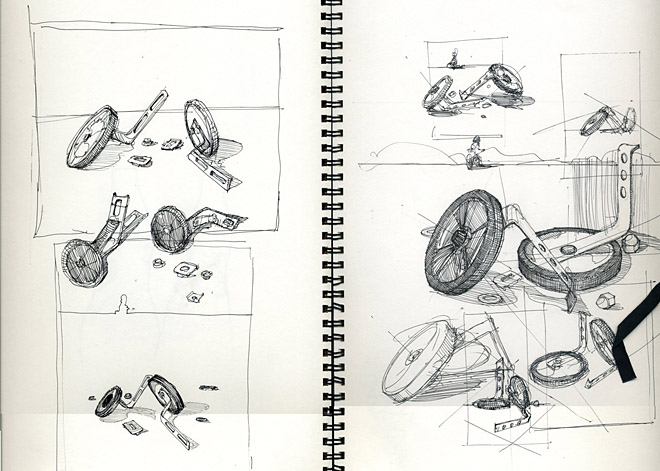
CST Week 4 – The Training Wheels Are Off

source: http://www.adventure-journal.com

But that’s why I agreed to do the ride—not to freeze the old projects in amber, but to create a new project that we can all participate in again” (Makers, 143).

Participate. Also one of the aims of The Maker Movement Manifesto. As well as learning, which all the students in Making Meaning Matter do every week; participate and learn. It seemed the first weeks were spent getting over the initial learning curve, but perhaps it was more about gaining the confidence that they could make something that would make a difference for others. Not because of what they were making, but because of who they got to be in the process. Makers. It could be said that anyone doing anything other than participating and learning might be missing the point.

He could never convince his bosses in Orlando to let him build anything remotely like this, and given enough time, it would surely overtake them…He’d seen the future that night and he had no place in it” (Makers, 151).

Week Four Reflection (Forbes)

“It made him smile.  Someone had invented this thing.  It could have been him.  He knew where you could download vision-system libraries, and force-feedback libraries.  He knew where you could get plans for the robotics, and off-the-shelf motors and sensors.  Christ, these days he had a good idea where you could get the ice cream wholesale, and which crooked vending-machine interests he’d have to grease to get his stuff into truck stops.” Doctorow (132)

In thinking about “the mind behind the artifact” (in this case the ice cream vending machine), we must think about the life of a person.  The quote above demonstrates so many pieces of prior knowledge.  This demonstration leads me to wonder about the instances in the maker’s life in which he learned these pieces of knowledge.  In order to make something do you have to know something?  Are these things slowly learned over time or can they be picked up quickly?  Is the knowledge information? skill? both?  Probably both and beyond.

CST Post #3 -Shaye Riano 10/27/2014

“What had prompted him to sabotage the ride? It was something primeval, something he hadn’t been in any real control of.”

Doctorow, C. (2009). Makers (p. 150). New York: Tor.

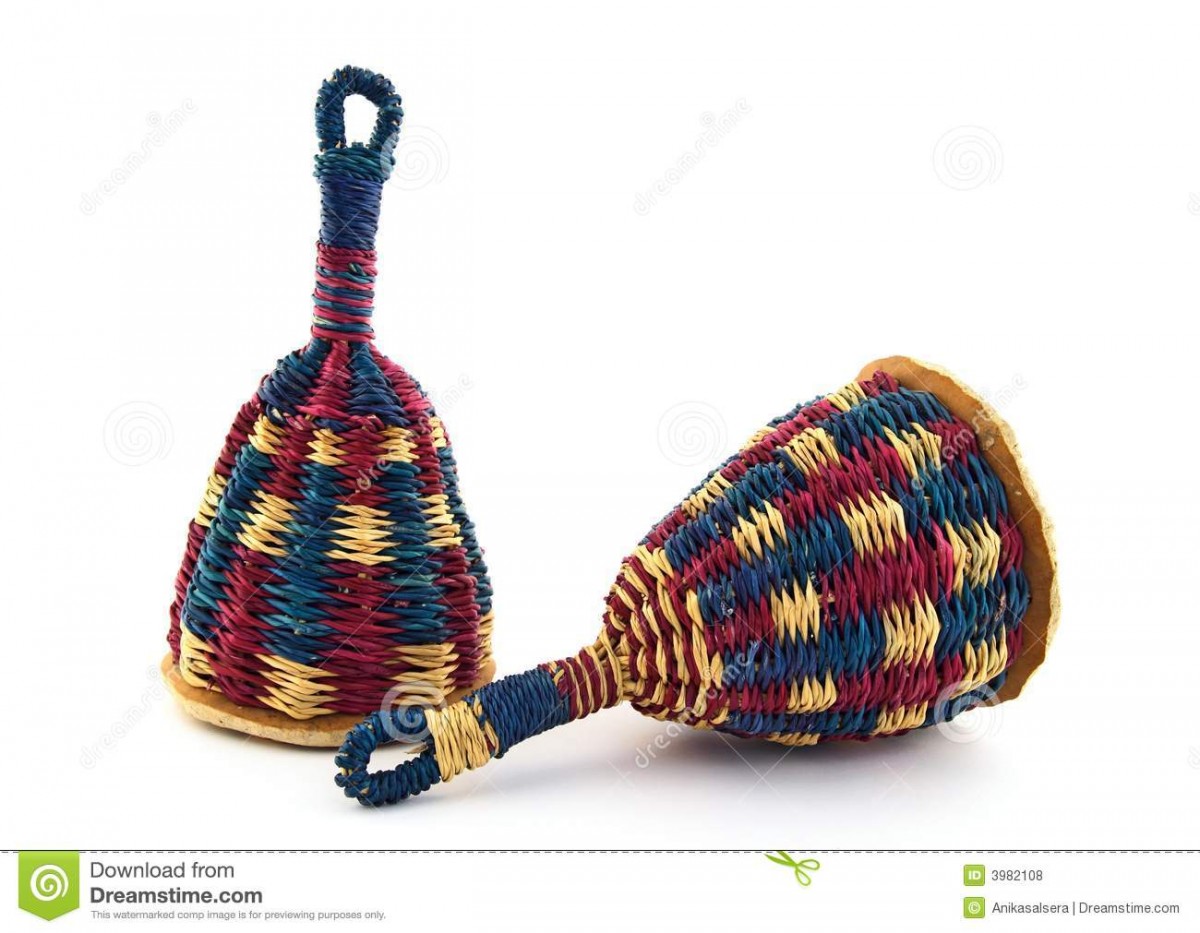
caxixi-afro-brazilian-percussion-instrument-3982108

Graham is really into music, drumming in particular. In this class he wants to create small percussion instruments  to add to his musical arsenal.

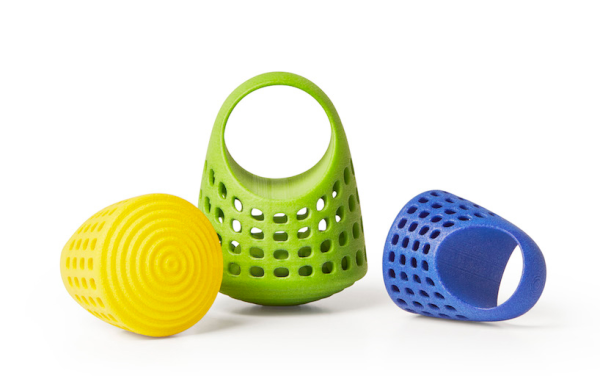
I watch him design a 3D image of a Brazilian Caxixi in Tinkercad, an instrument that you use to hit a drum, creating a “shaker” like noise. Hes never held or used a Brazilian Caxixi before, he found virtual images of it online and decided to 3D print his own. They cost about 50$ if you wanted to buy one. Probably easier and less time to buy one, but when I asked Graham he said making one would lead to a more meaningful product because of the effort put into the learning and making process. Also he can share the music the instrument he created can make.

brazilian-caxixi-instrument-kxx-3d-printed-rattling-rings-2

CST wk 5

In reading this week Suzanne had a thought. ” Taking big chances had gotten her this far and it would and it would take her farther she knew.” In class it was good to see everyone making progress. Everyone developing their own little routine. Everyone is making progress on their blue rabbit so to speak.  Everyone taking chances on what they want to make. I realized something this week that I can be my own worst enemy. Instead I’ve decided to get out of myself’s way take those chances. Isn’t that what life is about we have to live and learn to become stronger.

CST Week #4

“Can I allow my focus to stray from this?”

This week, I was noticing a tendency for people to be working on things not necessarily related to their design. Certainly, everybody was working on their designs at some point. However, there were also moments when students would stray away from their designs, sometimes for things unrelated, but often for related and important things. Graham, for example, was having troubles getting his designs to save. Michael often had to stray from designing to work with the 3D printers. However we all seemed to come to the conclusion that our designs were bound to get better, and didn’t need focus constantly.

“New Work isn’t going anywhere, Suzanne.”- Doctorow, Makers, 108

week 4 observation CST

This week I learned more about the importance of things that serve some utilitarian purpose. For example Tom is making a rubber duck (plastic duck) that he can explain his problems to. This is because it is proven that if you explain your problems, even to an inanimate object, then you can understand your problem and find the answer easier. Now of course you could explain your problem to nothing at all and not have to print out anything but as Tom explained it helps to have a material object. I look forward to learning more.

CST #1 Week 1

Although I wasn’t here for the first day of class, Coming in on the second day made me really want to join. Not being very knowledgable about computers or technology in general, I knew this class was going to be a challenge , but also something I was going to be engaged in and push myself to learn about things I would have never thought to do. As I observed everyone I was kind of overwhelmed at first but could feel I was surrounded by a very welcoming environment and it was okay to fail at trying something new. Knowing that failure can only improve myself for the next task. When I started making my coin , putting my thoughts into a design was hard. It was kind of frustrating wanting to do the smallest things, but not being able to achieve it because I wasn’t used to Tinkercad. I started to make duplicates of my design knowing that I would mess up and want to go back to how it was before. It got so much easier once I just started talking around and even observing others. Although my coin didn’t come out exactly how I wanted it to . I was still so pleased that I made something with a system I had never used before.

Blue Rabbit Project: Jewelry – Tchotchke, or Something Deeper?

How is jewelry – something that could arguably be considered a “tchotchke” – important to create in a world that’s already full of it?

The central question of this program is, “In a world already full of so much stuff, what is truly worth creating?” For a while, I was stuck on this question. I couldn’t think of a single viable thing to make via the 3D printer. One day, however, I was playing around with Tinkercad and eventually made a bead of sorts that I thought looked really cool, using solely the thin torus shape.

bead


With this bead in mind, it suddenly occurred to me that I could make many different beads and print them out, and eventually string them together to create jewelry such as necklaces and bracelets. This bead is just one of many possible designs – although I ended up being so satisfied with this one that it may be the most printed and used bead. The possibilities really are nearly endless, considering how accessible Tinkercad is. Although it’s not the most powerful software, it will be more than effective for this project.

Some, including whoever had the audacity to slap a “NO TCHOTCHKES” sign near the 3D printer, would argue that these beads – and the jewelry that they would turn into – are the very definition of tchotchkes. I would argue the opposite. Jewelry certainly can be considered useless trinkets – however, many other cultures, including our own, consider jewelry to have incredible value, both monetary and sentimental. I would argue that for a lot of people, jewelry is bought and kept for its sentimental value – things such as wedding and engagement rings, and other  Many family heirlooms are pieces of jewelry that have been passed on from generation to generation – for example, in my extended family, there’s a ring that has been passed from daughter to daughter for generations.

Jewelry has had a profound effect on many, many cultures. In the words of Lois Sherr Dubin, for many Native American tribes, “[i]n the absence of written languages, adornment became an important element of Indian communication, conveying many levels of information.” After European imperialists arrived to the “New World,” jewelry and other  “…signaled resistance to assimilation. It remains a major statement of tribal and individual identity.”

Native Americans all over the country proudly adorned themselves with jewelry, made from a wide variety of materials. The Northeastern Native Americans used wampum shells – both white from the channeled whelk and purple from the quahog clam. In the Northwest, walrus ivory was used for the carving of bracelets and other items for many years until the 1820s, when a massive quarry of argillite was discovered on Haida Gwaii, an archipelago off the coast of British Columbia. These stones proved easier to carve and had the benefit of coming in multiple colors.

Chacoan_turquoise_with_argillite


Copper was also a commonly used material, even before European contact. Tribes near the aptly named Coppermine River would trade it down the Northwestern coast, and it was worked into many different kinds of jewelry, although bracelets, which were given away at potlatches, were by far the most common. Silver and gold became popular materials later.

Although some people – definitely whoever put up that horrible sign – would feel that these beads and the subsequent jewelry are useless tchotchkes, I feel that the value of jewelry is entirely subjective, regardless of the actual cost. A relatively cheap engagement ring can mean the entire world to one person, while exorbitant, lavish necklaces and bracelets could mean absolutely nothing to another. We as individuals assign value to these trinkets and baubles. While monetary value is something that is definitely accounted for among all people, and is arguably the closest one can get to assigning objective value, sentimental and emotional value carries far more weight.

I hope to create at least one full piece of jewelry – whether it’s a necklace, ring, or bracelet. I will probably need to create several different bead models, although I already have one design that I’m very pleased with. I would also want to work in a few of the beads I made during our retreat to Deception Pass. I feel like this would made an interesting juxtaposition – the handcrafted beads paired with the mechanically made, although still originally designed beads. Whatever I create, however, will mean more to me than a simple, replaceable “tchotchke.” I feel like there is a lot of inherent sentimental value towards something that one created themselves, and I hope to get that same feeling out of making 3D printed jewelry.


Shearar, Cheryl. Understanding Northwest Coast Art: A Guide to Crests, Beings, and Symbols. Vancouver, B.C.: Douglas & McIntyre, 2000. 30-3-. Print.

Dubin, Lois Sherr., Togashi, and Paul Jones. North American Indian Jewelry and Adornment: From Prehistory to the Present. New York: Harry N. Abrams, 1999. 170-71. Print.

Dubin, Lois Sherr., Togashi, and Paul Jones. North American Indian Jewelry and Adornment: From Prehistory to the Present. New York: Harry N. Abrams, 1999. 169, 174. Print.

Lester’s Woes

“I mean, is it safe?” (Doctorow 101)

“What is outside the head may not necessarily be outside the mind” (Malafouris)

A theme I have seen with increasing frequency in Makers is the concern for safety, with the advent of the self-rearranging jungle gym, the fat burning procedure, and the rides through the museums of misfit robots. Suzanne wonders if Lester is the same person, after he goes through the radical procedure, which has given him the means to transform his psychological state through physical transformation. Suzanne wonders about the safety of the procedure, concerned with his physical health, but not the mental repercussions that occur. Lester’s physical transformation was able to transcend his skin and modify Suzanne’s mind. What would it be like to feel what Lester is feeling, having the body he always wanted, and knowing that Suzanne’s attraction to him is, if not decided, swayed by the way his body looks?

CST Field Notes #2

October 20th, 2014

“What’s with the jungle gym?”(Doctorow,100)

“Most people don’t even notice it. They think its daycare or something. Well, that’s how it started out. Some of the sensor people started noodling with jungle gym components that could tell how often they were played with. They started moding the gym every night, adding variations on the elements that saw the most action, removing the duds. Then the CAD people added an algorithm that would take the sensor data and generate random variations on the same basis. Finally, some of the robotics people got in on the act so that the best of the computer-evolved designs could be instantiated automatically: now it’s a self-modifying jungle gym.” (Doctorow,100)

Knowing this story isn’t true, I am still excited to think about a piece of work that can be the product of collaboration. I wonder what projects will be created through the collective efforts of individuals in the Making Meaning Matter class. What will people decide to work together on and how will they work together? Are people outside of the class going to be interested with are projects? Will they be asking my classmates and I about the projects they or we have collaborated on? What will are “Jungle gyms” be?nylon_steel_bike

CST Week 3

The question I asked myself this week was, “Where does the mind start?” Does it start from original ideas, or memory, or from somewhere else? I noticed several people copying directly from the Tinkercad book last week, and I thought to myself, Is that still creating? I feel like it is, but because it’s a copy, it’s not an original thought or idea.

I feel like while the mind starts from one’s first memory, it’s such an abstract concept that it doesn’t truly have a beginning or end.

week three field notes

“‘What’s with the jungle gym?’ It really has been something, fun and Martian-looking”(Doctorow 100)

Observing my classmates this week I had tried to get a sense of the projects that everyone was embarking on. Its really interesting to see the variations of peoples ideas. Its interesting in a way because I feel like everyone’s projects are similar in ways, like how useful they are, and how no one is making anything wasteful or useless, at least to them. I see the differences. I am looking forward to the unfolding of everyone’s ideas.


CST #2

“I mean something like that, but I want it to be capable of printing out the parts necessary to assemble another one.”

(Doctorow 93)

In observing others work I found it interesting how many ideas and questions about my own idea came to me and how others  were interested in making similar objects. Before entering this class I had no idea how a 3d printer was made or to what extent it could perform what it does. It was very helpful to see videos of how the 3d printer works and each step and layers it goes threw. The different types of resolutions types such as low,medium, and high resolutions were cool to see how different your design can look even though it is printing the same object , but just at different speeds. Certain objects need a different resolution type depending on what you want the final result to look like. I didn’t realize how long it takes to print something out until watching these videos. Making certain tools to help you with something else you are using is very useful such as the man who made the clip for his camera.

“They need the tools that will let them build anything else, for free, and use it or sell it.”

(Doctorow 93)

CST post week 3

“According to Wegner, it is instead the potter’s brain that has the reasons, in the form of a ‘readiness potential’ (RP), at least 350 milliseconds before the potter’s conscious awareness of the wish to act.” Malafouris 220

Does a RP precede every conscious action? Is this why artists and creators let their work flow through them instead of imposing themselves onto the work?  If the conscious mind was involved in every action would this be too slow?  Perhaps this is a place to contrast humans and animals.  Are animals able to react quicker than humans to stimuli because they don’t have to bounce a thought off their conscious awareness before they act?   We are forced to funnel our thoughts through an “ego filter” before we are able to make any sort of action, serving to alienate us from our environment and a common reference of time.

Sarah’s Week Four CST Post

“The problem is that all this stuff is too specialized, it has too many prerequisites”…

(Doctorow 89)

We have been doodling with flat blocks, clicking and dragging not quite drawing,  two dimensional blueprints representing the three dimensions of  objects that have yet to be created. I talked to two students in the CAL this week about the ability, or lack thereof to “doodle” in TinkerCAD. Doodling and drawing open up a sort of free space in the body and mind to create out of blankness and thin air, conveying the experience in two dimensions. The word tinker implies objectivity, the ability to be tactile with objects and perceive them as a whole. TinkerCAD occupies a gray space where so much dimensionality is perceivable, the objects and structures are flat as paper to the touch, and yet myself and another student I spoke with, each find ourselves tilting our heads, moving our faces closer, turning the computer screen, and being, at points, totally unable to get the right point of view.


“They’ve ended up back in the trash heaps that inspired them.”

(Doctorow 123).


« Older posts Newer posts »