Of Blood and Beauty

The Evergreen State College

Category: Berlin (Page 2 of 11)

Kinemathek Berlin

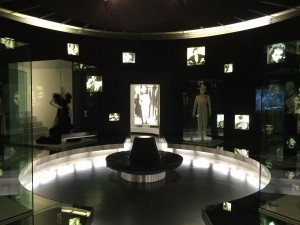
5//5: It was a reeling sojourn through the Kinemathek museum. This collection was a fantastically arranged look into the actual phenomenon of and affects surrounding film, from culture to industry, politics to aesthetics- the curators of this exhibition accounted for many modes, combinations and styles resulting from these contributing factors, from the earliest excitement about the possibility of capturing image and sound, to the harnessing of film as propaganda and the inverse – film as resistance and reframing. The persistence of film as not only entertainment, but as stage for fostering pubic dialogue and reworking the possibilities of story-telling was a theme throughout. Truth was and is always a central concept in film – and the delineation between truth and fantasy is constantly reworked in film, where critical ‘truths’ are often revealed in the most fantastical settings, and the falsehood of ideology ferments in the inflated realism of propaganda. The history of film itself is a front strewn with the wreckage and ruts of so many attempts – successes and failures, the grandiose and the vulgar. What this chronology fails to capture is the other half, the audience, who, meeting the artists  writers, designers, producers and filmmakers half way, bring their own swaying mass of ideas. Here we see the onward transformation of film as it appeals to and marks out the borders of possibility in the imagination, and the battles between fascist regime and artist/creator, but what lacks is the other half – the impression of the consuming audience. The audience is represented, however, portrayed in the films, as their characters. The continual evolution(and also the recurrence) of these characters and settings, occasionally gives insight into what battles are being waged in the streets. But as always, the distinction between what is being waged in the streets, hearts and minds and what is being impressed upon by the films, is always indistinct. The fourth wall is also a stage for filmmakers. Nietzschean Tragedy thrives here – where is the chorus?

The replication of life on film allows for the conceptualization of modern existence, a conjuring of myths which entrench ideas and physically embody the experience – they take an aura of collective erlebnis, reduce it to two dimensional concept, and recast it back to the acting public – (who truly are the original characters – hence the mass appeal and curiosity towards film) – it reveals our lives to us across the spectrum, from individual contrast to casting universal patterns. The gritty modern, day-to-day, experience, living “aura” under the censor of a regime is fastened to film, reduced to a theme with a moral and a story, the confinement (and reverence) of mild day to day life to the reeling frames of a film reduces the complexity of existence and allows for film to be used as the propagation of a strict, controlled mythology, which reinforces the ideaology of a regime. The films whose auras are expansive- critically reflecting life and encouraging the examination and critique of experience/existence-  rather than reductive, as in propagandist film, are those that immediately banned. These expansive, edgy, critical, wild films, are the first to be prohibited and denounced in National Socialist rhetoric. And so, when All Quiet on the Western Front was adapted to film debuted in 1930, the subsequent riots and disruptions by SA and NSDAP officials led to an immediate ban of the film; the story it told did not uphold the Nationalist ideology of German might and victory across Europe, the prevailing political party held final ruling.

“Under National Socialism, light entertainment dominates, movies offer escape from day-to-day reality, especially after 1939.”

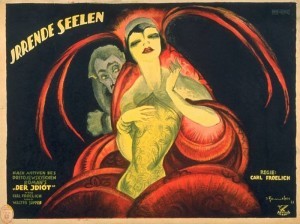
These sanctioned films point away from the rigidity of the regime and the actual experience of the proletariat, and towards a stable future just within grasp. The incredible contrast of propaganda films that depict a banal, conclusive, steadfast and conservative lifestyle, to those of brilliant and strange worlds of phantasy, such as The Cabinet of Dr. Caligari, Nosferatu and Metropolis, which point directly at the day to day existence through an abstract mode of phantasy, was fascinating to realize.
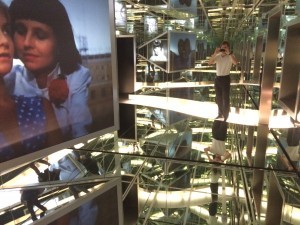
 

Kinemathek Berlin

And so it starts…

I’m in a new city with a small group of peers and we go on tours together and it slightly tears at me.

The tear: tourist vs. visitor

I dislike the thought of being a tourist. But I am one, of course. I’m here and I’m surrounded by my brilliant classmates and having people show me around and teach me. I enjoy that. But the thought of being a stereotypical tourist (fanny-packed, passive, wide-eyed, sheep-like) makes me uncomfortable. Why? There’s a certain irrational shame in being an obvious unknowing stranger I guess. I prefer to see myself as the anonymous and shadowy visitor, completely unremarkable, taking everything in silently. Maybe it’s just a jaded city girl thing, though.

Our first group outing brought us from the Brandenberg Tor through the Memorial to the Murdered Jews of Europe, the Finance building with it’s spooky Nazi doorknobs and cheery Eastern bloc mural, ending at the site of Hitler’s bunker, where he and his wife killed themselves for their honeymoon.

I ended up going on that exact same route maybe a week later, with three other people.

Now it’s time to go alone, I think. Be the invisible visitor.

What stuck to me immediately was the beauty of The Memorial to the Murdered Jews of Europe. The levels of planes, perfect lines, grays, light glints, all in perfect harmony…

I will return for it, and fill giant pages with it, so that I won’t forget.

Kinemathek Museum

Kinemathek Museum

Benjamin says, “that which withers in the age of mechanical reproduction is the aura of the work of art.” Keeping this in mind while visiting a museum on the history of German film is truly inspiring. No art for in history has so mercilessly rendered all other art forms so obsolete as film has. A film is in itself already a mechanical production, and thus mechanical reproduction is nothing special. Where as for thousands of years, what man has done by hand is now possible almost entirely though technology. 3D printers for sculpture, computers for architecture, and graphic design for painting. Of course there are the differences that cannot be replicated through technology, such as the brush strokes and the cracks in the concrete. These are the small minor details, that when accumulated together makes art human. In terms of photography, and later film, though, all production is created through a lens, what is produced is merely manipulated rather than created. The stage of theater has long been a home to artistic expression, and now, through close ups and filters, we have stories revealed to us one frame at a time, all rehearse and perfected and captured and copied exactly forever. There may be, in terms of aura, advancements that have been made as technology has advanced. For instance the introduction of sound has lead the text dialogue to become completely unnecessary. And the ability to allow color to be visible when filming has changed how we see the world through the screen. These two examples, although aged,  both have their own situational qualities to them. I use the recent film The Artist as a great example. In this day and age of computer images, it still takes a special talent, a flair for brining the old school back, that which was once revolutionary to be brought to light all over again. The film the Artist is in black and white and with no sound, a true homage to the birth of film if there ever was one. Instead of letting what was dead stay there, it has been cleverly reborn again to serve as a reminder of just how far we have come.

Sound and color are probably the two most obvious forms of aura for a film that can come to mind. Just as the dust on a record produces the crackling sound that adds an aging effect that we all cannot help but love, so too has the clear and succinct sharpness of film come from a place of similar origin. Old film reels often have scratch marks that, for a brief second are visible before they disappear. Older film can often be full of these marks and thus a whole reel can consist of brief stutters and halts that add an authenticity of sorts that one would not find in movies today. When you think of clear images, you would usually want to avoid these minor imperfections, but when you see them for what they are, you gain an appreciation for their existence as you think that never would you see this happen nowadays.

Kinemathek Museum

Paul Mason: or, Do Accelerationists Dream of Paper Tigers?

On April 5th I attended a lecture by the English journalist Paul Mason entitled “After Capitalism?!” The interrobang at the end of this title is either a little bit embarrassing, or devastating, depending on your relationship to anti-/post-capitalist discourse in general, and to the various new liberal third positionisms that seem to be getting a lot of attention over the last couple of years. I’m Highly Ambivalent.

What most non-reactionary accelerationists argue is that the transition between and production of economic forms is not ultimately accomplished by the activities conceived of as political during a given form’s lifetime, but rather by the emergence, out of a given form, of the new material conditions for the succeeding one; and that this process can be actively accelerated. The logic goes: capital was produced by the self-intensification of the economic relations of old-imperial mercantilism, so if we wish to move beyond capitalism  we need to figure out which of capital’s characteristic relations are potentially liberatory (especially those that make is so remarkably adaptable to new challenges) versus those that are primarily conservative. If we can get a better image of this then we can locate the places where these things that are contradictory in principle are contradictory in material form, and then we can intensify or accelerate the relevant processes. It is a fundamentally marxist position, but one which (whether explicitly or not) amputates most marxist theory of revolution from Marx’s ontological core of dialectical materialism.

I have no idea if Paul Mason considers himself an accelerationist, or whether he’s ever heard the term, but as far as I can tell he is working from this same basic logic. Where he differs is in his focus not only on the positive capacities of the technologies of capital, but also on roles these play in what he sees as a necessary acceleration in the tendency of the rate of profit to fall. As traditional market growth slows and stagnates the digital economy increasingly colonizes our subjectivity. Desire for both immaterial goods (and really only secondarily the material media of these goods) is a new market front, but one which requires constant reproduction, as the labor input and consumption are increasingly identical. Facebook et al are valuable to a given user because, and only so long as, many others are using it frequently: practically any direct competition begins pushing surplus value production toward zero; so they can only remain profitable as long as a sort of trust exists between the biggest tech and digital monopolies to simultaneously reduce competition and mutually produce in consumers habits and desires that mutually feed their models rather than freeing the consumers or the media up for alternative activities. This seems to mean that any breaks or resistances to this feedback loop could produce an opposite one in which the power of capital is diminished or threatened while more and more people are simultaneously interacting with each other and with technology in new, creative, and potentially liberatory ways.

Like I said, I’m ambivalent. I agree with the economic logic and hope the possibility for lines of flight out of the current internet desire-machine is a real one, but I’m frustrated to hear another person saying this sort of thing without any idea how to really begin producing these resistances or lines of flight. I also share some of the pessimism of one of Mason’s interlocutors, Hans-Jürgen Urban, who fears that the crises of capital that have already been occurring are producing new forms of conservative power (which may look more like pre-capitalist ones and therefore not be threatened by the same things) faster than Mason and other utopianists recognize. There’s really a lot to say about all of it, and I don’t think that either of the two criticisms I mention here are good reasons not to try what Mason (or other accelerationists) is ultimately suggesting, but I find myself with no more clue how to start than I did before hearing him speak and I think that’s a harder problem than he makes it out to be.


Boros Bunker

To start I want to give you a very brief history into this exhibit space from the perspective of the different uses it has taken on. It was originally built during the Second World War as a part of a 61 city wide bunker selection program made by the Nazi party. It could house 2,400 guests on any given evening and was used to show that Hitler could protect the inhabitants of the city when war struck. After the war it was a part of Eastern Berlin controlled by the GDR. During this time it was used as a P.O.W. Camp and a secure site to hold meetings where the Allies could not interfere, later it was used to store food, specifically fruits from Cuba during the Cold War, where it got its name the Banana Bunker. When the wall fell it was semi abandoned and used for rave culture and paintball fights. In 2003 the current owners bought it. The renovations took five years, which means it has only been a gallery for the past eight years. The two owners of the bunker live in a house constructed on the top of this building where they have 130 pieces from 23 different artists that they support to varying degrees. This is a treasure trove of intellectual art supported by elite ideals. It was both hard to swallow and awe inspiring all at once.

With this idea in mind I want to do some, quite possibly grotesque, surgery here and deposit a couple quotes from Georges Didi-Huberman’s piece entitled Images in Spite of All: Four Photographs From Auschwitz and just let them sit in relation to the image of a surviving Nazi bunker being used as a modern art exhibit and home.

“Images in spite of all: in spite of our own inability to look at them as they deserve; in spite of our own world, full, almost choked, with imaginary commodities.” P3

“It is troubling that a desire to snatch an image should materialize at the most indescribable moment, as it is often characterized, of the massacre of the Jews: the moment when those who assisted, stupefied, had room left for neither thought nor imagination. Time, space, gaze, thought, pathos – everything was obfuscated by the machinelike enormity of the violence produced.” P7

The pieces at this exhibit have no names, no plaques, no words to show what they are at all… Except for the guide that gives you information and a personalized interpretation on how to experience the work. The only way we know anything about these works is through our own contact and the stories of those who know better. You must not take images of any of the pieces… But you can buy books full of them at the front desk. There lingers a sense that one has gone beyond Hitler and the GDR, but that beyond only stands because of the view it looks out from which lies inside this reign. The walls look different now.

Boros Bunker and Street Art

The Boros Bunker has a lot of interesting history and shows the extent of human creativity and also the progression of Berlin. Once a Bunker, a storage center, and a rave area, it is now a museum of art open by appointment.
The art pieces in here were very modern and interesting. Pictures were not allowed inside, but among the exhibits was a tree hung upside down and constantly being dragged in a circular motion on the ground, a popcorn machine that popped popcorn when you entered the room, and a pipe that extended through at least two walls. The art was modern and creative, very interesting to see.

The street art tour was very interesting as well. Getting to pay attention to a different type of art that was out in the open and seeing What Berlin people think through what they make was very eye opening as well.

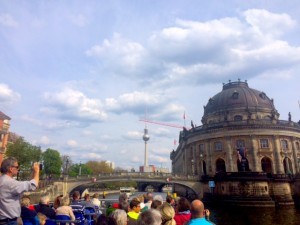
Rube and Mandy take a shiptour on the Reederei Riedel. 64 bridges, 23 kilometers.

Rube and Mandy take a shiptour on the Reederei Riedel. 64 bridges, 23 kilometers.

Rube and Mandy gave up their pretensions to belonging for three gloriously touristic hours atop a big boat in the middle of the Spree, passing through the locks into the Landwehrkanal and other byways, and meeting, it must be said, a very different Berlin.   They followed up the tour by tracking down but not entering a series of galleries designated as Gallery-Weekend hotspots; in what can retrospectively be construed as an act of resistance, they sat down a block away and ate so much Norwegian food that art was out of the question.  At least the restaurant was named for an artist: Munch’s Hus.  (And, in a thematically-relevant twist, it was full of mechanical reproductions of Munch’s works.)

Memorial to the Murdered Jews of Europe and Topography of Terror

This was a difficult day to write about.

I don’t know how to enter into any information or accounting of it.  Our guide was a man named Boris. He was very kind and seemed to try to do his best not to ask down to us as most tour guides do. It felt it a little odd to me that we would begin by looking at some laminated pictures in a folder in the stones above the exhibition but then the rain came and we all bustled inside. Continuing the introductory seminar it was really interesting to find out all of the different potential models made and Richard Serra’s initial involvement with the design of the site. The thing that struck me the most and stayed in my mind as we continued the day at the Topography of Terror was what Boris said at the beginning about it being an inauthentic site for a memorial. It seems that to make a site in remembrance to a very many 6 million people who were disappeared from all over Europe that to choose a single ‘authentic’ site would take away from an atrocity that whenever representing it on this scale can only be sited in the people and their absence.  That said it was very affective. The entire I walked through the rooms and observed and read, I didn’t want to make eye contact with anyone I knew. I don’t know if this is right but I didn’t want to have a collective-connected experience while in there beyond the acknowledgement that there were many other people around. The room of dimension was the most affective space that I walked through. To read the accounts and see the handwriting of families saying their last words and having to look down in order to do this, into the only light made available in the room which were these illuminated boxes covered in text, totally magnified the feeling of looking into some deeper dimensional intimacies. In the midst of feeling a breadth of hard things, we walked back outside and onward toward the Topography of Terror museum. Kevin and I put our hands on each other’s backs for a second during the walk and both agreed that it feels rather necessary to have a human to human check-in in those kinds of moments.The tour guide at Topography was vastly different than Boris’  guide style and demeanor. We were all accidentally late due to a blameless scheduling error and that seemed to started everyone off on a rather stiff foot. I don’t know why exactly and it seems a bit controversial to say but I rather liked him. His quick and somewhat up-tight demeanor paired with his over-sized looking hiking boots and salmon pink scarf was kind of funny to me. Anyway he framed our viewing of the museum with a straight ruler and held everyone on the tour including himself responsible in the proper assessing of old and making of new histories in a truly passive and aggressive way. I had a moment of anger at my public school education while walking through and reading. I could not believe, I felt so ignorant having it take my whole life thus far until getting to the Topography of Terror museum to find out how little the Nazi’s were punished after the war. This information I soaked in and my anger stunted much of my critical faculties that the moment.  Our time was so short there. In the last moments I walked into a room which had the propaganda films of the Nuremberg Rally and watched one minute of it before it was time to leave, not really processing what I had just glimpsed at.

Psychic City//Soundrings

Psychic City//Soundrings

21//4

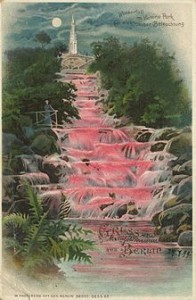
To Viktoriapark, the highest monument, the highest steps –

From the furthest fringes of sound and forward –

(But I wonder, what constitutes the furthest//how can I relegate the cognizance of an order surrounding me to the substrata of these impressions?Right. Best to just stop.)

a distant train, rhythmically clamoring over tracks

traffic in the nearby streets
a faraway 1-2 1-2 ambulance siren

the rush of a waterfall,

china clinks in the cafe

a small bell on a dog’s collar, among the murmur of scattered couples

the wind in the trees (timeless delicacy)
broken violin notes,

ascending, descending, circling steps

dogs barking, birds warbling – calling, responding sparring

fallen petals, dried and grating along the stonework

insect wings

and then blanch – blur toward inward slowly withdrawing –  language fades, inflections, wind, heartbeat – still at the center of a sphere of constant movement, interaction, interrelational, the frantic soundscape, worldwise depth, the whole outside, foreign, unnavigable, dense and multi-dimensional –  I hold my breath, a pure, filthy drag off of that whole outside and reduce myself to a controlled heartbeat, a low echo.

Denkmal für die ermordeten Juden Europas (Memorial to the Murdered Jews of Europe) and the Topographie des Terrors (Topography of Terror)

Our class visit this past Wednesday to the Denkmal für die ermordeten Juden Europas (Memorial to the Murdered Jews of Europe) and the Topographie des Terrors (Topography of Terror) presented me with one of most emotionally challenging trips we have gone on during this course. Floating on top of the steady waves of sorrow that always attended me during visits to these kind of places, was a series of complicated dialectics, ones difficult to resolve or even develop at the current moment, save for their brief mention: (the victims/the perpetrators), (reason/unreason), (above ground, light filled/subterranean, dark), (site/non-site), (information aesthetic/aesthetic impenetrability), (text/image), (unfathomability/directness of story and narrative). Unfortunately, I remain, at least at the time of this writing, stuck in the silence that Georges Didi-Huberman so earnestly asks us to break in his excellent Images in Spite of All, a silence that sticks to and is complicated by the 2,711 uneven, rectangular stele that reside above the Information Center of the memorial.

« Older posts Newer posts »