
Executive Summary:
The future effects of climate change on elk are uncertain. The number of elk in the United States fell significantly in the early 20th century, but has since risen back up due to effort from conservation agencies. Elk numbers are still supported through the sale of sport hunting. The loss of habitat may cause elk to compete with local livestock population and lead to a higher rate of interaction with humans. A greater number of elk have been reported to be inflicted with digital dermatitis, linked to an increase in bacteria numbers in the environment. Along with an increase in bacteria, there has also been an increase in ticks which can be attributed to reduced snowpack and warmer winters. Climate change has led to a change in available plant species available to elk for both food and habitat sources. There are many factors that make it difficult to predict the future of elk populations from the effects of climate change.
-

- Trees and grassy fields provide good habitat for elk.
-

- Dusk along a treeline in Olympia.
-
- An open field near coastal waters.
-

- Many woody areas have been paved for trails.
-

- Dense forest and an open field provide optimal elk habitat.
-
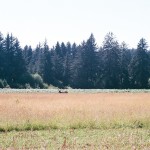
- An elk grazing in the field.