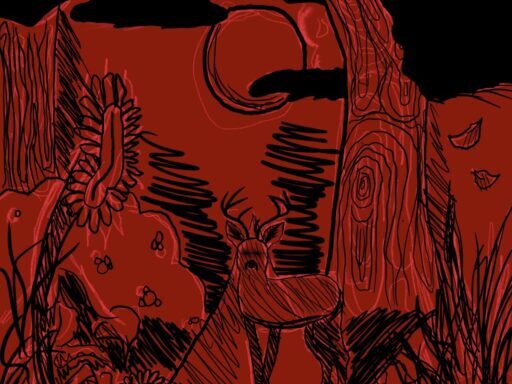
Before the break: The forest around Evergreen State College contains over 1000 acres of hiking trails, gorgeous views, and diverse wildlife. While most known for the thriving deer population, it is also home to a wide variety of other fauna, from waterfowl living off the sound to insects scuttling through the underbrush. With the many well-marked trails, it’s very common for both Evergreen students and people from around the Olympia area to be seen enjoying the stunning natural vistas.
Since then: When the scarlet veins filled the air and the ground shook like the earth itself was angry, the natural world changed. While fewer and fewer animals were seen on the campus itself, the surrounding forest only grew in population. While some animals appeared as they did before, many more of them… changed. Prey animals grew more aggressive and territorial, predators more cautious and timid, and animals that normally were social and lived in packs became loners, threatening and attacking those that were once their own. Deer in particular seem to have changed the most. Many of them now have front-facing eyes, pelts that change with weather, and horns that never seem to stand still. There have even been reports of deer acting as ambush predators, a stark contrast to their normal herbivorous diet. Near the beach, where the forest has turned into a mangrove swamp there are frogs large enough to ride. The deeper one goes into the forest’s depths, the stranger things become. There are birds that roost like bats, preying on the variety of bugs that have also increased greatly in size, and huge snakes hanging from trees like vines, ready to ensnare any passing prey.
https://wdfw.wa.gov/species-habitats/living/species-facts#reptiles-amphibians
https://www.evergreen.edu/student-life/exploring-area