Of Blood and Beauty

The Evergreen State College

Page 2 of 27

Leipzig

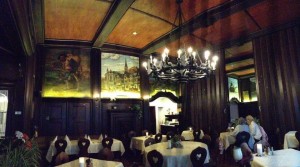
Well I didn’t get to see much of this town because we arrived late after having driven across the country. We had dinner in a hotel, too bougie to relate to, and went to bed that evening.

The next morning we woke and took a walk through the Catholic festival happening in the city and went into the Starbucks we had been at the night before to find a place to stay for the night, our first glimpse back into America as seen through the culture of Germany, had breakfast, discussed dinner plans with my host family to take place sometime that evening in Berlin to celebrate our time together as well as my Mother’s Birthday.

After a short excursion for people watching in the old city center and we were on the road again reading Buck-Morss on Adorno out loud to each other and discussing. A long sort of interview and conversation recorded from that time in the car. More discussions of family and life, the choices we’ve made and how to look back on them. Slowly making our own history together that will be there for the future generations to listen to and learn from in a similar way that I have been working through the history provided to me in an unbroken, if a little reduced and choppy, line of story. All this in a town I have no recorded documents other than this, no photos other than my few memories slowly fading away, little life left in that history that is continually losing important artifacts.

Mandy makes her way to Dessau on a Bauhaus pilgrimage

Mandy makes her way to Dessau on a Bauhaus pilgrimage

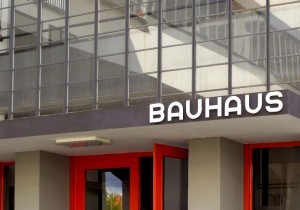
With Julia Zay, Jenny James:  made our way to Dessau by regional train to visit and tour the site of the second (and longest) incarnation of the Bauhaus school.  The school had leave Weimar in 1925, when the Nazis gained local power; it lasted until 1933, when they gained national control.  The style was deemed wesensfremde Architektur, the architectural parallel to entartete Kunst, and the buildings in the Bauhaus style were immediately transformed, modern elements covered over with traditional materials, large windows broken.

We toured the main buildings, original dorm rooms (big, with spare, beautiful Marcel Breuer desks and Marianne Brandt lamps, designs from students incorporated throughout), the auditorium where Schönberg and Bartok played, Oskar Schlemmer put on plays and dances, the houses where Gropius, Magoly-Nage, Klee, and Kandinsky lived.

Bacharach

Bacharach

Today we took a drive up the Rhine and back down the other side of the valley, collecting church and castle sightings along the way. Many stories and memories for my mother and many thoughts of bringing my partner Ellie along this path someday.

Bacharach

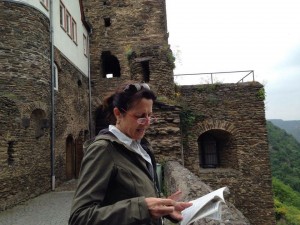
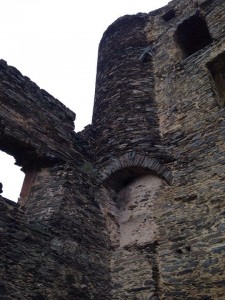
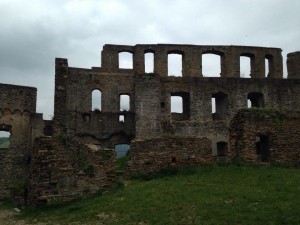
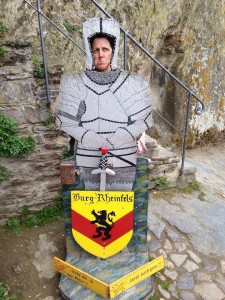
I don’t know the names of many of these little castles and towns we blew through driving with our little blue cruiser, but one place in particular we stopped was a ruin called Rheinfels Castle.

Bacharach

It has an interesting history that and was finally destroyed in 1794 by the French revolutionary army.

Bacharach

I put myself in the mindset of Ludwig Tieck’s “Der Runenberg” and found myself rounding corners expecting to find a woman with a foreboding gift for me, although I feel as though I have already received this gift from the dark mother of Germany and I am unsure what to do with it.

Bacharach

Bacharach

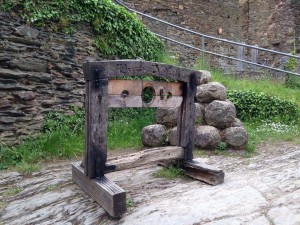
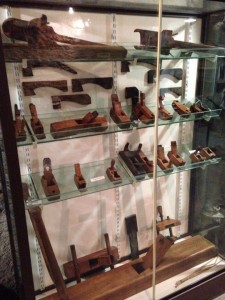
The castle was built to withstand an attach and so had fortifications to be completely independant of the surrounding land while having the ability to house a large portion of the population. The castle was home to a mason with access to their own stone mine, a blacksmith, an apothecary, gardens, a well, a massive cellar for food storage, a butchery, a bakery, and I can only assume they had a wizard somewhere in the mix. This is an example of the carpenters tools, one of the trades that were present when this castle was up and running.

Bacharach

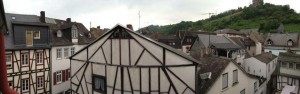
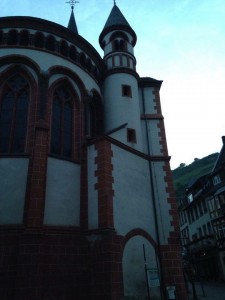
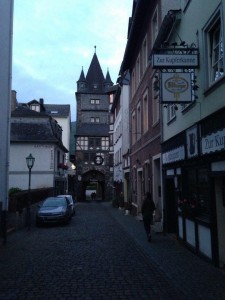
A few church stops later and we arrived in the small town of Bcharach to find ourselves driving down alleyways just as wide as the car. The entire length of the city is maybe six city blocks. I’m excited to see what comes out of this little town tonight.

Bacharach

Bacharach

Bacharach

Bacharach

Bacharach


SpreePark Geist

I visited Spree Park on a sunny day with friends from home.

We recognized the location from, maybe embarrassingly, a lot of films and that is why I steered us there. We were hoping to get to explore the abandoned rides, but the park was overgrown, often dismantled, and fenced off by a tall fence. Built by the GDR and opened in 1969, it was one of the few entertainment destinations in East Germany.

The Ferris Wheel is the clear eye-catcher, peeking above the trees In view quite a ways west up the Spree river. When we finally entered into the forgotten park, we could see that the wind was moving the wheel squeakily. How satisfyingly eerie. I pushed my phone through the fence to capture a video of the motion. I think I could be YouTube famous if I play my cards right:

My friend Jan told me that the automatic motion of the Ferris Wheel has attracted lots of trespassing riders, who have many times become stuck up high in the air when the wind stopped mid-ride. I can’t stop thinking of trying to anyway.

Change of Plans

My original plan was to stay in Nürnburg after Kaiserslautern, but the two family friends that my Mother knew, were both busy and somewhat unavailable. So I decided to skip Nurnburg and save it for June, post class, and instead head to the Capitol of Bavaria, Munich. I arrived a couple days ago, spent a night in a hostel and now found an Airbnb to stay in for another couple days before making my way back to Berlin.

Here I will need to figure out my second PsychoGeography, because I originally intended to do it in Nürnburg.

Like Kings in Kaiserslautern

After my brief stint in the Düsseldorf area, my next stop was Kaiserslautern where I would meet up with our old friend David Hollifield. On my way there I managed to catch a train along the Rhine River. Along it there were many precariously placed yet beautiful called on the tops of hillsides above the river. These were similar to the ones seen from the trai we caught to Prague, however, there were much more here. After I got off in Bungen and caught a transfer train, the surrounding area quickly turned to a rural landscape. For miles and miles, or rather kilometers and kilometers, there was very little other than trees and fields. There were large forests here as well, not just the small patches in between fields. After all, this was the northern tip of what could still be considers the Black Forest, of which we have all heard so much about.

Like Kings in Kaiserslautern

After seeing beautiful fields and trees, the landscape quickly and suddenly changed to buildings and concrete. Before I knew it I had suddenly entered into the city of Kaiserslautern, population 100k. This small town was quite isolated from the rest of Germany, I have spoken with multiple people since. Most Americans have never heard of it. Many Germans had not heard of it either, but no one had ever been there. And here I was.

Like Kings in Kaiserslautern

David and his wife, Mary Kay picked me up from the train station, we hugged it out and we were on our way. David lived actually a 20 minutes drive outside the city. During the drive he told me the this area was dominated by one of the largest US military bases in Europe. This made sense given David’s military history. He and his wife had been here a few years earlier, and they loved it so they decided to move here. Their place outside the city was only temporary. In only a week they would be moving into their new house in the city, which they were excited for, given the horrible traffic the area they were in was known for.

Like Kings in Kaiserslautern

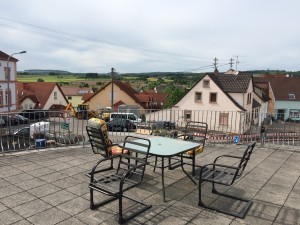
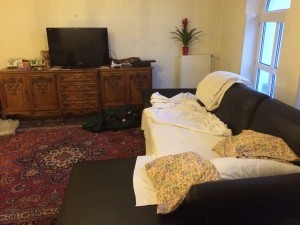
When we arrived, I was delighted by just how far into the country we were. This was definitely rural Germany. There may have been small 1000 person villages every once in awhile, but there were fields everywhere. Their temp. place and an awesome patio/deck which had an amazing view of the nearby landscape. It was still flat here, but there were more hills than Hamburg and Berlin, that’s for sure. I claimed the sofa as my sleeping spot for the night and enjoyed the next couple days catching up with David and exploring this hidden gem of Germany.

Like Kings in Kaiserslautern

Borussia

Aside from being quite the artist, Emil was able to shed some light on the history of football in northern Deutschland. Many years ago, at the turn of the previous century, coal had been discovered in this part of the country. When it was, Germany had recruited thousands of workers from Eastern Europe to move their and dig for it. These were people from Polish and Slavic backgrounds, in what was at that time Eastern Prussia. With them they brought their cultures as well as the label of Borussia, which is German for Prussia. At the same time as all of this was happening, football, as a sport had begun to emerge as the popular pastime as we know it today.

As coal miners, these Borussian men were the definition of proletariat or working class. After they finished their hard physical labor, they would play football as a way to unwind. The owners of the mines, the aristocrats, saw them and their football as a low game and would have no part in it, the workers relished this. Eventually clubs were formed in this region, two of which became more prominent than the others, and still exist to this day in the highest class of German football. These clubs were Borussia Dortmund and Borussia Münchengladbach. Although the times have certainly changed over the years, the division between worker and owner is still ever present. Today football has become a billion dollar industry, where the big wigs and the top cats have all the money and control the enterprise. Players are able to be paid large sums of money, only when they are able to bend to the will of these owners and do as they say, no matter their performance on the field.

Emil and I had an interesting discussion after he told me this, and it was primarily surrounding a theory of mine. Coal mining is hard, physical labor, and doing so makes a man much stronger and thus would make him a potentially better footballer. I told him about how, in the first decades of the invention of football, the sport was primarily dominated by strength. Tactics were not so fully developed yet and it was not until the 30’s when the influence of tango in Uruguay made players more skillful with the ball and thus feigns and moves became more prominent. No, before all this, the game was primitive, run faster and be stronger. These coal miners were bred to be good ball players, and it shows now all these years later in how they had managed to become so prominent in the rise of football that, these two clubs specifically, are held in such high prestige to this day.

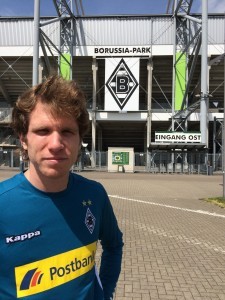
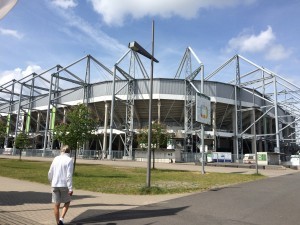
Later Emil brought me to the home stadium of Münchengladbach. They essentially had a whole autobahn exit dedicated to their stadium. Emil said that when there were games, the whole place was packed and that many people would be outside the stadium who couldn’t even get in.

Borussia Borussia

DFB Pokal

While in Viersen, I was able to watch the DFB Pokal final. This is essentially the German championship when it comes to football, the only higher award is winning the league. The two teams playing against each other were Bayern Munich and Borussia Dortmund. These two teams had spent the entire season in first and second place respectively. Dortmund had in fact had the best season they have ever had, and it still wasnt enough to take first place. This game, though, was highly anticipated. The captain for Dortmund, Mats Hummels, who I think is the best defender in the world, was playing his last game for this club, and would be playing for Bayern Munich next season.

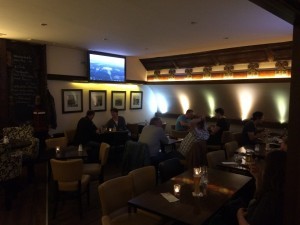
I went to the main square in a bigger town next to Viersen, called Münchengladbach. Here there were many bars and restaurants, all packed together, all showing the big game. For the first half, I was out in the crowded seating area outside without a vey good view. But for the second half I moved inside one of the bars, and found a small room at the back that had many open places. I found the seat with the best view and ordered some food to complete the second half.

DFB Pokal

The game was amazing, there was no clear favorite, both teams had had their chances and opportunities, as well as their swings of momentum. Unfortunately in the 60th minute roughly, Hummels had to get subbed out with a hamstring injury. So now Dortmund had a new player, who wasn’t their captain, on the field. This was, though, a sign of things to come. Dortmund had picked up some new talent who would be joining in the offseason, and would also be parting ways with another one or two players.

In the end the game went into overtime, tied at zero, and then to penalty kicks. No matter how hard they had tried neither team was able to put one in the back of the net. So it came down to pk’s and Bayern won, damn I was rooting for Dortmund, and the German football season had come to an end.

Kultur- Emil’s Work

Before I came to Düsseldorf I knew that Emil Schult was an artists. He had created two pieces of work that he had given to my parents. So I had seen some of his work and I was aware of what he could do. However, after spending a couple days with him, I found that I had really known nothing about him before hand. It all started with his studio.

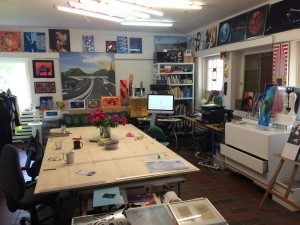
One day Emil decided to bring me to his studio, which was a small apartment a short walk from his house.  This was where he did all of his work. I tagged along, expecting to see some stuff similar to the ones he had given my parents. When I got there, though, as soon as he opened the door and I walked in, my mind was blown. The place was filled with all of the large works, from pictures to sculptures as well. Along with all of his tools and tables. This was a place where he had spent countless hours, I could instantly tell. What surprised me the most was just how many works there were all around in the studio. There were two main rooms, where most of the equipment was, then a kitchen, then a whole downstairs for storage and a bathroom.
Kultur- Emil’s Work

I call his works ‘pictures’ because I don’t know what else to call them. They are the types of work where you look at them and you have no idea how they were made. I still to this day am not entirely sure of the whole process, but I think I at least have a better idea. The works, for the most part, consist of layers of different papers, each cut out to a specific, very fine shape, via scalpel, then they are each individually painted a specific color, before finally being attached to each other some how, mostly by glue. When you see the works he has created, you cannot believe that they were all done by hand. There is so much detail in every work that it is easy to assume that the whole things was done by a computer, at least that is how I felt at first. He does use a computer, more for the design and drafting of the images, to get all of the dimensions correct, before getting to the hard, or maybe he might say fun, work done by hand.

When we arrived there, he had a specific job that he had to do. He had just finished creating cover for a record label, Rebirth they were called, and he needed to sign the pic and package it up and mail it. He had doe this process thousands of times so he really didn’t need my help, so I was surprised when he asked for it and jumped at the offer. These valuable works, which are finalized by being cover in a layer/frame of glass, need to be covered in his hard yet soft cardboard like material. He cut out the pieces to frame them, just right, on every side, before taping them all together. I actually cut my finger on a small piece of the stuff he cut out. He said be careful, because although it felt soft on the outside, underneath was a layer of multiple to help make it durable, and he ripped open the small piece to show me.

Before and after I helped him, I had been browsing all of the works hanging up on the walls. They were each so unique and different from the last. They all had this distinct touch of modernism in their display, from the fine details that made their reflections seem futuristic. The subjects ranged from animals to abstract space designs. I asked him which was his favorite and he said to go look in the kitchen. I did so and above the sink was a small picture of a dog. The dog? I asked, no turn around, he said, I did so, and then I saw it for the first time, I don’t know how I could have missed it. There were two shelves, as long as the room itself, Completely filled with packed up works. You see, he said, I have created so many that it is hard to choose. However, he said, that one I am quite proud of. He pointed out one of the more prominent works that was on display on a stand I the middle of the room, so it made it seem like he had not just finished making it. It was an intriguing and yet bizarre image of a hand, colored unusually, and in its palm was a small computer chip. In the chip was were all these small, tiny details began to emerge the longer and closer I looked at it.

The next day, Emil brought me to the city of Düsseldorf, and we went to a music school called Robert Schumanns, I think it was called. Having not been told what exactly we were doing there, I was expecting to see a musical performance. In the building we were in there was a stage with a lot of people going in and out, there were signs everywhere that reaveled that there was going to be a show there later on that night. However, we wouldn’t be seeing that, instead we went through a door at the back of a room with 15 other people, all but one of whom were roughly 50+ year old women. We we to down some stairs and through another door. In this room Emil had everyone sit in some chairs in front of another small door. There were four large works of his hanging up in this room. It was here that Emil started talking to everyone, in German of course, I still had no idea what was going on. From what little I could discern, he was discussing the Earth and specifically places in the Middle East, one of his pictures was of the large tower in Dubai. After a short talk, everyone put in these funny shoe cover and we walked through the small door. When we got in we found ourselves in a dark, dimly lit room, with small cushions in the middle  for everyone to sit on. Once everyone was seated, Emil, holding a remote in his hand, turned on one of the lights which illuminated the wall behind him, revealing a large immensely colorful wheel of sorts. Emil began to speak to the people again, and this is when I realized that this was all a presentation of his. Again, he spoke in German, so it was hard to pick up on the full dialogue, but I did hear large numbers recited over and over again, as well as an interesting comparison between ich bin and je suis, which both mean the same thing. Emil showed the back side of the room, changing the lights to his will with the remote, which had a golden wall which unfolded revealing a neon cross, the Jesus kind. I gathered that all of the gold walls were in fact painted with real gold, but were also mixed with another sub stance to prevent staining. The ceiling had an interesting space/astronomy design that was only visible when properly illuminated. At one point, Emil stopped talking and began to play some music. Everyone was quiet while it played. It was an interesting tune, it sounded very futuristic, consisting of a calm constant sound that occasionally would change to a high pitch. For some reason, accompanied by the space ceiling, this made me think of aliens.

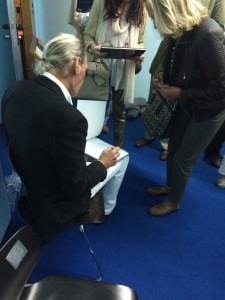
When the music ended, everyone started to leave this magical room. Outside I the small room with chairs and the big pictures I sat next to Emil as he began distributing small books that everyone was buying from him. Each person paid ten euros and he would sit there and sign the book. Everyone, all of them bought a copy. After all was said and done and me and Emil were walking back to the car, he finally revealed to me what I had seen. This room, in which he presented, was called the Crypt, and he had been presenting this room a couple times a week to different groups of people each time, who had come from all over to see it, for over 15 years. It was one of the most visited exhibits in the area. The main concept, he said was the discussion of people and life on earth all being as one on this planet in the eyes of God. This was interesting for me to hear, because Emil, to my knowledge was not a religious man, yet he spoke so clearly and truthfully on this matter that I wasn’t sure any more. I brought up how I had just heard at the Untying the Mother Tongue conference that for many cultures the concept of religion did not exist, and this was simply their way of life.
Kultur- Emil’s Work

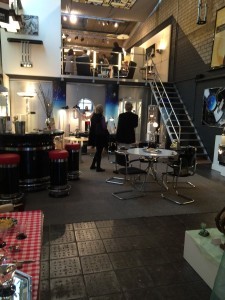
At our next stop, we went to another exhibit, this time of an interior decorator. In this building there were tons of works of art, including many of Emils, but there were also many other things, everything you could think of when it comes to interior decoration. There were tabled and cabinets, as well as many old, from the 50’s or so influenced pieces. We stayed here for a while, I was mostly within a couple steps of the snack bar at all times, before heading off to our last stop. One more art gallery. Here, in the heart of downtown Düsseldorf, there were no works by Emil, but rather all of them were by one artist. This place was called he serateh gallery, if I recall correctly. We were only he a short while, Emil wanted to go in and say hello to a couple people. Afterwards we left and walked around the corner and met his family sitting with another family at a Thai restaurant. The father in this other family was named Rolf, he was Emil’s oldest friend, and together they had formed the musical group Kraftwerk many years ago.
Kultur- Emil’s Work


Lorch

Another day another road. I am truly blessed to be out here on the road with my Mother. It has been hard enough to be traveling together working through our differences, but it has been fruitful in many ways because of this.

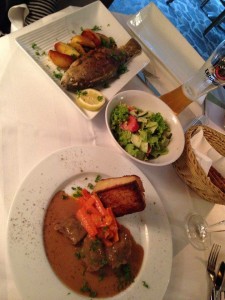
When we left the hotel the morning after my visit with Jochen I had hardly slept a couple hours. For whatever reason I can’t seem to get my sleep schedule on track. It is all over the place. Needless to say I was a bit tired and cranky. We made it to Lorch, a quaint little town on the Rhine river, and found our hotel down the main strip. Basically the only two lane road in the town. We had a great dinner at this little wine tasting restaurant run by a Czech family serving mainly German dishes. The food was simple and great.

Lorch

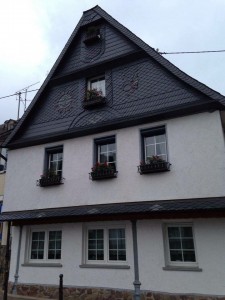
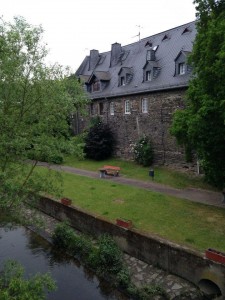
We then wandered down to the poster street that fronts the town. Along the way I was struck at the way they make these slate roofs seem like scales. It’s as if you are walking through a hillside of dragons with their giant Mothers coiled at the pinnacle of these towns in castle form.

Lorch

Lorch

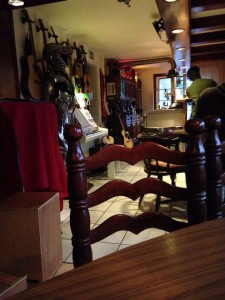
We found a little pub called The Troubadour and went inside to see where the locals congregate. The man running the place has played as a troubadour in the surrounding castles for thirty five years. There were so many instruments it was hard to even find a place to sit even though there were only four patrons in the place.

Lorch

It was cozy and the owner was very welcoming. With a glass of dunkel beer and a glass of the house made dry Riesling we listened to this man play the piano very fluently and softly. His friends chided him at the bar for playing swanky songs. My theory was it was a ploy to woo my mother, the only woman in the bar. I only wished I had my partner there with me to sing songs and and woo the locals just the same. Many thoughts of the bar scene in Herzog’s “Heart of Glass” came to mind and I only wished I had my notes from the film as a companion to the experience.

Lorch

We went home, got in bed, and got some dream stuffed sleep.

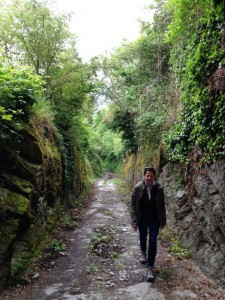
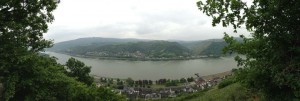
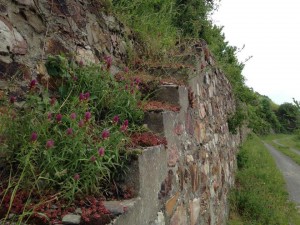
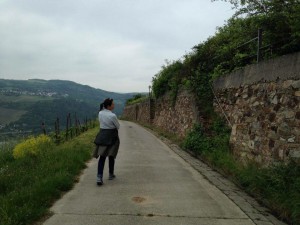
This morning we were off on a hike climbing the valley. Cue pictures.

Lorch

Lorch

Lorch

Lorch

Lorch

Lorch

« Older posts Newer posts »