Of Blood and Beauty

The Evergreen State College

Page 14 of 27

Das Kinderkrankenhaus

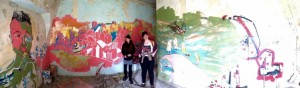
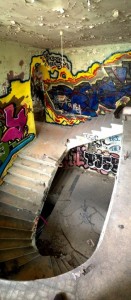
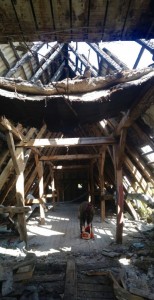
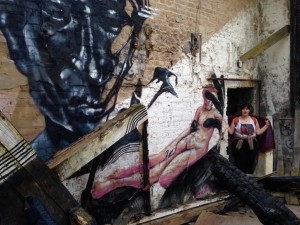
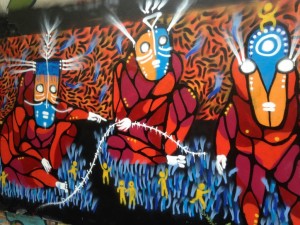
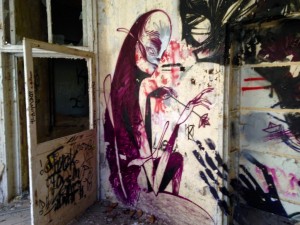
This place was like nothing I’ve ever seen before. I want to stay away from describing the history of this place because it is intricate and complicated and there are many things to say about the experience of it that is somewhat separated from that intellectual history in my mind. With that being said I do want to give you a sense of what you are walking into when you step inside this crumbling facade. It’s original purpose was a children’s hospital intended to combat the rising infant mortality rate in Berlin. This building has since changed ownership and purpose many times over the course of its life. Since 1997, when it last changed hands, it has been unused and abandoned because it failed to meet many of its funding goals and struggled to file the correct bureaucratic documentation required to move forward with renovations and reconstruction. It has since experienced many fires, various structures collapsing, decaying, and/or purposefully being destroyed. Along side this destruction is the appeal of why you would even consider going here. The artwork.
Das Kinderkrankenhaus

And the artwork.

Das Kinderkrankenhaus

Tags!

Das Kinderkrankenhaus

Architecture!

Das Kinderkrankenhaus

Murals!

Das Kinderkrankenhaus

Nature!

Das Kinderkrankenhaus

Colors!!!!!

Das Kinderkrankenhaus

And this is only a small part of the work there. It’s is like diving into an abyss of color, texture, space and light unlike any possible museum. I was amazed to be immersed in this subject of culture that is coming from the ground up. It has as little influence from the higher forces of society because it is intentionally temporary and transitory, always under danger of being smashed, painted over, defaced, crumbled, etc. It has no possible monetary gains to be made by the artists. It shows how these peoples individual culture shows through in their work. So it is a part of society and possibly the overhanging powers of society are dominating these individuals in their own lives which then projects itself into their work. I get this sense of convulsing within that control though. Of seizing in it as the body rejects that authority when they do this work. Those spasms shape the work out of a madness or maybe just onto a chaos that can transmute these flailings into something of value.

Adorno says in his essay The Autonomy of Art, “art is not autonomous in the sense that it is metaphysically removed from and independent of society. It is autonomous in that it is not reducible to the requirements of society, namely in the presentation of a harmonious and meaningful whole… relevant parts of Leibniz’s theory are… They reflect the universe from their own individual perspective.” p240
Mauer Museum

Mauer Museum

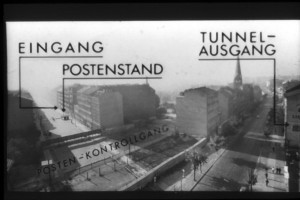
This museum provides an obsessively detailed look through the discernible history of the wall, from the inception in the highest echelons right down to the tunnels furrowed beneath –

And the Western world may be rapt in wonder, what does it look like to tunnel beneath the “prison walls” of a loathesome Communist regime, against the grain of their own “anti-fascist protection rampart”, to escape into the Free World? Three young students, after having engineered a tunnel, sold the rights to film the escape and capture the story to NBC, who arrived to film on September 14, 1962. The tunnel brought 26 people out of East Berlin. Here’s the resulting NBC documentary:    The Tunnel

A few wikipedia facts about the film:

“The Tunnel was a 90-minute black-and-white documentary film that chronicled how three West Berlin university students organized the escape of 26 friends and family members by digging a tunnel underneath the Berlin Wall. Produced by Reuven Frank and narrated by Piers Anderton, it was an NBC White Paper installment that was broadcast on December 10, 1962 and sponsored by the Gulf Oil Corporation.

The Tunnel earned three Emmy Awards in 1963. It was the only documentary to receive the award as The Program of the Year. It was also honored for Outstanding Achievement in the Field of Documentary and Outstanding Achievement in International Reporting.

The National Broadcasting Company (NBC) officially announced on October 11, 1962 that it was going to televise the documentary on October 31 from 7:30 p.m. to 9 p.m. (EST). Reluctant to add to global tensions in light of the Cuban Missile Crisis, the television network decided on October 23 to indefinitely postpone the broadcast.”


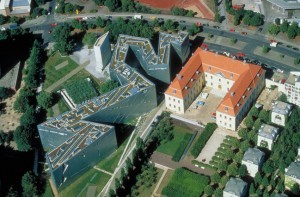
Jewish Museum 18//4

Jewish Museum 18//4

Our visit to the Jewish Museum in Berlin was a but a brief snapshot into the vivacious Weimar period as it pertained to Jewish integration and innovation in 1920s Germany. This segment of Jewish history in Germany is a mere glimmer in a long strand of brilliant cultural contributions and developments, but as this period directly precedes/coincides with the rise of fascism, under the banners of National Socialism, it was in our interest to examine the Jewish experience in the framing of the Republic.

After addressing the central themes of cultural identity, integration, adaptation and contribution, we were directed through the displays of three prominent Jewish figureheads: Georg Wertheim,  founder of Wertheim department stores, who represented the sterling example of Jewish mercantilism and retail development in early modern history.

From the regaling tales about the Temple of Retail, we turned to pay respect to the contributions of Magnus Hirschfeld to the roaring 20s.  As a great pioneering sexual-rights activist, advocate of women’s rights and founder of both the Institut für Sexualwissenschaft and Scientific Humanitarian Committee, Hirschfeld stripped down taboos and opened up discussion around sexuality and the investigation of sexual behavior as never before.

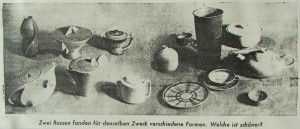
Here our discussion turned to Margarete Heymann-Löbenstein, whose rejuvenation of aesthetics in pottery ushered in a new vogue in ceramic design and unleashed new stylistic possibility.

Jewish Museum 18//4

“Nazi propaganda “Der Angriff” newspaper, May 20, 1935. Caption generally translates to “Two races have different forms for the same purpose. Which is more beautiful?””

All three of these figures were revolutionary, as innovators, intellectuals, artists, activists and/or scientists. Jewish citizens of the Weimar period were a mere 1% of the population, yet represented a higher percentage of avant-garde innovation and scientific discovery than the gross population, illuminating their desire for integration and eminence within the broad German culture, which they did with remarkable success.

Hello from Slovakia!

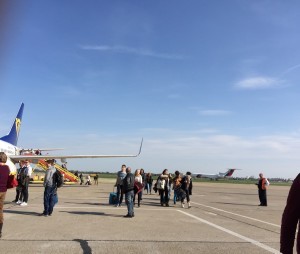
Well, here I am! My wonderful buddy Kristen and I are here in Bratslava in Slavakia for a fun weekend trip! After some trial and error I booked an Airbnb from a nice man named Eruch, and oh my god. After scrambling to get to the airport, we discovered that we had some interesting passengers joking us, from some Coachella-looking people to a whole bridal party. After an entertaining plane ride that involved stripping bachelors, video cameras, and high-stakes lotto scratching in the span of a glorious hour, we touched down and took our cab to our Airbnb house. And oh. My gosh.

Set in the outskirts of the city, the houses are big, beautiful, and colorful, and ours was no exception. After being buzzed in and donning the guest sandals, our host showed us around the house. From there he gave us a short synopsis about the bus and a history lesson of Slovakia under the socialist regime.

Woth hungry bellies we prepare for a night out in Bratslava, excited to try some Slovakian comfort food that our cabby told us about. More to come!Hello from Slovakia! Hello from Slovakia! Hello from Slovakia! Hello from Slovakia! Hello from Slovakia! Hello from Slovakia! Hello from Slovakia! Hello from Slovakia! Hello from Slovakia! Hello from Slovakia!

Jűdisches Museum

We visited the Jűdisches Museum on Monday and it’s now Friday morning, so I’m pretty late with this reflective note. This is mostly accounted for by the fact that I’m lazy and forgetful.  Part of it, however, is due to the fact that I don’t think I took very much away from the visit. Our tour guide was very knowledgeable, and he was more critical than you typically get from official tour guides. It was interesting to learn about the role of department stores in the history of Jews in Berlin (and vice versa), and I’m glad to have learned who Grete Löbenstein was. With rare exceptions I am really not a fan of guided tours. Especially not in places which already present an extremely produced experience to the visitor. I took too long eating lunch and did not get to see the section on the Jewish faith, and that is my fault. I can’t remember when it happened, but I bought a book by Martin Buber in the museum gift shop and I love it. I should maybe go back when I can wander around at my own pace and visit that section on the Jewish faith.

Jewish Museum

The architecture and concept of this museum was so fully synthesized together the closest thing in my experience that could compare is a Funhouse though that comparison feels really offensive to make. Perhaps it is that Funhouses have architectural dimensions that are presented in a way that makes you aware of the fact you are supposed to feel some emotional and bodily discomfort from it.This Funhouse phenomena could have also  been due to the tour guide as it seemed the feeling was pretty unanimous that he gauged our education and engagement level pretty low. I for some reason I thought we were going to see and cover a lot more than the cross-bearing Synagogue and three historically innovative jewish people though all of which I thought were nice odd pairings to each other. It did made me wonder if all of his tours were paced in this way or if it was because of how he perceived us.

Also whenever dealing with heavy material whether it be the loss of a friend or processing historical atrocities and attempts of reconciliation over the past century, anytime my mind wanders into another area the thoughts become amplified by the guilt of not having an appropriate and punctual feelings focused in me for the right duration time. I bring this up because through out this short but very long tour I kept imagining what our tour guide was like at a rave and if he might have some sort of of double life where he stays up till noon dancing and doing other nameless acts. The only thing that brought on this guilt-ridden mental excursion was the length at which he described the dance club that existed underneath where the old department store once stood.

After the tour I had a enjoyable but extended lunch that took up a large potion of our time to wander alone so with what time was left, Gabriel and I walked up the stairs to the dead zone made in honor of the architect’s family who died in the holocaust. Then we heard a tinging, metal sound, almost like heavy bells, and followed them. To be honest I’m not sure what came first whether it was the following of the sound or my awareness of it. We came to an installation called, ‘Shalekhet’ by the Artist Menashe Kadishman. I stood silently, watching a group walk across a narrowing hallway covered in cast iron faces that got smaller and darker the further in you walked until it dead-ends. I tried to listen deep with my ears and recording the tings on a device I had in my bag. four classmates walked up and no one wanted to step on the faces. I think we are a rather sensitive group, myself included. I really like this about us.

Berlin Wall Memorial

We started at the Visitor/Documentation Center. While watching the two movies I felt a little feeling of sympathy and desire to better understand the context of peoples lives and the history of east Germany and the Soviet Union. Simple narratives always tend to put me off. I don’t know why but humans never got out of the habit of writing myths. This historical notion that the eastern block was enveloped in Ideology and false consciousness, thereby implying that the west was not at all in the midst of anything like that and not only brought down the eastern block but in the words of some historians brought an end to Ideology brings me back to Adorno in his essay “Art, Culture, Society.” In this essay he tries, as he always does, to describe the sneaking pervasiveness of false consciousness and how the slippery, bamboo-like fascistic tendencies can sneak their way into any uncritical gardener’s garden. He writes, “…the semblance of freedom makes reflection upon one’s own unfreedom incomparably more difficult than formerly when such reflection stood in contradiction to manifest unfreedom, thus strengthening defense.”(198)  Adorno understands the difficulty we have today in deciphering what is free, what our our freedoms and what is a free state, what are these things and what do they mean under free market capitalism? It is interesting to think about how much the definition of the word ‘free’ is augmented once conjoined with a noun.

I did also really enjoy learning about the process of demolishing, privatizing, monumentalizing, and reselling of the Berlin wall. Capitalism digested the iron curtain through a series of stomachs and valvic transfers much like a happy cow.

Post-Class

Setting foot in Europe was both exhilarating and suffocating. Maybe it was the feeling of being cooped up in little metal tubes for a cumulative fifteen hours or the fact that once landed in Frankfurt I was without a clue regarding where I had to go. All I knew once I set foot on European soil was that the ticket I had purchased for Berlin had been, on none but my own fault, scheduled at the wrong time. I didn’t know where it was I was headed, but I knew I was already late.

Add 4 and 1/2 more hours and I’ve reached Berlin! Whew, feeling good and ready to find some good German beer and meet the owner of the flat that I would be staying with for the next two nights until we came together at CIEE .

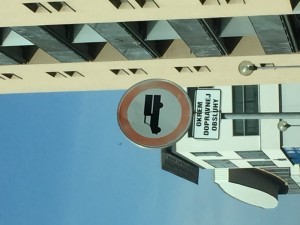
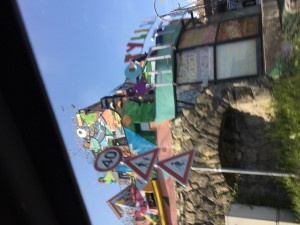
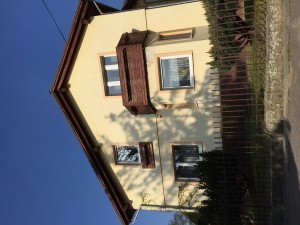
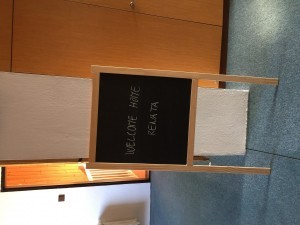
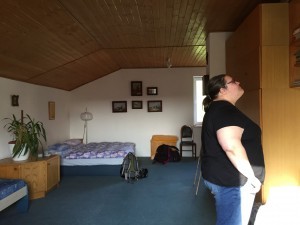
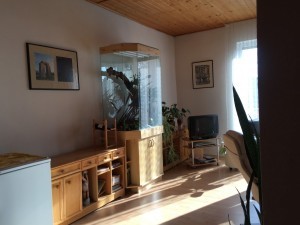
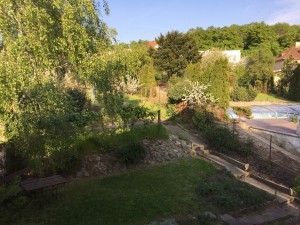
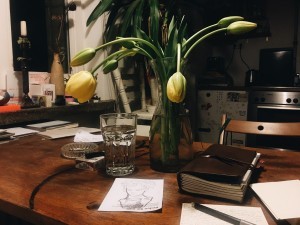
Below are a few images I snapped while I was hosted by Vesso –

Post-Class

Post-Class

Post-Class

Post-Class

Post-Class


Berlin Wall Memorial

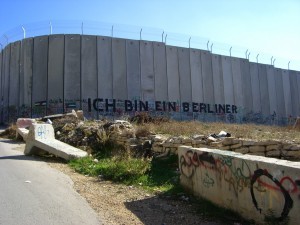
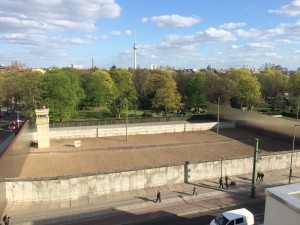
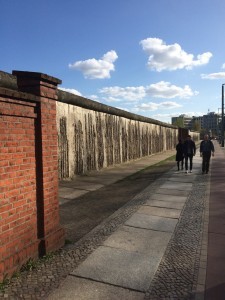
Yesterday we toured the Berlin Wall Memorial, complete with two interesting short films providing in depth detail about the Wall and the history surrounding it. The tour itself consisted of a long narrow park that followed along the nearby road. Along this road, the rebuilt wall had occasional openings for gates and passage through, until the outline of the church that was destroyed was reached. The face windows are a great effort to help remember those that died due to this division. Halfway along the park, there is a building across the road with a tower which we climbed all the way to the top. From there one could see the whole layout of the Memorial as well as a region of sand surrounded by walls that indicates the death pit which separated the different layers of walls. There are newly renovated apartments that seem to be on the park, but are actually just on the edge. They are right next to the indicated tunnels, which many people used to escape to the west. Maybe the tunnels still exist and on,y the people that live in those apartments know about it.

Berlin Wall Memorial Berlin Wall Memorial

« Older posts Newer posts »