Of Blood and Beauty

The Evergreen State College

Author: Ross Heymans (Page 3 of 3)

Street Art Walk

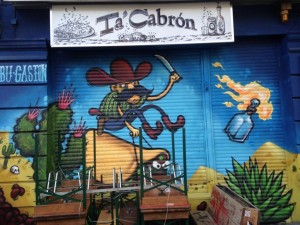
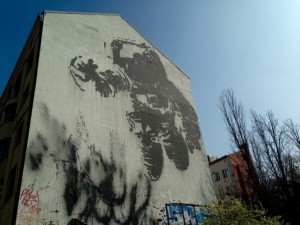
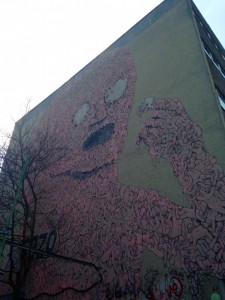
We went directly through the epicenter of the district fondly known by its area code 36 also known as Kreuzberg. To see some of the well known street art of this city we hopped down Oranienstrasse and Skalitzer Strasse all the way to the Oberbaumstrasse bridge. Along the way we got a chance to discuss the difference between tags of various mediums, commissioned works, and the way gentrification and a constantly shifting subculture of artists are changing and obfuscating the scene today. Here is a passage from Benjamin’s A Berlin Chronicle to help guide you along some of these images of the work we saw.

“Language shows clearly that memory is not an instrument for exploring the past but its theater. It is the medium of past experience, as the ground is the menu=I’m in which dead cities lie interred. He who seeks to approach his own Burris past must conduct himself like a man digging. This confers the tome and bearing of genuine reminiscences. He must not be afraid to return again and again to the same matter; to scatter it as one scatters earth, to turn it over as one turns over soil. For the matter its self is only a deposit, a stratum, which yields only to the most meticulous examination what constitutes the real treasure hidden within the earth: the images, severed from all earlier associations, that stand – like precious fragments or torsos in a collector’s gallery – in the prosaic rooms of our later understanding.” Pp 25-26
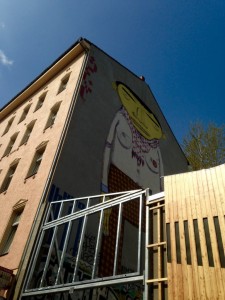
Street Art Walk Street Art Walk Street Art Walk Street Art Walk

Sit Spot: 1

Find a spot in Tiergarten and sit for twenty minutes.

After twenty minutes of uninterrupted awareness of yourself and your suroundings, being conscious of all five of your senses, leave the garden and go to a place where you can write in solitude.

Write for ten to twenty minutes about the experience of your encounter with a specific species as it relates to its place in Berlin.

Post your findings in the comments section below.

image

Senate Department for Urban Development and the Environment

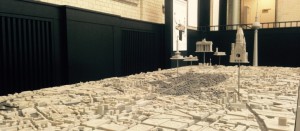
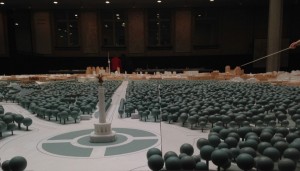
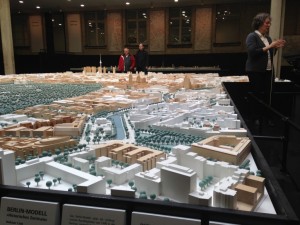
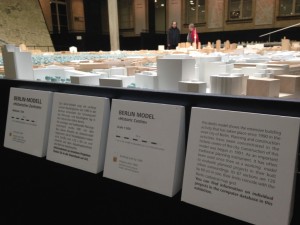
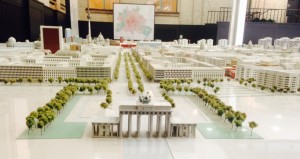
We saw four models of what Berlin was, is, and is becoming on this trip orally translated by a woman named Ursula.

On one of the models we discussed we were able to see three different colors of buildings that represent the architecture since 1945, since 1990 and the new things that are popping up. Our discussions surrounded the idea of what it means to change the space in Berlin architecturally or otherwise and where those ideas and projects come out of. An incredible matrix of culture, history, government, economics, etc that become driving forces for new interpretations of what is important to keep and what is useful to add on.

There is of course so much more to be said about the possibilities of this model and incredible anecdotal compilations that are just as important. My intention is to leave some space for this model city to breathe in the images I have to represent it here.

A touch model for the blind.

Senate Department for Urban Development and the Environment

A model with the old, the current, and the aspirations.

Senate Department for Urban Development and the Environment

Senate Department for Urban Development and the Environment

Senate Department for Urban Development and the Environment

A model of east Berlin under The GDR.

Senate Department for Urban Development and the Environment


Newer posts »