Musical Cities

The Evergreen State College

Tag: Uncategorized (Page 8 of 27)

trains

As I’m sitting here I am literally bursting with energy even though I haven’t slept much. I have been having to coordinate my recent plans around the train strikes that are happening in Germany. The strikes started on Monday and are going on for 10 days supposedly. It’s really messing with my plans and I had to completely change things. I originally had a show booked for tomorrow in Leipzig but had to cancel it because of the train situation and the options for getting there are too stressful for me to deal with right now. Lindsy and I found a way to Berlin tomorrow though that way I can still play my show there at Madame Claude’s on May 8. From there we are taking a flight to Paris a day early before my first show there on May 11.

11176582_509696462515377_1215229684_n

Earlier this week Lindsy and I took a train to Hamburg where we met up with Against Me! (the band I mentioned in the previous post). The train was about 4 hours long and I had time to read one of my books, Nico: The Life and Lies of an Icon. I am almost done with the book and couldn’t put it down. I do like to stare out the window occasionally while riding the train but I feel it’s the best time for me to get my reading done. Currently I am sitting in the dark with my candles burning. I have deemed them mine with the drop of oil, the carving of a symbol. I have found that Nico was extremely into candles and found myself relating to her quite a bit. “Candles make stars of light. A room is a universe.” Nico had said (P 199). John Cale of The Velvet Underground said, “Candles. Yes, candles. Candles everywhere.” The book I’m reading about Nico has really opened my eyes to who she was as an artist. Understanding the roots of her German childhood really frames the portrait of her life. As a child she experienced numerous things that would have left someone with PTSD (something she had but never was diagnosed with). Traumatizing events like seeing Jewish people being railed away in carts during WW2, being given a lampshade made of human flesh, a bar of soap made of human flesh, and being raped as a 13 year old by a man who was tried in court and hung (many women testified against him). Events like these made Christa Paffgen (Nico) into the person she would be her whole life; a detached nihilist who sang with a hauntingly beautiful voice. Such sorrow is heard in her singing, it is something that cannot be replicated. It stands alone in its powerfully low androgynous depth. During interviews she would usually just say “ho ho ho”. I have never read about a more interesting human. She was born in Cologne, a city about 20 minutes from Bonn. During my stay here I have been to Cologne about 6 times. Before she moved to New York City, Nico spent a lot of time in Paris and London due to her modeling career. I have already been to London and will be in Paris soon. While in Hamburg, Laura Jane Grace of Against Me! asked me if I wanted to go to Amsterdam with them the next day and open for them at Bitterzoet. I said yes of instantly, double checked with Lindsy, and she was on board immediately. The next day I opened for their sold out show and was met with love from Against Me! fans. It was Lindsy’s first time in Amsterdam and my 2nd time. We had to go back 2 days later for another show at a government funded punk community center called OCCII. The people who volunteer cook vegetarian food for the band. It was great to see two different sides of the music scene in Amsterdam.

11186821_840311606057697_267263854_n


This week I went back to the Beethoven house to have an audio tour after reading more of the Beethoven biography. Going there a second time around was definitely a good idea. I could actually understand all of the items on display and their history this time. I viewed paintings of Christian Neefe, Beethoven’s music teacher as a child that encouraged him to compose his own music. They don’t allow pictures in the Beethoven house or I would haven taken photos of the original compositions hand written by Beethoven.


Tonight we went and saw Salome, the opera composed by Richard Strauss. I already knew the premise and how it would end because we read about it in The Rest is Noise. That still didn’t take away from the creepy ending with the three decapitated heads being served on a platter. This version of the opera was more modern than I had pictured in my mind. The set looked like the 1920s.

IMG_4469

Bonn Amsterdam and Berlin

I’m sitting in Bonn Germany. In the kitchen of a historic house. The Sunflower Goddess grandfather clock is ticking behind me, and chimes every 30 minutes. The dishwasher is making melting water dripping sounds simultaneously. The tiles are red, and original from the 18th century. My heart is beating fast and it is 1am here. The trains in Germany are on strike, and all long distance trains are out of order. Lizzie and I had plans to go to Leipzig tomorrow for a show. She had to cancel the show because it takes 4 guaranteed train connections to get there. The risk of us getting stuck there, or somewhere in between, are greater than the benefits of performing the show. So tomorrow we are going to Berlin via ride share so Globelamp can perform on the 8th at Madame Claude. From Berlin we have a flight on the 9th to Paris so Globelamp can perform 2 shows in Paris on the 11th and 13th. From Paris we are going to Barcelona. We are mid figuring out what to pack for this next stretch of the journey.

These are some musical cities! Europe respects art with such a degree of passion that I feel more inspired than ever! When I was on the train to Bonn from Amsterdam I was sitting at a table seat with some curious strangers. One of which works for Deviant Art and wants to see my art portfolio! We have been conversing and I am excited to get some of my paintings out there.  I have been working on some more that are half way done. One day I’ll post about 3 at a time. Everything feels back logged right now. The internet is slow, so slow that it feels like shooting darts into a dark tunnel. Booking trains, flights and arranging transportation in general has been a nightmare since the train strike. The reason the trains are on strike is because the conductors want more pay. Traveling by train all through Europe is otherwise incredible. There are usually trains everyday 10 minutes for small routes and trains every 1 to 4 hours for long distance routes.

Since the Against Me! show in Koln, and meeting them in Hamburg ,Lizzie also opened for them in Amsterdam. A brief introduction to Hamburg; our first train stop into the city from the main train station was the Reeper Bon. This was “comforting”. Hamburg is a large city with a lot of districts. It has a port and is North and central Germany. There are more distracts than I could get a handle on in one day. Some lasting impressions were the red light district block. Very bold, red, regulated and legal, with a police station near. In exploring the history of Germany and Europe in general, Hamburg is a city that is built tall with flats, similar to Berlin, except more spacious from one building to the next. From what I saw, similar to Berlin there is a good mix of old and new buildings.

From Hamburg Lizzie and I rode in a bus to Amsterdam. We called the bus a submarine because it had 12 beds, a fridge, and 2 communal areas. It was packed tight and did not expand. It was a very musical experience. From the streets, pedestrians asking Lizzie to sing louder when she was jamming with Laura Jane Grace on the sidewalk. Music takes you to any city when you make it, live it, breathe it. Every city is musical, and connections can sometimes lead you to unexpected opportunities like opening for Against Me! in Amsterdam at the Bitter Zoet sold out show! The opportunities come as you go, out the door, and explore! Sometimes you just have to jump! Plans get you out the door, and into more connections.  In Europe, it has been proven to me that it is less about who you know, and more about what you do. What you do, the skills that you have are what opens doors. I was told this by a fellow Olympian who has been living in Paris and, now Amsterdam for the last 10 years. I have been proven this the entire trip. My life seems to be in awe, passion and devotion to art. This translates to any country. Particularly in Europe thus far. If I find a way to make a living out here, I’d stay. No questions asked.

In Bonn I’ve seen two operas and a castle. The first opera was Fidelio, Beethoven’s first and only opera. It was in German. Fidelio is a woman dressed as a man to play the role of a prison guard to save her husband. Fidelio was the first opera to stage in Berlin after WWll at the Theatre Des Westens. It is a story of sacrifice because the woman risks her life to be a male prison guard to save her husband, heroism because she makes a big scene to rescue him, and comes out to the other prison guards as a female, and triumph because both of their lives are saved at the end.

Then, the next morning we journeyed an hour drive to the Eltz Castle. One of the only original castles in Germany, that wasn’t destroyed in the war with Sweden because it was hidden in a foresty cove. The Eltz family is a mystery that I have just begun researching. I saw their castle today. I will dig up some good connections to the role the Eltz family played in early Europe! For now, this is a great resource for information about the castle.

http://burg-eltz.de/en/850-years-history.html

After a day exploring Eltz castle a few hours later we went to see the opera Solomei.

Internet is starting to go out again….Must publish before I lose everything. I’ve learned my lesson the hard way.

I will have to post pictures tomorrow.

Until then, Cheers.


Speedy Ortiz at Johnny and Brenda’s

On April 27, I went to a local music hall and bar called “Johnny and Brenda’s” to see a live performance by Speedy Ortiz.

JohnnyBrendas_M.Kennedy09-680uw


Johnny Brenda’s is a bar, restaurant, and music venue located in the Fishtown section of Philadelphia. Featuring a world-class sound system, and a balcony (a rarity for a room it’s size), it is unlike any performance space in Philadelphia. It maintains the feel of an elegant, iconic historical social hall with design elements reminiscent of a turn of the century burlesque club or theater. Johnny Brenda’s bar is 1.3 miles from my house.

Heres a map!

Screen Shot 2015-05-06 at 5.40.10 PM


About Speedy Ortiz

Speedy Ortiz Pic


“From their start as a full band, Speedy Ortiz found a warm reception in the Bay State’s rock underground, from Boston’s basements to Western Massachusetts’ experimental scene. In March 2012, the band recorded and self-released a two-song single (“Taylor Swift” / “Swim Fan”) with Paul Q. Kolderie (Pixies, Hole) and Justin Pizzoferrato (Chelsea Light Moving, Dinosaur Jr.). Establishing both creative momentum and a fanbase earned through near-constant U.S. touring, they continued with the Sports EP, a loosely conceptual 10″ released on Exploding In Sound that June.

Their debut album Major Arcana, named Best New Music by Pitchfork, saw the evolution of Speedy Ortiz from a lo-fi project into a wholly collaborative effort, marked by Darl Ferm’s thick bass lines, drummer Mike Falcone’s boisterous fills, and the counterbalance between guitarist Matt Robidoux’s anti-melodic playing and frontwoman Sadie Dupuis’s angular riffing. The end result is a band able to distill their influences and impulses into something at once dissonant and melodic.

For their Real Hair EP, Speedy Ortiz has teamed up with Paul Q. Kolderie once again, resulting in a collection brushed with effected guitars and pop-conscious vocals. Here Dupuis attempts to untangle concerns about misrepresentation of identity in four songs delivered with the band’s signature abrasive clarity.”-http://www.johnnybrendas.com/event/784507-speedy-ortiz-philadelphia/

This concert was the third concert of their tour to support their new album “Foil Deer.”

Speedy Ortiz Poster


I really liked this poster and I recognized the art from somewhere. I couldn’t quite remember so I did a little research. Turns out, the posters have been made by an artist named Michael DeForge. Michael worked with cartoonists of the kids television show Adventure Time. The style of art is reminiscent of the show.
Here is a short bio:

“Michael DeForge was born in 1987 and grew up in Ottawa, Ontario. He began drawing gig posters in high school order to get into clubs for free. He attended the University of Toronto and dropped out after two years in order to focus more of his mental energy on drawing dogs wearing sunglasses, or whatever. He spent a lot of time dishwashing. After a few years of experimenting with short strips and zines, he finished Lose #1, his first full-length comic, in 2009. It was published by Koyama Press and won in the Best Emerging Talent category at the 2010 Doug Wright Awards. Issue 2 of Lose was released in 2010, and issue 3 is scheduled to debut at the 2011 Toronto Comics Art Festival. His influences include Jack Kirby, Eduardo Munoz Bachs, Mark Newgarden and Hideshi Hino.”

The more I begin to explore the music of Philadelphia, the more I realize how linked visual arts and music are.

Here is a video of Speedy Ortiz performing at Johnny Brenda’s!


May 5, 2015: A general introduction to Drone and Melody in native thinking.


Four heads on a bus from Manila.

Four heads on a bus from Manila.


Last week, I introduced ways in which Manila’s colonial history could be traced to Macéda’s work. This week, I will pick up where I left off, to elaborate on the distinctions José Macéda drew between the Western and Eastern “idioms”.

“To understand [native people’s] thinking and feeling, and to express this musically would be to step into another world freed from the constraints of a technological life today” (Maceda 1979). Macéda was strongly a humanist, asserting that since tools and technology reflect the guiding ideologies of a culture, a hovering focus on the latter is a more “valid” source of a culture’s musical essence (ibid). For instance, an instrument with three holes at different distances apart allude to the structural ideology which assigned those particular parameters. Macéda saw modern salvation in village ideologies because of what he saw in their values, demonstrated through their musical practice. (What might we find reflected in the prevalent musical practice of our own culture?) And so, this post will provide more ideological differences than specific techniques, in a condensed form.

Fuzz.

Fuzz.

The "kubo" I am staying in.

The “kubo” I am staying in.


As Macéda collected, the overarching characteristic which makes rural Southeastern Asian music distinct is the importance of indefinite and diffuse musical elements, through a unique use and definition of drone and melody. This is opposed to the precision and closed-system that comes with the Western employment of “development” and cadence within demarcated time.

Macéda makes a summary of the concept of time in Southeast Asian rural music: “This simple music is based frequently on repeated sounds, with no stresses, showing a concept of time without marking time, like a straight line with no end – a concept of infinity” (Macéda 1979). A sense of “infinity” is achieved through a inclusive sense of drone and melody mainly centered around colour (a broad sense of “tone quality”) dynamics rather than specific and fixed pitches. From his field work in various remote villages in SE Asia, Macéda describes drone as “understood not only a sustained sound” but also a periodic reiteration or continuous repetition of several tones from pitched or non-pitched percussive or non-percussive sources.

His definition of melody is a “permutation” or arrangement of multiple tones, pitched or un-pitched.  This contrasts with the Western definition of melody in which tones are arranged in definite pitch relations. He categorizes drone and melody into six types of combinations:

(a) drone without melody; 
(b) multiple drones;
(c) drone and melody simultaneously;
(d) drone and melody consecutively;
(e) several drones to one melody;  and
(f) several individual drones to make one melody (Macéda 1976).


He employs all of these combinations throughout “Udlot-Udlot” (1975), see video below this paragraph. He writes, “written melodies can be seen, whereas drones can only be heard” (Macéda 1986).

Click here to view the embedded video.


The natives’ concept of time in their music reflects the relationship they aspire to uphold with the universe through their way of life. This relationship with nature is: intimate, equilibrious, endless, yet indefinite, just as in their drone-melody relationship. Macéda sees the parallels between musical practice and non-musical lives not as a mere analogies, but actual connections. One area where he realized this was in the diversity of musical and domestic uses SE Asian natives derived from the richness of sound materials found in their natural environment – e.g. bamboo, coconut shells and leaves, animal parts, rice stalk reeds, carabao horns, vines, hair, wood, etc. (Maceda 1979). In such a rich use of ‘natural’ sound material, Macéda saw a “profound respect for nature”, in which the natural vibrational/tonal decay of the sound material, once struck,  “describes time” in the music (1986). In other words, the tonal envelopes of sounds as a central measurement of time, derives from a cultural value placed on the natural environment which produced the sound material. Hence, as he earlier wrote, “time is measured by natural events, such as the migration of birds, flowering of plants, or sounds of insects in the dry season”, instead of “fixed clocks ” (Macéda 1976).

Masantol, Pampanga.

Masantol, Pampanga.

Masantol, Pampanga.

Masantol, Pampanga.


This points to the role of sonic “colour”, in conjunction with pulse, as one central indicator of the passage of time, rather than a precise calculation and strict adherence of duration based on one’s position in relation to a metrical beat, marked by a pitch or harmonic stress. Pitch hierarchies sometimes exist in native practices, but they are created through flexible durational or drone/melodic patterns. (Defining the SE Asian concept of colour deserves a whole section, so this will have to wait for another post for elaboration). The former yields more arbitrary, ambiguous, unpredictable time structures; whereas the latter is more specific and, thus, makes the music more identifiable in terms of its temporal position. In the beginning of “Udlot-Udlot” (see video above), we can hear Macéda employing “unfixed” or “imprecise” measurements of time and pitch in the “TINIG” (voice) sections, his directions:

“Singers sing a pitch given by a leader. The pitch is held for approx. 10 sec. As one singer takes a breath, another continues singing, thereby prolonging the pitch. The passage of time is indicated by a leader who swings a flag left to right. Each swing should take approx. one sec. The sliding voice (gliss[ando]) takes 5 sex. and the ‘rest’ or silence takes 5 sec. This whole pattern – 10 sec. plus 5 sec. plus 5 sec. – is repeated many time over for 4 min., according to  to duration indicated in TAGAL [‘time column’]…”


A roof beyond the wall.

A roof beyond the wall.

Incidentally, there is a correlation between this musical dichotomy and  Kevin Lynch’s idea of imageability of a city. With words like identification, predictability, ambiguousness, etc. I see how urban navigation, and perhaps even spiritual well-being in a city, may depend on similar factors….

Macéda makes the philosophical claim that the technologies of the modern city “strive to promote constant and increasing production, in contrast to the primitive thinking which seeks to minimize the use of technology and to emphasize a life of accommodation with the process of nature” (Maceda 1978). Manila is precisely that kind of modern city which he contrasts to “primitive thinking” (see previous post titled: “First week in the Philippines”), owed to its ingrained colonial past. D.R.W. Irving writes in Colonial Counterpoint, “With its proximity to the markets of island and mainland Asia, Manila grew quickly into an important commercial entrepôt and thriving international community” (23). Western enterprises began, with Spain’s colonization, to displace the “primitive” aspiration and practice of an infinite, equilibrious relationship with nature in what became Manila. And, correspondingly, the local musical practices shifted, reflecting those new enterprises.


A very Western establishment. Manila.

Part of the modern experience. Manila.

Week one in Paris

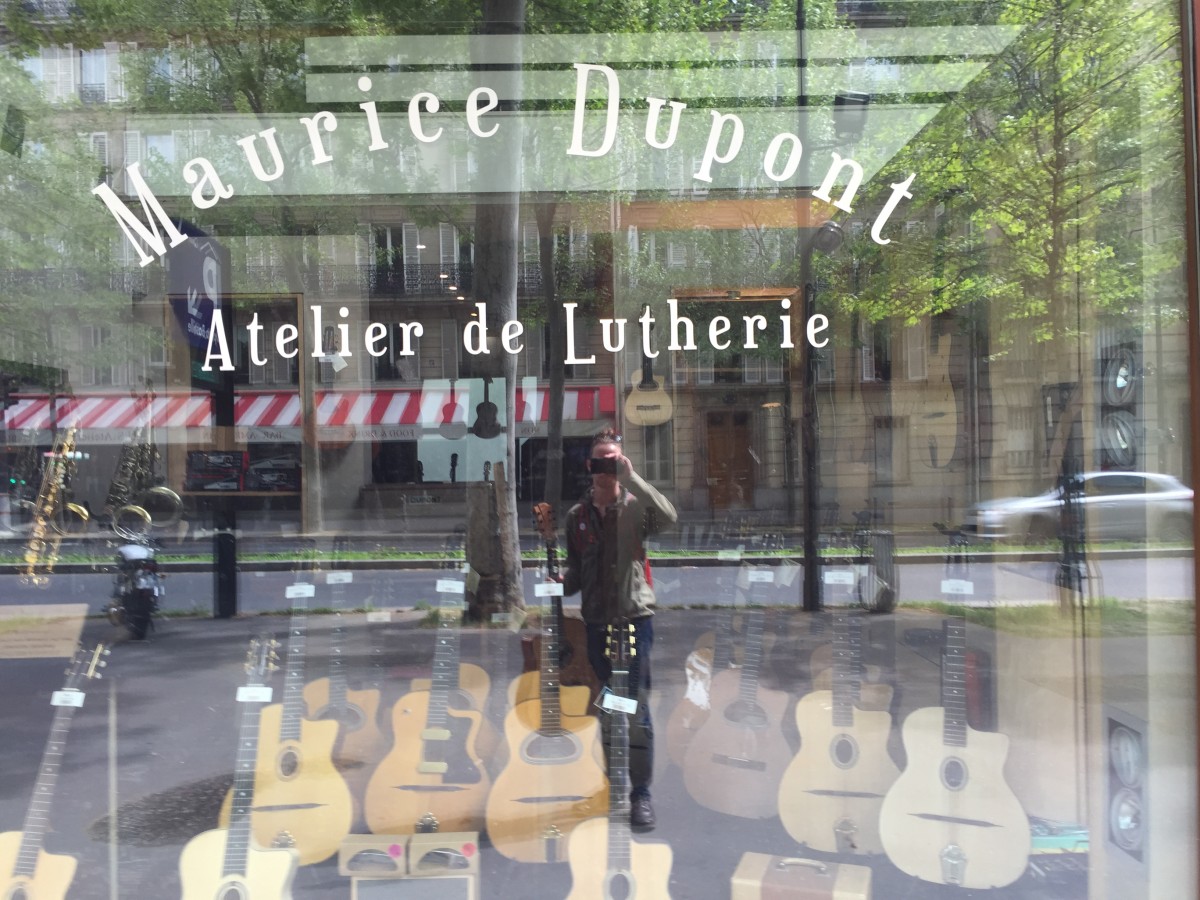
IMG_1726Paris is an amazing and inspiring place to study gypsy jazz. I found a place to buy a guitar the second day here and have been practicing every day. Which is awesome because I haven’t really had the time to do that since last summer! So the first few days in Paris I did a bunch of touristy stuff like see the Eiffel Tower, Le Champs Elysees, Le Louvre, Le Palais Royal, and many others. I’ve done tons of walking! It’s a bummer that it has been raining so much. And when it’s not raining the wind is blowing so hard! Im reminded of this video I saw a few years ago.

But nothing can really get me that bummed while in Paris! It really is a beautiful and romantic city.

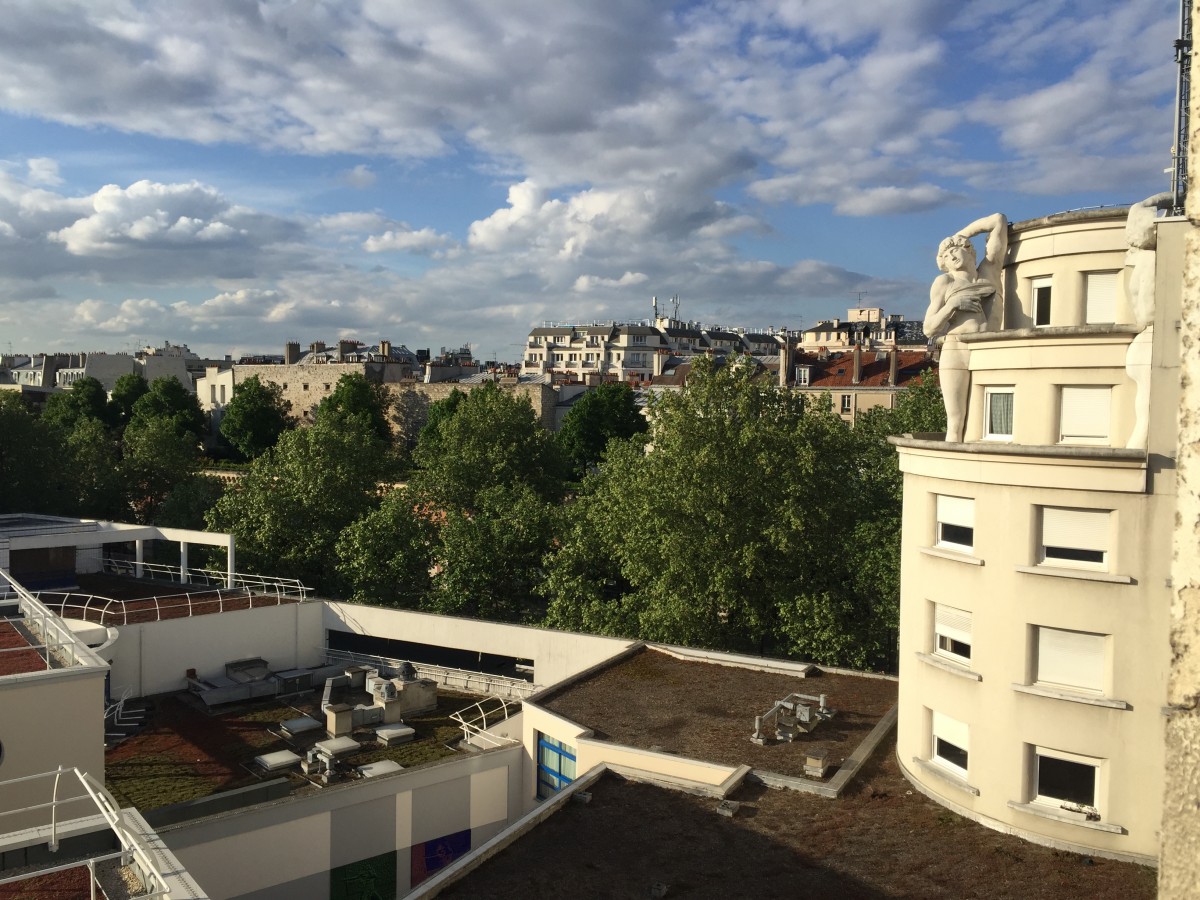
So after I got being a tourist out of my system I was able to settle in an get studying and practicing. I’ve been getting up every morning and getting myself a delightful breakfast at a boulangerie or sitting down at a café and reading over un café et tartine avec un jus d’orange. C’est très français n’est pas? Then after breakfast I come home and practice for a hew hours, sitting in front of my big open window in my room (the picture below the view from my room). Not a bad IMG_1723pace to practice!

Every afternoon and evening I spend out in the city walking around seeing what there is to see. listening to street performers, sitting at cafés reading (but mostly people watching), and best of all, listening to gypsy jazz at wonderful little clubs, restaurants and bars. I am fully immersed in exactly what I came here to study! Im reading, listening, and practicing this incredibly style of jazz all in the city where it was born. I can think of no better way to learn the art form.

This week I have continued to read the book I read last week called Gypsy Jazz by Michael Dergni. He goes into a bit about Django Reinhardt’s life growing up and his progression as a musician. What makes the guitar style in jazz manouche so different from other form of jazz is the way Django was forced to relearn how to play guitar after is fretting hand was totally scorched when his caravan caught on fire. His ring and pinky finger were totally paralized after he recovered. So this new style of guitar playing that people musicians still learn and play even with all there fingers working, was born from Django’s terribly accident but amazing drive to still play guitar. Even though no one thought he would ever play again.

The term jazz Manouche comes from the name of the Romani people that Django was apart of. In Paris there live the Gitans, Tsiganes (or Tziganes), Manouches, Romanichels, Bohémiens, and the Sintis. In much of continental Europe, Romanis are known by names cognate to the Greek term τσιγγάνοι (tsinganoi).

The Romani (or Gypsy) culture is rich and beautiful and so full or art. I wish there was a way for me to experience more of it while here. This upcoming weekend I look forward to heading up north just outside of paris where le marche aux puces de saint-ouen is. This is the flee market where Django grew up and strummed his banjo on the streets and in the bals at night. I will be able to see where his caravan was once parked and some of the old bals where he used to play. Many of them are now turned into night clubs that bump electronic dance tunes all night which is awesome but it would have been cool to hear the valses, chansons, cabrettes, the outlawed java, and of course jazz manouche!

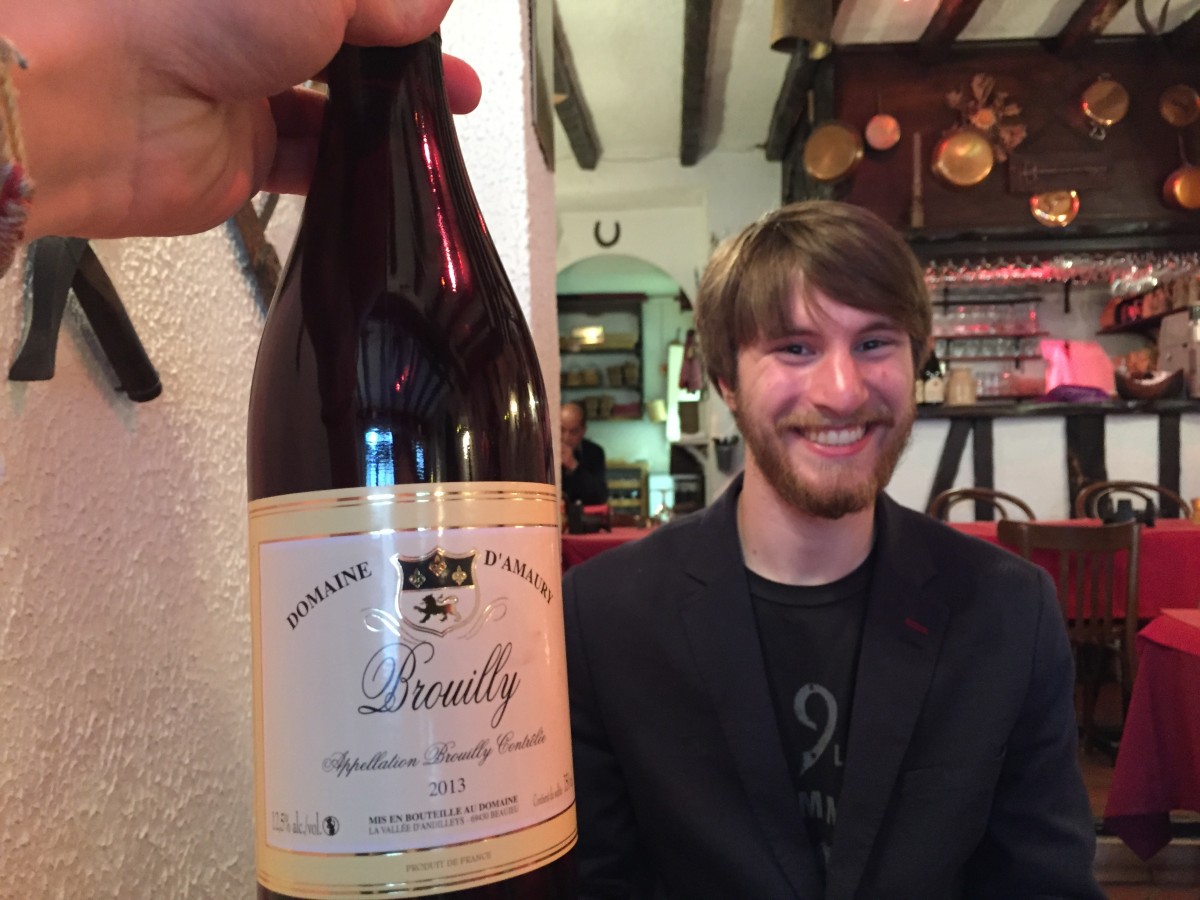
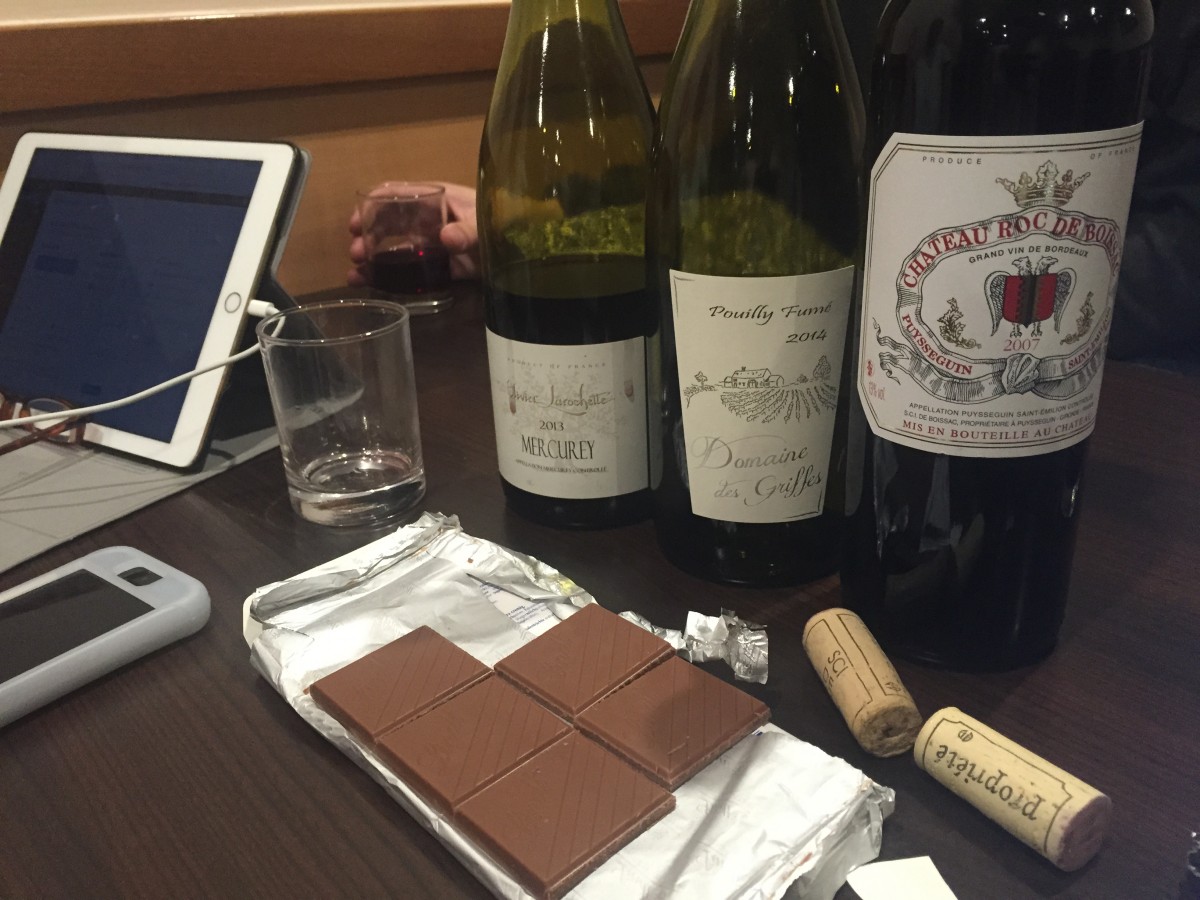
This week I’ve been able to spend a lot of time with Rai, her daughter Taj, and Tristan. It’s great to experience this wonderfully city with people I know. Almost every night we have been able to hear live music, and luckily for me they have been into listening to gypsy jazz! We have eaten so much good food and drank so many wonderful cocktails and glasses of wine together.

IMG_1809 IMG_1827 IMG_1856

Tristan and me at a little Fondue Restaurant


Taj, Rai and I at Le Sacre Coure


Us working on our blogs together…….


IMG_1857


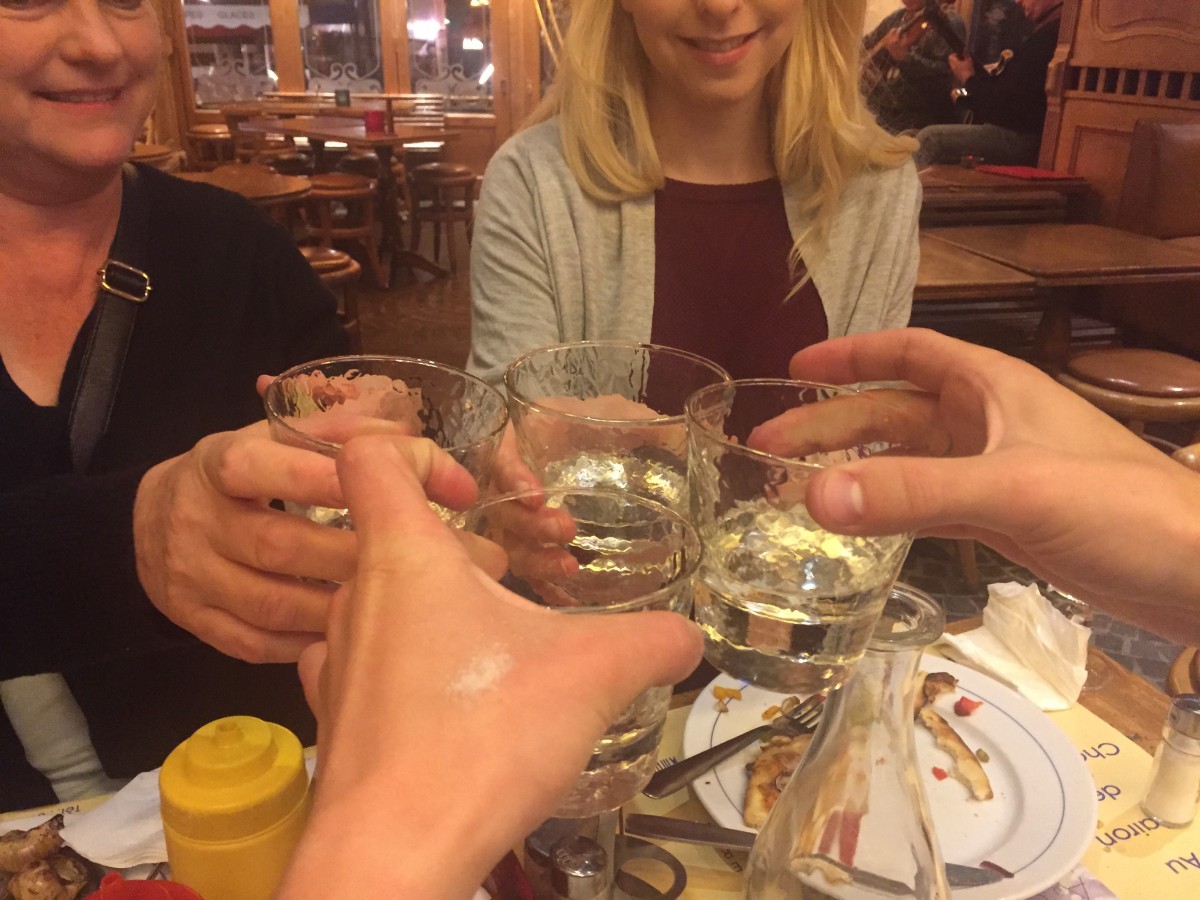
Having our cinco de mayo tequila shots while listening to a Parisian jazz duo. And we had escargot! It was so good!


Redirection? – Old Issues; New Questions

I’ve begun to rethink my research’s focus.

Growing up in San José, I was often upset by how hard local music seemed to be so difficult to come by. Most people listened to rock, pop, hip hop, and country–the kind of top-50 music you stuff you could not avoid on the radio if you tried, and no one I knew could be bothered to branch out. For those middle and high school kids who were interested, the big thing was to see bands play in the party room in the back of the Nickel City arcade. Of course, by the time I finally got in on it, it was already getting shut down (dancing was not allowed at my first show). My brother and I once drove as far as Cupertino just to see a band from our own school.

I always figured that this impression of scarcity was a result of my own inexperience, but since I have come back to town, sat down, and directly applied myself to seek out music in the city, I have come to rethink that. Through four weeks in San José, and I have only been to one show in the city. On top of that, in the entirety of Gimme Something Better, a book by Jack Boulware and Silke Tudor on the history of punk rock in the Bay Area, San José is not mentioned a single time while the south bay is only referred to twice, essentially to say that nothing was happening there.

This seems to remain the case; I’ve been able to find two shows in town (one of them 21+), and most of those musicians I have managed to see have been playing in San Francisco and Santa Cruz. The independent music and art festival, SADFEST 2KX5, coming up towards the end of May will take place over one night in Dublin, CA, and two in San José, yet only three of the twenty-eight bands announced are actually from the city. Compare this to any given night in Olympia, where there’s likely to be a handful of shows featuring plenty of locals. San José is the tenth largest city in the United States, with a population of just under a million, yet San Francisco (pop. 837K), Seattle (652K), Portland (609K), Oakland (406K), Berkeley (117K), Santa Cruz (63K), and Olympia (48K) all have much more impressive music scenes and musical histories. The question I inevitably have to ask is why is there so little music in San José, especially for a city its size.

I‘ve been considering and researching a number of factors that might contribute to this. For one thing, San José is a very big city (the tenth largest in the country), which may have a suffocating effect for would-be artists. For another, the layout and architecture of the city can feel very homogenous and uncompelling, which may impact its artistic psyche. Some of the people I have interviewed so far have pegged the lack of venues in recent years, which may be linked to a shift in population as the computer industry continues to draw in wealthy tech-types who’s interests–and money–may be oriented towards night club types of places. Wealth in general may be a factor, considering that San José has the most disposable income per household among large cities (population>500K) in the United States. Then again, some of these characteristics are recent developments. San Francisco has historically dominated San José, and with their renowned artistic and liberal reputations, San Francisco and Berkeley may act as vacuums or magnets that draw all the artistic people away from the south bay.

I will be addressing each of these ideas in more detail in upcoming posts. I regret that I have not been keeping up with my website. Between my car getting wrecked and an extensive series of complications and let-downs associated with that; trying to make sure that I don’t end up homeless again this Summer from two states away and a series of complication and let-downs associated with that; trying to actually get out and see music and a series of complications and let-downs associated with that; coming back to live with my parents and series of frustrations and complications associated with that; nursing and running errands for my dad, losing both of my cameras; and getting banged up a bunch since skateboarding has been my soul mode of transportation, my board is falling to pieces and the sidewalks in San José are trash… I have been feeling very overwhelmed and very disappointed. I’m out of my funk now though. I’ve got a car and a camera to use and a list of upcoming shows and festivals, and I’m going to be recording interviews and music. I’m back in it!

Week 5 Response

I’ve reached the halfway point of this field study, and I’m proud to say that, over this past week, I’ve really hit my stride. I’m proud of what I have accomplished thus far, and, while this workload is certainly stressful, it no longer feels overwhelming. Instead, I feel constantly revitalized by the information I’m acquiring. On top of this, I’m starting to see my field study really blossom as all of the connections in my curriculum become more and more apparent, and I begin to take on new subjects and responsibilities.

This past week I’ve done a bit of research in an attempt to understand the peculiar sound qualities of a site here in Olympia. In West Bay Park there’s a path that leads to a stone circular area. In the center of this spot is a metal circle with what looks like a cog or wheel printed on it along with the words “Rotary Point.” When you stand on it and speak your voice sounds like it’s being thrown back at you. I contacted Dan Lehuta of the Rotary Club of Olympia in hopes of finding out if that spot was consciously designed to create this effect, and, if so, what it was that actually caused it. Dan told me that the company that constructed the site was called Berschauer/Phillips, now FORMA Construction. I contacted them, and asked about the site. The man who was assigned to designing the construction was out for the day, but they let me leave a message. I’m still waiting on a reply, so… cliffhanger.

Last Tuesday I watched the film, Amadeus. The entire time I watched it, I was wondering which aspects of the movie were historically accurate, and which were embellished or entirely fictional. The next day I watched the A&E biography on Mozart, and was surprised to find that the film was closer to the truth than I had anticipated. Most of the embellishments occurred in the construction of Antonio Salieri’s character as the villain.

Since my last post I’ve also watched the first two videos in Howard Goodall’s series, How Music Works. Each of the videos in this series is based on a different aspect of music, and the first two are about melody and rhythm. It’s a difficult thing to sum up such huge concepts in the course of a fifty minute video, but I think Howard Goodall does an effective job. Though some of the ideas he presents are very familiar, he often explains them in a fresh way which I hadn’t previously considered. Such as the human tendency to divide beats into twos and fours as connected to how we walk on two legs, or how the popularity of compound meter in Anglo-Celtic folk music could be related to their “speech patterns and popular poetry” (think of limericks). There are also plenty of ideas he discusses that I was previously unaware of. His explanations for the development of different scales and modes throughout history was a great supplement to Helmholtz’s account. In particular, I found his demonstration of the melodic minor mode in three part harmony to be helpful. Perhaps the most interesting thing I learned from him though, was actually an explanation for something I had begun to notice in the popular music I’ve listened to. I remember the first time I noticed it actually. I was listening to Elton John’s Rocket Man and I noticed that the melody tended to land right before the chords were actually voiced. Afterwards, I noticed this in a lot of other popular songs. In his video on rhythm, Goodall traces this phenomena to Afro-Cuban music in which the melody tends to anticipate the harmony.

As you may have noticed, I began posting definitions to the list of terms found at the end of each chapter of Allen Forte’s Tonal Harmony in Concept in Practice. This has proven to be extremely helpful for me because I’ve started looking up the terms before I read the chapter which seems to keep me more attentive when reading. As Allen Forte puts it on page 228, “the topic of this section is properly the subject of an entire volume. However, the vast scope of the subject need not deter us from outlining certain of its essentials.” This basically sums up my experience with his text so far. There is a wealth of knowledge to be found in reading it, but tackling all of this knowledge at the rate I am (as well as in conjunction with other things such as Helmholtz’s text) has been very challenging. I am, however, learning an extraordinary amount about a subject I love, and am continually making improvements in how I absorb the information. As I said before, listing the terms has helped me, and supplementing the text with routine exercises and lessons on musictheory.net has been incredibly helpful. I’m also planning on working through some of Forte’s exercises in counterpoint with my new piano teacher.

Right now, I want to write about Helmholtz. I finished Hermann Helmholtz’s On the Sensations of Tone – As a Physiological Basis for the Theory of Music earlier today. I don’t think I could have picked a better book to begin my study with. It was certainly a challenge to work through some of the denser sections, and I had to do a fair amount of research outside of the text in order to fully grasp the material. However, the text has proven to be one of the most thought provoking and informative  books I have ever, or likely will ever, read. I highly recommend that anyone with any serious interest in music or sound read this book.

In Part I, Helmholtz develops Fourier’s Theorem which posits that all sound which is reasonably continuous is, at its most fundamental level, a sum of sine or cosine waves. He makes the distinction between simple tones (a sine wave) and compound tones (a series of partial tones based on the fundamental pitch- each of these tones can be expressed as a sine wave). The notes which are most commonly used in music are compound tones with partial tones based on the harmonic series. He also explains how the ear has the tendency to create its own compound tones when it hears a simple tone of significant volume.

In Part II, Helmholtz tackles the physical properties of two or more tones sounded in tandem. He describes the how, when two tones are sounded together, a combination tone is created in the ear. He also writes about how the phase of two tones creates beats, explaining why discordant tones sound rough while consonant tones sound pleasant and stable. With these two phenomena in mind, Helmholtz sets out to describe which intervals are most consonant and which are most discordant.

In Part III, Helmholtz develops his physical analysis of sound to explain the development of music theory. Here, Helmholtz gives an historical account for the development of what he calls “modern music,” and by this of course he means Western Classical Harmony. Though Helmholtz obviously holds Western Classical Harmony in a higher regard than any other musical system, he stresses the fact “that the system of Scales, Modes, and Harmonic Tissues does not rest solely upon inalterable natural laws, but is also, at least partly, the result of esthetical principles, which have already changed, and will still further change, with the progressive development of humanity” (235). It was in this part that Helmholtz’s research became much more applicable as he applied it to a musical system which I am familiar with, and am currently studying. Of particular interest to me was his explanation for the evolution of equal temperament. I found it fascinating that Helmholtz cites a Chinese prince, Zhu Zaiyu, as having probably developed equal temperament as we know it. I had also known for a long time that continually moving in fifths would get you through all twelve notes, but I had no idea that this was actually the process by which the twelve notes were developed. I also hadn’t known that equal temperament is actually produced by slightly detuning each of these fifths so that each semitone is of equal distance. The result is that we now have instruments which can play in any key, but the effect is that no interval is as “pure” as it would be if all of the notes were tuned in relation to a single tonic. Since equal temperament is so pervasive, it’s easy to not notice this, but, when compared to just intonation, the effect is startling. If you’re at all interested in hearing this difference, I’ll provide a link to a video which compares the two here.

In the conclusion of his book, Helmholtz touches on the philosophy of art, esthetics, as it relates to music. I find Helmholtz’s personal viewpoint on the subject fascinating, and am ecstatic that he leaves off here, writing: “Certainly this is the point where the more interesting part of musical esthetics begins, the aim being to explain the wonders of great works of art, and to learn the utterances and actions of the various affections of the mind” (371). I’m happy because this is precisely the line of thought I aim to continue in my study as I begin reading Philosophies of Art & Beauty.


Oakland: Hard Casual

“The mix speaks to you…it shows the inexplicable mutability of sound as different people share the memories brought about by the same songs. It demonstrates the uncanny power to metamorphosize, through audio alchemy, the passage of sound into a kind of unspoken story, that like its predecessor, the oral tradition, can pass on “tales” of songs.” -DJ Spooky

The night after my show in SF, I played in downtown Oakland at a Bar called The Rock Steady. The event was put on by an old friend Isador who wanted to have the night be female and/or femme identifying DJs only, and they (Isador) called it Hard Casual. Aside from Isador and myself, there were three other acts, the openers being a pair of DJs who did a back to back set. They went by the names MegaLow and Pariah Carey, and are in a really good band together called Silver Shadows, who I had seen play over the summer when I was in LA. One half of the duo was Margot, a good friend who I’d shared a practice space with in Olympia, and seriously one of the best musicians I’ve ever played with. We were in a Runaways cover band together roughly 5 years ago. Megan, her back to back counterpart that night I’d met just very briefly in LA, and I had heard that she used to DJ with producers and DJs in LA who I have been really excited about at events called Mustache Mondays and Night Slugs. Her and I got to talking throughout the night, and realized we had quite a bit in common with our musical interests, and when she found out I was thinking about moving to Oakland she told me I definitely should. After my set she explained how she is part of a people of color DJ collective called Browntourage (love that name) and said she would be interested in starting a monthly event with me if I moved to the Bay. She also offered to try to connect me with the aforementioned DJs and producers in LA which I can’t explain enough how exciting that is even if it doesn’t pan out! Those people are some of my absolute favorite artists right now. Needless to say, both of my shows were so incredible positive in feedback and opportunities. Plus it was great to see a group of old Olympia friends show up to see me play.
I was asked in a comment to describe my process for preparing a DJ set so here goes:
I consider several things before I even look through my music selection–

  • Where am I playing? (venue, house party, all-ages space, bar)
  • Who will my audience be?
  • Who asked me to play?
  • Who will I be playing with and what is their style?
  • Do I need to match my style to the other performers or not?
  • What is the vibe of the venue space, and the particular night that I am playing? What kind of music usually is played there?

I do that research, and often ask these questions to whoever I am in contact with about playing the show. If possible, I talk to the other DJs as well. Then I get an idea of what type of music I want to play and I compile a playlist that is often at least 3 times longer than the time I will be playing for. I

I work through that playlist by doing practice sets with minimal arrangement, though sometimes I do start out with a good chunk of songs I know I wanna play and have ideas for their placement in my set. Eventually, I am able to eliminate songs that will not work for the set. I often start recording my sets during this part of the process so that I can listen to them when I am driving or walking somewhere to see how they sound to me when I’m only listening and not actively mixing songs. After that, I come up with a series of songs I know I want to play, and I think about the flow of the songs, so I start to think about what order they would sound best in. Then I put those together and leave at least an extra hours-worth of songs in the playlist that I can use if those songs don’t all get played how I planned, because a huge part of DJing is reading the crowd, and intuiting what they are responding to. Maybe I have a solid set but the audience loses it over the song I play halfway through my set and suddenly I know that theres this other song they would like and it wasn’t planned but I throw it in next and go from there.

That’s what I did for my shows in the Bay, but I do that for every show, to an extent. Being in school and working part time sometimes doesn’t allow me to go as deep into my process as I would like to, but all those parts are always there. How much I practice is really the thing that changes from show to show.

One last thing is that I’m reading an essay in Audio Culture: Readings In Modern Music that really resonates with me, and reaffirmed my need to refine my research question to this:

What does the DJ represent in the music scene?

The essay I am reading is by Paul D. Miller who is famously known as DJ Spooky (also sometimes known as That Subliminal Kid). The intro to this essay is kind of ambiguously written, I think the author of the entire book wrote it about Miller, but it perfectly encapsulates what Miller does go on to say in the essay: “…the DJ is not merely an entertainer but an information handler who selects and guides the flow of audio data. The DJ’s mix is a composite of fragments drawn from a heterogeneous array of temporal, spatial, and cultural locations. Hence, according to Miller, the DJ regulates not only data but also the construction of time, memory, subjectivity, and experience.”

The two quotes I posted speak to me in that I think heavily about the journey/story I am telling through the tune selections that I make and the order in which I make them. This is excluding the technically able part of DJing that is also important to me, but in all honesty, is secondary in importance. When I DJ I think about how I am creating an atmosphere for people in which they can sit and talk, get up and dance, fill the awkward silences with, and bob their heads to. Especially when I am not playing a dance party setting, I really think about what kind of atmosphere I will be creating so that it is just engaging enough to include my audience (that whole thing about the construction of time, memory, etc. applies here) but not in a way that overpowers their ability to engage with each other and have a good time.

(See media page for my latest mix which I submitted to a radio show right before my trip)

5/5

Soon after acquainting myself with the city, I realized that it was time to for me to immerse myself back into my creative zone and work on some music. During the day, I spent my time in between my friends’ apartment and a studio space playing guitar and trying to develop different riff ideas into full-fledged songs. As much as I tried, I found difficulty in trying to make myself write during times when I was probably feeling more inspired to do something else. This often led me to dissatisfaction with many of the things I was coming up with. After accepting this, I decided to take a break from writing and again extend my attention outwardly onto New Orleans, hoping that something would spark my imagination along the way.

I left the house and resumed wandering around Uptown New Orleans. The places I found myself frequenting became more or less facilities for my creativity. While out seeking my morning cup of coffee, I would go to either the nearby gas station or Rue de la Course coffeehouse, where I would get my fill of coffee, sit outside and knock out my daily reading. From there I found myself hanging around outside a church down the street. I don’t know what it was that attracted me to this place. I have no religious affiliations of any kind and the church seemed very old and dilapidated but for some reason I was drawn to it. I would sit outside on the steps and jot down notes and lyrics and occasionally capture some field recordings of passing streetcars, church bells, pedestrians, and other general ambiance of the neighborhood. Eventually I found myself walking back towards my friends house and along the way pass by the neighborhood cemeteries, one in which I would later attempt to record music in. By this time I had some musical ideas brewing and when I got home, I tried to translate them onto guitar. Through this casual excursion, I began to find the parts to my compositions but had not yet realized the whole.

Later that evening, I found my friend Buster editing recordings on his laptop. Excited by my curiosity, he began to play me chunks of music from a rather prolific collection of songs that he had been working on. His music was largely based on 1970’s style Funk but with his own stamp on it, in which he recorded bass, guitar, drums, vocals and programmed horn and synthesizer parts. Although, the styles of music we make are very different, I felt inspired by his overwhelming enthusiasm towards what he was doing. I think it was at this point that I had finally caught the certain type of creative energy that New Orleans harbors. He had kept on telling me that along with other things, making music in New Orleans feels better than anywhere else. After he had left the house, I had taken over the living room as my personal practice space and spent the rest of the night, playing guitar and piecing together one of my compositions. I was beginning to understand what he meant.

That was one of the first nights when I chose staying in and working on my own music over going out to watching somebody else play music. Although I tried to make a balanced schedule that would include doing both things, my own music was certainly a priority during my stay in New Orleans. Although I usually designated my evenings for songwriting, my morning walks around Uptown became a part of my daily routine as well as a part of my creative process. I found it important to establish a work environment and and schedule in a place that was new to me and far from my typical comfort zone used for writing.

On a side note: Near the second half of my stay in New Orleans, my cellphone got nearly destroyed after being dropped onto the street after a concert. However, I was recently able to back up some of my data and recovered photos and audio from my trip. I will be posting some of those shortly. Stay tuned.

Week 5, Rai in Paris

As if to be writing a postcard, I spent the week reading “Wish You Were Here”. This is a beautiful book that shows the reader around the different Arrondissements of Paris. Arrondissements are formally named neighborhoods in Paris. I read several of these sections before coming to Paris and have since reread the others and reviewed the arrondissements that mean something to me.image
image

Aaron took Taj and I to see Le Tavern du Cluny to hear live Gypsy Jazz.  Aww so beautiful.

Aaron took Taj and I to see Le Tavern du Cluny to hear live Gypsy Jazz. Aww so beautiful.

I am getting familiar to Arrondissements one, two, five and six. The author of this book tells about the the ‘pockets of calm’ that can be found amid all the buzzing activity (15). This seemed natural to me that certain areas would be quieter than others but it really surprised me to hear the birds sing in the trees in front of the Eiffel Tower as if, and in reality, they own the treed area. I have found Paris to be completely developed but that there are still areas that belong to nature, preserved. When I stepped in to my room here I went to the window to see the view. I opened the windowed doors and peered out past the wrought iron railing and experienced my first ‘spot of time’. My window faces the center of the building and my view is of rooftops and a very small courtyard below. The walls are beige and the roofs light gray. The occasional red flower living in the window boxes are the only noticeable color. There is no sound of traffic unless there is reason for a police call close by. The soundscape here at my window is very different from the rest of Paris. It is the sound of birds chirping and the hotel staff chatting. There is a drone which I have identified as maybe a heating or air furnace. I can’t express the calming strength this spot has over me. How, with the population (over 2 million), is it possible to have this type of soundscape?

This is the view from my room

This is the view from my room

It may sound like I’d never leave my I room but of course I did. I am gawking at every turn of a block. Just before leaving home I began realizing that after I cover all of the wonders of Paris I would feel let down, that the wonder was no longer there, that I’d seen all there was to see. Like when you spend too long at Disneyland and the magic disappears. This city has so much to offer in the way of new experience that it will not happen. It is so refreshing to know that there is somewhere in world that can capture my attention infinitely. This may be due to the vast and varied visitors the city.
This area is about 6000 years old. A Celtic tribe settled here to fish along the Seine and called this lle de la Cite. About 300 years later the Romans took over and changed the name to Lutetia. After about 200 hundred years the name was changed to Paris (after the local tribe). Paris was eventually invaded by Childeric the Frank in 464. 300 years later Vikings invaded and took their turn pillaging in the 9th century. It wasn’t until the 12th century that Paris began to take shape with the Notre Dame cathedral being built, establishing a center of religious and government life (16, 17).
With so many stories about how Paris was first established I couldn’t possibly cover them all so I’ll tell about a most beautiful place, the Place de l’ Opera. I think think the people of Paris wanted it. I always thought of Napoleon as a ‘bigger than life’ type of person, giving France its reputation for the continued lavish lifestyles of the rich and noble but then I learned about the building of Place de l’ Opera. It was built during the fall of Napoleon and during the Franco-Prussian war. To make matters more difficult there was a subterranean lake beneath it (made famous by the “Phantom of the Opera” play). There were other difficulties but nothing that stopped the building. Velvet, marble and gold were gathered for the building and cherubs and nymphs were carved. The grand staircase was completed in time for the inauguration in 1875. I think this enormous effort speaks to the wishes of the people of Paris. Apparently, Napoleon wasn’t the only one that liked things to be grand.image

One other tidbit I learned about this opera house is that in1993 there is a man called Opera Honey who needed a place to keep his beehive until he could take it to his home in the country so he put it on the Opera house rooftop. A week later he discovered that it was overflowing with honey. Now they sell Opera Honey in the gift shop (139).

I hope to see this place sometime this week.
Rai
Measom, Christopher. Paris: Wish You Were Here. New York, NY: Welcome, 2008. Print.

« Older posts Newer posts »

© 2026 Musical Cities
The Evergreen State College
Olympia, Washington

Log inUp ↑