

To change the environment, change the narrative
July 15th, 2025
Link
Narratives help shape our society, culture and environment, entrenching beliefs that can help — or harm — our planet and human rights. Tsering Yangzom Lama, story manager at Greenpeace International, joins Mongabay’s podcast to explain how dominant narratives — stories shaped by existing power structures and institutions — often undergird destructive industries and favor the powerful and the wealthy, and to discuss what people can do to counter such narratives.
In this interview, she expands upon thoughts shared in the essay “How to Reject Dominant Narratives,” from the new book Tools to Save Our Home Planet, published by Patagonia Books.
“A dominant narrative in reality would be anything that supports the status quo … what we have right now is a system in which we’re trashing the world in which a small minority is profiting off of that destruction, and in which the vast majority of humanity does not have the basic necessities for a dignified human existence,” she says.
Countering these narratives, Lama says, requires not only logical appeals full of facts and figures, but also compelling stories that resonate with people’s morals and emotions.
“[Shift] the conversation to a completely different space,” she says, “perhaps a space in which you have not just the truth, but the moral authority and the backing of the stakeholders.”
Common dominant narratives that Lama says are harmful include the separation of humans and nature, when, in reality, humans are a part of — and depend upon — nature. Also, the belief that there is a choice between either economic development or a healthy environment.
“I think that is one of the most dangerous fallacies that’s been around us,” she says, pointing to the fact that food insecurity and malnutrition continue to rise globally despite advances in agriculture and continued economic growth.
“ I think it’s important [to] present the facts, but also to say [that] there’s a world in which people can have enough to eat, because they preserve nature.”
Lama is also the author of the novel We Measure the Earth With Our Bodies, which contains the perspective of a Tibetan family’s experience with emigration and exile.
Subscribe to or follow the Mongabay Newscast wherever you listen to podcasts, from Apple to Spotify, and you can also listen to all episodes here on the Mongabay website.
Please send questions, feedback or comments to podcast[at]mongabay[dot]com.
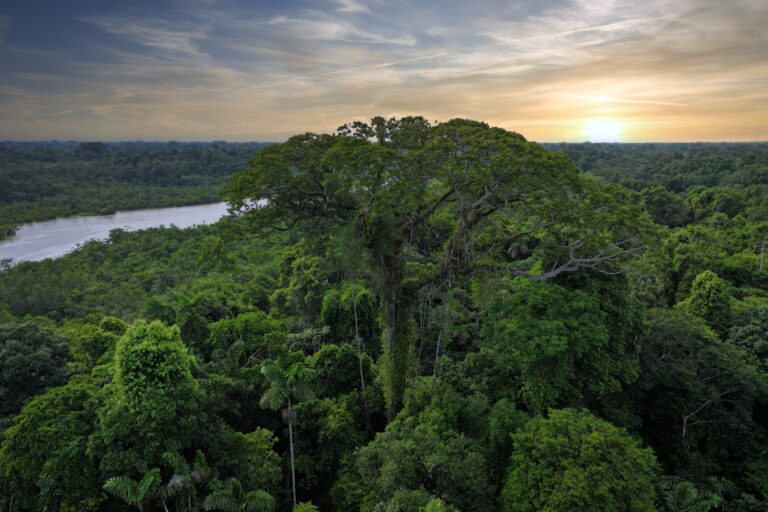
Banner image: Emergent tree in the Amazon Rainforest, Ecuador. Image by Rhett A. Butler/Mongabay.
Mike DiGirolamo is a host & associate producer for Mongabay based in Sydney. He co-hosts and edits the Mongabay Newscast. Find him on LinkedIn, Bluesky and Instagram.