
Co-authored by Ian Mann & Aeowyn Isobel, edited by Marisa Gilbert
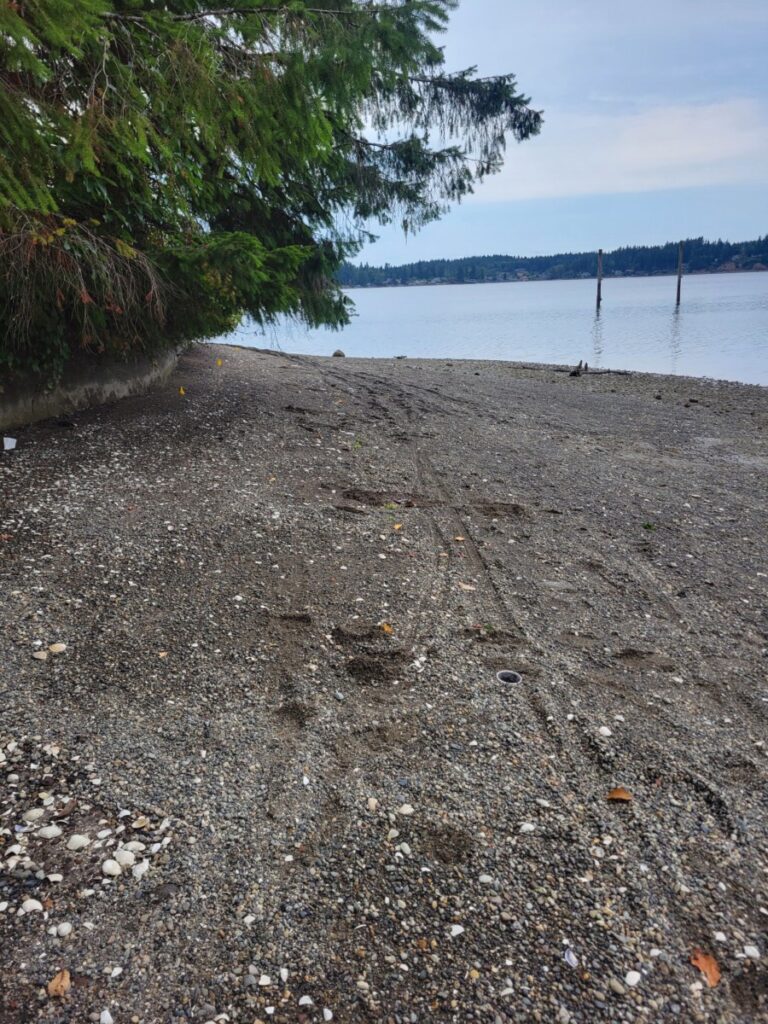
As industrial development proliferated throughout the Pacific Northwest in the 1800’s, the construction of concrete stabilizing walls along beaches became a standard practice in perceived damage prevention in the face of seemingly “harmful” erosion. Though they go unnoticed by many, their implementation has caused significant degradation of coastal habitat. Today, bulkheads cover almost 30% of the Puget Sound’s shoreline. (Dunagan) In recent years, region-wide efforts have been made to remove these structures, as their negative ecological impacts have become more widely recognized. This year, Evergreen is joining these efforts as part of a larger cultural shift towards valuing healthy environments over invasive infrastructure projects founded for exploitative economic gain. It is important to reflect on the wise words of Billy Frank Jr.,
“Without salmon we will not have people; without a healthy Puget Sound we will not have healthy communities; without a vibrant natural resource base we will not have a vibrant economic base. We need to understand these connections and think about the legacy we will be leaving to future generations.” (Welsh)
In Fall of 2024, a group of graduate students in the Master of Environmental Studies (MES) program began working with Evergreen’s Center for Climate Action and Sustainability (CCAS) as a part of the Sustainability Research Fellowship Program with the goal of bulkhead removal at Bushoowah-ahlee Point (aka Synder Cove Point). In the spirit of encouraging ecological stewardship and understanding, students have the opportunity to take part in restoration efforts and study the effects of this infrastructural change. Collaborating with CCAS Director Dr. Anthony Levenda and Assistant Director Michael Joseph, the MES Graduate Fellows have formed a team to follow the project on campus.
Student efforts began with an outline of a long-term monitoring plan to note changes in the health and stability of nearshore habitat. Students are partnering with faculty and local organizations, such as SPSSEG (South Puget Sound Salmon Enhancement Group) and the Stream Team. During Fall of 2025, the Bulkhead at Bushoowah-ahlee Point will be removed by SPSSEG. This undertaking aims to restore 500 ft. of shoreline by extracting 220 ft. of concrete armoring. The current bulkhead will be replaced with a ‘soft armor’ of logs and stabilizing vegetation to create a living shoreline-the effects of which will trickle upstream, reaching the inlet of Snyder Creek to improve riparian habitat. This style of construction had been employed by Salish peoples along the coast for thousands of years, in an integrated manner of working with cycles of erosion, rather than against it.
Listening Before Acting: A Cultural Assessment
Before any of this work could begin, surveys of the areas were completed, including one that exceeded previous standard practices. This survey went beyond measuring the beach’s fish and soil and instead studied its past. Maurice “Mo” Majors, the Washington State Anthropologist, visited the site to assess its cultural and archaeological significance. His work carefully evaluated whether the shoreline held buried sites or other cultural remnants through core sampling for pollen and other indicators of traditional food forests.
Mo’s visit reflects a commitment to “listening to the landscape;” the effort to understand a place through its human and ecological stories before deciding its future. Engaging in a cultural review before breaking ground is an important act of respect. At a Green Drinks event at Millersylvania Lakeside Taphouse, Majors described this kind of work as both scientific and spiritual, seeing beyond the surface to what the land remembers.
What does removing the bulkhead actually do?
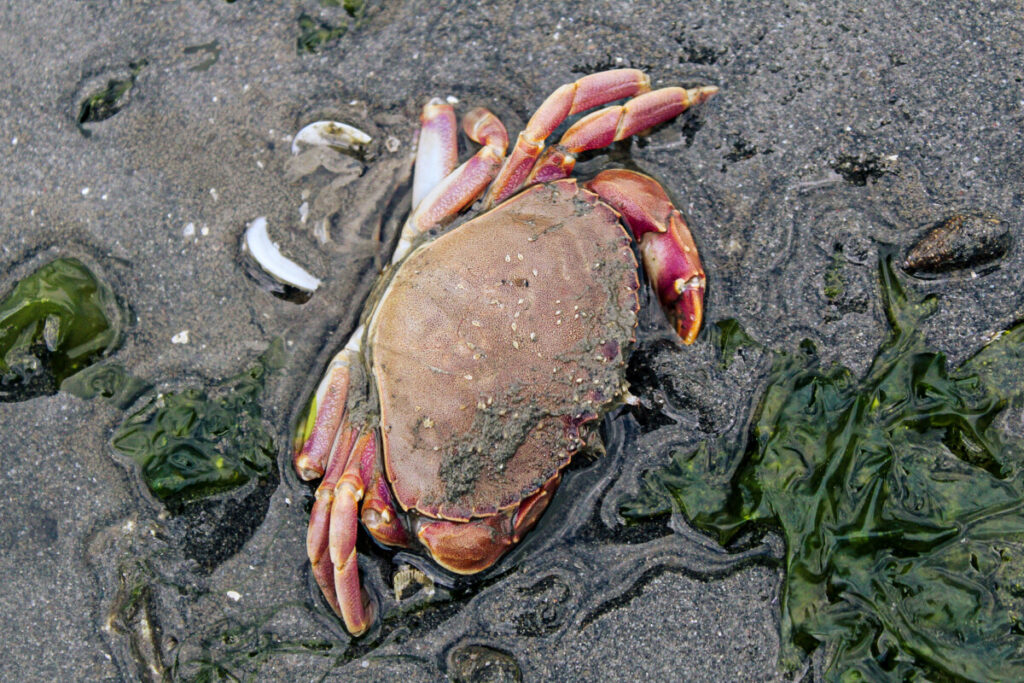
Bulkheads act as ‘sediment dams’ that prevent inputs of sediment from the land, thereby increasing erosion rates. Coastlines of the Puget Sound that are free from concrete intervention exist in states of dynamic equilibrium; between sediment being deposited from upland areas and moved by water-to the benefit of the entire ecosystem. Bulkheads can also cause beach narrowing, a change in sediment assemblage which disrupts the operations of vital flora and fauna. The removal of the bulkhead will support habitats of micro-invertebrates, insects, shellfish, and the forage fish which salmon rely on for food. Bulkhead removal increases local ecological resilience, reduces erosion, and supports biodiversity. The years 2010-2020 mark the first decade in recent Sound history wherein mileage of bulkheads removed was greater than that of bulkheads constructed (Dunagan). On a broader scale, engaging in such developmental shifts reflects a reorientation in our relationship to local ecology-away from harmful mediation and towards comprehensive conservation.
How to Get Involved
Students, staff, faculty, and community members are welcome to take part in this work. Whether you’re studying ecology, policy, art (or are just curious) there are opportunities to join monitoring events, share stories, or help educate others. If you own shoreline property and are considering your own restoration, visit shorefriendly.org for helpful resources. To learn more about Evergreen’s shoreline project, or get involved, contact the Center for Climate Action and Sustainability (www.evergreen.edu/climate, or ClimateAction@evergreen.edu). Additionally, the South Puget Sound Salmon Enhancement Group provides an informative and engaging “Story Map,” detailing site-specific restorative approaches and species reports: The Evergreen State College Bulkhead Removal.
Together, we can rebuild not just shorelines, but a culture of care.
Students and community members who are interested in learning more about the long-term monitoring, and the eventual Bulkhead Removal are welcome to contact the Center for Climate Action and Sustainability, through this email: climateaction@evergreen.edu
Special thanks to Ian Mann, Aeowyn Isobel, and the wonderful staff and students at the Center for Climate Action and Sustainability. Special thanks to Maurice “Mo” Majors, Cole Baldino and the whole South Puget Sound Salmon Enhancement Group, and Grant Gilmore of the Stream Team.
Bibliography
Dunagan, C. (2021, October 28) Puget Sound meets 2020 bulkhead-removal goal; new indicators will chart the future. Puget Sound Institute. https://www.pugetsoundinstitute.org/puget-sound-meets-2020-bulkhead-removal-goal-new-indicators-will-chart-the-future/
Welsh, L. (2022, October 24) A “Warrior of Justice” on the Long Road to Recognition. NWF Blog. https://blog.nwf.org/2021/06/a-warrior-of-justice-on-the-long-road-to-recognition/



 We kicked off the winter season with a
  impact of climate change by CCAS alum Mina, and closed with a discussion on envisioning and building
  In partnership with the
  Our
Our 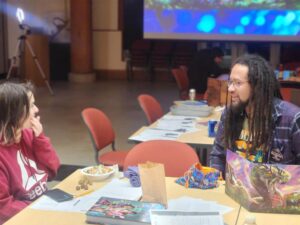 The
The 

 We participated in the