Category: Uncategorized (Page 2 of 4)

𓆝 ⋆ Bulkhead Removal and Ecological Restoration on the Evergreen Campus 🌊

Co-authored by Ian Mann & Aeowyn Isobel, edited by Marisa Gilbert
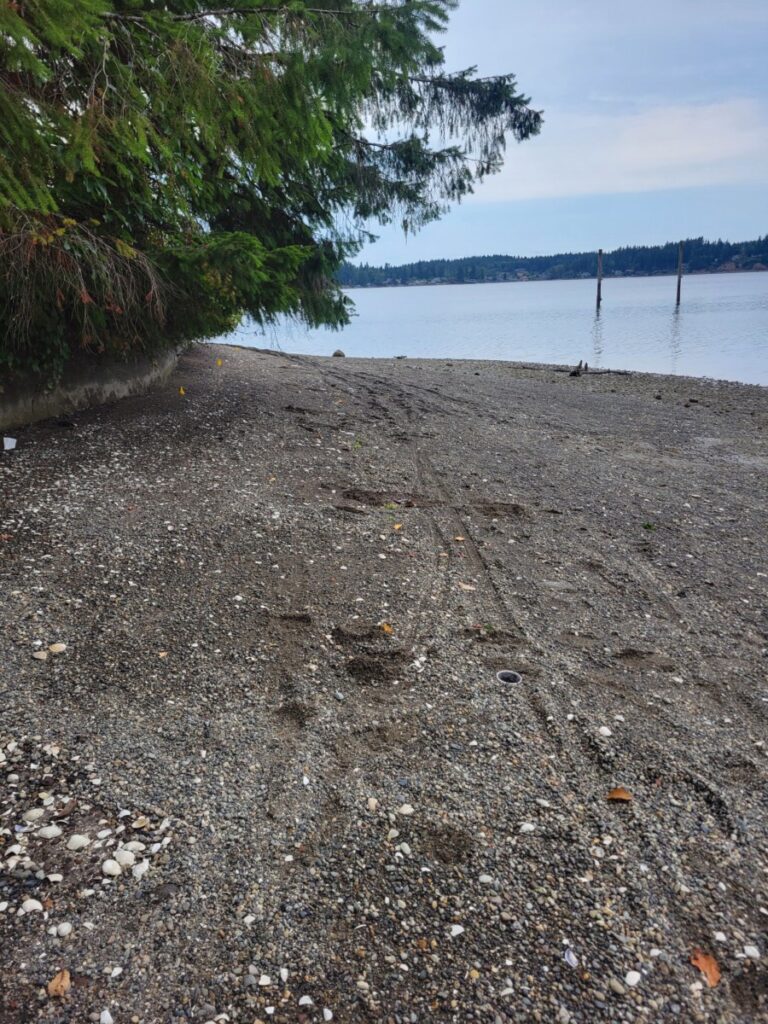
Bushoowah-ahlee Point Shoreline (Synder Cove Point) Bulkhead

As industrial development proliferated throughout the Pacific Northwest in the 1800’s, the construction of concrete stabilizing walls along beaches became a standard practice in perceived damage prevention in the face of seemingly “harmful” erosion. Though they go unnoticed by many, their implementation has caused significant degradation of coastal habitat. Today, bulkheads cover almost 30% of the Puget Sound’s shoreline. (Dunagan) In recent years, region-wide efforts have been made to remove these structures, as their negative ecological impacts have become more widely recognized. This year, Evergreen is joining these efforts as part of a larger cultural shift towards valuing healthy environments over invasive infrastructure projects founded for exploitative economic gain. It is important to reflect on the wise words of Billy Frank Jr.,  

 â€œWithout salmon we will not have people; without a healthy Puget Sound we will not have healthy communities; without a vibrant natural resource base we will not have a vibrant economic base. We need to understand these connections and think about the legacy we will be leaving to future generations.” (Welsh) 

In Fall of 2024, a group of graduate students in the Master of Environmental Studies (MES) program began working with Evergreen’s Center for Climate Action and Sustainability (CCAS) as a part of the Sustainability Research Fellowship Program with the goal of bulkhead removal at Bushoowah-ahlee Point (aka Synder Cove Point). In the spirit of encouraging ecological stewardship and understanding, students have the opportunity to take part in restoration efforts and study the effects of this infrastructural change. Collaborating with CCAS Director Dr. Anthony Levenda and Assistant Director Michael Joseph, the MES Graduate Fellows have formed a team to follow the project on campus. 

Student efforts began with an outline of a long-term monitoring plan to note changes in the health and stability of nearshore habitat. Students are partnering with faculty and local organizations, such as SPSSEG (South Puget Sound Salmon Enhancement Group) and the Stream Team. During Fall of 2025, the Bulkhead at Bushoowah-ahlee Point will be removed by SPSSEG. This undertaking aims to restore 500 ft. of shoreline by extracting 220 ft. of concrete armoring. The current bulkhead will be replaced with a ‘soft armor’ of logs and stabilizing vegetation to create a living shoreline-the effects of which will trickle upstream, reaching the inlet of Snyder Creek to improve riparian habitat. This style of construction had been employed by Salish peoples along the coast for thousands of years, in an integrated manner of working with cycles of erosion, rather than against it.  

Listening Before Acting: A Cultural Assessment 

Before any of this work could begin, surveys of the areas were completed, including one that exceeded previous standard practices. This survey went beyond measuring the beach’s fish and soil and instead studied its past. Maurice “Mo” Majors, the Washington State Anthropologist, visited the site to assess its cultural and archaeological significance. His work carefully evaluated whether the shoreline held buried sites or other cultural remnants through core sampling for pollen and other indicators of traditional food forests. 

Mo’s visit reflects a commitment to “listening to the landscape;” the effort to understand a place through its human and ecological stories before deciding its future. Engaging in a cultural review before breaking ground is an important act of respect. At a Green Drinks event at Millersylvania Lakeside Taphouse, Majors described this kind of work as both scientific and spiritual, seeing beyond the surface to what the land remembers. 

What does removing the bulkhead actually do?   

Bulkheads act as ‘sediment dams’ that prevent inputs of sediment from the land, thereby increasing erosion rates. Coastlines of the Puget Sound that are free from concrete intervention exist in states of dynamic equilibrium; between sediment being deposited from upland areas and moved by water-to the benefit of the entire ecosystem. Bulkheads can also cause beach narrowing, a change in sediment assemblage which disrupts the operations of vital flora and fauna. The removal of the bulkhead will support habitats of micro-invertebrates, insects, shellfish, and the forage fish which salmon rely on for food. Bulkhead removal increases local ecological resilience, reduces erosion, and supports biodiversity. The years 2010-2020 mark the first decade in recent Sound history wherein mileage of bulkheads removed was greater than that of bulkheads constructed (Dunagan). On a broader scale, engaging in such developmental shifts reflects a reorientation in our relationship to local ecology-away from harmful mediation and towards comprehensive conservation. 

How to Get Involved 

Students, staff, faculty, and community members are welcome to take part in this work. Whether you’re studying ecology, policy, art (or are just curious) there are opportunities to join monitoring events, share stories, or help educate others. If you own shoreline property and are considering your own restoration, visit shorefriendly.org for helpful resources. To learn more about Evergreen’s shoreline project, or get involved, contact the Center for Climate Action and Sustainability (www.evergreen.edu/climate, or ClimateAction@evergreen.edu). Additionally, the South Puget Sound Salmon Enhancement Group provides an informative and engaging “Story Map,” detailing site-specific restorative approaches and species reports: The Evergreen State College Bulkhead Removal.

Together, we can rebuild not just shorelines, but a culture of care. 

Students and community members who are interested in learning more about the long-term monitoring, and the eventual Bulkhead Removal are welcome to contact the Center for Climate Action and Sustainability, through this email: climateaction@evergreen.edu   

Special thanks to Ian Mann, Aeowyn Isobel, and the wonderful staff and students at the Center for Climate Action and Sustainability. Special thanks to Maurice “Mo” Majors, Cole Baldino and the whole South Puget Sound Salmon Enhancement Group, and Grant Gilmore of the Stream Team.

Bibliography 

Dunagan, C. (2021, October 28) Puget Sound meets 2020 bulkhead-removal goal; new indicators will chart the future. Puget Sound Institute. https://www.pugetsoundinstitute.org/puget-sound-meets-2020-bulkhead-removal-goal-new-indicators-will-chart-the-future/  

Welsh, L. (2022, October 24) A “Warrior of Justice” on the Long Road to Recognition. NWF Blog. https://blog.nwf.org/2021/06/a-warrior-of-justice-on-the-long-road-to-recognition/ 
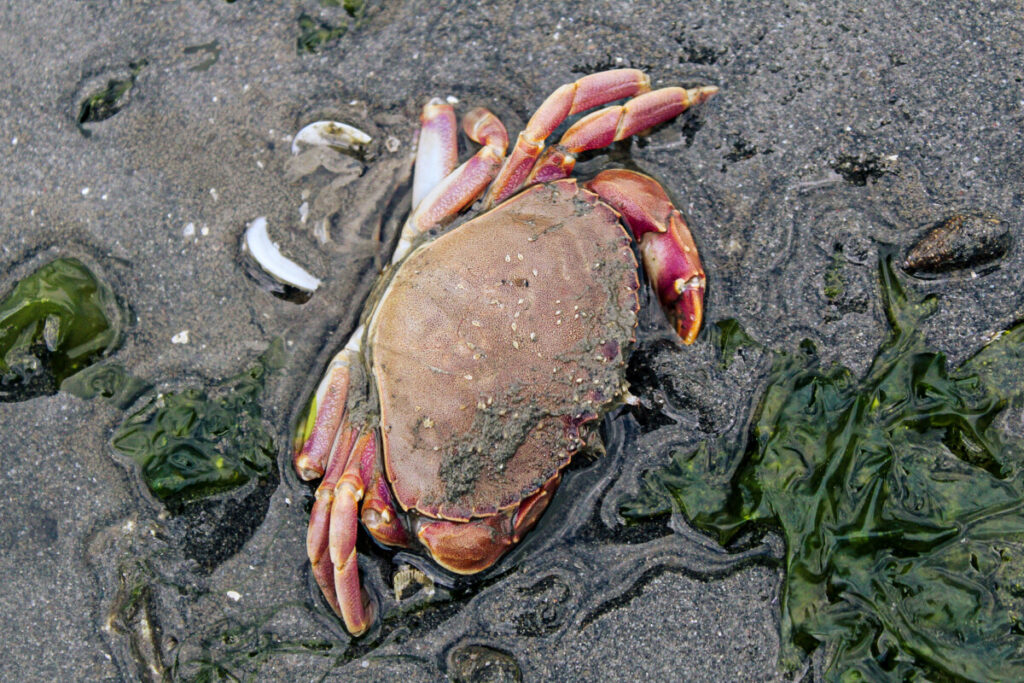
Photo by Enija Reed

🌻 Recapping Spring & Summer – CCAS Newsletter 🌻

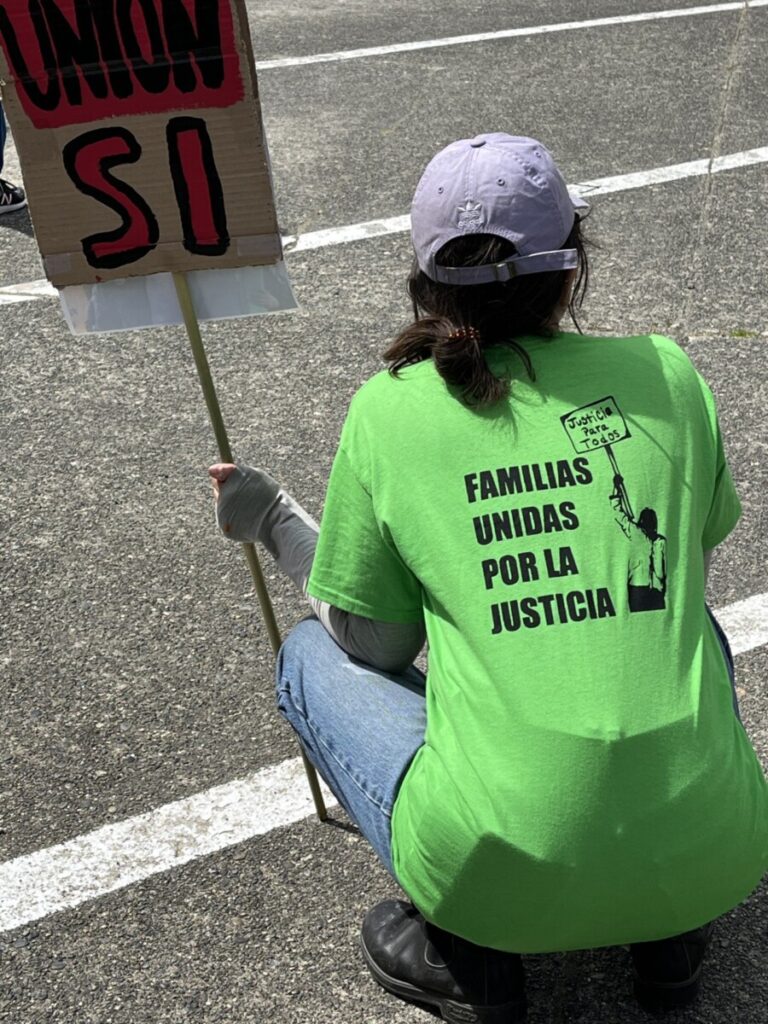
Photo taken during a protest advocating the enforcement of human and labor rights sanctions – Farmworkers Justice Day 2025

Welcome – from the Center! 

This spring and summer, the Climate Center was buzzing with activity! From hosting events, collaborating with partners, to sparking conversations about climate action, justice, and creativity. From games and roundtables to symposiums and community gatherings, our focus has been on connection: connecting people to ideas, to one another, and to practical ways we can work toward a more sustainable future. 

🌱 Event Highlights 🌱

Climate Games Day – April 9 

In partnership with Evergreen’s International Study Abroad program, we hosted a lighthearted afternoon of snacks, games, and big ideas. Participants tackled resource-trading games and strategic challenges that sparked creative solutions to climate adversity. 

Earth Week – April 22–24 

Three days of celebrations, learning, and action: 

• Earth (Field) Day – April 22 An outdoor celebration of our local environment, student projects, and ways to engage in campus sustainability. 

• Rachel Carson Forum – April 24 Hosted by MESA, this year’s Forum honored the 40th anniversary of the Master of Environmental Studies (MES) program. Guest speakers Dr. Rob Knapp, Dr. Francisco Santiago-Avila, and Dr. Adam Romero explored themes of sustainable design, transforming our relationship to wildlife, and reimagining U.S. agriculture. 

• Farmworkers Social Justice Day – April 23 Honoring José Gómez, we highlighted the fight for farmworker justice, food sovereignty, and solidarity with those who grow our food. 

Equity Symposium – Climate Lecture Series Special 

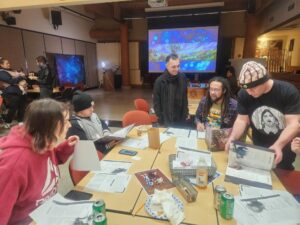
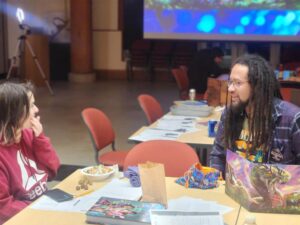
Faculty member Sam Saltiel led an interactive workshop exploring Solarpunk and tabletop role-playing games (TTRPGs) as tools for creativity, climate action, and personal empowerment. Participants reflected on their strengths and imagined practical steps toward a greener future. 

Sustainability Roundtable – May 12 

A collaborative design charrette on reimagining Evergreen’s communal bike shop. Together, we discussed why this space is vital for sustainability, accessibility, and student health—and what’s needed to bring “Bike Shop 2.0” to life. 

Climate & Sustainability Symposium – May 17 

Co-hosted with Thurston Climate Action Team (TCAT), this convention brought together climate and sustainability representatives from across Thurston County. The day was filled with workshops, networking, and collaborative visioning for regional action. 

Climate Lecture Series: Empowering the Energy Workforce 

Nikki Luke explored how energy governance impacts workers and communities, with a focus on justice in the U.S. South. She highlighted how race, gender, class, and ability intersect with energy policy—and where opportunities for change lie. 

🌞 Summer Highlights 🌞

Critical Edge Alliance Conference 

This June, Evergreen hosted the international Critical Edge Alliance conference, bringing together educators and innovators from around the globe. CCAS presented on what teams and institutions can do in the face of climate change and federal opposition—sharing practical strategies for resilience, collaboration, and action. 

Building Networks & Partnerships 

• Thurston Eco Net + Cascadia NOW! – We connected our local community of environmental educators and outreach staff with our Cascadia NOW! partners, establishing a fiscal sponsorship to support ongoing collaboration. 

• Olympia Green Drinks – We continued co-hosting monthly gatherings for people in green careers and interests to meet, share resources, and strengthen our local sustainability community. 

• WOHESC Statewide Calls – We kept convening sustainability leads from Washington colleges and universities to exchange tips, share projects, and learn from one another’s successes. 

Grants & Student Fellowships 

We secured a $20,000 grant to fund MES Fellowship students working on Evergreen’s new Sustainability Action Plan 2.0 and ecological restoration projects across campus. 

Summer Institute: Teaching Social Action 

In partnership with the Washington Learning and Teaching Center, we hosted a two-day Summer Institute focused on Teaching Social Action—exploring pedagogy. And the theme of Solarpunk with sustainable planning for classroom praxis. Faculty and staff engaged in hands-on design sessions and shared approaches to building climate literacy and agency in their students. 

Looking Ahead 

We’ll wrap up the summer at the Burien Solarpunk Festival, connecting with Indigenous Futurists partners and other visionaries shaping regenerative futures. 

This summer, our work has been about momentum—releasing a wave of new projects, resources, and case studies for classes, community partners, and anyone ready to act for a sustainable future. 

📚 Projects & Partnerships 

• MES Fellows & Faculty Collaborations – Our fellows continued work on climate planning, ecological restoration, and community engagement projects. 

• Community Engagement – We tabled at the Tumwater Elevate Fair, showcasing climate-and-art intersections and our new trivia game Fact or (Science) Fiction, highlighting BIPOC and femmes in STEM. 

🎥 In Case You Missed It 

• Videos, blog posts, and zines from our events will be shared on our website and social media this fall—stay tuned! 

📅 Upcoming 

Mark your calendars for fall events, including the continuation of our Climate Lecture Series and sustainability skill-building workshops. 

Get Involved

Volunteer, partner with us, or join an event. Follow us to stay updated: 

• Instagram: @EvergreenCCAS 

• Facebook: EvergreenCCAS 

• Subscribe: Join our mailing list


August Green Drinks Sustainability Gathering Recap


Guest Speaker:

Phoebe, a dedicated volunteer with the Thurston ECO Network (TEN), joined us to share exciting updates about the network’s growth and evolving vision. TEN is a collaborative hub connecting environmental educators, advocates, and organizations across Thurston County. Phoebe highlighted their new social media presence, an upcoming podcast, and a new proposal to join the CascadiaNow!’s fiscal sponsorship program—opening doors to grant funding, nonprofit resources, and expanded programming.

This partnership would allow TEN to scale up educator meet-ups, professional development workshops, and community outreach without the overhead of forming a standalone nonprofit. Phoebe emphasized TEN’s commitment to transparency and collaboration, inviting more helping hands to join the effort. A link to the full TEN Growth Proposal slides will be shared for those interested in learning more or getting involved.

🗣️ Community Announcements

The second half of our August Green Drinks was full of exciting updates and opportunities from our vibrant sustainability community. Here’s a quick rundown of what was shared:

🚲 Ongoing Programs & Opportunities

  • Bike Donation Program is still active—keep spreading the word and donating if you can! More info.
  • Seed Libraries are growing! Lacey Library now hosts one, supporting local food resilience.
  • Upcycling Workshop. Speaking of Lacey Library, they’ve had a Upcycling Workshop. Reach out to see if they’ll be rehosting again soon!

♻️ Upcoming Events

🌊 Nature & Culture Highlights

  • Otters at Saint Martin’s – Bruce shared a tip to check out potential otter sightings!
  • Ashland’s “As You Like It” at Oregon Shakespeare Festival – A solarpunk-inspired adaptation offering a fresh take on society and sustainability through the arts. If you have the luxury of being able to see it before November, highly recommended (Michael’s review here)!

🌐 Community Coordination

  • Thurston ECO Network Gathering
    🗓️ Next Wednesday—join our guest speaker to connect with local sustainability leaders.

  • Event Calendar Access
    A new calendar is in the works to consolidate all these events. For now, email climateaction@evergreen.edu to get access.

🌱 Climate Center Summer Institute: Imagining Better Futures, Together

Date: Tuesday, July 29, 2025
Time: 9:00 AM – 4:00 PM
Location: The Evergreen State College
Sign-Up Deadline: Wednesday, July 24

This summer, we’re inviting students, staff, faculty, and community members to come together for a full-day Summer Institute hosted by the Climate Center. Through the lens of Solarpunk—a movement that blends hopeful climate futures with creativity, justice, and systems thinking—we’ll explore how imagination and action can work hand in hand to build a better world now.

Expect a day of collaborative workshops, storytelling, hands-on tools, and space to connect with others who care deeply about climate justice and community resilience.

🔗 Sign up here to reserve your spot.
📬 A detailed agenda will be emailed to participants on Friday.
📖 In the meantime, check out this overview post for a sneak peek at what’s in store.

July 29, in SEM II B2105

9:00 AM ‑ 10:00 AM

Welcome, Introductions, & Housekeeping.

  • Coffee and chatting (9-9:15)
  • Welcome New Guests, Free-write (5 min.)
  • Refresher/Recap of Day 1 (Faculty & Staff: Solarpunk and Teaching Social Action)
10:00 AM – 10:50 AM

Workshop Session 1: Intention

  • Teaching Social Action (with Anthony)
  • Solarpunk Solutions (with Michael)
10:50 AM – 11:00 AM

Break (stretch, rest, chat)

11:00 AM – 12:00 PM

Workshop Session 2: Impact

  • Teaching Social Action (with Anthony)
  • Solarpunk Solutions (with Michael)
12:00 PM ‑ 1:00 PM

Lunch Break (Bring a Lunch/Potluck!)

  • Food options in the  Summer on campus are limited. So please be sure to bring food (or plan to potluck or grab food off campus)!
1:00 PM – 3:00 PM

Workshop Session 3: Integration!

  • Teaching Social Action (with Anthony)
  • Solarpunk Solutions (with Michael)
3:00 PM – 3:45 PM

Wrap-up: “Regroup & Recap”

  • Groups A and B present their discussions and mindmaps to the other group
  • Time for individuals to share-back any lingering thoughts or ideas.
  • Decide on 1 action to take going forward. 
3:45 PM – 4:00 PM

Feedback Form Time

  • Specific time to quickly fill out the Washington Center’s Feedback Form

Questions? Reach out to us at ClimateAction@evergreen.edu. We can’t wait to see you there.

July Olympia Green Drinks Gathering

🌿 Olympia Green Drinks – July Recap & Community Announcements 🌿 
Thanks to everyone who joined us for July’s Green Drinks meetup at Whitewood Cider’s Tiny Taproom! We had a fantastic time connecting and hearing from our featured guest, Sarah Hammon with Oly Ecosystems. A full recap of her presentation will be posted on the Climate Center’s blog soon—stay tuned! 

📣 Community Announcements & Events: 

  • 📍 August Location: 
    Next month’s Green Drinks will be at Millersylvania State Park’s Lakeside Taphouse—stay tuned for details! 

💚 Local Engagement Opportunities 

  • 🛢 July 9 and 16th Anti‑Chevron Protest 
    Join Palestine Action South Sound in a banner and picket outside Tumwater’s Chevron station on Wednesday, July 9 from 5–6:30 PM. Organized in solidarity with global anti‑Chevron actions. bdsmovement.net+6instagram.com+6theolympian.com+6. 
  • 🌊 Estuarium Pier Peer Programs 
    Explore marine life with the Puget Sound Estuarium’s Pier Peer—use underwater drones/ROVs to observe kelp crabs and estuary creatures. Family-friendly, all ages. Details and registration here: Pier Peer – Puget Sound Estuarium 

 Local Resources 

  • 🔆 Olympia Community Solar Grant (Solarize Thurston) 
    Olympia Community Solar is offering group solar purchasing discounts, including free assessments before the campaign closes July 4. Learn more at Solarize Thurston actionnetwork.org+11olysol.org+11solarwa.org+11. 
  • 🐝 Evergreen College Beekeeping Pilot 
    A summer and autumn pilot at The Evergreen State College is re‑establishing student‑managed nucleus hives (around 3–5 colonies). Thanks to the Olympia Beekeepers Association, Evergreen’s Sustainability in Prisons Project, and Woodsbee Co. 
  • 🚲 Adult Bike Rescue Program 
    Thurston County Solid Waste, Intercity Transit, and partners are now collecting gently‑used adult bikes for refurbishment—drop off at the Waste & Recovery Center starting July 2 facebook.com+3intercitytransit.com+3facebook.com+3. 
  • ⚡ EV Charging Grant Opportunity 
    Thanks to a recent legal settlement, funding is now available for electric vehicle charging stations in Thurston County—details coming soon once links are live. 

WOHESC Winter ’25 – Cultivating Unity, Community, Climate Action, and Solarpunk Imagination!

This spring, students, faculty, and staff from The Evergreen State College traveled to — the Washington Oregon Higher Education Sustainability Conference — held this year in Portland, OR at the Portland Community College Sylvania Campus.

Themed around “Cultivating Sustainable Communities,” the 2025 gathering brought together changemakers from across the Cascadia bioregion to envision more just, resilient, and regenerative futures.

Representing Evergreen were delegates from across campus:
– The Center for Climate Action and Sustainability (CCAS)
– The Clean Energy Committee, funded by the student green fee
– The Changemakers Lab academic program
– Several Master of Environmental Studies (MES) Sustainability Fellows

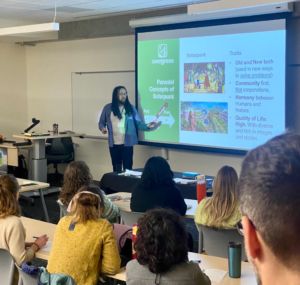
This marked a milestone year for Evergreen’s involvement. For the first time, an Evergreen staff member led a workshop at WOHESC. Michael Joseph, Assistant Director of CCAS and MPA candidate, presented an interactive session titled “Solarpunk and You: How We Can Change the World,” developed with CCAS student staff, with facilitation assistance from Aeowyn Isobel, the Center’s chief editor.

The workshop introduced attendees to the Solarpunk movement—a growing genre and framework for envisioning sustainable, just, and hopeful futures—through the lens of Tabletop Role-Playing Games (TTRPGs) as educational curriculum and scenario training simulators. Participants engaged in guided imagination and reflection activities designed to build creative agency and climate resilience, drawing connections between personal strengths and systemic change.

“Rejecting dystopia isn’t just about hope—it’s about building capacity for collaborative futures,”* said Michael Joseph. “Solarpunk invites us to imagine forward together, and that’s what this session aimed to model.”

In another first, Evergreen also supported a student participant in WOHESC’s Sustainability Design Challenge, a hands-on experience rooted in Design Thinking. The student explored how this methodology could be adapted and brought back to campus—particularly to enrich academic learning and campus projects through innovation and user-centered systems thinking.

Throughout the conference, Evergreen participants engaged in interactive panels, connected with regional peers, and brought home new insights and strategies for strengthening our campus-wide sustainability efforts. The experience emphasized not only Evergreen’s commitment to environmental leadership, but also our dedication to building inclusive, imaginative communities ready to face the challenges of climate justice head-on.

To learn more about the conference and upcoming events, visit the WOHESC website.


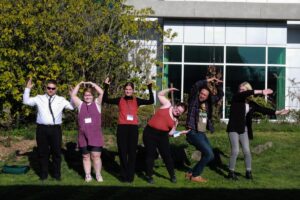
Pictured Above: Students spelling WOHESC and taking a goofy picture before the van-ride home!

❄ Winter Wrap-Up Newsletter ❄ 

As the season of quiet reflection comes to an end, we’re taking a moment to highlight the work we’ve been doing throughout last winter quarter. From engaging community workshops to expanding sustainability initiatives across campus, CCAS has continued to foster collaboration, education, and action. 

Below, we share key updates on past events, ongoing projects, and what’s ahead for spring. For more details on each initiative, follow the included links! 

❄️ Winter Events Recap 

This past quarter, CCAS collaborated on several events that brought climate action, sustainability, and storytelling into focus. 

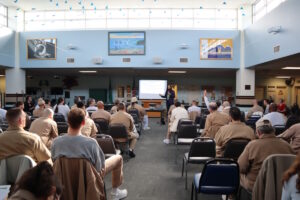
We kicked off the winter season with a Sustainability in Prisons Project (SPP) workshop, a first post-COVID in-person collaboration at Stafford Creek Correctional Facility. This session introduced foundational climate science by Director Anthony, explored the humanimpact of climate change by CCAS alum Mina, and closed with a discussion on envisioning and building Solarpunk futures from AD Michael, inspiring attendees to imagine informed actionable sustainability solutions.
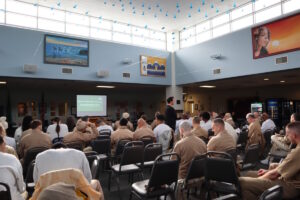
In partnership with the House of Welcome Longhouse, we co-hosted a screening of Finding Common Ground: Collaborative Leadership in Washington State. The documentary explored the journey from historical environmental conflicts to present-day collaborations that shape conservation efforts in the Pacific Northwest. The event concluded with a panel and community discussion on conflict resolution in sustainability work. 

Our quarterly Sustainability Seminar & Roundtable, “Imagining a Sustainable Evergreen”, once again brought together students, faculty, and even local business/industry partners to discuss ongoing sustainability efforts. From campus pollinator projects to energy infrastructure improvements, the event sparked new ideas for collaborative action and future green initiatives at Evergreen. 

The Coyote & Crow Longhouse Game Night introduced students to Indigenous futurism through storytelling and role-playing. Co-hosted with the Native Pathways Program and the Indigenous Futurists Society, the event encouraged players to explore sustainable and decolonized relationships with land and technology within a collaborative, narrative-driven experience.

The Climate Lecture Series this quarter featured two compelling discussions. In January, Jacob Johns and Jhajayra Machoa MendĂşa shared insights on Indigenous climate resistance, emphasizing the role of frontline communities in global environmental justice movements.

In February, Dr. Mijin Cha explored the Just Transition framework, focusing on how sustainability policies must be designed to protect both workers and communities as we shift toward a carbon-free economy.

🌍 Work in the Community 

Beyond campus events, CCAS deepened its engagement with local and regional sustainability efforts through workshops, resource creation, and project consultations. 

We participated in the Deschutes Estuary Restoration Team’s (DERT) Community Envisioned Deschutes Estuary (CEDE) Series, presenting on the role of higher education in restoration efforts, pollution solutions, and place-based community development. We look forward to continuing this work during the upcoming Olympia Arts Walk, where synthesized information regarding the restoration project community design will be featured. 


Not only did our students and staff get to attend and present at the Washington & Oregon Higher Education Sustainability Conference (WOHESC). Our Assistant Director has also taken on a leadership role in the monthly Sustainability Director & Educators Chats, where we’ve facilitated discussions on campus policy changes, AASHE STARS reporting strategies, and student engagement tactics. 

This winter, CCAS officially joined the Thurston ECO Network, a coalition of sustainability and outreach professionals. As part of this group, we’ll be working to expand educational partnerships, community engagement efforts, and professional development opportunities for sustainability practitioners in the region.

The Human Dimensions of Global Change (HDGC) Specialty Group of the AAG hosted a webinar titled Teaching Climate and Environmental Justice on January 30. This virtual event, open to all, featured three experts—Jennifer Atkinson (a former Climate Guest Lecture), Jessica Creane, and our own Anthony Levenda—who shared innovative strategies for engaging students in climate and environmental justice topics.

Additionally, CCAS was featured in the Cooper Point Journal, where we highlighted student-led sustainability initiatives on campus. These projects serve as a testament to the creative and impactful work students are leading in climate action. 

🔬 Projects & Programs 

Our ongoing projects and academic collaborations continue to evolve, providing students with opportunities to apply sustainability concepts in real-world contexts. 

CCAS has been working closely with Facilities & Environmental Studies faculty to advance the Bulkhead Removal & Salmon Habitat Restoration Project, an initiative focused on removing barriers to salmon migration and restoring ecological balance in local waterways. 

At the Tacoma Campus, we’ve been advising on the integration of student-led hydroponics research into kitchen spaces, bridging the gap between campus-grown food and student-run food service initiatives. 

The Evergreen Story Maps Initiative is also progressing, with faculty and student researchers developing an interactive GIS-powered map that highlights key sustainability projects across campus. This will serve as both an educational tool and a digital archive of Evergreen’s evolving sustainability landscape. 

Through the Student Success Stories Archive, we are documenting and sharing the experiences of students who have participated in community-based internships, sustainability research, and climate action projects. Our goal is to provide future students with inspiration and insight into career pathways in environmental work. 

Meanwhile, the Community Internship Program continues to grow, with students partnering with local organizations to gain hands-on experience in sustainability-related fields.

The Idea Co-Lab (Climate Cafe Series) launched as a space for students to workshop climate action projects, collaborate with faculty mentors, and gain access to sustainability resources. This quarter, one of our most exciting partnerships has been with Artists with Ecology, where MES Fellowship students will be working with the a combination of local teams to develop an art installation that also serves as a data-monitoring tool for local ecosystems. 

📅 Looking Ahead: Spring Events & Initiatives 

Spring quarter will bring a packed schedule of sustainability initiatives, including our biggest event of the year: 

  • 🎲 Worldwide Climate and Justice Games Day – This event aims to educate students about global climate change, solutions, and justice through engaging and interactive games. As part of the Worldwide Climate Education Week initiative, participants will play games like CATAN – New Energies, highlighting the importance of transitioning to green energy and community/global citizenship thinking.

    • Date: April 9th (Wednesday) | Time: 3:00 – 5:00 PM
    • Location: Social Justice Center, The Evergreen State College
    • Organizers: Center for Climate Action and Sustainability & International Study Abroad Office
  • 🌍 Earth (Field) Day – In celebration of Earth Day, the Center for Climate Action and Sustainability invites you to Earth Field Day—an open space for rest, reflection, and connection with the Earth and each other. This midday gathering is your chance to step outside, touch some grass, and reclaim rest as a powerful act of resistance.

    • Date: Tuesday, April 22nd | Time: 12:00 – 1:30 PM
    • Location: Red Square, The Evergreen State College
  • 🌿 MESA Rachel Carson Forum – Hosted by the Master of Environmental Studies Association (MESA) at The Evergreen State College. This year, we celebrate the 40th anniversary of the MES program with a special focus on “Stories of Adaptation: How has environmental work changed over the last 40 years?”

    • Date: Thursday, April 24th | Time: 4:00 – 8:00 PM (Doors open at 4:00 PM)
    • Location: Purce Hall 1, The Evergreen State College (Hybrid Remote options available)
  • 🌱 Thurston Climate Convention & Sustainability Symposium – This regional gathering will bring together climate action organizations, students, researchers, and policymakers for a day of knowledge-sharing and collaboration. The symposium will feature faculty and student research presentations, workshops, and networking opportunities.

    • Date: May 17th | Time: Purce Hall 9:00 AM – 5:00 PM, Evans Hall 5:00 PM – 9:00 PM
    • Location: The Evergreen State College

Read more about other events this quarter on our www.evergreen.edu/climate page, including: 

  • Equity Symposium Workshop – Examining storytelling & games as tools for climate action. 
  • Farmworkers Justice Day – Exploring sustainable agriculture & labor rights. 
  • Sustainability Roundtable – Continuing our quarterly discussions on campus sustainability.

Additionally, CCAS continues to pursue several grants, including the Career Connect Washington Grant, which would expand our Community Internship Program, and ongoing proposals through the Rose Foundation and NSF R212 Regional Resilience Innovation Incubator grants with community partners.

📬 Stay Connected!

📧 Contact us: ClimateAction@evergreen.edu
🌎 Visit our main website: www.evergreen.edu/climate
📢 Follow us on social media: https://linktr.ee/evergreenccas


Solarpunk: A Vision of Hope and Action at The Evergreen State College

Author: Michael Joseph

Solarpunk is more than just a genre of speculative fiction or an aesthetic of green roofs and solar panels. It’s a vision of a sustainable, equitable future where humanity has embraced regenerative practices that harmonize with nature. At its core, Solarpunk imagines a world rooted in solutions, community, and joy—a “yes” vision to counter the heavy narrative of climate despair. It’s a call to action that celebrates not just the fight against environmental challenges, but the creation of a better, more interconnected world.

This optimistic outlook aligns perfectly with The Evergreen State College’s legacy. Founded on principles of innovation, community, and interdisciplinary learning, Evergreen has long championed the kind of systems thinking and creative problem-solving that Solarpunk thrives on. The college’s focus on environmental studies and its commitment to alternative educational methods make it a natural hub for Solarpunk-inspired action.

Why Solarpunk Matters for Climate Action

In a time when climate discourse often feels dominated by “no”—no to fossil fuels, no to waste, no to environmental destruction—Solarpunk offers a refreshing counterbalance. It’s about saying “yes” to solutions: Yes to renewable energy. Yes to urban gardening. Yes to resilient communities that uplift one another. By focusing on what we can create rather than what we must reject, Solarpunk inspires action through hope and imagination.

This approach is especially vital for combating climate anxiety and burnout. Solarpunk introduces an element of play, joy, and curiosity—essential for sustaining long-term engagement in climate work. At Evergreen, this ethos could transform sustainability efforts into something not just urgent, but deeply inspiring and fulfilling.

Repair Clinics, Bike Shops, and the Solarpunk Campus

Practical initiatives like repair clinics, communal bike shops, and accessible bike stands are inherently Solarpunk. They embody principles of resourcefulness, community-building, and ecological stewardship. Repair clinics teach students to mend and maintain their belongings, reducing waste and building self-sufficiency. Communal bike shops and bike stands make sustainable transportation more accessible, fostering a culture of low-impact travel while empowering students to keep their bikes in good condition.

On college campuses, these initiatives not only achieve sustainability goals—they also support student health and wellness. Biking, for example, is a low-cost, eco-friendly way to promote physical fitness and mental health. It encourages movement, reduces reliance on cars, and provides a sense of freedom and connection to the environment. As part of Evergreen’s focus on holistic education, these efforts contribute to a campus culture where sustainability, wellness, and community care are deeply intertwined.

Building a Solarpunk Future at Evergreen

By integrating Solarpunk ideals into its operations and campus culture, The Evergreen State College can lead by example, inspiring students to envision and build a better world. Imagine an Evergreen campus buzzing with repair clinics where students learn hands-on skills, dotted with solar-powered bike stands, and bustling with bike-friendly pathways that invite students to embrace active, sustainable transportation.

These efforts aren’t just about reducing emissions or promoting green technology—they’re about creating a campus where innovation, joy, and hope thrive. In the process, Evergreen can solidify its legacy as a pioneer of progressive education, modeling what a Solarpunk future could look like for the broader world. Together, we can say “yes” to a brighter, more sustainable tomorrow.

Meet the 2025 Evergreen Spring Sustainability Fellows!

The Center for Climate Action and Sustainability (CCAS) is proud to introduce this ongoing year’s cohort of Sustainability Fellows — a group of outstanding student leaders working to support Evergreen’s sustainability goals, deepen community partnerships, and contribute to climate action initiatives across campus and beyond.

The Sustainability Fellowship is a grant-endowed program that selects two graduate-level students each year to contribute to real-world projects. Thanks to expanded support this particular year, four incredible students were chosen to participate. And, for the first time, the Center for Climate Action and Sustainability is proud to house and grow this program, helping fellows contribute their skills to meaningful environmental and social impact work.

Since its founding, the Fellowship has helped advance Evergreen’s decarbonization planning, land stewardship efforts, energy and building assessments, and sustainability reporting. Fellows have gone on to pursue additional graduate programs, professional roles in the environmental field, and leadership positions in public service and advisory boards.

What the Fellows Are Working On

This year’s Fellows are already deeply engaged in projects that impact both the Evergreen community and the wider South Puget Sound region, including:

  • Ecological Restoration and Salmon Habitat Work: Assisting in the restoration of Geoduck Beach by supporting bulkhead removal efforts, creating educational materials about Indigenous stewardship and coastal ecology, and partnering with the South Sound Salmon Enhancement Group and the Squaxin Island Tribe.
  • Sustainability Story Maps: Designing an interactive ArcGIS Story Map to showcase Evergreen’s green buildings, programs, and ecological initiatives — a resource for current students, prospective students, alumni, and visitors.
  • Career and Green Workforce Research: Interviewing alumni and former interns to better understand pathways into sustainability careers, and developing resources to help future students navigate these fields.
  • Climate Education Innovation: Creating new educational programs that use tabletop role-playing games and board games to teach climate resilience skills, environmental storytelling, and coping strategies for eco-grief and climate anxiety.
  • External Grant Applications – from a National Science Foundation R212 grant, to the Rose Foundation, and Career Connect Washington, our students have been assisting Evergreen and Non-profits with meeting programmatic funding needs where possible.
  • Event Support and Policy Tracking: Assisting with high-profile events like the Rachel Carson Forum, representing Evergreen at regional climate conferences, and tracking emerging climate and energy policies that could influence campus planning.

Need Help with a Sustainability Project?

Our Fellows have availability over Spring and Summer Quarters to assist with feasibility studies, research projects, data collection, grant writing, and project management consulting.
If your department, program, or office could use support on a project related to sustainability, land stewardship, climate action, curriculum development, or green workforce initiatives, reach out! They’re excited to apply their skills to new challenges and collaborations. Email ClimateAction@evergreen.edu to get in direct contact.

Follow Their Work

Want to see more of what they’re up to?
Follow the Climate Center at Evergreen on Instagram, check out our WordPress blog, or sign up for our quarterly newsletter.

Instagram: https://www.instagram.com/ccasevergreen/
Student Blog: https://sites.evergreen.edu/ccas/news/
Newsletter Signup: http://eepurl.com/iKgKhI

Meet the Team!

Recap: Community Highlights from April’s Green Drinks Gathering

Thanks to everyone who came out for another energizing evening of community connection at Green Drinks! Here’s a recap of some of the announcements and updates shared during the event, along with flyers and links for those who want to learn more or get involved:


Fertile Ground Programs

Marisha Auerbach of Fertile Ground shared updates on several upcoming offerings for gardeners and permaculture enthusiasts. Two flyers were posted to the board that detail their upcoming workshops:

  • Learn Soil Building Strategies
    Saturday, April 19, 10am–4pm at Permaculture Rising in Olympia
    This hands-on workshop will cover composting, hugelkultur, sheet mulching, vermicompost, and more.

  • Grow Your Own Produce Series
    Monthly Zoom workshops, February–November, first Wednesdays, 6–8pm
    A year-round support series for growing food ecologically. Topics range from seed starting and soil testing to cover crops and harvesting.


Citizens’ Climate Lobby

A representative from the Citizens’ Climate Lobby shared their focus on four key policy areas, including solar energy and forest protection. The Olympia chapter meets every second Saturday of the month, and they’re part of a larger national organization advocating for climate solutions through bipartisan legislation.
https://community.citizensclimate.org/groups/home/1271


Stop the Olympia Airport Expansion

Local attorney and advocate, gave a passionate presentation on the risks of the proposed expansion of the Olympia Airport. Concerns included:

  • Increased air and noise pollution

  • Threats to Tumwater’s drinking water

  • Harm to local ecosystems including salmon runs and endangered species like the Olympia pocket gopher and streaked horned lark

  • The impact of temperature inversions, which frequently trap pollutants in the Olympia area

She emphasized that this isn’t just an ecological issue—it’s a public health issue too. One community member also noted that the expansion might aim to reroute flight traffic from other regions, raising questions about who truly benefits.

This could be a pivotal moment to advocate for rail expansion instead of doubling down on air traffic infrastructure.

Link to the petition and Stop Olympia Airport Growth website


Fix-It Fair – April 15

A great opportunity to extend the life of your belongings! The Fix-It Fair will take place on April 15, where folks can bring broken household items (clothes, appliances, etc.) to be repaired free of charge by skilled volunteers. It’s a perfect event for families, students, and anyone looking to save money and reduce waste.
https://www.thurstoncountywa.gov/departments/public-works/solid-waste/garbage-recycling/education-resources/community-programs-events/fix-it-fair

Another Fix-It Fair is already in the works for November, so stay tuned.


Climate Center Updates

We also shared upcoming events connected to the Center for Climate Action and Sustainability at Evergreen:


Next Green Drinks Gathering

Mark your calendars! Our next meetup will be at Vic’s Eastside (the newest location). We’ll post more info soon, including whether a guest speaker will join us.

Have an idea for a future guest speaker? We’re looking for folks who can give a 15–20 minute talk about their organization, campaign, or sustainability effort in the region.
Email us your suggestions:
climateaction@evergreen.edu

« Older posts Newer posts »