A Focus on Food Inequality
__________________________________________________________________________
The End of Food by Paul Roberts
Salmonella-tainted tomatoes, riots, and skyrocketing prices are only the latest in a series of food-related crises that have illuminated the failures of the modern food system. In The End of Food, Paul Roberts investigates this system and presents a startling truth—how we make, market, and transport our food is no longer compatible with the billions of consumers the system was built to serve. In this vivid narrative, Roberts presents clear, stark visions of the future and helps us prepare to make the necessary decisions to survive the demise of food production as we know it.
More Book Information
__________________________________________________________________________
Fresh Fruits, Broken Bodies by Seth Holmes
This book is an ethnographic witness to the everyday lives and suffering of Mexican migrants. Based on 5 years of research in the field (including berry-picking and traveling with migrants back and forth from Oaxaca up the West Coast), Holmes, an anthropologist and MD in the mold of Paul Farmer and Didier Fassin, uncovers how market forces, anti-immigrant sentiment, and racism undermine health and health care. Holmes’ material is visceral and powerful— The result is a ‘thick description’ that conveys the full measure of struggle, suffering and resilience of these farmworkers.
More Book Information
___________________________________________________________________________
 Foodopoly by Wenonah Hauter
Foodopoly takes aim at the control of food production by a handful of large corporations—backed by political clout—that prevents farmers from raising healthy crops and limits the choices that people can make in the grocery store. Foodopoly is the shocking and revealing account of the business behind the meat, vegetables, grains, and milk that most Americans eat every day, including some of our favorite and most respected organic and health–conscious brands. Foodopoly demonstrates how the impacts ripple far and wide, from economic stagnation in rural communities at home to famines overseas. In the end, Hauter argues that solving this crisis will require a complete structural shift—a change that is about politics, not just personal choice.
More Book Information
___________________________________________________________________________
Food Movements Unite! by Eric Holt Giminez
The present corporate food regime dominating the planet’s food systems is environmentally destructive, financially volatile and socially unjust. Though the regime’s contributions to the planet’s four-fold food-fuel-finance and climate crises are well documented, the “solutions” advanced by our national and global institutions reinforce the same destructive technological path, the same global market fundamentalism, and the same unregulated consolidation of corporate power in the food system that brought us the crisis in the first place.
Food Movements Unite! is a collection of essays by food movement leaders from around the world that all seek to answer the perennial political question: What is to be done?
The answers—from the multiple perspectives of community food security activists, peasants and family farm leaders, labor activists, and leading food systems analysts—will lay out convergent strategies for the fair, sustainable, and democratic transformation of our food systems. Authors will address the corporate food regime head on, arguing persuasively not only for specific changes to the way our food is produced, processed, distributed and consumed, but specifying how these changes may come about, politically.
More Book Information
___________________________________________________________________________
Food Regimes and Agrarian Questions by Philip McMichael
Food Regimes and Agrarian Questions extends the original conception of the food regime, formulated by Harriet Friedmann and Philip McMichael, detailing new dimensions of the succession of imperial, intensive and corporate food regimes. Developing the methodological contributions of food regime analysis, McMichael re-examines the agrarian question historically and its present-day implications, introduces regional interpretations of the food regime and incorporates gender, labour, financial, ecological and nutritional dimensions into his analysis. Finally, McMichael explores the relationships between contemporary food, energy, climate and financial crises and food regime restructuring, which includes agrofuels, land grabbing, the bioeconomy, agro-security mercantilism and the food sovereignty movement.
More Book Information
___________________________________________________________________________
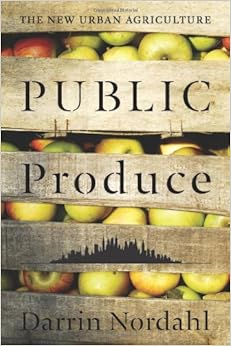 Public Produce by Darrin Nordahl
Public Produce makes a uniquely contemporary case not for central government intervention, but for local government involvement in shaping food policy. This book profiles urban food growing efforts, illustrating that there is both a need and a desire to supplement our existing food production methods outside the city with opportunities inside the city. Each of these efforts works in concert to make fresh produce more available to the public. But each does more too: reinforcing a sense of place and building community; nourishing the needy and providing economic assistance to entrepreneurs; promoting food literacy and good health; and allowing for “serendipitous sustenance.” There is much to be gained, Nordahl writes, in adding a bit of agrarianism into our urbanism.
More Book Information
___________________________________________________________________________
Stolen Harvest by Vandana Shiva
In Stolen Harvest, Vandana Shiva charts the impact of globalized, corporate, agriculture on small farmer, the environment and the quality of the food we eat. With chapters on genetically engineered seeds, patents on life, mad cows and sacred cows and the debate on shrimp farming, this is a book that is designed to shape the debate about genetic engineering and commercial agriculture.
More Book Information
___________________________________________________________________________
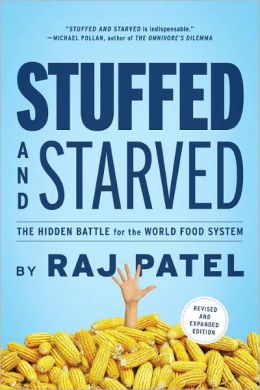 Stuffed and Starved by Raj Patel
It’s a perverse fact of modern life: There are more starving people in the world than ever before, while there are also more people who are overweight.
To find out how we got to this point and what we can do about it, Raj Patel launched a comprehensive investigation into the global food network. Going beyond ethical consumerism, Patel explains, from seed to store to plate, the steps to regain control of the global food economy, stop the exploitation of both farmers and consumers, and re-balanced global sustenance.
More Book Information
___________________________________________________________________________
Tomatoland by Barry Estabrook
Supermarket produce sections bulging with a year-round supply of perfectly round, bright red-orange tomatoes have become all but a national birthright. But in Tomatoland, which is based on his James Beard Award-winning article, “The Price of Tomatoes,” investigative food journalist Barry Estabrook reveals the huge human and environmental cost of the $5 billion fresh tomato industry. Estabrook traces the supermarket tomato from its birthplace in the deserts of Peru to the impoverished town of Immokalee, Florida, a.k.a. the tomato capital of the United States. He visits the laboratories of seedsmen trying to develop varieties that can withstand the rigors of agribusiness and still taste like a garden tomato, and then moves on to commercial growers who operate on tens of thousands of acres, and eventually to a hillside field in Pennsylvania, where he meets an obsessed farmer who produces delectable tomatoes for the nation’s top restaurants.
Tomatoland reads like a suspenseful whodunit as well as an expose of today’s agribusiness systems and the price we pay as a society when we take taste and thought out of our food purchases.
More Book Information
___________________________________________________________________________
 Fed Up
Everything we’ve been told about food and exercise for the past 30 years is dead wrong. FED UP is the film the food industry doesn’t want you to see. From Katie Couric, Laurie David and director Stephanie Soechtig,
FED UP will change the way you eat forever.
More Film Information and Resources
___________________________________________________________________________
 A Place at the Table
A Place at the Table shows us how hunger poses srious economic, social and cultural implications for our nation, and that it could be solved once and for all, if the American public decides — as they have in the past — that making healthy food available and affordable is in the best interest of us all.
More Film Information and Resources
___________________________________________________________________________
 Food Chains
In this expose, an intrepid group of Florida farm workers battle to defeat the $4 trillion global supermarket industry through their ingenious Fair Food program, which partners with growers and retailers to improve working conditions for farm laborers in the United States.More Film Information and Resources
___________________________________________________________________________