Musical Cities

The Evergreen State College

Tag: Uncategorized (Page 13 of 27)

the strangest way to begin a journey

The past ten days or so have been some of the strangest, most eye opening  days of my life. To start, I went to Coachella quite last minute thanks to a gifted ticket. My time at the festival was mostly unrelated to this project, although I certainly applied an understanding of many of the performance and listening skills Andrea taught the program. Since there were artists from all over the world there, I wasn’t able to focus directly on Chicago music. I ended up meeting my family in California and because of our different locations and schedules, we all had to leave at different times and have different kind of tickets (standby and regular). Because I was on a little bit less hectic schedule as the rest of them, and I had some of my reading with me, I agreed to take a standby ticket and hopefully get on the first flight I could. I tried to get on the 6 am flight and saw each one of my family members leave to get on a flight home while I was trying to remain positive after being stuck in LAX all day. I wasn’t able to leave until that Tuesday (5/13) in the afternoon. After that painful 40 hours in Los Angeles, I don’t wish my worst enemy to get stuck in LAX and it’s surrounding areas. That whole fiasco certainly put a funky start to my independent research and set me back two days without access to the internet.

It’s as if the big D-O-G in the sky planned it out, because the book I selected for myself to read the first week of the research study was barely resourceful at best. It is titled, The Chicago Music Scene 1960s and 1970s. It was a large collection of photos with small to medium blurbs attached. The blurbs provide some basic history as well as the artists connections to other artists and venues. There was a lack of real insight or intelligent writing. I suppose I could have done a better job of determining that this book was more of an encyclopedia than a narrative book, but the amazon.com subscription definitely did not match what I understood this book was.

It was not all a waste, though. While there was no nitty gritty information contained in the pages, I was able to collect a list of names and venues that kept popping up in the blurbs. One trend that I noticed consistently was that a lot of the folk and acoustic artists of Chicago music scene emerged from universities and colleges above any other music. My immediate thoughts on why this is leads me to Bob Dylan. There were absolutely non-college aged folk and acoustic musicians, but this era of the 60s and 70s saw a population of young students be so influenced by Dylan and other folk masters and wanted to turn it into something of their own.

In addition to the lackluster reading, I have been having a somewhat difficult time getting in contact with DJs and other people in the Chicago music scene. I find it vital to this project that I speak and communicate with the people involved from the ground up, so that I can get the fullest understanding possible. I have gotten one response from Rachael Cain, a House music vocalist from the 1980s, who now runs Trax Records, which was arguably the most important House label in Chicago back in the 80s to now. I have been texting her, but unfortunately, she seems flaky and goes for days without emailing me back. I hopefully will get her on the phone or meet her in person when I get to Chicago. I have also contacted three DJs from Chicago who were heavily involved in the scene. One DJ, Derrick Carter told me that  he doesn’t do interviews but wished me luck. Thanks, Derrick. The luck is cool but your words would have been cooler. The other two DJs have not responded despite my email and Facebook messages. I know the other two have done interviews in the past and I can probably gain some understand from those.

This time period since my last post has been good for me to do a lot of taking care of business things for my upcoming trip. I have been solidifying my sleeping arrangements and planning my days ahead. I can work the best when I have all of my actives laid out in a concrete way, and so in doing that for my trip to Chicago, I hope that I can best utilize my time there.
Beginning the journey…

167

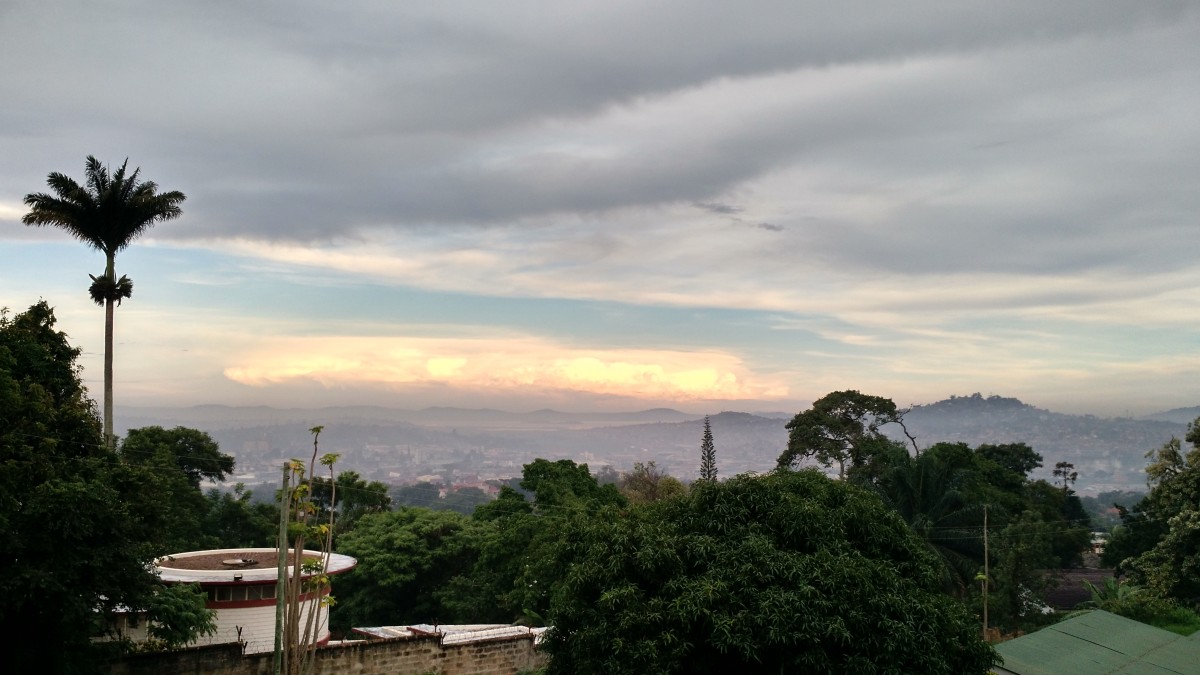
View of Kampala from Kololo Hill with Lake Victoria in the distance

Once I finally arrived at the airport in Entebbe, I made my way through customs and collected my luggage. I then took a taxi to the house I am staying in for my first two weeks in Kampala. It was already dark when I landed but I still tried to take in as much as I could on to drive to Kampala.

As we progressed along the Kampala-Entebbe road, I was able to catch glimpses of the Friday night nightlife. Along the road there were many clubs, restaurants and many other locations playing music. As we drove, I would hear just a small clip of sound from each one. Coincidentally, the room I am staying in is right next to a club. However, three of the first songs I heard before I went to sleep (I was way too tired to try and go out after the trip) were ‘We Found Love’ by Rihanna, ‘Waka Waka (This Time For Africa)’ by Shakira and ‘Drunk in Love’ by Beyoncé.

One of my first observations on the next morning was how different the soundscape is here. In addition to the club next door the night was filled with the sound of barking dogs. The morning was filled with a variety of beautiful bird songs as well as the sound of roosters welcoming the new day with a cockadoodledoo.

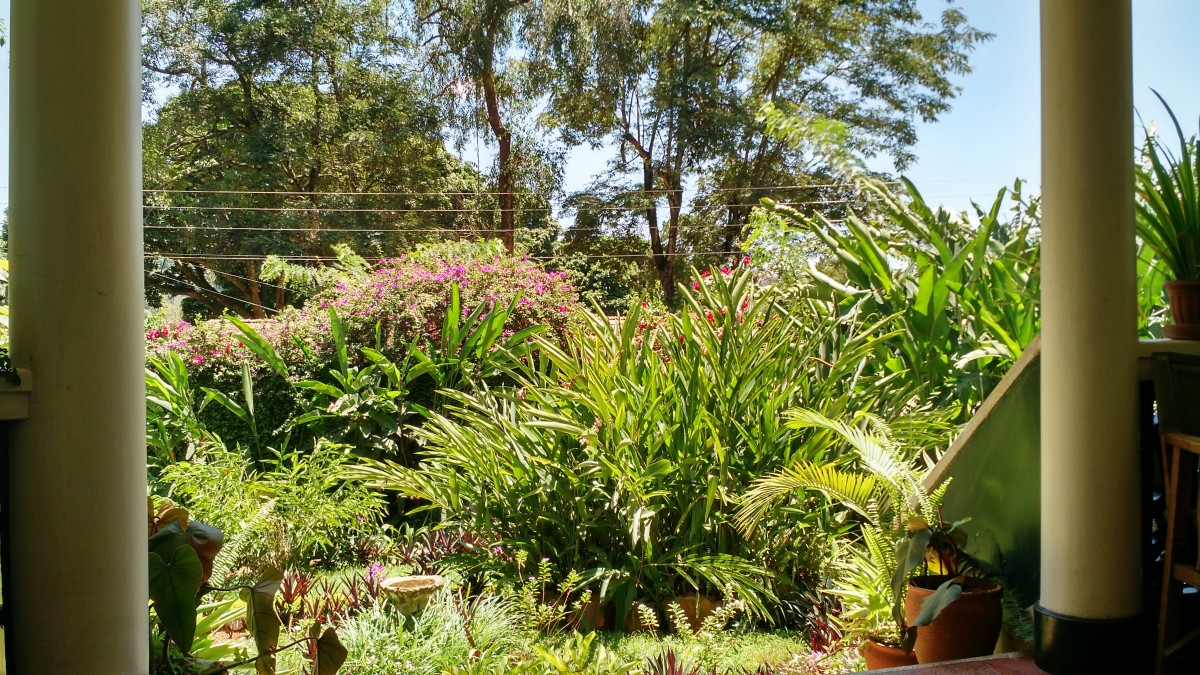
The earth here is also distinct. It is a deep brick orange that contrasts beautifully with the luscious greens of the vegetation. Amongst the trees and other plants I have also caught glimpses of various birds including a vibrant flash of red and blue swooping briskly from one tree to another. I plan to find a book on the flora and fauna of Uganda so I can learn more about what I am seeing. There is also a balcony overlooking the beautiful garden of the house I am staying in. I hope to spend some of the sunny afternoons reading and birdwatching from there.

088

View from the balcony at Cathy’s house

Even though I have been here a few days I am still getting the feel for navigating the city. Part of the difficulty is that the streets aren’t organized on any easily discernible grid. This however is understandable as the city is built entirely on hills so the roads tend to curve up and around the hills.  Kampala was originally built on 7 hills and was the center of the Baganda kingdom. It has now spread onto the surrounding hills as well. I am staying with a family friend, Cathy, on Kololo Hill. Fortunately, this is close to both Makerere University and the National Theater.

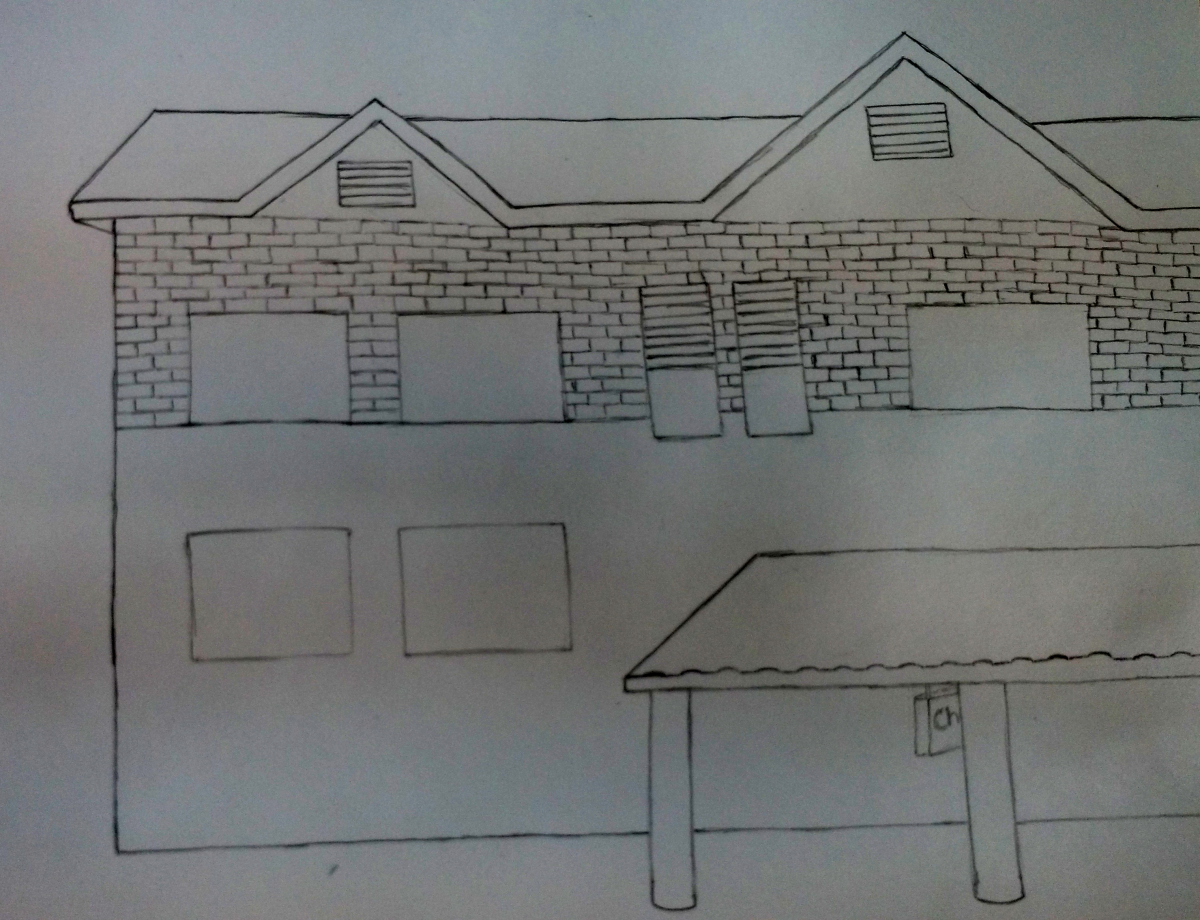
Sketch - Week 3 - Chillie's building at Kisementi Edit

Building at Kisementi near the house where I am staying

On my second day in Kampala, Cathy introduced me to her friend Denis. Denis first showed me two shopping centers in walking distance from where I am staying just in case I need to pick up anything while I am here. From there we walked to the National Theater and took a look around. At the National Theater I was able to get a list of scheduled events which will definitely be convenient during my stay. From there we walked to a taxi stop and took a Matatu (minibus) to the Shell station in Bugolobi. From there we walked a short distance to Gattomatto and Jazz Ville. These are two venues that Denis said would be good for hearing live music while I am in Kampala. From there we took another Matatu to another venue called Zone 7 in a neighborhood called Nakawa. Next we went to Ntinda to go to the Ndere Center to see the Ndere Troupe perform.

100

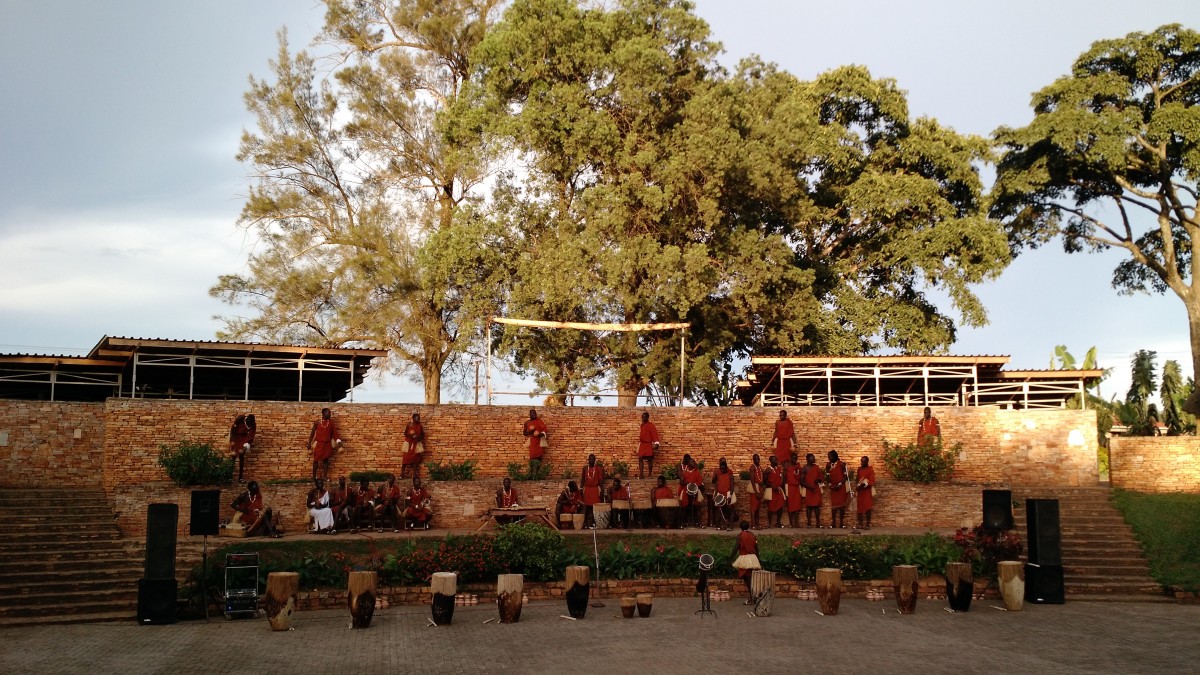
Ndere Troupe

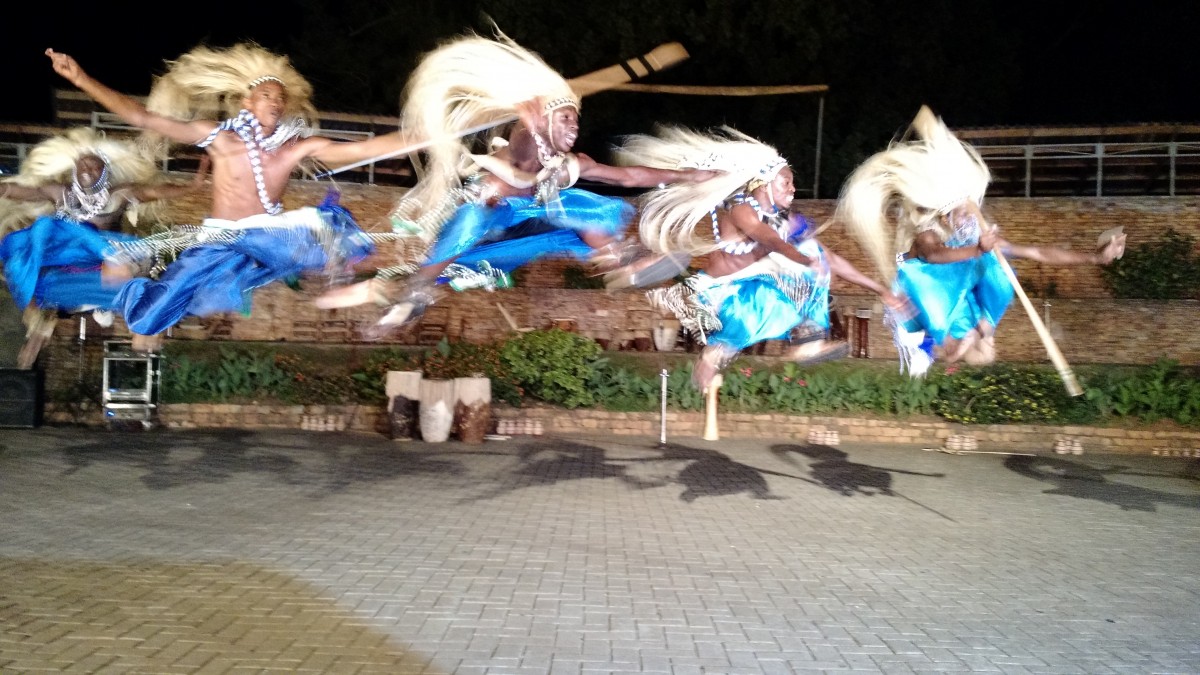
The Ndere Center was a wonderful experience. The NdeMolly, another of Cathy’s friends, met us there. She is a dancer and was able to explain the dances, music and musical instruments. The dancers performed dances from all over Uganda as well as a few dances from Rwanda and Burundi. One of the goals of the Ndere Troupe is to promote unity through the inclusion of dance and music styles from a diverse group of people.

127

Ndere Troupe performing a dance of the Banyarwanda

A passage from Waiting by Goretti Kyomuhendo highlights the diversity of cultures found throughout East Africa. The narrator of the story is from a district of Uganda called Hoima. The majority of the people in Hoima speak Nyoro which is the language of the Banyoro people. In this passage she is talking to one of her friends about the Tanzanian army that is passing through their town while attempting to drive Idi Amin’s army out of Uganda:

“But what about their own languages? I mean, the languages of their tribes?”
“They don’t speak them.”
“Then how can they tell what tribe someone belongs to?”
“I’m sure it must be difficult since everyone speaks the same language. Maybe they can tell by their names, you know, just like here; people from different regions have different names.” (82)

The language the Tanzanian soldiers speak is Kiswahili. Kiswahili is primarily a Bantu language from the east coast of Africa (Kenya, Tanzania and northern Mozambique). However due to the cultural integration with Arab trader it also contains a large Arabic influence. Kiswahili is considered a lingua franca for much of East Africa including Kenya, Tanzania, Mozambique, Uganda, The Democratic Republic of Congo, Rwanda and Burundi. In Kampala a large percentage of the population speaks English as it is the official language of Uganda. However, walking around the city it is easy to hear a wide variety of languages including Luganda (Kampala was originally the center of the Baganda Kingdom) and Kiswahili.

Week 1 in Los Angeles

From the time I was an hour out of town on the freeway and traffic started to get hectic, I’ve been experiencing a city that moves at it’s own strange and chaotic speed. My dad’s friend who’s lived in L.A. over two decades and who I had lunch with my first day put it well, “Los Angeles is a great city, just not great for sight-seeing or tourism. Everyone here is just doing their own thing.” This past week has felt more like the trip controlling me than me controlling the trip, adjustment to a city that won’t heed if you’re too slow.

There was definitely a bit of culture shock upon my arrival. I’ve lived in Wenatchee, Washington (small, suburban, pretty friendly), Seattle (mostly college kids where I was) and Olympia (strange but cool). My experience is pretty limited, so it’s no surprise that this is unlike any place I’ve ever experienced. What I’ve seen this week is how confined my life has been up to this point. It’s just plain weird seeing how many people have been consuming the same media as me, ordering things from the same websites, watching the same TV shows and movies, aware of the same celebrities and pop culture, and listening to the same music as me, and how all of them are so different, yet we all like these things, dislike other things, and because of this we can relate to one another. It’s bewildering to me.

I’m glad I decided to bring my car; I don’t know how anybody here gets around day to day without a car. The traffic here gets crazy, especially during rush hour which I’m told is actually five hours (3-8), which I think is scandalous, because that’s a huge chunk of time during which I usually have to drive at some point. During that time most people on the highway drive like they have a wife in labor in the back seat. I’ve learned to get used to being honked at for not speeding enough or unintentionally cutting people off who otherwise may have cut me off, intentionally or not. It really is everyman for himself.

I’m living in a garage converted into a studio apartment. It still has the garage door, so if I want some fresh air I open it. There is a little patio outside too, with a wall giving privacy from the sidewalk. I’m right on the corner of the street, the building shares one wall with a house, one wall with my neighbors parking port, and two walls with the street and sidewalk. Really, those two walls are shared with whatever the city decides to put outside my window, and there is a surprising amount of through traffic here. There are a lot of motorcyclists who prefer riding loudly at 2am more so than any other time. Besides the more aggressive and startling sounds though, there is a white noise of the freeway, about a half-mile away. It reminds me of a river in a strange way, there is just enough texture and change for it to be noticeable, but it never seems to die down other than at night, when it gets slightly more quiet. There’s a constant current of traffic passing through, and it’s noticeable from everywhere in my house. I’ve gotten used to it though, in a way it’s calming.

While a dose this strong of L.A. life has felt like a slap in the face, I’ve noticed a lot of what Botton said would happen in The Art of Travel happening. Most obviously, bringing all of myself with me on this trip. During the stages of anticipation for travel it’s impossible to foresee how the smallest and most unpredictable details will affect your experience, and which details will matter to you. This happened to me quite a bit during breakfast this week, because I had to learn how to make omelets and I always end up messing up the first omelet, and I always have to spend around 20-25 minutes cleaning dishes before hand, because I’m all out of clean dishes for my ingredients and such. Anyway, little things like this add up throughout the day, so I find it’s important to make sure I’m out the door by a certain time every day, and every night I try to have an idea of what I’ll be doing the next day.

This week I went to the Griffith Observatory, the Getty Museum, Santa Monica Pier, Venice Beach, and to a play directed by Tim Robins. I feel like a got a pretty diverse sense of people from each place. The Griffith observatory felt like all kids on a field trip, while the play felt like a bunch of local people. Everything else fell somewhere in between. The play was probably my favorite thing this week. It was A Midnight Summers Dream by an acting group that normally tours to perform it. They were only in L.A. for two days but my cousin works at the theatre and she was able to get me a ticket. The theatre was small and intimate, probably between 100-200 seats. It’s called “The Actors Gang”. All of the music was live which I thought was pretty cool, and it was done by someone named Dave Robins who I suspect is Tim Robins brother, but I haven’t bothered to look it up so please don’t quote me on that.

All in all, it’s been a good week. I love it down here! Over the next three weeks I’ll be conducting interviews with 4-5 people who work in different creative fields. I’ll type up the interviews when they happen and post them for anyone who wants to read them. Other than that, I’m going to continue my readings, keep sketching everyday, exploring the city and seeing what I can learn from this strange and fascinating place. Right now I’m working on City of Quartz by Mike Davis, which is super interesting but much more dense than I expected. It goes over the history of Los Angeles very thoroughly, and while I like reading it I think I’m going to need to extend it as something I read over the course of my whole trip rather than during the first week. My other books have less pages than this, mostly, so I’m hoping this won’t be a recurring theme.

21 April 2015: Arriving in Central Texas

My project originally was planned to be based solely around Austin, Texas. However, I have realized that for purposes related to where I am staying, I am going to have to expand my project location to the bigger, common parts of Central Texas (Killeen and Austin).

The airplane ride here was treacherous. I’ve flown over 20 times and have never felt more scared than I have during this trip. At first, it was Seattle to Houston to Killeen. Then, the plane going to Killeen (from Houston) had to divert backwards into Austin because of inclement weather. On the flight from Houston to “Killeen,” I thought my life was going to end because of how heavy the turbulence was. There was so much fog that I don’t think the pilot could see anything. Once we ended up in Austin instead of Killeen, we waited about an hour before we lifted back off to head back to Killeen hoping that the weather would be cleared by then. If it wasn’t the pilot would have had to fly us back into Houston. Luckily the weather had cleared and it was a successful landing into my original destination! It was a pretty stressful start for the trip…when I finally landed into Killeen at midnight, I was incredibly relieved and met up with my significant other, who I’ll be spending most of this trip with. We drove a few miles to her house (I will be staying here for the majority of my trip), and I slept soundly through the night.

I had planned from the beginning to study the music scene in Austin and its connections between the culture and history of Texas. So a few days later, on Monday, April 13, we got a hotel in Austin for two nights to be able to easily access the live shows. It was a vintage hotel with a wide view of the beautiful Lake Charles. The architecture was obviously refurbished and influenced by the Mexican-American style that seems to be prevalent throughout Texas which was interesting to me. This helped to expand my curiosity of Texas’ history, which I’ll definitely be studying heavily during this quarter. The inside of the hotel seemed colonial-styled so it differed from the external aesthetics.
11127241_1394019464255429_1190153987_n11160511_1394013290922713_798941019_n 11165856_1651071918446156_1398866351_n

The travel time from the hotel to downtown Austin was about 20 to 30 minutes. When we finally arrived downtown on the 14th of April, I’d gone into this thinking that I would spontaneously show up to live concerts. Well, it turned out one of my favorite 80′s bands, Artillery, was set to play at the very moment I was downtown. Artillery, a Danish band, played a particularly fast brand of metal called ”thrash” metal that was a forerunner to modern metal. When we arrived at the concert, a few opening bands had played. They were obviously all thrash mental influenced but were underground local bands. After the second opening band had played, which had a very progressive metal sound to it, there was an interlude of about 30 minutes in between where Artillery was setting up for their main set. During that in-between time, we had walked along 4th street and encountered four different local bands playing inside of the restaurant/bars, all blues, country, or rock. We stopped at an Irish bar to get a bite to eat, in there was another local band playing blues-rock who was able to keep the entire restaurant entertained by their music. After 20 minutes, we walked back to the venue to see Artillery play. Even though they have considerably aged since they released their first slew of albums, they played a fantastic set and once we left, I couldn’t hear anything but a distinct ringing. (My hearing is back to normal now.)

After that, we headed back to the hotel for one more night’s rest. The next morning, we had breakfast and made the hour trek back to Killeen. On the way back, turns out, my mom had won four surprise tickets to see The Who.

On the 27th of April, I will be seeing The Who in Austin after observing some local bands around the same area. During The Who, I plan to interview some old-timers of Austin’s local music scene from the 60′s (or before) to now and hopefully find out some interesting information.

Rai And Paris-Week Three

image

Above is a drawing of my home.

Uggggggg.  Today I learned that it is way too easy to delete my weekly assignment while typing on google docs! So here is my second paper. Hmmm, what did I say in the first paper? Well, I can’t forget the feeling I got after our last class. Free. I felt free like never before and it began with our circle singing. What a powerful thing to meditate together. No research was too big for me, no city too complex to navigate.

This week I read about different parameters of research. I also spent a lot of time getting addresses of high schools in Paris. I am working with an Evergreen employee to clean up the letter that goes with my survey. I read up on the Likert scale for my survey and also read the Rick Steves Paris 2015 book, which is long but really captivating and took a lot of time. I am feeling like this is the second week of any quarter-like a boulder is about to roll over me! Well, just knowing that this feeling is a pattern is comforting. I just have to keep working hard and hope for the best.

My first priority this week is my survey. I read a great article by Urie Bronfenbrenner called Ecology of the family as a Context for Human Development: Research Perspectives. I learned
about paradigms for investigating the impact of someone’s environment. Keeping the research questions simple is best for the beginning of any research. More sophisticated surveys can be included in additional researches. For my research I am using a mesosystem model. This will provide me with results that show whether my surveyees feel that they have the amount of agency they deserve (B 723). Another aspect of research that I’ve considered is the level of explicitness and complexity. A social address model will be perfect in that I will be able to find out whether or not Paris provides the youth with enough help to this population (B 724). These youth that have siblings with intellectual disabilities will hopefully be willing to fill out my survey if its simple.

The Rick Steves book was helpful in social ways. There are lists of common phrases used by travelers in Paris and included is the pronunciations. Wi-Fi is pronounced wee-fee (S 24). This book covers everything. When using an escalator it is polite to stay to the right in order for people to pass on the the left if they choose to (S 515). Another bit of advice is to speak quietly like the French do in public so as not to appear as a rude American. There are a few differences in the way they write the numbers 1, 4 and 7 but nothing big. They use a comma instead of a period to separate thousands. When counting with your fingers you begin with the thumb instead of the first finger. If you begin with the first finger when trying to order food you’ll end up with two of something (S 727). Parisian hoteliers frown on people taking food to their rooms because of the extra cleaning needed, the extra garbage and the smells. It wasn’t so many years ago that food was not allowed in American hotel rooms. One would have to sneak it in and then take the extra trash out or receive a bill for the extra garbage (S 397). In France, it is frequent for older women to give parenting advice to young parents with children. I would like this to customary is America (S 488). Picnic lunches are a great idea but I will watch for signs to stay off the grass in some places. Also, not all of the cafes provide a fork or knife unless you ask for them (S 442). Steves recommends that you carry tissue because public toilets are frequently unstocked. The weirdest thing I read about was how there are toilets on the sidewalks of Paris encased in nothing more than a booth! I can remember my father telling about how he could see over the top when standing inside of one and he was only 5′ 6″. I am surprised that they are still there. I think this is a good idea. It probably keeps the alleys clean and may cut down on crime. A few toilets cost money or have an attendant that would appreciate a small tip (S 25). These differences don’t seem like an inconvenience but maybe when I’m faced with so many new ways I will feel different.

I am so anxious to get to Paris and in the environment that I have been studying; the smells, the sounds, the feel of the structures and the sights of the people. For now I’ll just have to consider that all this studying about Paris is the equivalent of a first trip to the city. According to Rick Steves the second trip is the best!


Bronfenbrenner, U. (n.d.). Ecology Of The Family As A Context For Human Development: Research Perspectives. Developmental Psychology, 723-742.
Edit Citation

First Week Abroad!

Well…… This might be the coolest thing I have ever done. It’s only been one week and I have already experienced so much and met so many wonderful people! This is going to be a very memorable time.

Hmmmm…. where to start….

IMG_1411

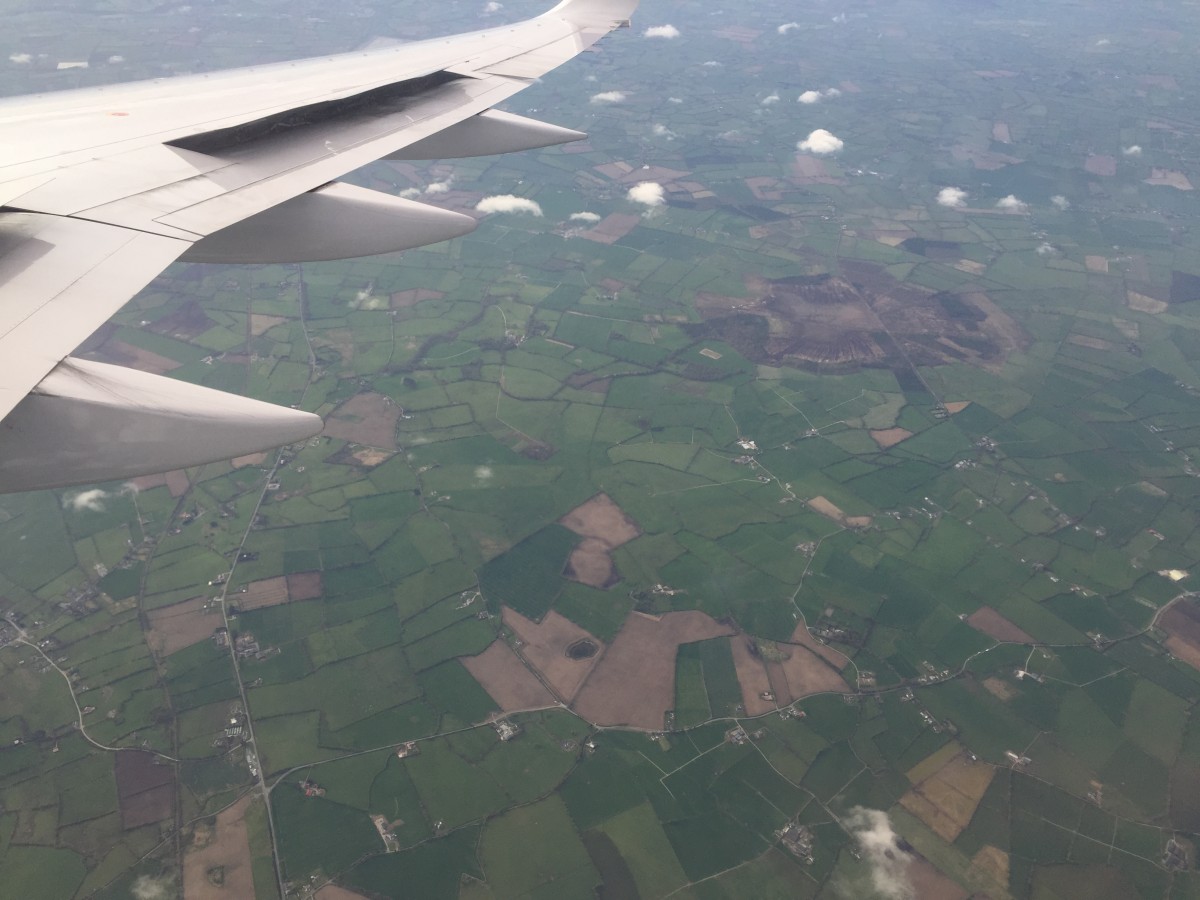
Ireland is an amazingly beautiful country filled with some of the most friendly people I have ever met. And It was sunny for my flight in! I got to see the whole county from the sky!

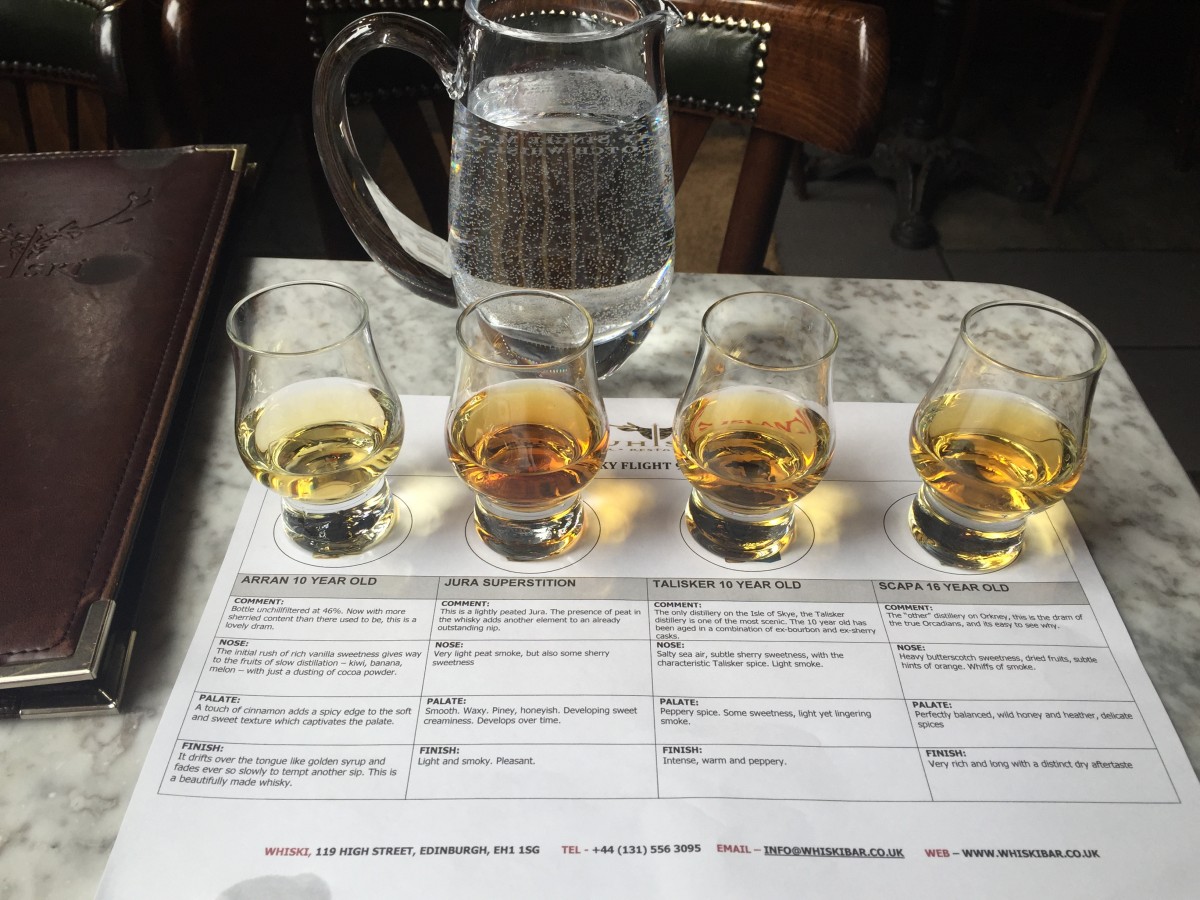
After Landing in Dublin I took a bus to the city center and walked to my hostel where I dropped off my bags and then went and grabbed a cup of coffee at a cute little spot called Cafe Sunrise. I soon learned that there really isn’t good coffee in Dublin… But that’s okay I guess. They make up for that with their fish and chips and whisky. It turns out a friend of mine names Ada that I wasn’t suppose to be able to see because she was headed back to the states the day I was flying in, ended up extending her stay in Ireland for a few extra weeks. So we were able to spend my first few days in Dublin together! This is my fist time ever traveling outside the states, so it was really nice for me to have someone there that I really knew to welcome me to first international travel experience.

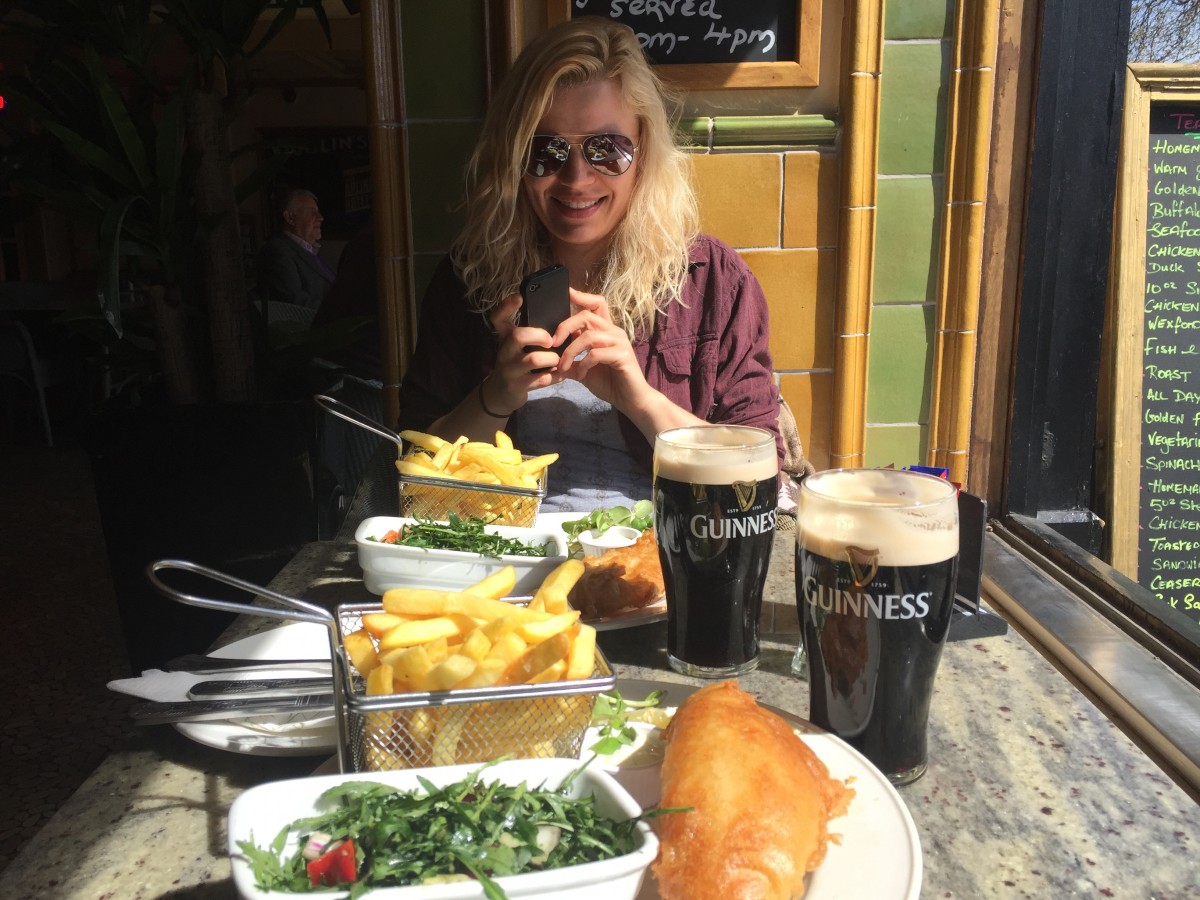
IMG_1417Ada met me at the cafe I was at and we walked around to find some fish and chips and my first real draught Guinness! The fish was amazing! And the Guinness was a Guinness….. Not my favorite beer but fun to drink while in Ireland. After talking to some locals later on in the week we learned that Guinness extra stout that comes in a bottle is better than what you can get on tap. I did like that much better.

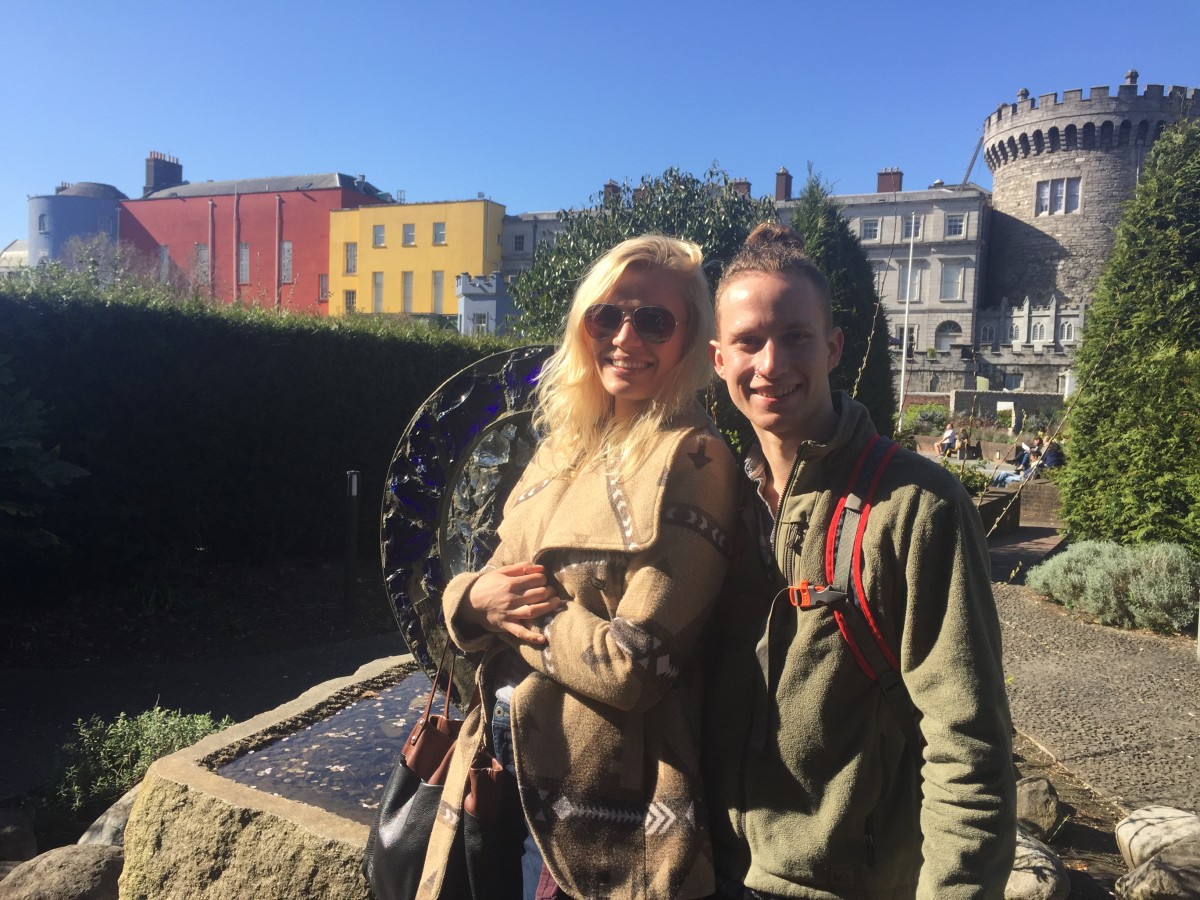
After lunch we decided to just walk around the city and see what there was to see. At one point we were looking around this little memorial in a park somewhere in the old Dublin area near the Dublin castle. An older Irish gentleman approached us and asked if we knew what we were looking at. We didn’t, so this man named Girard gave us a whole history of this memorial and then waked us around the park and showing us everything.

This was the place in the park for the best photos according to Girard.

IMG_1431


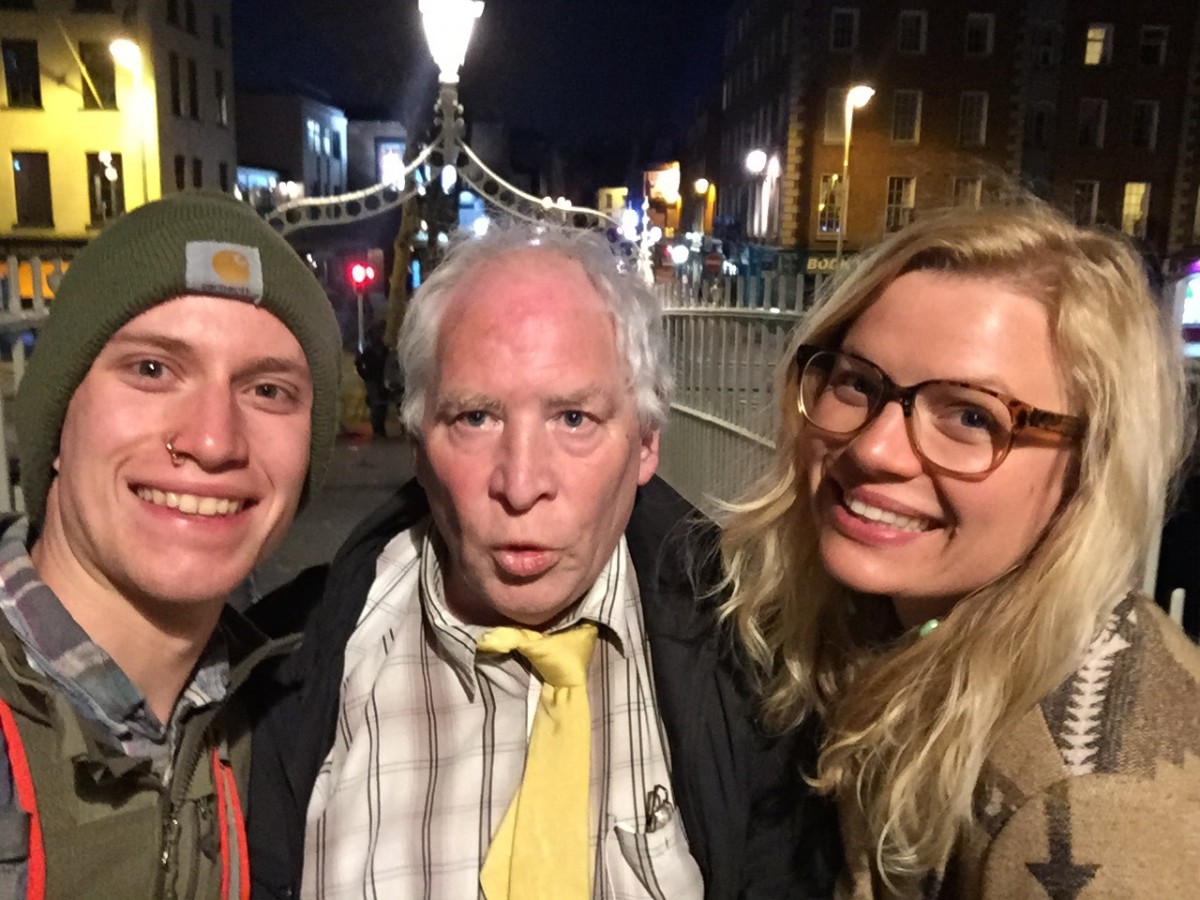
IMG_1458We ended up spending the whole rest of the day with this guy. He was awesome! He gave us a great tour of the whole city center. Girard was full of facts and knew the history of just about every building. It was really impressive. Then we took him out for a drink and some food at the oldest pub in Dublin.

I couldn’t have asked for a better first day in Dublin. Even though I was up for 34 hours! Great food, friends, and whisky!


I guess Im really not sure how this whole blog thing is suppose to work. There is no way I can explain all of the things I have done since I’ve been here in a 750 word post. So I’ll just try and sum up the rest of the week for you all.

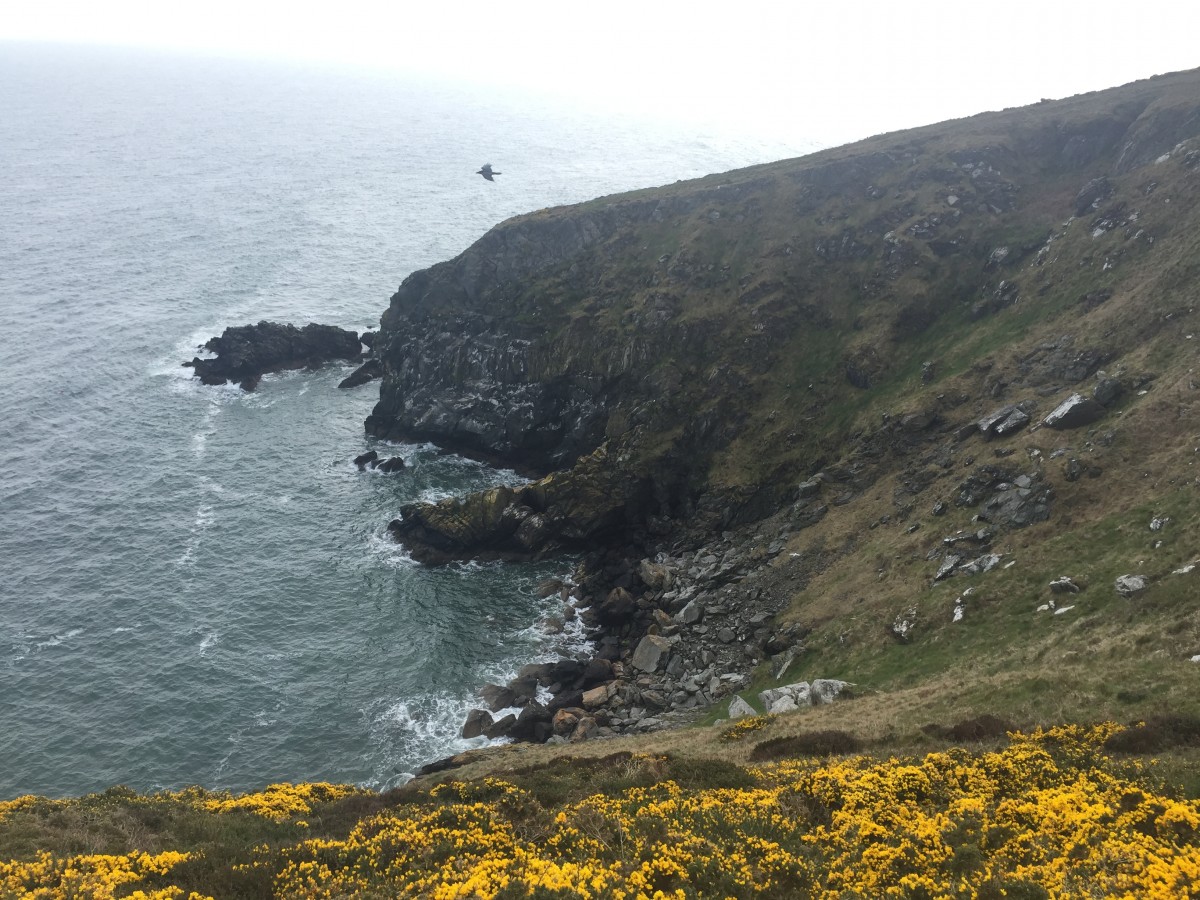
I spend most of my mornings and afternoons walking around the city or sitting in pubs and cafes journaling or reading. One afternoon I took about an hour bus ride to a small fishing town called Howth and went for a little hike along the cliff looking out over the Irish sea. After my hike I got the best fish and chips of my life at shop called Beshoff Bros. SO GOOD! The fish was so fresh! Then I grabbed a pint and chatted with an old ship captain at the pub next door. The Irish are so friendly and willing to talk to travelers.

IMG_1471


The cliffs of Howth


Monday morning I got up at 3 am and got on a bus to the airport to catch my 6:35 flight to Edinburgh. Edinburgh is so gorgeous. The old architecture is incredible! I spend the whole day walking around the old town and in the evening I got to hear awesome jazz and Funk at a place called The Jazz Bar. I also drank scotch all day…

IMG_1529


IMG_1542


This Morning I got up and was on a train to Glasgow by 10. I Have not done much here today. Just enjoying the beautiful weather. It hasn’t rained a drop since I left Seattle. Which is almost unheard of in both Ireland and Scotland! I walked around the botanical gardens, drank some wonderful coffee (finally) and ate great food. I just got back from a pretty great comedy club. It was open mic night so it only cost 2 pounds. But honestly I didn’t get many of the jokes because of the thick Scottish accents. I just couldn’t under stand them!

It’s been an amazing first week of my trip and I know the rest will be just as good. Im headed to Fort William tomorrow for some hiking!

Until next week,


Cheers!

My week in Bonn

This week has been very busy for me. Monday we arrived in Frankfurt, Germany and took a short train ride to Bonn where my uncle picked us up. It was quite a hassle because my grandma and I had many bags; we had one suitcase full of antiques specifically for my uncle (he restores antiques). On Tuesday I walked around downtown Bonn with my grandma and uncle. The weather was very warm and the sun was out the whole time, something that is not very common here. The climate is quite similar to Washington in that it is cold, rainy, and grey most of the time so the people get really excited when the sun is out. I saw multiple street performers, one was playing the marimba. We visited the Bonn Minster (Bonner Münster in German), a Roman Catholic church that was built between the 11th and 13th century, making it one of Germany’s oldest churches. Beethoven played the church organ there as a young boy. It is probably the biggest church organ I have ever seen in person. According to legends Saints Cassius and Florentius (the patron saints of Bonn) were beheaded for their religious beliefs on the spot where the church stands. There are statues of two heads in front of the church representing them.

bonnminster


MunsterChurchIMG_2715


We went by the Bonn tourism office and got a map of Bonn and also a map of where Beethoven had been around Bonn. While in the tourist office I saw a picture of the Bonn Symphony Orchestra on the wall with my uncle featured on the left.

IMG_2784


We visited the house that Beethoven was born in, which is the main attraction that brings people to Bonn. Inside the house are manuscripts and letters written by Beethoven. While walking through the house I felt as though I was being transported back through time. The floors creaked with every step we took and we were told to leave our cameras behind so I wasn’t able to take photos inside. The house features the first viola Beethoven owned, his death masks, his ear cones that he used to try to get back his hearing at the end of his life (which didn’t work unfortunately), and many other possessions owned by the legendary composer. Images of Beethoven are literally all over the city from the obvious (the Beethoven haus) to statues of him in the city square, delis, on chocolates, and inside the banks. After talking to numerous locals, I realized that the Bonn Symphony Orchestra still remains in Bonn because of Beethoven. Bonn used to the be capital of Germany and since the capital switched to Berlin, there’s really no point in Bonn having such a prestigious orchestra. It’s all because Beethoven was born in Bonn that makes this city have such an important musical cultural significance.

IMG_2818


beethoven2 beethoven


beethoven1


IMG_2971


During the weekend we went to see two operas at the Operhaus Bonn. I noticed that most of the crowd were older people (something our classmates observed at the opera that they attended in Seattle). My uncle played trumpet during both operas (and every other opera that is performed there). On Friday night we went to see a 4 hour opera, The Tales of Hoffmann, which was performed in French and subtitled in German. It was a bit confusing to follow since none of it was in English. I researched it before going to watch but still couldn’t follow the premise.  At first it seemed like we were watching parts out of Frankenstein or Beetlejuice because of the dramatic face paint and steam punk costumes. Everyone’s hair was white and tinged neon green. Even with minimal knowledge of what was going on, I could still appreciate the instrumentation, beautiful costumes, set design, and wonderful music. I did feel a little disoriented after because of so many languages being projected at me (French being sung, German on the screen). After the opera I went home and read up on “The Tales of Hoffmann” and it made more sense. I would like to watch it again in English.

On Saturday night we went to see another opera, Fidelio, which was the only opera Beethoven ever wrote. Since I was so confused by The Tales of Hoffmann, I spent an hour reading about it before going. It really helped and I was moved by the story and love how Beethoven took a political message and put it into music. This opera was only 2 hours long. I feel extremely lucky that I was able to watch my uncle play in an opera by Beethoven in the city of his birth and in the language it was composed in.

my sketch of a building in Bonn that I sat across from drinking tea during the afternoon and people watched. It looks very old but is situated among modern businesses like Starbucks.

IMG_3211

3. Geaux Bama!

Some exciting new developments have taken place the last week and half! Slowly, but surely my trip to New Orleans has evolved into a road trip through the south.  My roommate is Alabama born and raised and her parents have a cabin on the river in Tuscaloosa. So myself along with three other people will be driving to New Orleans, making a stop at the gulf, and ending in Alabama. This has been a dream of mine since I can remember – and in just short of two weeks it will be coming true. We will be driving through Oregon, Idaho, Utah, Colorado, New Mexico, Texas, straight into Louisiana. After we stay there a few nights, we will make our way to the gulf shores for a night or two and then up to Alabama.

This change in plans of course, will affect my study questions. If I’m being honest – I am really grateful for that. While New Orleans is rich in history and cultural influence, being able to explore more than just the french quarter is really exciting. I’m excited because this program has challenged me to be an attentive traveler. One that doesn’t just drive through a city, distracted by the radio or my phone, but a traveler that takes the time to observe, to notice, to draw, to see, to hear, to touch, to taste, to smell. My hope is to take note of the contrast between urban and rural soundscapes. Some new questions I will be asking myself: What differences do you notice in urban and rural settings? Similarities? Does one influence the other?

This week, I read an academic journal titled “1/f  Noise in Rural and Urban Soundscapes” by B. De Coensel, D. Botteldooren, and T. De Muer

Here’s the summary: “In complex systems, log-log linear relations between appropriate descriptors are quite common. In this paper, the rural and urban soundscape is assumed the voice of a complex system. Self-organized criticality is shown to occur at different levels in this underlying system. The power spectral density of loudness and pitch in recordings of rural and urban soundscapes indeed often follows quite closely to the typical 1/f frequency dependence in many cases. Looking in detail at the data, a breaking point is observed in many of the curves around 0.2 Hz, which corresponds to a period of 5 seconds. It seems logical to associate this to within event and between event sound dynamics. Indicators based on this analysis could be useful for cataloguing soundscape dynamics. By extension of the earlier finding that 1/f noise is quite common in music, labels such as “boring / dull” or “too chaotic / too unpredictable” may even be borrowed to describe soundscape dynamics”

While the authors focus is on 1/f frequency – the article breaks down different aspects of rural and urban sounds – bird song, wind, road traffic, a mixture of urban activities, song and speech. Having these categories will help me to organize my thoughts and will be helpful for me to pay attention to sounds I might not have paid attention to before. This article also touches on the fact that different sounds, with different pitch and frequencies can change the way you hear the sounds. A bird song with a high pitch may be easier for you to notice than the low frequency wind sounds. This is something I’ve been observing in myself  over the last few weeks. When listening to music, sometimes all I pay attention to is the lyrics, other times it’s the piano, or the drums. This program has challenged me to pay attention to everything – but as I am going to be exposed to many different sounds in a couple of weeks, I think it is important for me to take note of my raw reactions to sounds. Like de Botton talks about in The Art of Travel, I am bringing myself on this trip and there is not getting around that.

I am also bringing three other people – so here’s where I talk about expectation. I love road trips – I think there is something beautiful about driving to your destination rather than flying. I think it gives context to the places I go. The deep south is different than the northwest. You don’t need me to tell you that. The food is different, the weather is different, the dialect is different, the people are different, and the music is different. I know these things because of research that I’ve done – reading articles and books and talking to people that have been there or lived there. With these things in mind – I want to let go of them as much as possible to allow myself and the people round me to have as much of an authentic experience as possible.


Week 3 Reading

Week 3 Readings:AllYouNeedtoKnow9265891

  • The Lost Gate, Orson Scott Card. (Fiction)
  • Chapters 1-23

All You Need to Know About the Music Business, Donald S. Passman.

  • Chapters 1-10


Donald Passman dissects the Music Business in a choose-your-own-ending style. Depending on what is relevant to interest or inquiry the reader can flip around the book. Within the text he gives parenthetic references to future or past pages that contain more in-depth explanations. The book is written chronologically parallel to the life of an artist who is strategically planning a career in music from the floor to the ceiling. No previous experience necessary. 

Passman begins the text laying out who should be apart of an artists team, why, and how to acquire them. This all entangles itself within the branded image of the artist: the artists philosophy and goals. Who do others see you as or who do you want others to see you as?

There are many options, he explains, but there are ways that the music industry already flows. Knowing this information is useful in navigating the currents of a music career.

As an artist who takes control of 100% of my personal life, musical career and finances I consider myself worth 100% of my profit. However my profit from music is currently $0.00 and I cannot very well have 100% of nothing. I need a team; managers, agents, attorneys. Their time and resources are worth something and within the industry there are standards to how much they are worth. This is usually calculated as a percentage of the artists earnings. It is up to me to decide what tasks I can’t handle, what tasks I can and who is best to fill the gaps.

Once an artist establishes a team (the largest part of this collective is a fan base) they are ready to begin selling their music and negotiating with labels. This is a fork in the road for the artist and for the text. Reading through how record contracts operate is useful in one of two ways:

1) You plan to sign away your career to the benefit of a benefactor (your label) wether major or independent and need this information to assist you in contract negotiations, bargaining power and lowering the cost of an attorney by not being a pretty stool with a voice.

2) It reinforces your motivation to be independent because you aren’t a pretty stool with a voice and now you know the face of the monster you’re avoiding. Curiosity kills the cat. Im not a cat. I only have one life.

Since I subscribe to benefit number two I will forgo any further explanation of record contracting and utilize the readings to supplement my creative experiences in Los Angeles as well as my other readings. I will return to responding when I reach Chapter 15: Songwriting and Music Publishing.

Week 3 (April 13th – 4/19)


0421150817

 We see more of ourselves in others than we see who they are. What we despise in others is what we despise that we see in ourselves that we cannot embrace. Wrestle the evils and see that within judgment is discernment, within discernment is caution and within caution is fear. You are afraid and so am I. What quiets your fears? That is what quiets mine. It’s not enough to seek to escape our own suffering. We will escape it by learning how to escape others suffering, do you see?

I see and when I see I must look for kindness and forgiveness. Instead, what makes its image in the mirror? Silver reflections give way to sets of self-aware waves and I see a young, dry landscape ready to burst into flames. There is a patch of yellowing grass that rustles in the breeze below both balconies of this home overlooking a dense forest of trees who seem not to know the way that brought them to this place. The paper grass speaks to me of impending flames and irresponsibility. So I clean my bong with a match stick and throw it in. 

Faith. Religion. Money. Love. Beauty. The sun eats away the skin of the maggots as they strive to eat every bit of oxygen in the air. In youth the power of the earth gives us jubilance but in age it reveals the scars that have laid underneath filters on our social media screens. You cannot hide from the humility of the weather that takes away everything it gives. We are eating off plastic and paper to save water on a planet that has more than enough to occupy an entire solar system. Here we are in the mist of a planetary ballet, fog machines and laser beams but what have we done? Filled our lungs with carbon. Exhale. 

The highways are streams; the cautious, stones being smoothed by the raging movement of those who are carried with the water. But these are dry lands. These streets sparkle star dust. Tumbleweed personalities roll through with smiles as I thrust a herring into their hand. 

Eggy. Ovular personalities of superiority. Guarded children fenced in the den become feral posters of territory. I am angry because I cannot find fault in this place; only in the way I perceive can error be margined. Receding I know what they say:0421150817a

This is our home. 

So my ostrich legs fold me back away into a desert of one track thought. 

“Exist. 

Let them live and perhaps you, too, shall learn to live. Oh sagittarius, maker of hearts and haver of homes, you wandering traveller, carry a piece of each of them in your chest and sprinkle their dust across the earth, then others, too, may learn to live. Listen to the roll of a mid-spring Los Angeles heart and see that its timbre is made from the fell of a thousand suns beating down on shining teeth waiting to meet your gaze in smile.”

_____________________________________

The song at the top was recorded in Calabasas, CA; just north of Los Angeles. The recording took place at a friends studio using Logic Pro X, Manley Dynamic Microphone, Roland SP-404 SX, Kontakt 5 and Massive. The hook/bridge is sung by myself and Keaton separating two verses: one by Eli and one by me. The song did not take all that long to create, probably somewhere around eight hours. We were in Calabasas for only three or four days and left with one complete song and a skeleton.

« Older posts Newer posts »

© 2026 Musical Cities
The Evergreen State College
Olympia, Washington

Log inUp ↑