
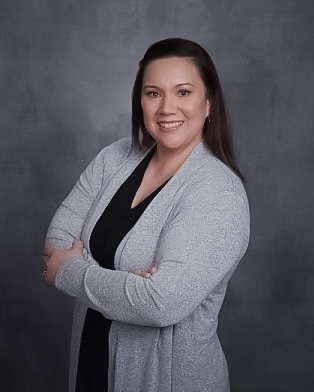
My name is Wesidult and my English name is Michelle Gladstone-Wade. I am from the Webster family from the Suquamish Tribe and the Gladstone family from the Nooksack Tribe and the Shxwháy Village First Nation. The entirety of my formal education and career has been dedicated to advancing tribal communities. During my undergraduate work at Dartmouth College, I fell in love with social sciences and learned how people work together. Little did I know it was my spirit finding its way back to living and learning in relationship. My exploration of relationships carried me through my graduate work where I earned a Master of Business Administration and a Master of Science in Leadership. I even dipped my toes into the doctoral space, but a move to state service and a promotion within the Washington Department of Commerce caused me to take a sabbatical from my studies. The most serendipitous aspect of this sabbatical is that I am living my research. I was interested in the intersection of tribal and nontribal economics, tribal and nontribal organizational development, tribal and non-tribal governance, and how they weave together to impact regional economics. I am so lucky that I can work in an area that I love so much. I believe that ideas of economic development have been pushed on tribal communities by the colonial governments and it is about time we redefine economic development to fit who we are and reflect our ways of life. This more encompassing idea of economic development is what drives me to ask hard questions and focus my efforts on facilitating conditions that help tribal communities to truly flourish.
I started my career in tribal higher education and shifted to state service to gain broad experiences. Still: the classroom is my happy place. When I got the opportunity to come back to teaching alongside Jeffrey, there was no decision to make! Being a part of this program has been fulfilling and rewarding both as an academic and personal. The environment in the classroom is incredibly welcoming and full of curiosity. Both relationships and curriculum are founded on the ideas of how we, as native people in a native framework, interface with the non-tribal world. Exploring this question and existing in the learning space based in reciprocity and relation to the world around us fills my cup.
The true value of this program is that it brings allies, tribal practitioners, and students together to live and learn in a tribal way while preparing students for the realities of serving their tribal communities. There is an accepted norm that we to show up holistically and authentically, which was not a comfort I had during my higher education journey. I hope that I provide that comfort to students as they move through this incredible program. I am eternally thankful for the opportunity to be a part of this community of learning.