Author: Anthony

Between Paralysis and Motivation: Coming to terms with Climate Emotions by Jamie Fiano

At the beginning of COVID-19, I decided I would go back to school as an avenue to contribute to collective justice. I enrolled at The Evergreen State College in 2020 and unknowingly began my journey toward climate action. Over the past two years, through a multidisciplinary scope, I have learned about the imperial and colonial dynamics underlying current global relationships, how those relationships are defined through neoliberal capitalism, and how the prioritization of a racist and classist economy comes at the expense of environment and ecology. I have learned to lift the veil of the Manifest Destiny, and see the legacy of violence, exploitation, and extinction that has created our global/social climate crisis.

My relationship to myself and the world around me has largely been defined by the time I spend outside. The more aware I became of ecological degradation through my coursework, the more I personally felt it: I began choking on the pollution I sensed in the air when I’d run, I felt the oil on my skin when I’d surf in the Pacific Ocean, I was forecasting the death of forests at the hands of industry on every hike. My intellect and critical thinking was expanding, but my heart was breaking and my spirits were sinking under the weight of loss. I couldn’t move, I couldn’t eat, and – because of the pandemic – I couldn’t find community. Instead, I was staring at a Zoom screen of mostly black squares with names of people I’d never met, clinging to lectures and readings as though they were pieces of a puzzle that would solve the whole ambiguous problem.

As black Zoom squares became moving and talking pictures and classes became hybrid, I learned many of my peers were experiencing similar emotional responses to our shared learning content. Class seminars served to collectively process feelings of paralysis and helplessness in response to the gravity and complexity of climate change. An Evergreen course I was in hosted a guest lecturer: Cal Poly Humbolt Professor of Environmental Studies: Sarah Jaquette Ray. It was through Sarah Jaquette Ray and her work that I learned there was a name for the shared experience of difficult emotions around climate change: climate anxiety.
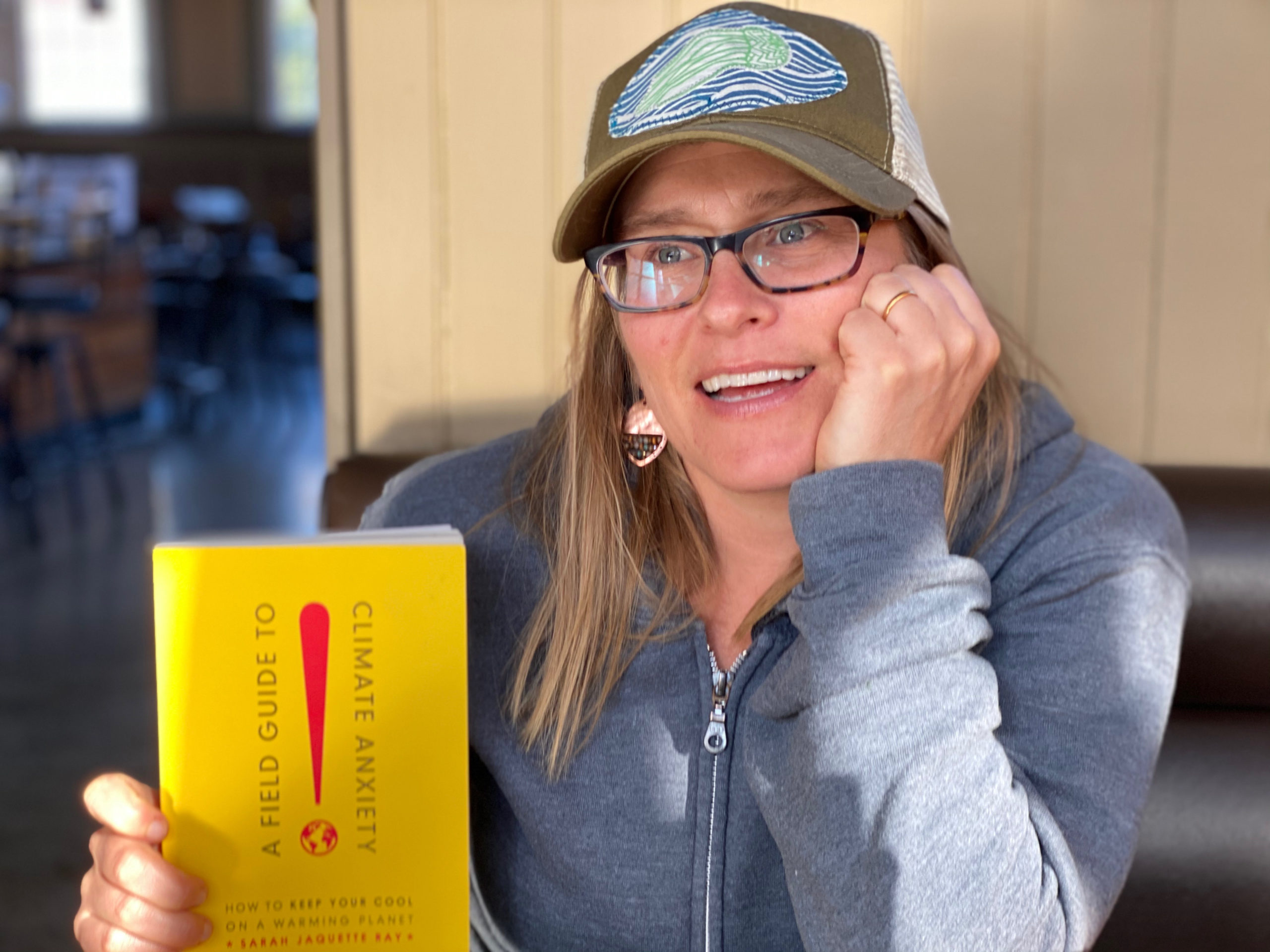
a photo of professor Sarah Ray holding her book

Dr. Sarah Ray, holding a copy of her book. Image credit: Good Grief Network.

Climate anxiety (interchangable with eco-anxiety) is used to describe an emotional response to the engagement with ecological degradation and climate change. Other ecological emotions encompassed within climate anxiety include: “fear, anger, exhaustion, powerlessness, feelings of loss, helplessness, and even phobia and despair”.[1] Leading researcher of climate anxiety, Panu Pihkala, identifies it as a phenomenon which – depending on the severity – has the ability to paralyze or “emerges as an adaptive response to the vast socio-ecological problems of our time” when it is “connected with expectation, motivation, and hopes.”[2]

I believe this point between paralysis and motivation is where the Center for Climate Action and Sustainability (CCAS) can be a resource to Evergreen. Facilitating elements of adaptive coping to the learning community encourages both individual health as well as the individual capacity to address the causes of climate change.[3] The Evergreen State College already provides an “education model that is participatory and democratic,”[4] which encourages the necessary sense of agency for students to feel capable of addressing climate change. In order to put a sense of agency into practice with feedback, the Center for Climate Action and Sustainability can connect students to local change-making opportunities through internships and other community partnerships. The Center can also build awareness of climate anxiety and other difficult emotions by providing literature, resources for hope, and a space for facilitated discussion groups[5], which encourages adaptive coping to stress and climate risks.[6] After experiencing and subsequently researching climate anxiety, what I see as most critical to overcoming the paralysis climate anxiety evokes, is to navigate hope with “a radical imagination about the future we desire”.[7]  By facilitating creative workshops and active student engagement, CCAS can expand individual capacity to envision a hopeful and desired future within a climate-changed world. This capacity to imagine a desired world through hopelessness, guilt, and other difficult emotions we experience through climate change, serves as a channel to individual empowerment.

The Center for Climate Action and Sustainability is actively working to connect the Evergreen learning community to resources of hope and empowerment. As soon as the Center opened, I applied for an internship available to students, and was given the opportunity to do self-directed research and communication of climate anxiety in community with like-minded people, which subsequently allows me to work through my own experiences of difficult emotions. The Center will also be hosting a Climate Speaker Series, which has featured Dr. Jennifer W. Atkinson, a UW professor of environmental humanities who focuses on climate and mental health. The Speaker Series will also feature Dr. Sarah Jaquette Ray, who authored A Field Guide to Climate Anxiety. In addition to the speakers, CCAS will facilitate a creative workshop during the winter quarter, which will provide tools to empower those experiencing climate anxiety. 

– Jamie Fiano, CCAS Intern, Spring 2023

[1] Baudon, P., Jachens, L. (2021). A scoping review of interventions for the treatment of eco-anxiety. International Journal of Environmental Research and Public Health, 18(9636). https://doi.org/10.3390/ijerph18189636.

[2] Pihkala, P. (2020). Eco-anxiety and environmental education. sustainability, 12(10149).  

[3] Ágoston, C., Csaba, B., Nagy, B., Kőváry, Z., Dúll, A., Rácz, J., & Demetrovics, Z. (2022). Identifying types of eco-anxiety, eco-guilt, eco-grief, and eco-coping in a climate-sensitive population: a qualitative study. International Journal of Environmental Research and Public Health, 19(2461). https://doi.org/10.3390/ijerph19042461.

[4] Ojala, M. (2015). Hope in the face of climate change: associations with environmental engagement and student perceptions of teachers’ emotion communication style and future orientation. The Journal of Environmental Education, 46(3), 133-148.

[5] Pihkala, P. (2019). Climate anxiety. MIELA Mental Health Finland. https://helda.helsinki.fi/handle/10138/307626.

[6] Mah, A. Y. J., Chapman, D.A., Markowitz, E.M., & Lickel, B. (2020). Coping with climate change: three insights for research, intervention, and communication to promote adaptive coping to climate change. Journal of Anxiety Disorders 75(102282). https://doi.org/10.1016/j.janxdis.2020.102282

[7] Ray, S.J., (2020). A field guide to climate anxiety: How to keep your cool on a warming planet. University of California Press.
Director’s Note: Prioritizing Climate Justice

The climate emergency demands immediate attention. Higher education institutions have increasingly focused on climate change in both curricular offerings as well as in reducing greenhouse gases from their own operations and investments. But often we miss some of the more foundational issues that structure how climate change impacts different communities, including the students at our institutions.

Urban Climate Justice

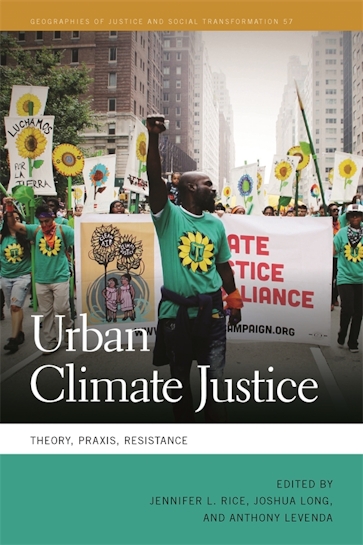
Dr. Levenda’s co-edited book has recently been published as a part of the Geographies of Justice and Social Transformation series at the University of Georgia Press: https://ugapress.org/book/9780820363769/urban-climate-justice/

After a year and a half of the CCAS being started, we have been able to center climate justice in our work. We consider climate justice in numerous ways including the disparate impacts of climate change on communities across place and space, but also in the lifeworlds, emotions, and everyday activities of our communities. As a part of each of our core functions – transformative education, innovative research, and public engagement – climate justice is a guiding principle. Events such as the Native Cases Conference, Climate Lecture Series, and Jose Gomez Farmworker Justice Day have all paid special consideration to this theme and connected issues such as Indigenous sovereignty, worker justice, emotional well-being, and climate action across sectors. We have continued to extend our work in these directions.

In addition, the CCAS has continued to focus on Evergreen student experience and collaboration. We have been lucky enough to support 15 student interns (Jamie, Justin, Corey, Angelica, Renae, M, Mina, Arien, Lana, Ali, Cedar, Amita, Miguel, Takumi, and Ash) who have been doing amazing work that is featured in this newsletter. In upcoming posts, you can read reflections from CCAS interns as well as original writings from Jamie Fiano and Arien Wolf on the connections between our Climate Lecture Series speakers, climate emotions, and climate action. Additionally, you will find reviews of our past events and previews of much more to come, including our efforts at building education pathways for green jobs and climate workforce development.

Thank you for reading and I hope you can find ways to collaborate with us!

In solidarity,

Anthony


A Summer of CCAS Internships: Student Reflections

I hope that my experience demonstrates the value of external internships through the Center for Climate Action and Sustainability for any Evergreen students considering climate-related careers.

Ali, CCAS Intern – SPring 2022

Internship experiences are an important element in experiential learning and can have transformative effects on students (and faculty and supervisors). The CCAS has been lucky enough to support 15 student interns over the past year (Spring 22 – Spring 23), some working for multiple quarters. We wanted to highlight some of the recent student comments about their experience and how it helped them in their climate career pathways.

Internships can also help students learn about climate action from a variety of sectors and perspectives. One primary way is to apply classroom and lecture-based knowledge in real word settings and participating in climate change work. Corey, a Master of Environmental Studies student and CCAS Intern with the Thurston Climate Action Team explained this quite well when he stated: “This internship has given me a newfound appreciation for citizen involvement in climate action. I was able to interact with volunteers and gained an understanding of how important invested locals are in making a difference at the city and county level. This experience cemented the importance of organizations that support the enthusiasm and skills that volunteers can bring to climate action.” Similarly, Angelica an undergraduate student and CCAS Intern with TCAT explained that internships helped connect to community. These sentiments were echoed by many CCAS interns as they search for opportunities to connect with local community for climate action and educational experiences.

I am very grateful for the opportunity of this internship, particularly because I was able to directly impact conservation efforts in my community and contribute to climate action efforts. The work to save legacy forests is imperative. I hold my head high knowing that I was able to transition my corporate operational experience into climate change mitigation efforts with relative ease.

Justin, CCAS Intern – Summer 2022

Students also gained and applied professional skills during their internship experience. Justin, an undergraduate student with many years of professional experience in business start-ups, had applied many of his skills to a new passion related to legacy forest preservation for enhanced carbon sequestration and biodiversity. Justin’s work made a significant impact on the non-profit organization he interned with, including rebuilding social media accounts, developing a social media workflow guide, organizing events, and helping with strategic planning, ultimately leading to significant increase in public engagement.

While these are only a brief look into the internship experiences of a few students, we are proud to say that the CCAS has made significant impacts. We are committed to continue to provide student opportunities for internships across sectors from local government to non-profit organizations to local sustainability businesses. Our focused efforts contribute to the professional development of students, workforce development, and educational experiences that have lasting effects long after students’ time at Evergreen.

The internship was an outlet for me to learn more about my community, ultimately helping me feel more connected to it through learning about local policy and the people working to improve it. I felt gratified by the work I was doing and was happy to be involved in working in climate action.

Angelica, CCAS Intern – Summer 2022

As we look to expand these programs, we are always on the lookout for new partners and collaborators. If you are interested in hosting an Evergreen student to work with your organization, please get in touch.

CCAS goes to WOHESC!

The Washington Oregon Higher Education Sustainability Conference (WOHESC) provided an invaluable experience for a group of eight Evergreen students. This diverse group, comprising undergraduate and Masters in Environmental Studies students, traveled to Corvallis, Oregon via van. For some students it was their first time experiencing WOHESC in-person. For a few it was their first time experiencing a conference. The experience served as a catalyst for their professional growth and engagement in sustainability, as well as generating ideas for our own student population and campus. 

During their time at WOHESC, the students took advantage of networking opportunities, forging connections with fellow attendees and sustainability professionals from across the PNW region and Idaho. Other attendees were student peers, directors/staff, faculty, business owners (some sponsors), public sector entities, or local community members. These interactions led to (and continue to) collaborations, guest presenters, and discovering career prospects and options in all sectors and academia. The conference served as a hub for knowledge exchange, empowering the students with a wealth of insights and best practices shared through panels, workshops, and presentations. 

Between sessions and over meals, like true Greeners the Associate Director and student group met to seminar and discuss our experiences. Inspired and motivated to apply their newfound knowledge to their own campus. This reflective process fueled brainstorming sessions, which highlighted common needs within The Evergreen State College community (even across undergraduate to Grad programs). Notably, they recognized a shared desire for the Greener Sustainability Project Network (GSPN) and the need to develop passive and active programming for summer events. 

The impact of WOHESC extended beyond the conference itself. Inspired by a speaker they encountered, the students extended an invitation for the individual (Deann Garcia) to deliver the keynote presentation at the Rachel Carson Forum Earth Day 2023 event (an annual event traditionally hosted/led by MESA, this year being assisted by CCAS in securing funding and logistics/running. Now being passed onto CCAS for 2024) on the Olympia campus. This exchange exemplified the lasting connections formed at the conference and the influence it had on their approach to sustainability initiatives. 

The students’ participation in WOHESC, was a great examples of CCAS goal to fostering sustainable practices and conversations in students. It highlighted the importance of creating opportunities for students to engage in professional conferences, network with industry leaders, and bring back ideas to shape and enhance sustainability efforts on campus. We hope to drastically expand the number of students that attend in Bellingham next Feburary, and organize a few Evergreen based workshops as a group. 

(Pictured above: six of the Evergreen students plus Associate Director of CCAS posing in a clever WOHESC! Left to Right: Michael Joseph, Emma Wright, Cleo Gourley, Olivia McGoldrick, Rachel Escobedo, Shaina Thompson, and Alix Vasseur-Landriault)