
This week marked the beginning of a seven-year ecological journey at Evergreen State College’s Geoduck Beach, where the CCAS team (myself, Ian, and Emma) embarked on the first round of data collection following the removal of a concrete armored bulkhead. The goal: to understand how the shoreline evolves and recovers over time.
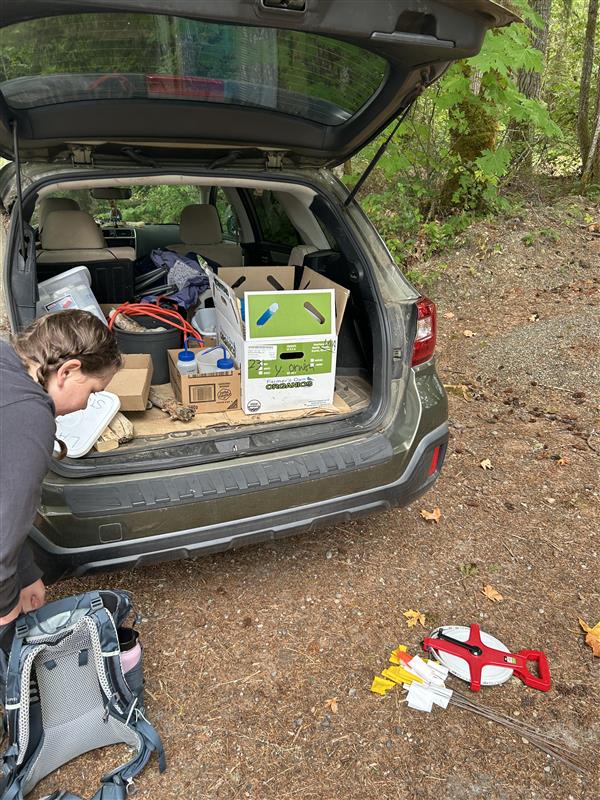
We met at the gate around 11 AM, grateful for a break in the heat wave. The weather was unusually cooperative: cool, overcast, and only flirting with drizzle. As we unloaded gear and stretched out the morning stiffness, Ian had already flagged the sampling zones and packed the supplies in their trunk. After a brief pause for birdwatching (a necessary ritual), we got to work.
🪤 Pitfall Traps: The Bug Hunt Begins
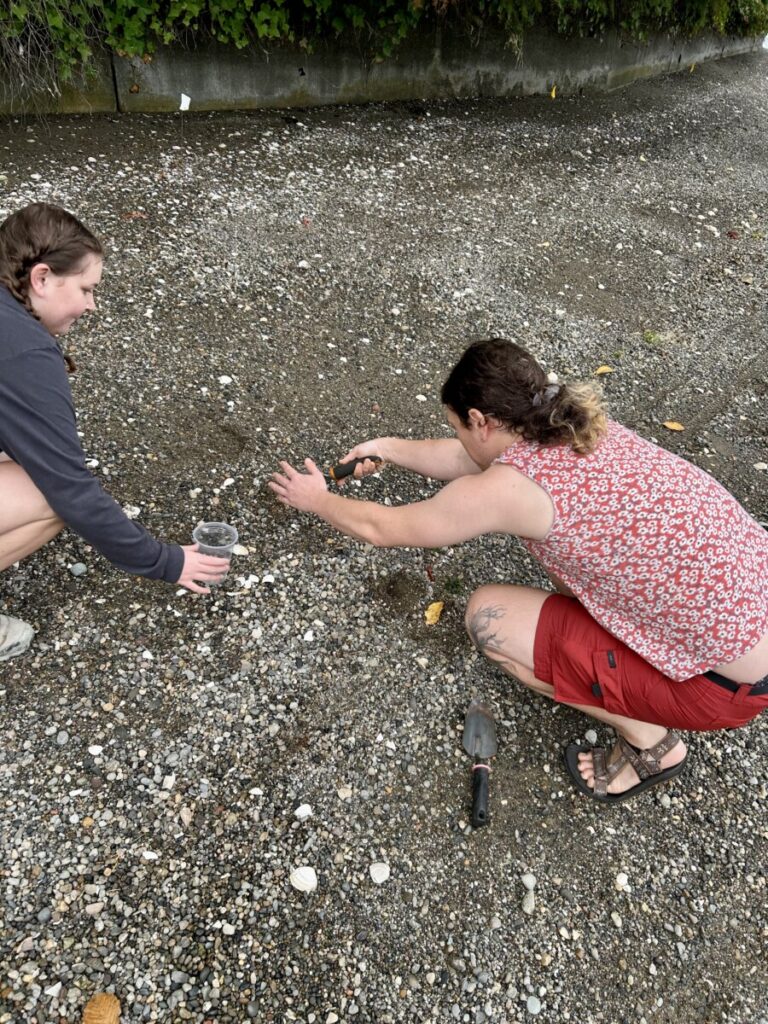
Our first task was installing pitfall traps. Simple plastic cups dug into the wrackline to catch crawling insects. Ian explained the importance of placing the cups flush with the soil to avoid disturbing the terrain and to ensure bugs would naturally fall in. We added water and a few drops of soap to break surface tension, a trick that helps trap insects effectively.
Emma and Ian had immediate success—within minutes, their traps had caught a few bugs (mine, I noted, remained stubbornly empty till the very end). Still, it was exciting to see the method in action and understand how even small changes in placement or terrain can affect results.
🧱 Wrackline as a Living Border
As we moved between flagged zones, Ian shared an observation that stuck with me: the wrackline is more than just a line of debris. It’s a living intersection where the contents of the sea meet the land. It’s a place of exchange, accumulation, and transformation. That insight gave our work a deeper sense of purpose.
🧪Sediment Samples & Fallout Traps
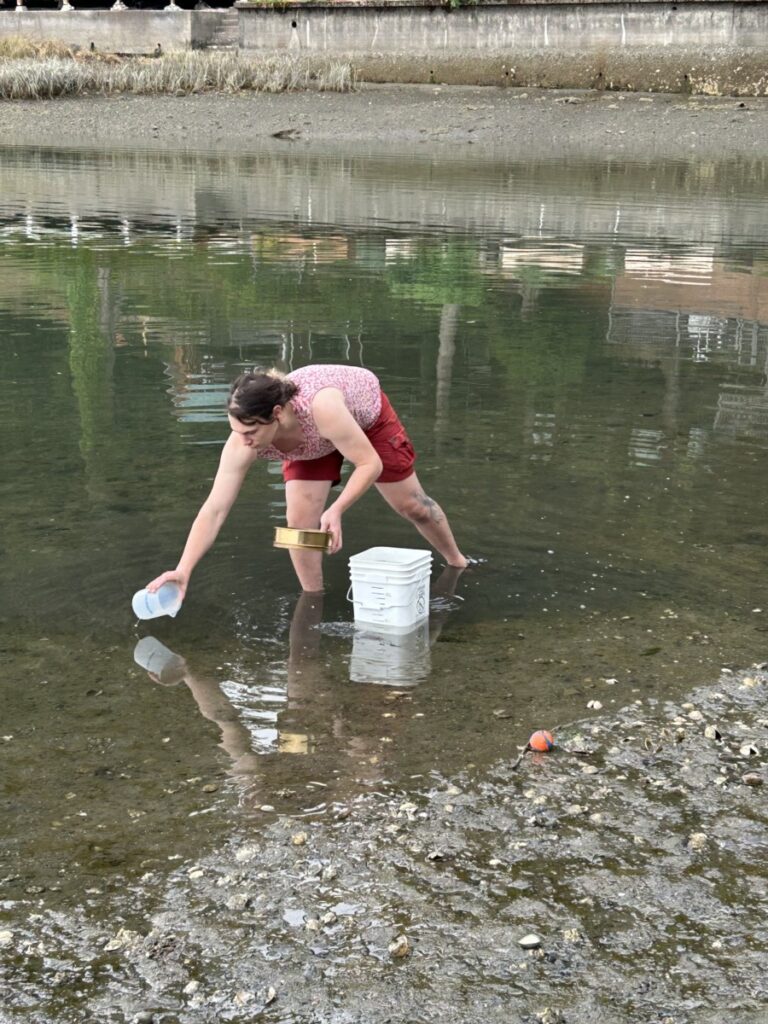
Next, we collected sediment samples using core tubes, digging into the wrackline and placing the samples into labeled tubs. It was more physically demanding than expected—digging, bending, and hauling—but many hands made the work light.
We also set up fallout traps on the bluff, placing bins to catch airborne debris over 24 hours. Emma reminded us to label everything clearly with laminated cards to prevent curious passersby from disturbing the setup. Poison ivy was a concern, so gloves and long sleeves were a must.
🌲 Log Analysis & Wrackline Survey
We wrapped up with log analysis, measuring woody debris and noting characteristics like moss, barnacles, and dimensions. The wrackline survey followed, using the Survey123 app to document debris types and density.
Throughout the day, we discovered small ways to improve future sessions (bringing a pop-up table, a large tote box for supplies, and even a speaker for morale and fun). We talked about comfort items like snacks, hand sanitizer, and kneepads, and how these small additions could make a big difference.
🌞 Looking Ahead: A Solarpunk Tradition?
As we packed up, I found myself imagining what this could become. A summer tradition rooted in Solarpunk values—blending community science, ecological restoration, and joyful collaboration. Emma and I brainstormed ways to involve younger students, especially K–5, in meaningful and age-appropriate ways. We envisioned future sessions with volunteers from the Puget Sound Estuarium, South Sound’s GREEN Tean, TRIO Upward Bound College-ready program, or even just curious locals, followed by shared food and connection.
This first day was more than just data collection. It was a beginning. A moment of learning, reflection, and dreaming.