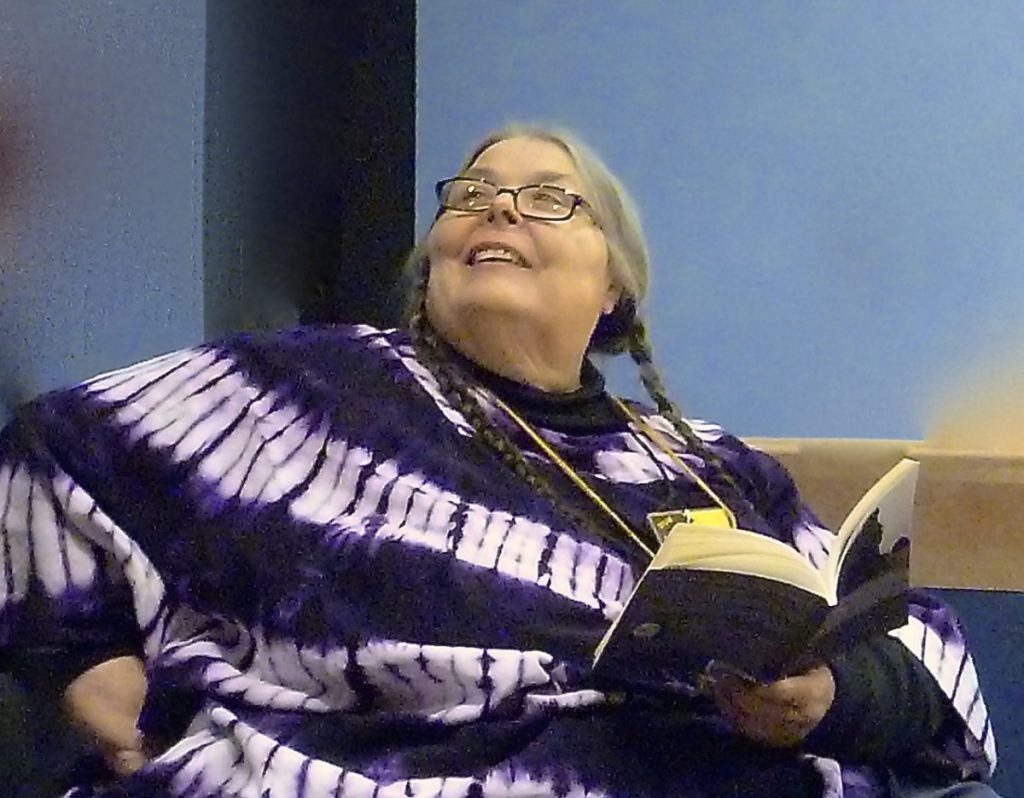
Tom Comitta is the author of The Nature Book, recently out from Coffee House Press. Their other books include 〇 (Ugly Duckling Presse), Airport Novella(Troll Thread), and First Thought Worst Thought: Collected Books 2011–2014 (Gauss PDF), a print and digital archive of forty “night novels,” art books, and poetry collections. In 2015, Royal Nonesuch Gallery installed these books in a multimedia exhibition containing drawings, video, vinyl window installation, and a sound poetry computer program. Comitta’s fiction and essays have appeared in WIRED, Lit Hub, Electric Literature,The Los Angeles Review of Books,The Kenyon Review, BOMB,Joyland, The Brooklyn Rail, and BAX:Best American Experimental Writing 2020. They live in Brooklyn.
Neely Goniodsky has directed and animated over twenty-five short films including productions at the National Film Board of Canada, The New York Times, and Seattle University. She holds a master’s degree in Animation from Royal College of Arts, London, and a bachelor’s degree in Animation from Concordia University, Montreal. Neely has been animating for over 15 years with her works reflecting an ever-ongoing search for new styles and expressions. Neely is interested in interpreting the human condition through abstract narrative and visual experimentation attempting to translate reality into visual poetry. She explores a combination of traditional animation techniques including ink and paint on paper, cut-out collage, under the camera animation, computer drawing, and 2D computer animation. Beyond animation, Neely’s works include video installations, paintings, drawings, and collage.
Charles Edward Williams is a contemporary visual artist from South Carolina. He holds a BFA from Savannah College of Art and Design (SCAD) in Georgia and an MFA from the University of North Carolina Greensboro (UNCG). Williams has attended summer artist residencies at Otis College of Art and Design (CA), SOMA (Mexico City, Mexico), the Gibbes Museum (SC), and the McColl Center for Art and Innovation (NC). Solo traveling exhibits include “Sun + Light,” “Warm Water,” and “Swim.” “Sun + Light” has been on view at Polk Museum of Art (FL), Gibbes Museum of Art (SC), and Residency Art gallery (LA). “Warm Water” has been on view at the Urban Institute for Contemporary Arts (MI), SECCA (NC), and Weber State University (UT). “Swim” was displayed at Morton Fine Art (DC). His work was also recently exhibited at Aqua and Scope Art Fart / Art Basel (FL) and Texas Contemporary Art Fair (TX).
Dahlia Elsayed is an artist and writer who makes text and image-based work that synthesizes an internal and external experience of place, connecting the ephemeral to the concrete. She writes short fictions for created landscapes that take the form of narrative paintings, print and installation. Her work has been exhibited at galleries and institutions throughout the United States and internationally, including the 12th Cairo Biennale, Robert Miller Gallery, BravinLee Programs, The New Jersey State Museum and Aljira Center for Contemporary Art. Her work is in the public collections of the Newark Museum, the Zimmerli Museum, Johnson & Johnson Corporation, the US Department of State, amongst others. Dahlia has received awards from the Joan Mitchell Foundation, the Edward Albee Foundation, Visual Studies Workshop, the MacDowell Colony, Women’s Studio Workshop, Headlands Center for the Arts, and the NJ State Council on the Arts. She received her MFA from Columbia University, and lives and works in New Jersey. Ms. Elsayed is a Professor of Humanities at CUNY LaGuardia Community College in Long Island City, NY.
Andrew Demirjian is an interdisciplinary artist who works with remix, rhythm and ritual. He creates environments for critical reflection through scraping and recombining popular culture, making intricate collages of sound and language. His work is often presented in non-traditional exhibition spaces and takes the form of interactive installations, generative art, multi-channel videos and live performances. He is currently a Fellow at the MIT Open Documentary Lab, where he is working on a computational text analysis project for linguistic remixing of vast quantities of video files. Andrew’s work has been exhibited at The Museum of the Moving Image, Eyebeam, Fridman Gallery, Rush Arts, the White Box gallery, Cyberfest, Fieldgate Gallery, the Center for Book Arts, The Newark Museum and many other galleries, festivals and museums. He is the author of Pan- terrestrial People’s Anthem, a book of poetry and collection of music that remixes the lyrics and songs of 195 national anthems. The MacDowell Colony, Puffin Foundation, Artslink, Harvestworks, Diapason, The Experimental Television Center, The Bemis Center, LMCC Swing Space, The Visual Studies Workshop and the New Jersey State Council on the Arts are among some of the organizations that have supported his work. Andrew teaches theory and production courses in emerging media in the Film and Media Department and the Integrated Media Arts MFA program at Hunter College.
Bill Basquin, filmmaker (From Inside of Here), is a multi-modal artist who enjoys the lessons that come from working with people, living with a tiny cat, and continuing to attune to worlds both wild and domestic. Bill’s films have been shown at the Sundance Film Festival, the Ann Arbor Film Festival, the Mix Festival, Documenta, and the New York Museum of Modern Art.
Born in Topeka, Kansas in a military family, Carol Rashawnna Williams is the only child of Bessie Williams & Willie C. Williams. Soon after birth Carol and her family moved to Frankfurt Germany where she grew up on a military base and went to German schools until she was 11 ½. At which time she and her mother settled in Tacoma, WA. Carol graduated from Mount Tahoma High School, went to the Evergreen State College, was an Upward Bound student of 4 years.
Carol’s mother was a certified missionary and gave her life to community service for over 25 years, feeding and sheltering those who were homeless. or re-entering society from prison. Carol’s father was a patriot and believed in American Democracy. He gave 28 years of his life to his country through military service.
After graduating from college Carol was accepted as a Vista-Americorps for 1 year in Seattle’s White Center neighborhood working with young single mothers of Head Start students get jobs and get into school. Carol had her first group exhibit at the Seattle Central Community College Gallery in 1990 when she attended Seattle Central College, it was a community college. Her second group exhibit was in 1996 at the Evergreen State College at which time her work was acquired and catalogued into The Evergreen State College’s (TESC) video art library and showcased into the TESC student anthology book.
Carol is a mother to 2 children. She currently resides in Seattle, WA and works to mentor emerging artists from various backgrounds. Carol is a musician of 21 years who plays the violin and the viola. Carol enjoys hiking in the Pacific Northwest’s numerous old growth forests. Carol was certified thru the City of Seattle Parks & Recreation Urban Forest Educator Program and loves to teach about conifers, indigenous and invasive species. You can find her walking all over Seattle.
Carol deeply believes in the power of art to build community, bridge community relationships and create authentic space for healing.
Klara Glosova is a Czech-born visual artist based in Seattle. She is a multidisciplinary artist working primarily in drawing, painting and printmaking. Her work is autobiographical, drawing inspiration from her dreams as well as daily life. Klara is also a founder of NEPO House and is always interested to see what happens when you place the inside out, invite the outside in and generally do things backwards. She received Seattle Magazine’s Spotlight Award in 2013. Seattle Art Museum’s Kayla Skinner Special Recognition Award, the New Foundation Fellowship and nomination for James W. Ray Distinguished Artist Award in 2014. In 2015 she was nominated for the Stranger Genius Award and a Betty Bowen Award finalist in 2017. Klara is represented by Linda Hodges Gallery.
Dave Kennedy’s works have been published globally in such magazines as Art21 and Numéro Cinq and exhibited both locally and internationally at such venues as the Brownsville Museum of Fine Art, Photo Center Northwest, Bellevue Arts Museum, Zhou B Art Center, Chicago Industrial Arts & Design Center, Escuela de Belle Arte in Spain, Rogers Park/West Ridge Historical Society Museum, and the Seattle Art Museum’s Gallery.
Represented by Bridge Productions in Seattle, WA, Kennedy is a recipient of a Yaddo Residency and Fellowship, 4Culture Individual Project Award, as well as, Artist Trust’s Grants for Artists Projects, the Joanne Bailey Wilson Endowed Scholarship, and the Vermont Studio Center Fellowship. He has presented multimedia presentations to the Society of Photographic Educators, Cornish College of the Arts, and the University of Washington on topics of marginalization and objectification. He received his MFA from the University of Washington in Interdisciplinary Arts and an undergraduate degree from Western Washington University in Visual Communication. Kennedy is currently working as an adjunct professor at Photo Center Northwest while keeping a full time studio practice in Seattle, WA.
Out of retirement to teach the first ever class from the new Fiber Arts Studio, Gail Tremblay has assembled a brilliant group of master weavers for you!
GAIL TREMBLAY
Writer, teacher, and mixed media artist Gail Tremblay (Onondaga and Mi’kmaq),was born in 1945 in Buffalo, New York. Tremblay taught English, Native American Studies, Art, and Art History at Evergreen State College in Olympia, Washington, where she joined the faculty in 1981. As an educator, she has influenced more than a generation of Native and non-Native students and has been instrumental in building Evergreen’s focus on Native arts and Native Studies.
In the 1980s, while she was teaching a Third World and Feminist Film Theory class, Tremblay began weaving baskets out of scrap 16mm film, old movie trailers, and outdated educational films. In perfect postmodern irony, Tremblay, who has been making baskets since childhood, utilized materials from a medium that often originated and propagated stereotypes of Indigenous people in order to create “traditional” baskets that critique those same stereotypes. Her titles often allude to the film source, which is frequently obscured by the weaving.
JOEFEDDERSEN…former Greener faculty member!
Joe Feddersen, who is Okanagan from the Colville Confederated Tribes, lives on the reservation in Omak, Washington. He taught art programs, from the early 1990’s until he retired, at the Evergreen State College. His work includes a suite of what he calls his Urban Indian baskets that use designs from things like car and truck tire tracks, electrical towers, parking lot designations, and other forms, objects, and structures that have moved from urban America onto American Indian reservations during the 20th and 21st centuries. Many non-Indian viewers often perceive his basket as having traditional Indigenous designs until they read the basket titles and come to see what he is saying about contemporary experiences in the Indigenous
JEREMY FREY
Jeremy Frey started weaving in his 20s, learning to make baskets from his mother Gal Frey. Gal taught him, drawing on what she had learned from her teacher Sylvia Gabriel. Sylvia was renowned for her basketry, especially her porcupine curlwork. Jeremy learned all aspects of the tradition from selecting brown ash to pounding and preparing basket stuff. His work fuses traditional shapes with the innovative use of both traditional and non traditional materials, as well as unique signature designs.
Jeremy was born in 1978 and raised in Indian Township. His work has received national recognition with the 2011 Best of Show award at the Heard Museum Guild Indian Fair and Market and the Santa Fe Indian Market. He was the recipient of a $50,000 United States Artists grant.
TERROL DEW JOHNSON
Terrol Dew Johnson started basketry weaving at the age of ten. He soon learned that he was a born natural and found that it was one of the few things in life that he found intrinsically effortless.
Johnson is a member of the Tohono O’odham nation of southern Arizona. The Tohono O’odham have a long history of basket weaving using a whole variety of techniques using natural materials and dyes. These are all used in order to tie the basketry in with the local landscape colours and flora, making the baskets part of the community and of the larger landscape.
The traditional basketry weaving techniques that Johnson learnt at such an early age, have allowed him to expand into the world of contemporary fine art basketry, while still keeping hold of his traditions, which he uses as a foundation or anchor point for his subsequent career as an artist.
LISA TELFORD
Lisa Telford (Everett) was born in Ketchikan, Alaska, in 1957. As a Gawa Git’ans Git’anee Haida weaver she comes from a long line of weavers including her grandmother, mother, aunt, cousins and daughter. Lisa harvests and prepares her own material, using red and yellow cedar bark and spruce root. The gathering of materials takes her hundreds of miles from home and hours of preparation that vary depending on the final product. Bark is traditionally stored for one year and then must be processed further. Her baskets may be seen in the collections of The Oregon Historical Society, Hallie Ford Museum of Art, The Smithsonian National Museum of the American Indian, The Heard Museum, The Portland Art Museum, and The Burke Museum.
Bob Leverich is an architect, sculptor, and craftsman, and a faculty member at The Evergreen State College, where he teaches visual art, craft, and sustainable design. He has building projects, sculpture, and furniture works in public and private collections across the country and in Canada. His architectural experience includes commercial, public, residential, and religious projects, as well as preservation of historic structures.
His sculpture and craft works have addressed expressive and functional themes in a variety of materials. His recent sculpture has focused on carved stone and wood, using iconic landscape and body forms, and includes large, site specific, multi-part public art works in Maine and Washington State. Bob regards drawing as a foundational tool in his working process, and he sees architecture, sculpture, and craft as connected by their substantiality and character as kinesthetic experiences, both in making and in use. Meaning gained through making is fundamental to his work and to his teaching.