Evelyn’s Symbolic Image of Liver and Gallbladder: Spring General

Image

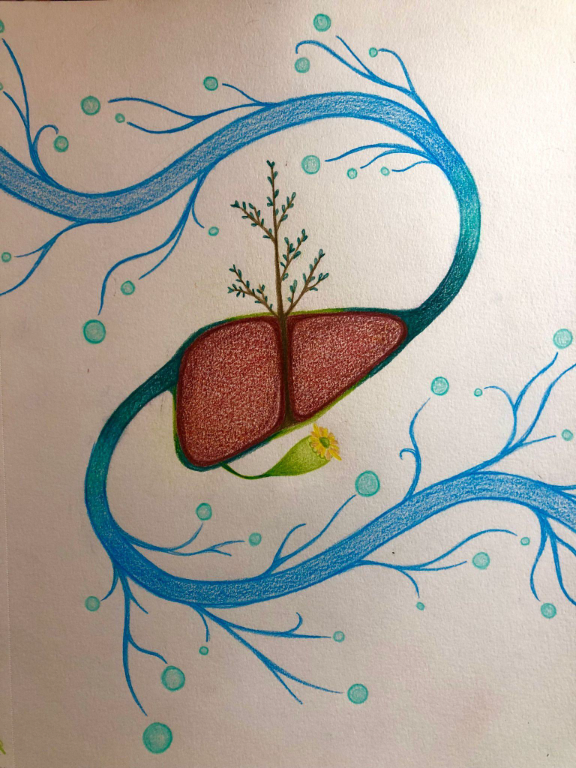
The liver produces bile, which is sent through a network of bile ducts, down to the gallbladder for storage. The gallbladder then releases the bile into the duodenum of the small intestine. This process is triggered by the hormones cholecystokinin, secretin, gastrin, and somatostatin, which are released in response to the presence of fat in the duodenum (Daniels, 2022). Bile is a concoction of various substances including: water, bile acids/salts, metals, electrolytes, phospholipids, and waste products like the pigment bilirubin and cholesterol. It enables three important digestive functions: the absorption of fat-soluble vitamins, the removal of metabolic waste products, and deconstruction of fat into absorbable forms. Bile acids are the facilitators of fat deconstruction and are conveniently absorbed by the lower intestine to be returned to the liver for repurposing (Daniels, 2022).”
Kaya’s Symbolic Image of Liver and Gall Bladder

Image

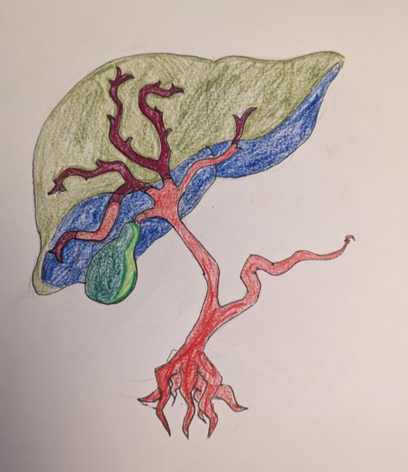
This image I created illustrates the connection between the liver and gallbladder, as well as the connection both organs have to the spring season. The liver is shown and drawn according to its anatomical shape in a dark pink color. The gall bladder is also depicted anatomically correct. However, the gall bladder is shaded in green and branches out through vines that are actually known as the cystic duct, hepatic artery, left hepatic duct, right hepatic duct, hepatic portal vein, and the common hepatic duct. Connecting these veins, arteries, and ducts to the gall bladder and spreading their growth throughout the liver illustrates the direct relationship, close proximity, and overall connection between the liver and the gall bladder. Furthermore, transforming these veins, arteries, and ducts into nature vines that sprout into flowers in the spring illustrates the relationship between spring and the liver and the gall bladder.

Chelsea’s Symbolic Image of Liver and Gall Bladder

Image


“Marsh Liverwort”. Chelsea Robb, 2022.
My art piece represents the function of the liver and gall bladder processing bile. Marshes are
weedy, mucky, dank and sometimes ominous places full of oddities like snakes and toads and
strange plants. Liverwort is an odd marshy plant that is carnivorous! It eats small bugs and flies.
To me this is a bit like the bile of the marsh, all these strange plants and creatures melded
together in their own little ecosystem.