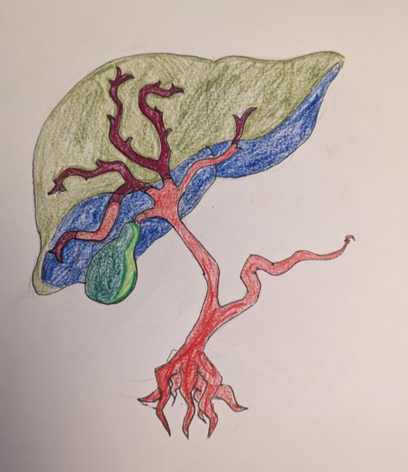
The liver produces bile, which is sent through a network of bile ducts, down to the gallbladder for storage. The gallbladder then releases the bile into the duodenum of the small intestine. This process is triggered by the hormones cholecystokinin, secretin, gastrin, and somatostatin, which are released in response to the presence of fat in the duodenum (Daniels, 2022). Bile is a concoction of various substances including: water, bile acids/salts, metals, electrolytes, phospholipids, and waste products like the pigment bilirubin and cholesterol. It enables three important digestive functions: the absorption of fat-soluble vitamins, the removal of metabolic waste products, and deconstruction of fat into absorbable forms. Bile acids are the facilitators of fat deconstruction and are conveniently absorbed by the lower intestine to be returned to the liver for repurposing (Daniels, 2022).”