Musical Cities

The Evergreen State College

Tag: Uncategorized (Page 5 of 27)

Yung Tuna

Last week we put what felt like four days of work into two days. Not only had we not finished the songs prior to accepting to play, we also had to look at this opportunity as the first chance to establish our name. In All You Need to Know About The Music Business Donald Passman talks about establishing a team consisting of you – the artist, a personal manager, a business manager, producer, mixer and an agent. Kory is someone who has looked out for me and help establish who I am today and is consistently guiding me to help better my career, I couldn’t be more thankful and honored to call him my manger. Steve is the business head; his mind handles the things that regard the affect of the company in a way I wish I could understand. We have established he will take on the roll of business manager and producer/mixer.

Creating a brand was the next part. Passman and the authors Dan and Chip Heath from Made to Stick have helped lead me to understand what a successful brand looks like. Building off of what makes an idea sticky; simplicity – what hooks an audience, unexpectedness – what keeps people’s attention, a successful idea also needs to be concrete, credible, emotional, and you need to have a story. Concreteness – puts a picture in our head and help people understand and remember. Credibility helps people believe. Emotional aspects make people care and stories get people to act.

Kory helped put some of these concepts into perspective of myself. What’s stuck with me since being here is the nick-name everyone has been calling me – “tuna” whether its got the prefix “lil” or “yung” or just straight Tuna Boy, its what it is. And it’s so hilarious. I’m a white rapper from god-knows-where Washington who looks like a surfer punk from So-Cal who plays guitar and should probably be in a Ska-band writing songs about woman and weed. Yung Tuna sounds like he’d probably fall right in line. It’s an easy name to remember and everyone calls me it anyway. Yung Tuna is simple and it creates mental “hooks,” like the Heath brothers mention, to grab people’s attention. You don’t just hear Yung Tuna is about to play a show and not start thinking of all the possibilities of music that he’s going to be playing (or she!?). Being unexpected makes people pay attention. I’m coming down to a shared level of understanding by establishing first and foremost that, yes, I am a rapper, and a concrete idea like this helps coordinate people to a better understanding of what I do.

After establishing the name it was ironic what the next people that we met had to say and offer.

Prior to our performance Hannah and Cindy asked me what our name was and I said Yung Tuna, and they said it matched perfectly with my style and we hadn’t even performed yet. (Steve goes by Dusty but the stage name for both of us falls under Yung Tuna). After hearing our music the credit they gave us seemed unbelievable. They said that they could see us playing festivals, and coming from two street musicians who just have a genuine love for music that meant a lot.

But what was really uplifting was the advice three people with established careers had to offer us.

The following Thursday we met with Robbie Crawford who is an “insta-famous” instagram photographer sponsored by GoPro, and a good friend of Kory’s. We got to hang out with him and his wife and play some games; converse and he also showed Steve some tricks on mixing vinyls. When we played him the song in the video below he asked us to play it two additional times, and he enjoyed it, but this was the first time we realized our music was credible. Not only did he give us his opinion on what he liked he also instructed us on how to spread our product, and offered to promote it on his personal page.

Unbelievable. Blessed. Blessed, blessed, blessed.

The support kept coming, on Saturday, while we were in Long beach, Cathy, a hairstylist for Kory, was the mother of OC’s best female rapper. When she listened to our music she immediately gave Steve the number to a Venue owner she knew personally and said we would be able to play there for sure and wouldn’t need to be a warm up band, rather someone should open up for us. Turns out she grew up with a lot of artists who were big in Long Beach during the 70’s and sounded like she was either the agent of, or managed a few of them. Her credibility reassured us of our goals and aspirations.

When I picked up Kory’s friend Berrick, who is a pro surfer from South Africa from the airport, him and I started talking about what I was doing in LA and I told him about our music. He was interested, being that his primary listening was hip-hop, I played him the same song as the one below. His response was “I got nervous because when I hear someone is a rapper and has a goal and is pursuing it I get excited but a lot of people don’t have what it takes, when I heard your songs it sounded fresh the production was great and you were good and new, I believed it.”

By being emotional in our songs and creating a story we have made people care, and inspired people to act. Robbie wants to promote our song, Cathy gave us the resources to get in touch with venues and Berrick wanted us to make a song for one of his surfing videos. It is so rewarding to feel the support we’ve been getting from these amazing people and reinsures me that we are on the right path and making the right steps moving forward.


Alsace Bike Tour

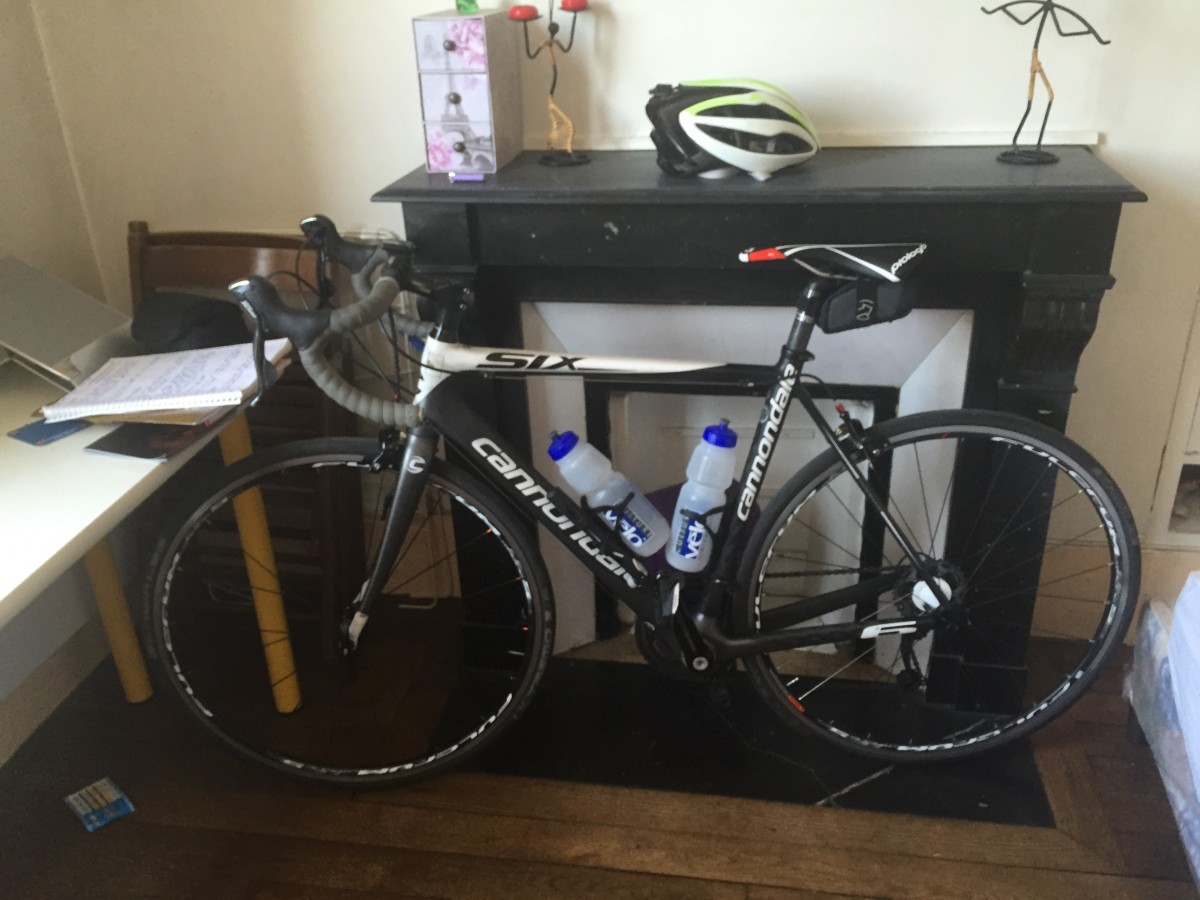
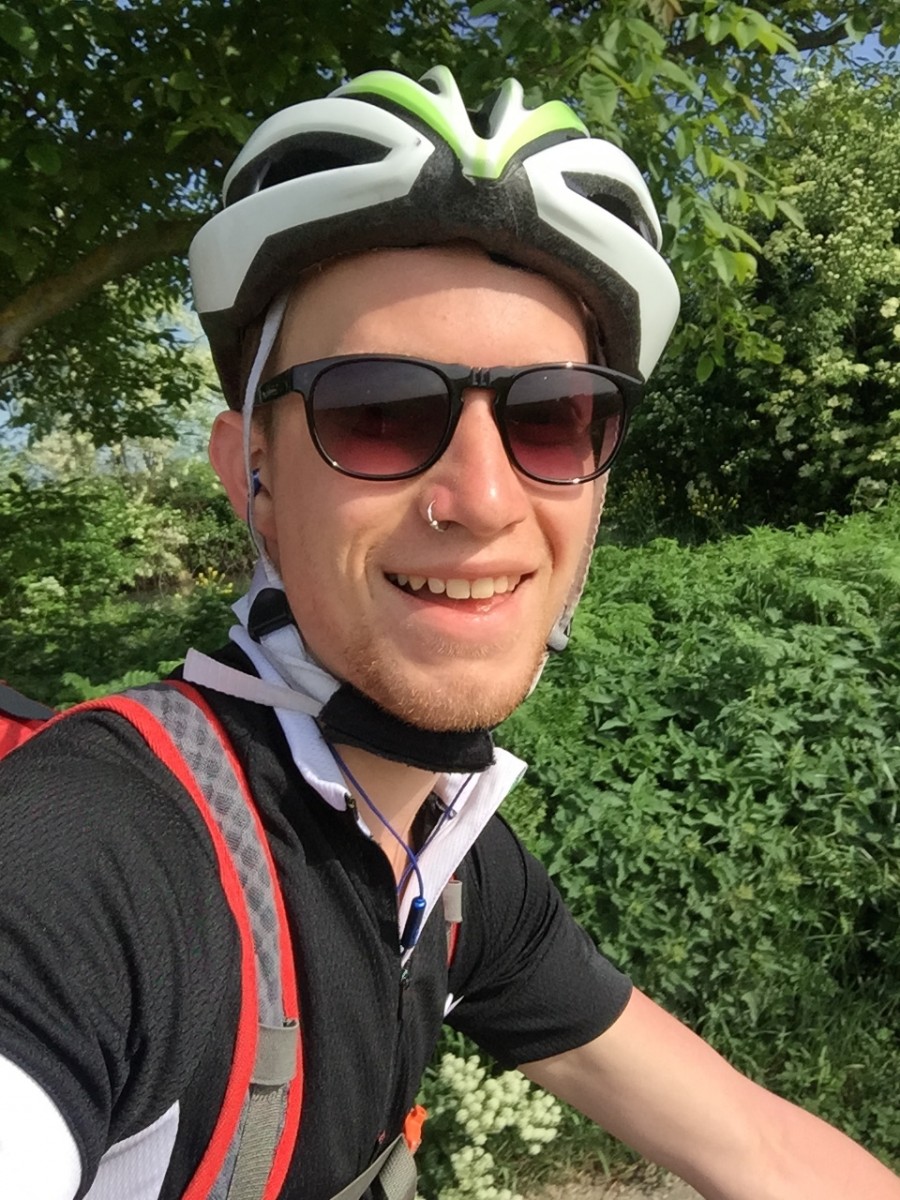
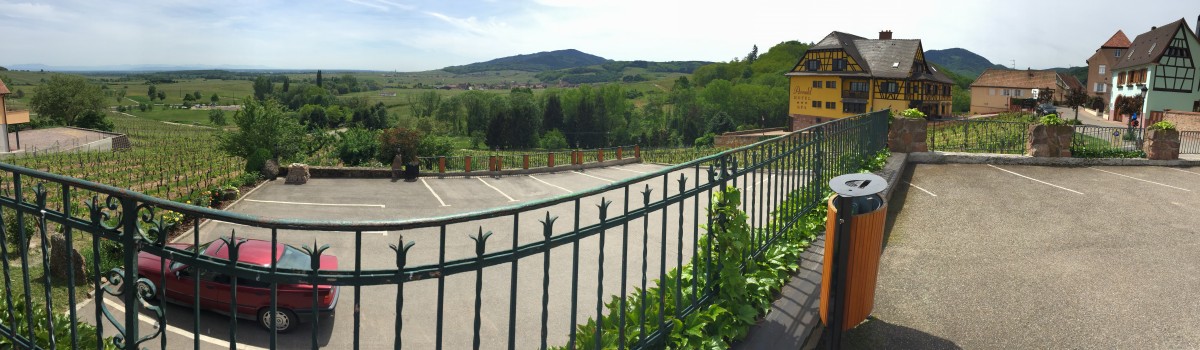
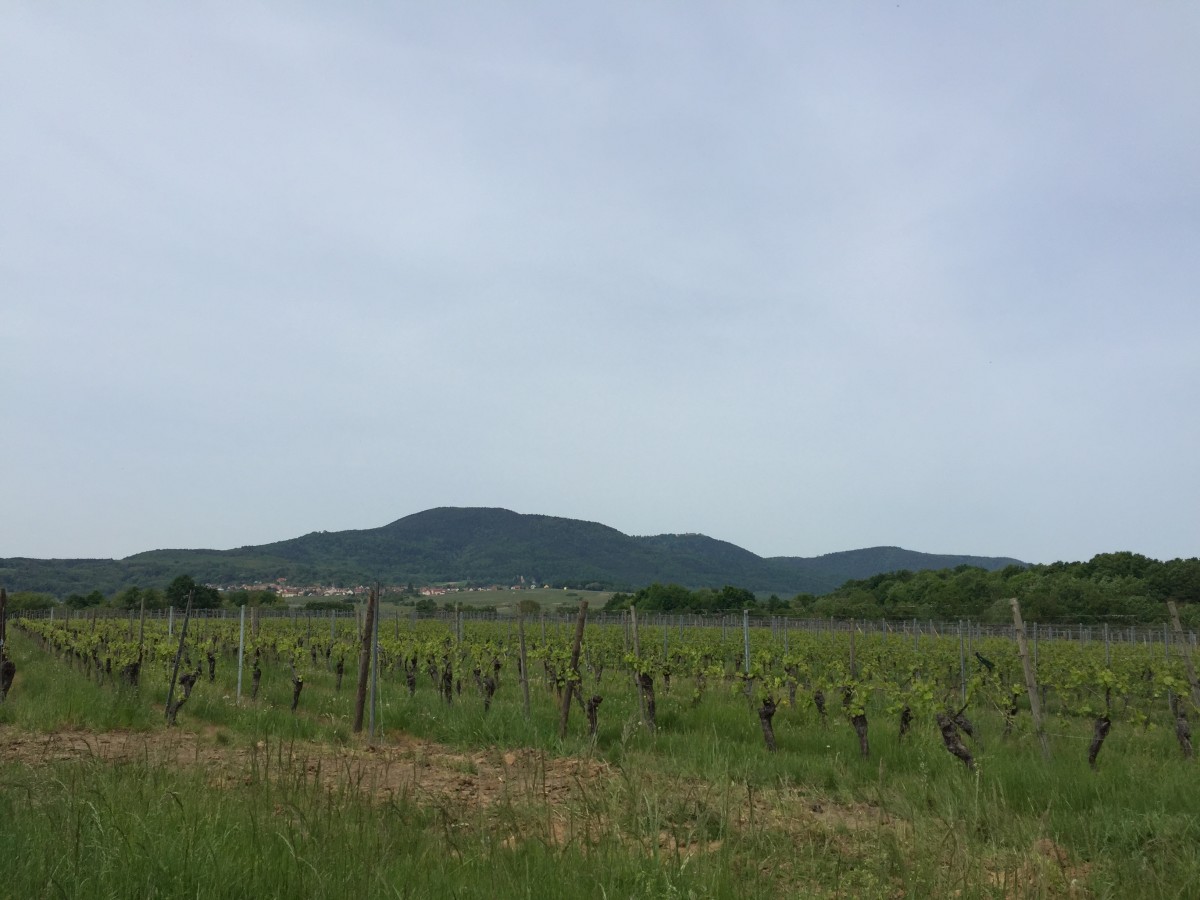
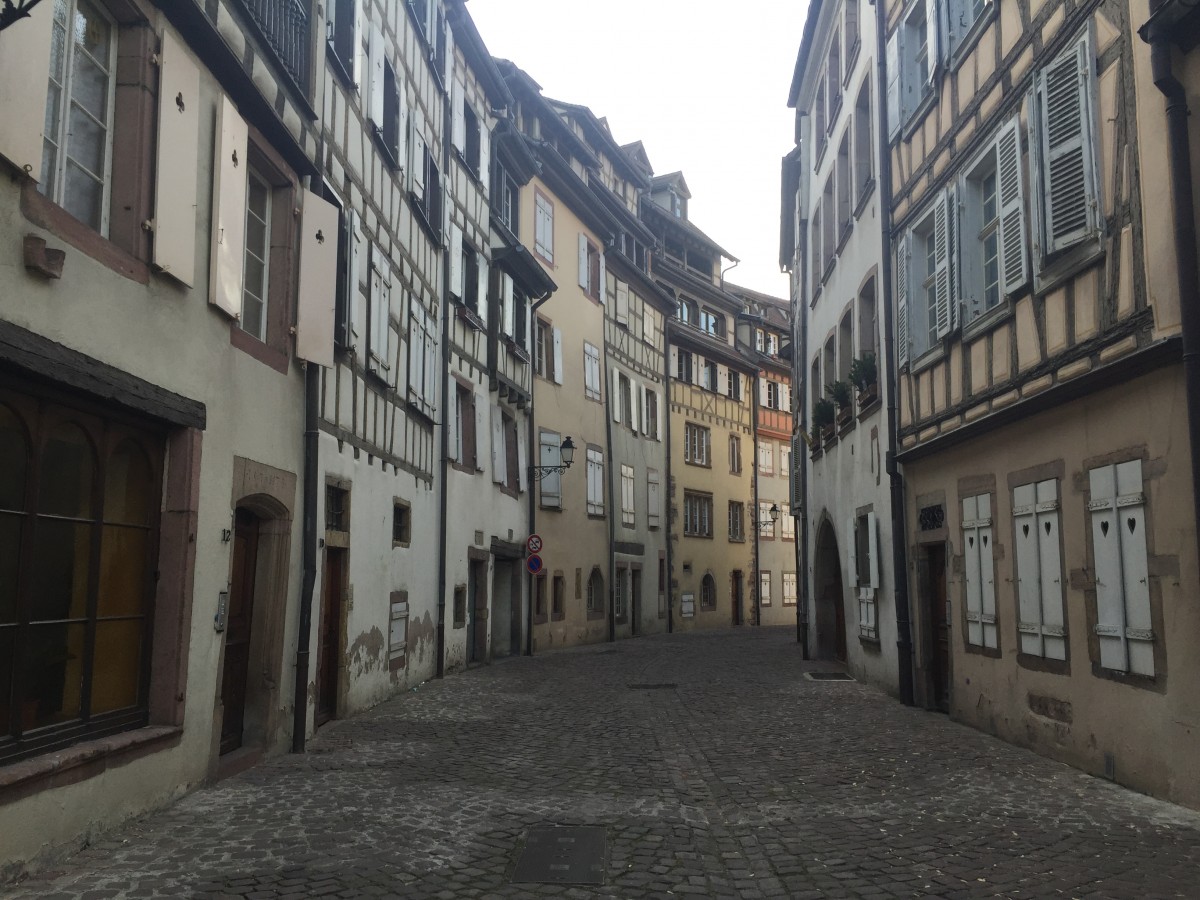
I just got back to my apartment in Paris from a three day trip to the Alsace wine region. I thought hiking around Scotland was cool…..  and it was but Im pretty sure nothing compares to biking the entire Alsace wine country in just a few days with the weather sunny and in the 70s. This was a truly unforgettable experience. I took a train from Paris to Strasbourg very early Monday morning with the fancy road bike i had just rented from one of the coolest guys I’ve met while abroad. His name was Sam and he owns a little bike hire/repair shop just outside Paris. And he gives tours all round the country too. So if you are ever in the area and have any desire to do some biking to see a bit of the amazing French countryside, Sam at Paris Bike Co. is your guy. I went into his shop last week to ask about his bikes and to get some advice on where to do about a 50 mile day ride. He helped me plan this three day trip to Alsace and I ended up getting over 150 miles in! And that only took us a half hour to work out. We ended up sitting and chatting for three hours. He was American so I didn’t have to worry about my terrible french.

IMG_1905

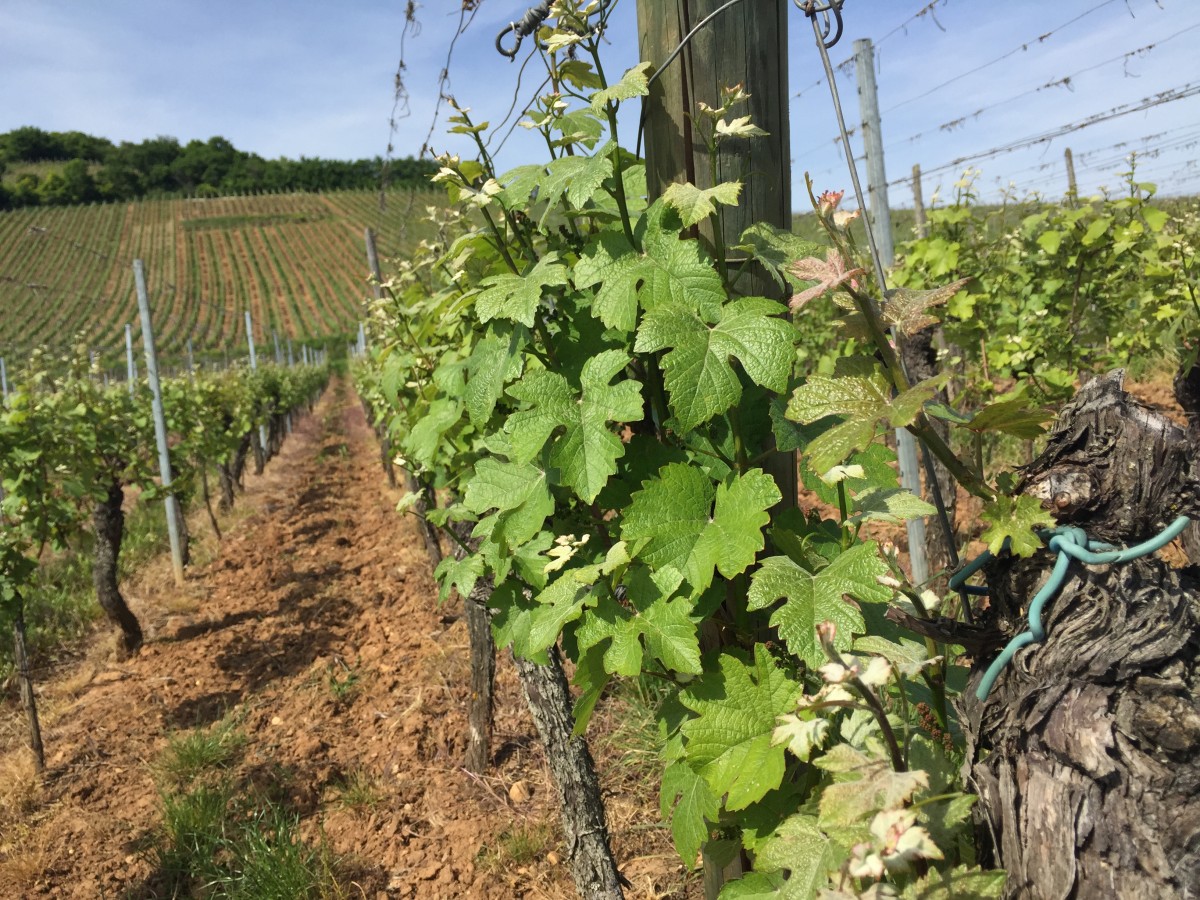
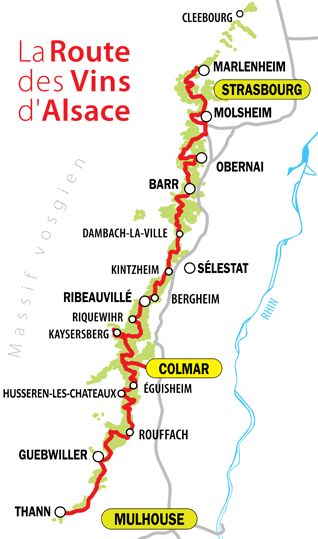
Here is sort of the route I took. I started in Strasbourg and headed down to stay in Colmar for two night. So I spent Monday biking down to Colmar, and seeing that town once I got there as well as 5 or 6 other old mid evil villages on the way. Tuesday I biked around to half a dozen different little vineyards tasting the afternoon away. All wine tastings were free! I guess they are just looking for you to buy a bottle or two. Today I got up had breakfast and biked back to Strasbourg with enough time to eat at a nice little restaurant before I had to catch my train back to Paris.


IMG_1904 IMG_1927 IMG_1947 IMG_1951 IMG_1925 IMG_1918
IMG_1928


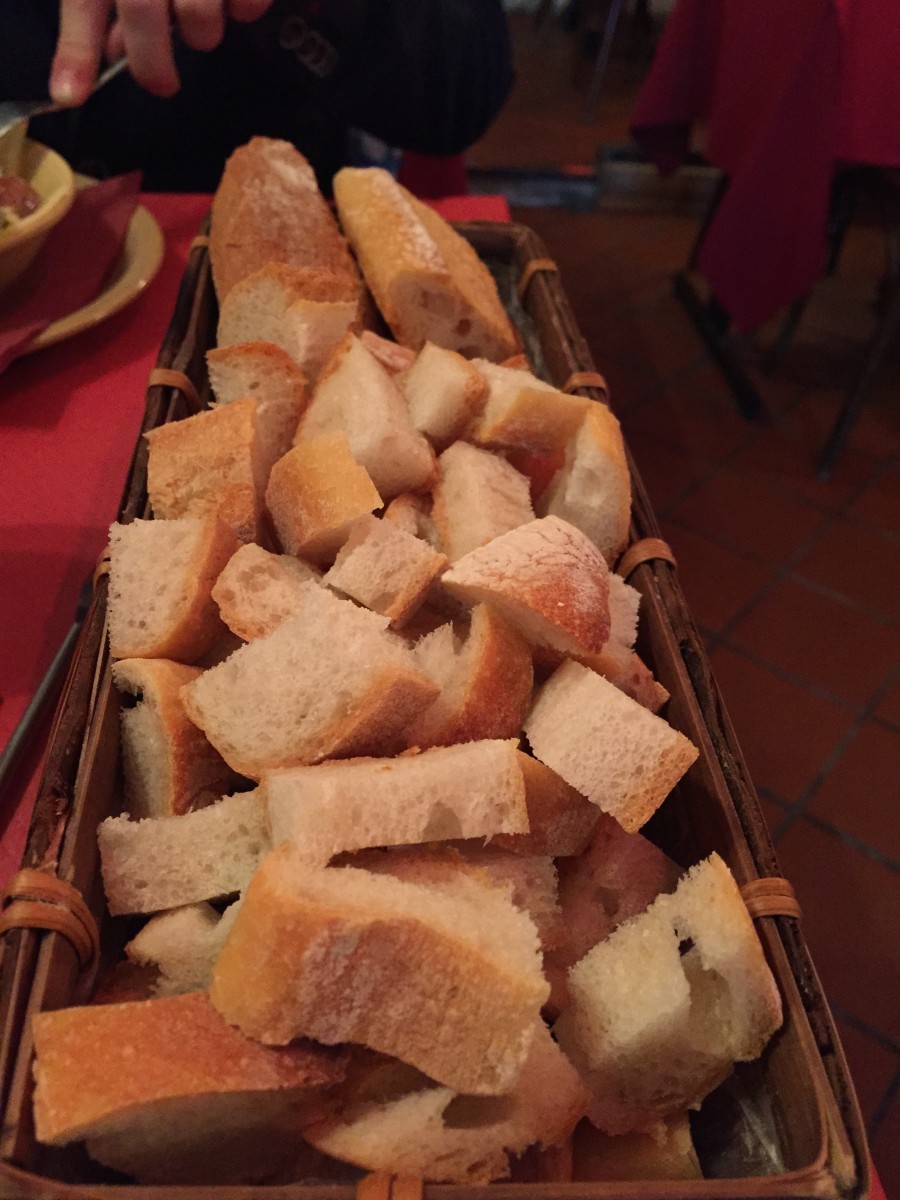
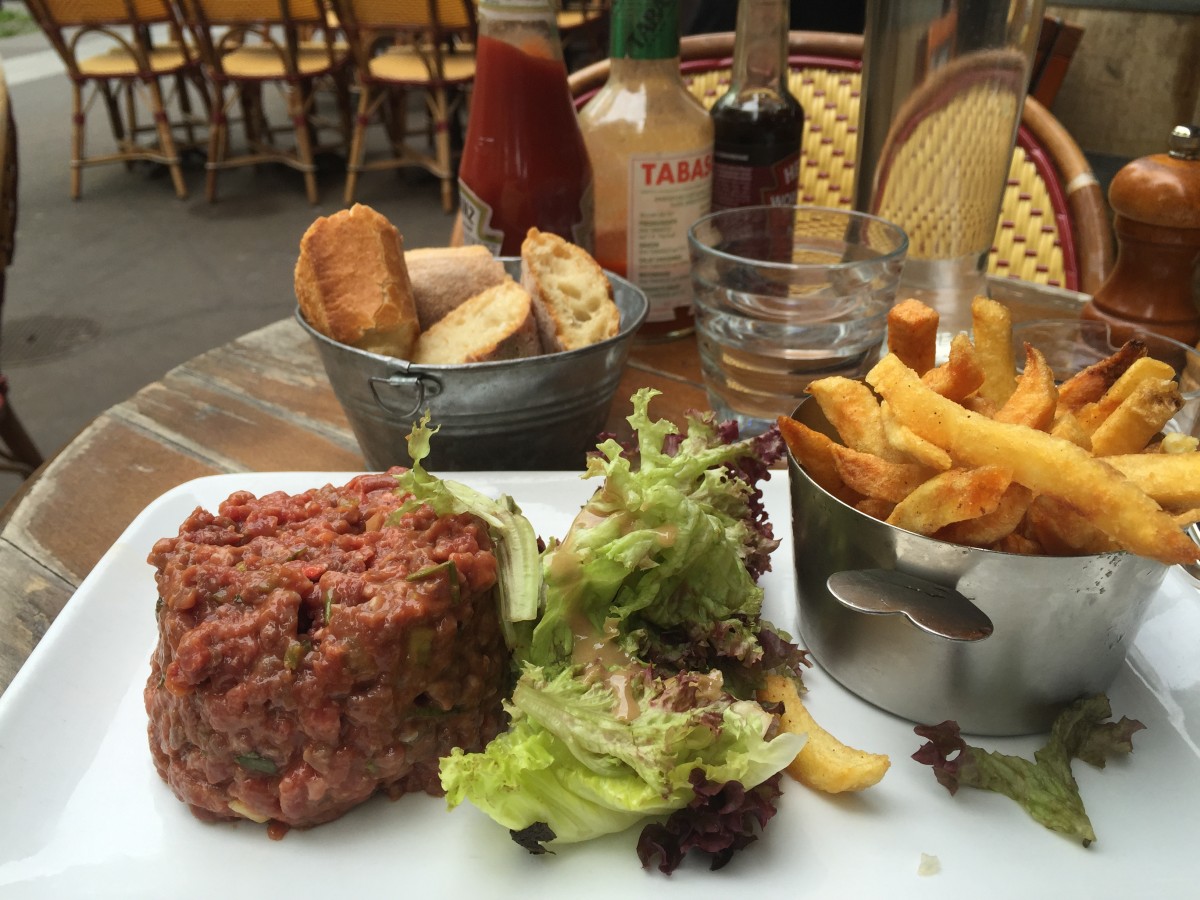
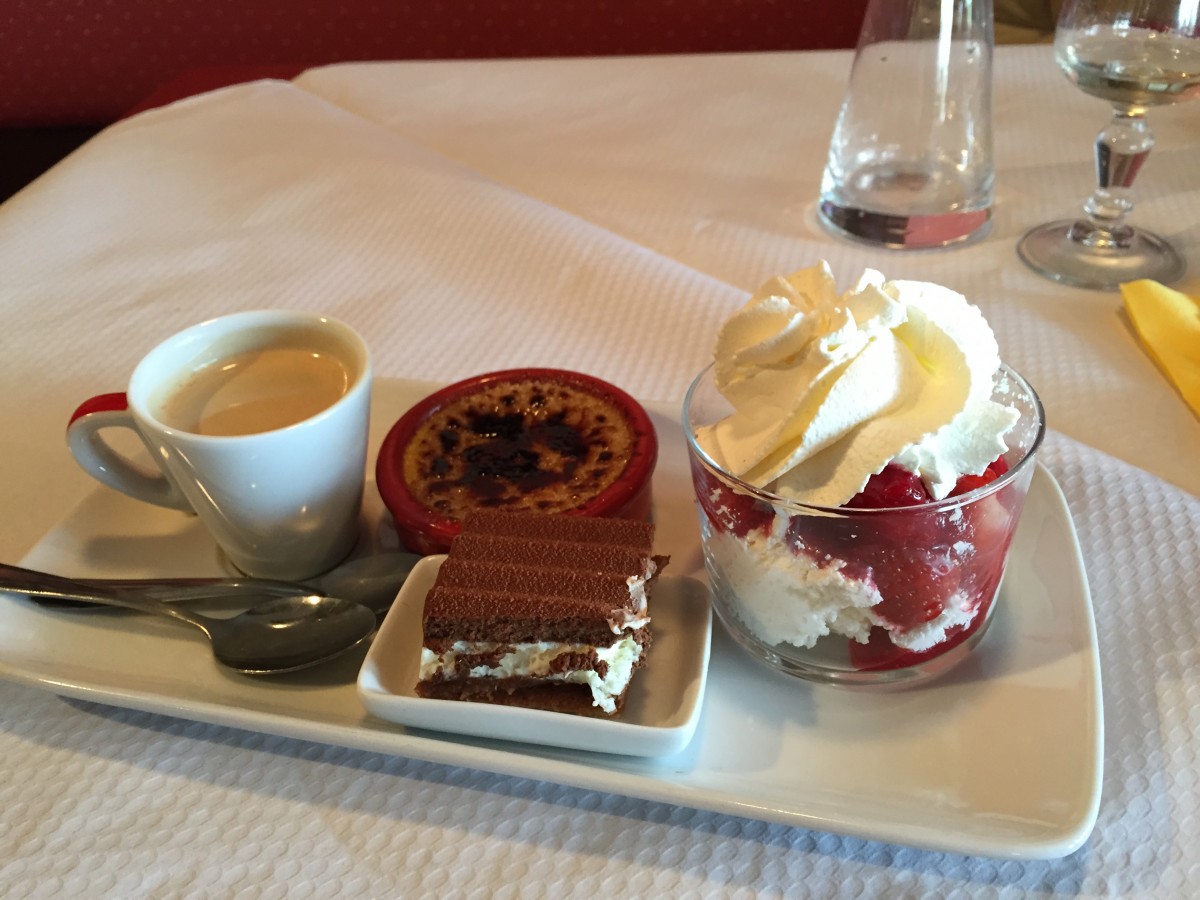
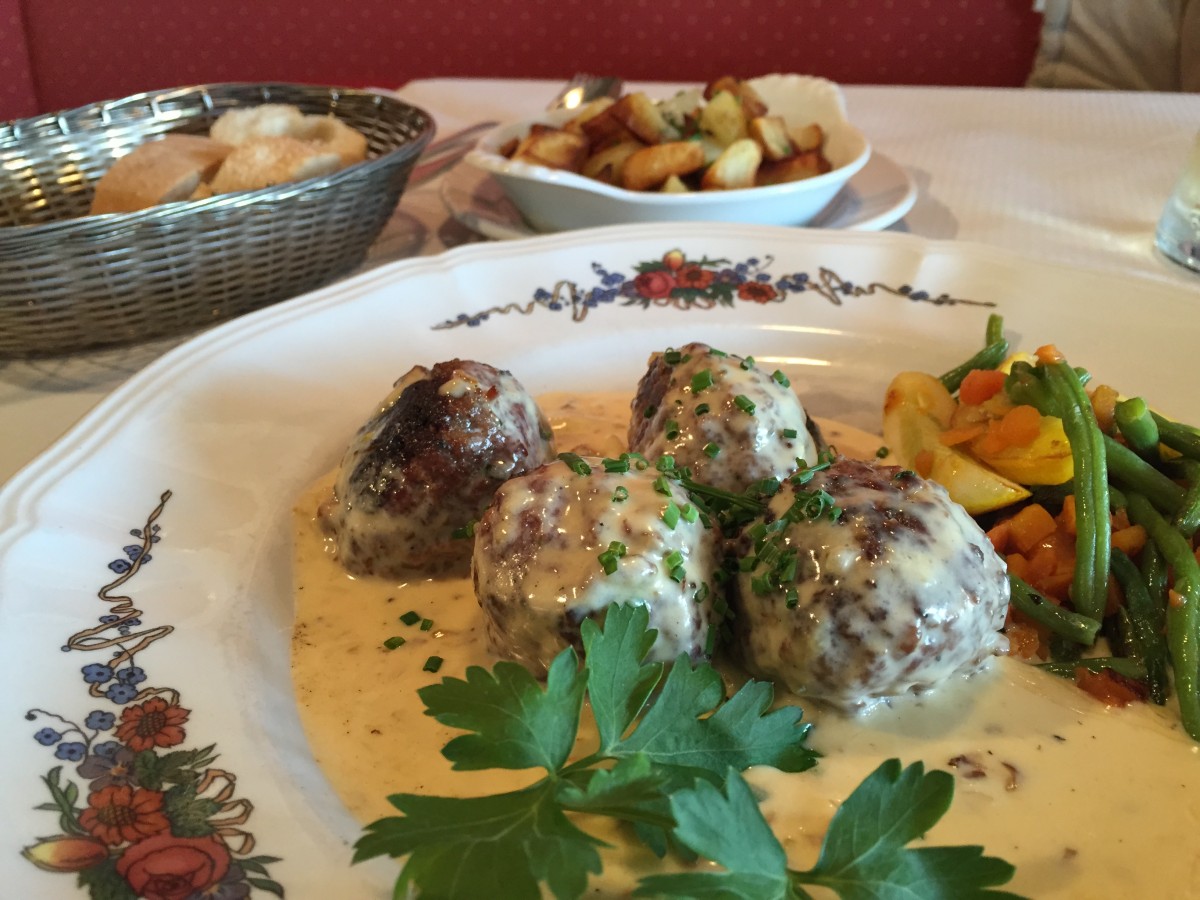
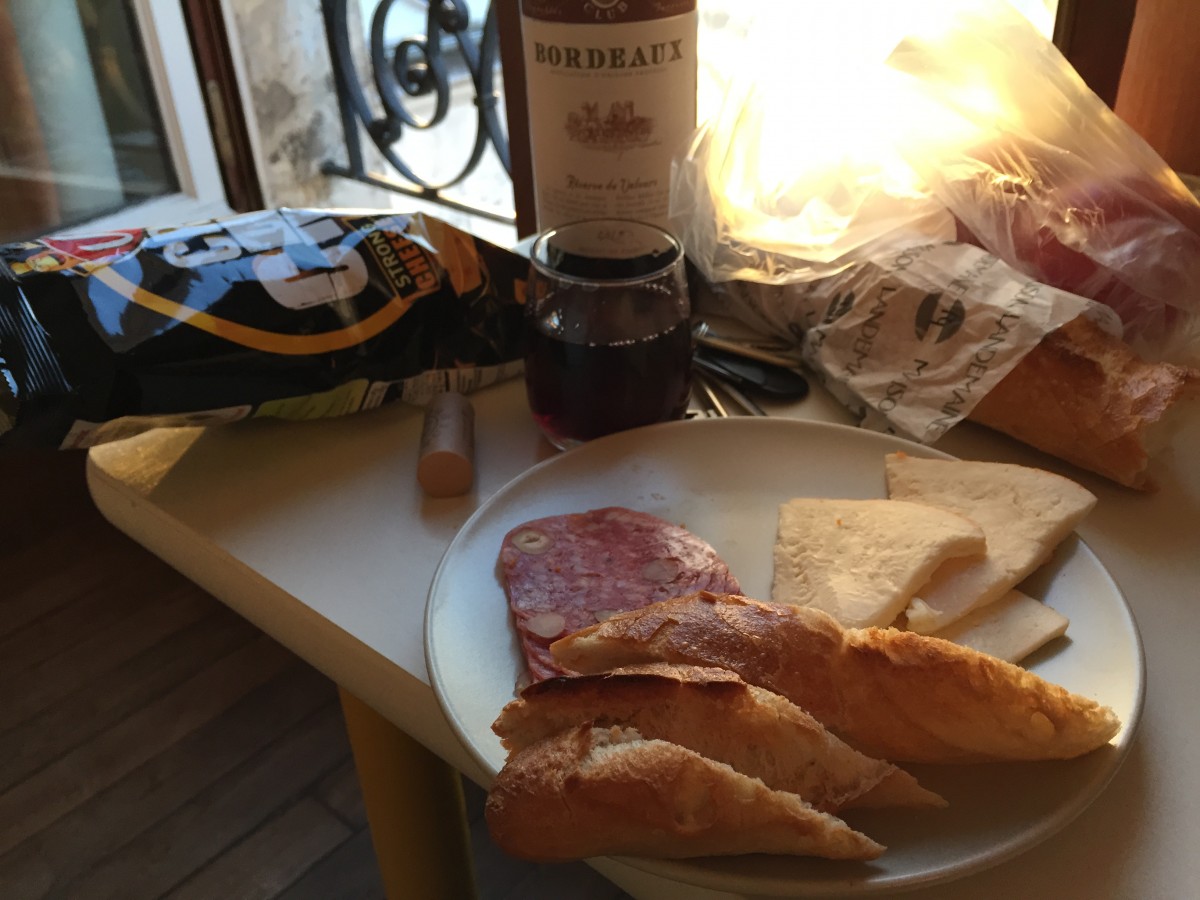
I wish that I could find some connection between this little tour and what I have been studying here in France….. But really it was just a wonderful little trip that had nothing to do with Parisian music, the Romani people, or music in general. It was purely for the pleasure of eating amazing food, drinking incredible wine, and biking through some of the most picturesque countrysides I have ever seen. Speaking of food, here is a bunch of food I have had the chance to try while here is France.

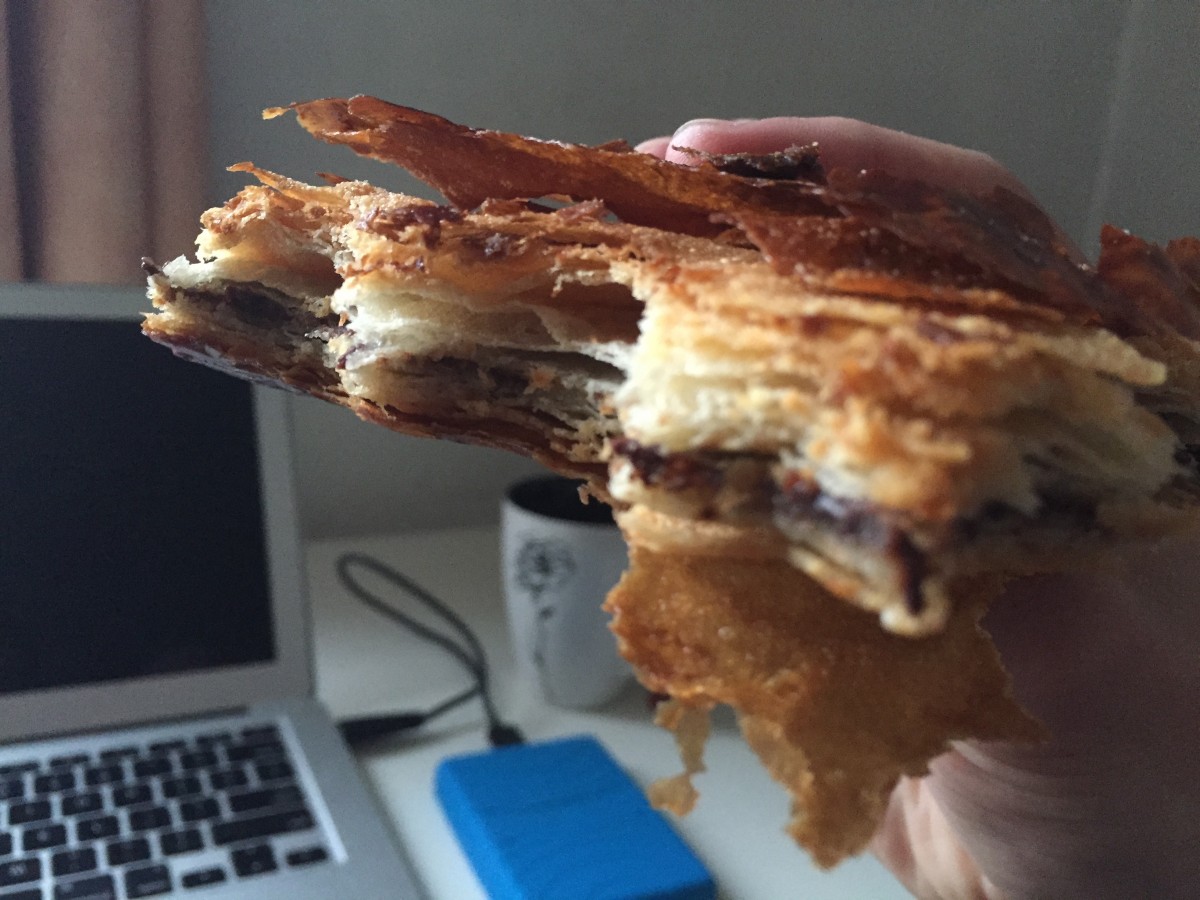
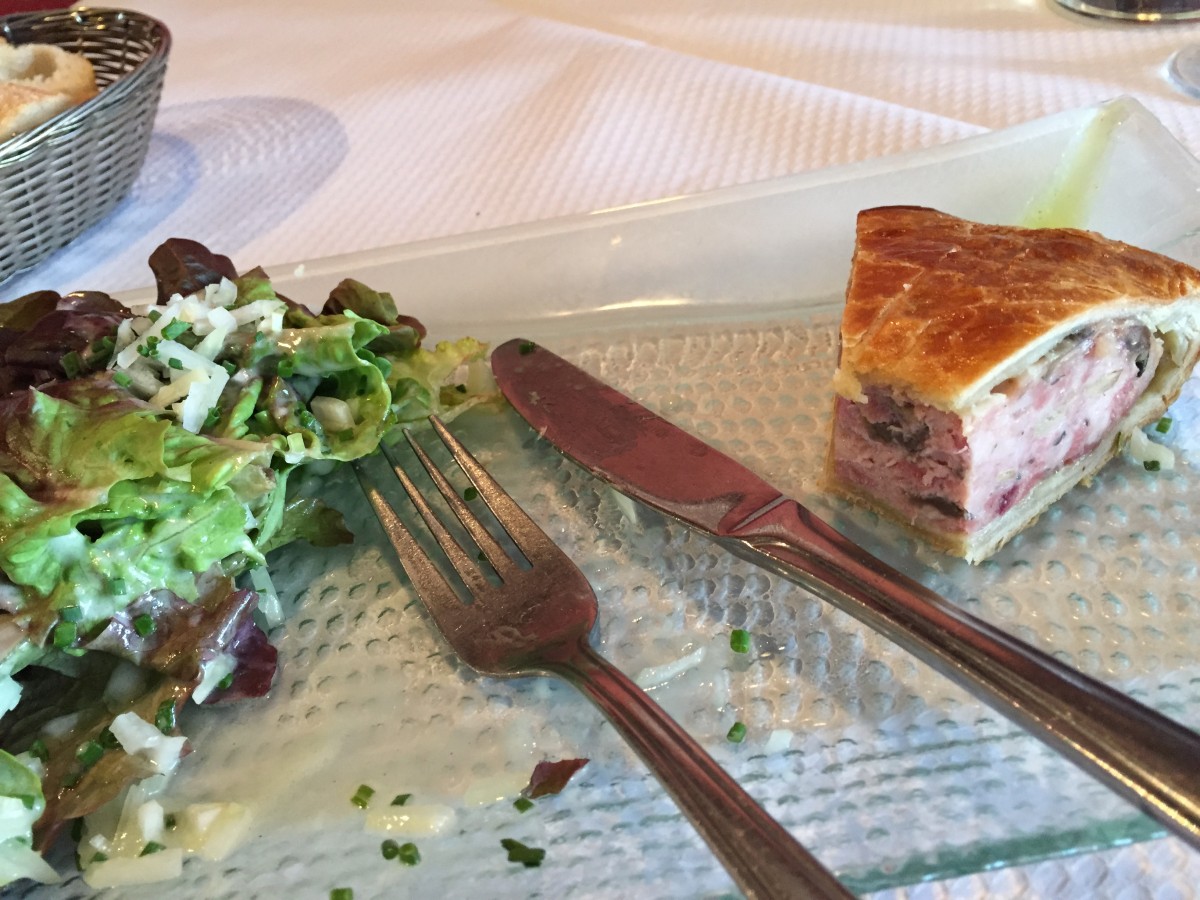
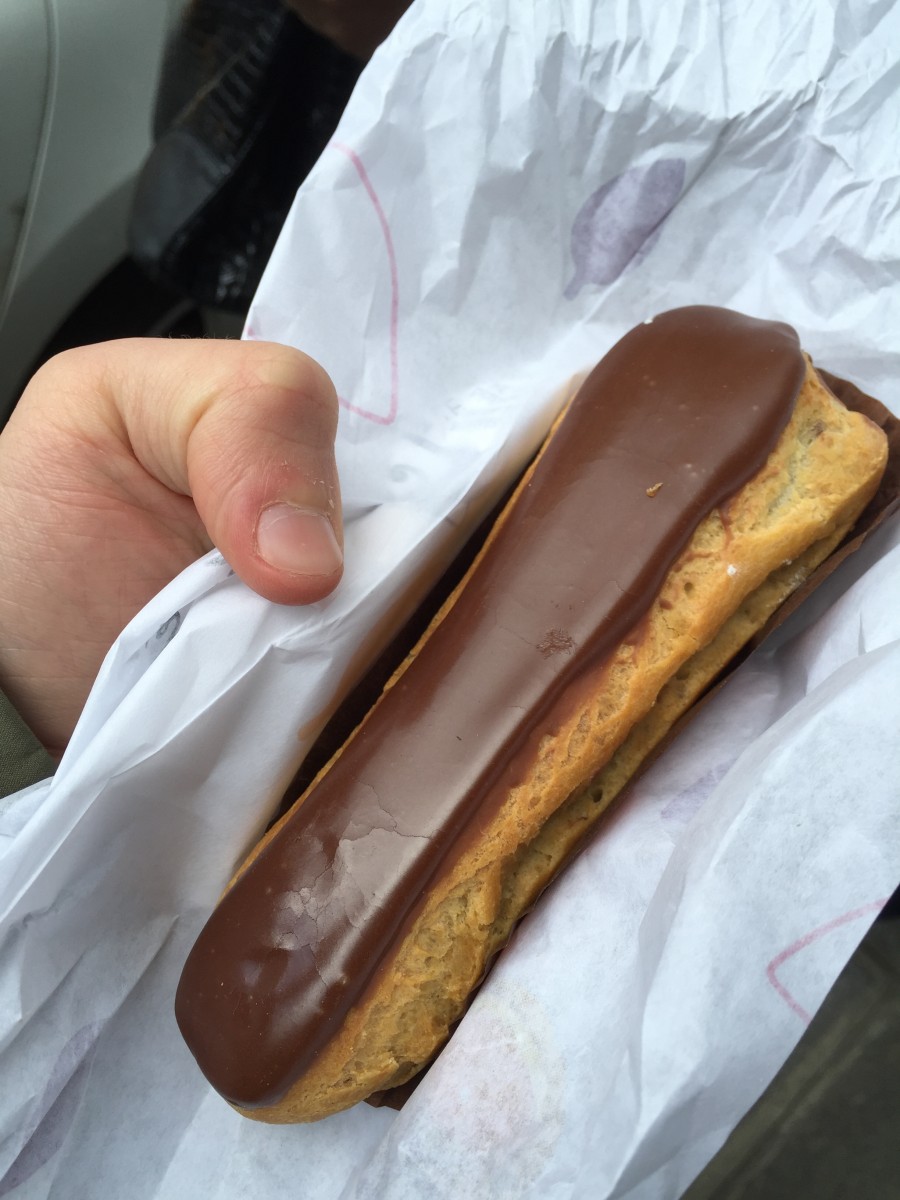
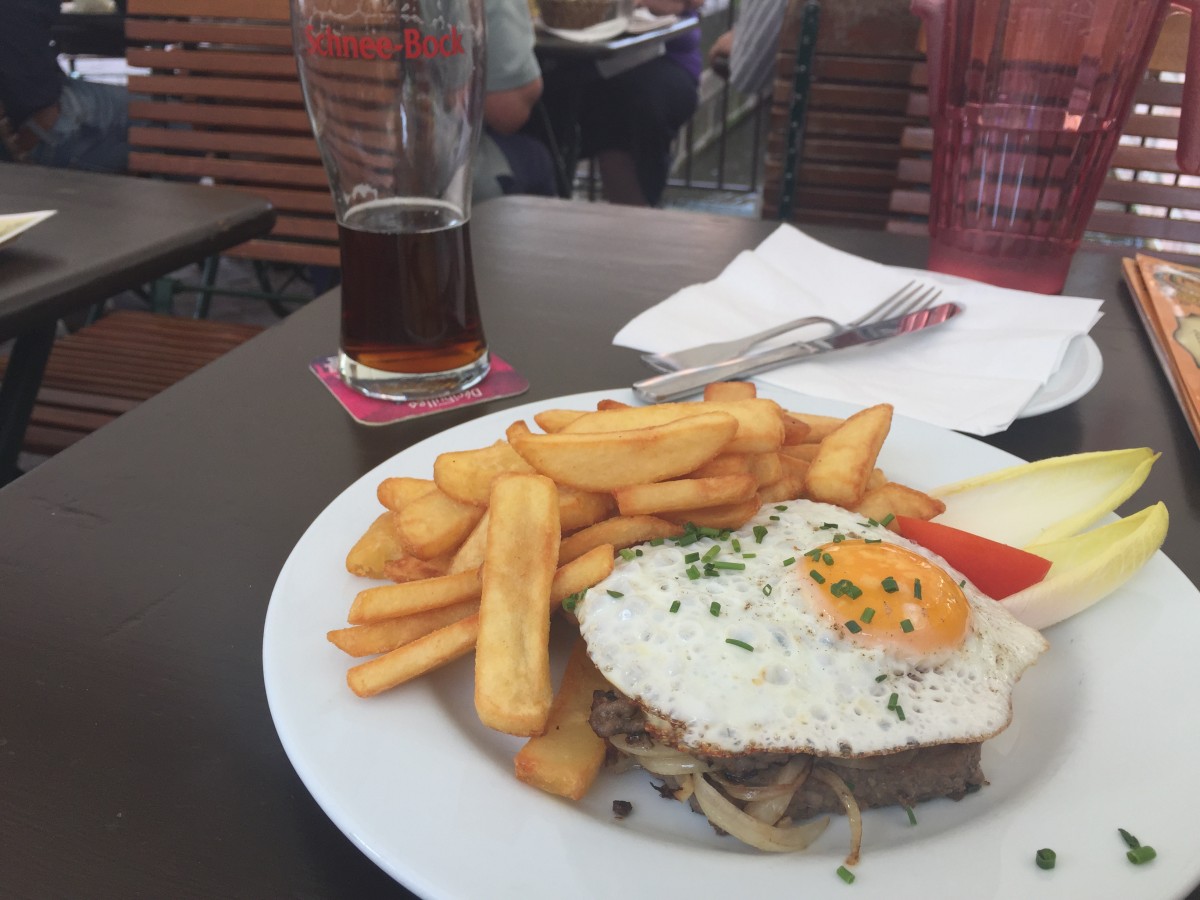
IMG_1811 IMG_1821 IMG_1844 IMG_1922 IMG_1921 IMG_1920 IMG_1829 IMG_1872 IMG_1810 IMG_1725 IMG_1931 IMG_1941 IMG_1943 IMG_1962 IMG_1963


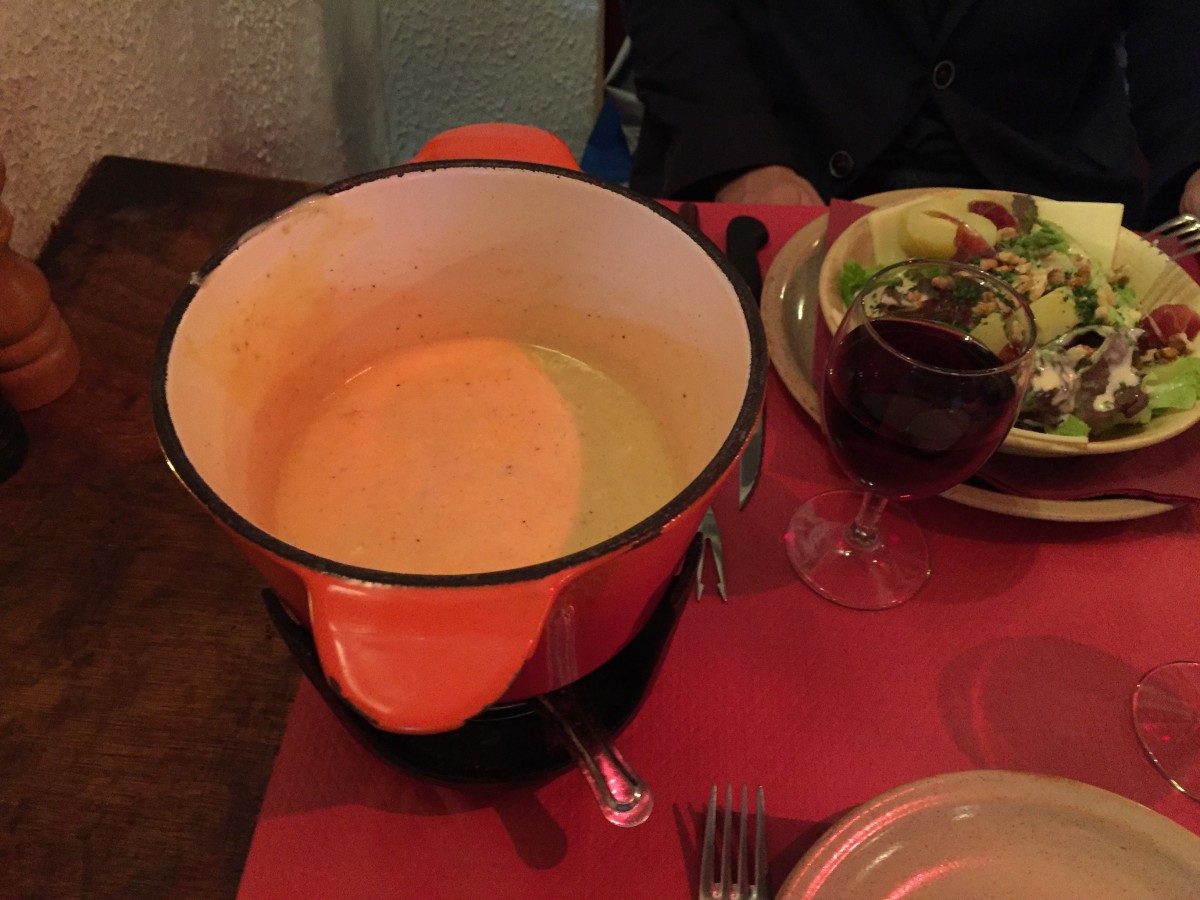
An amazing pot of fondu I got to share with Tristan.


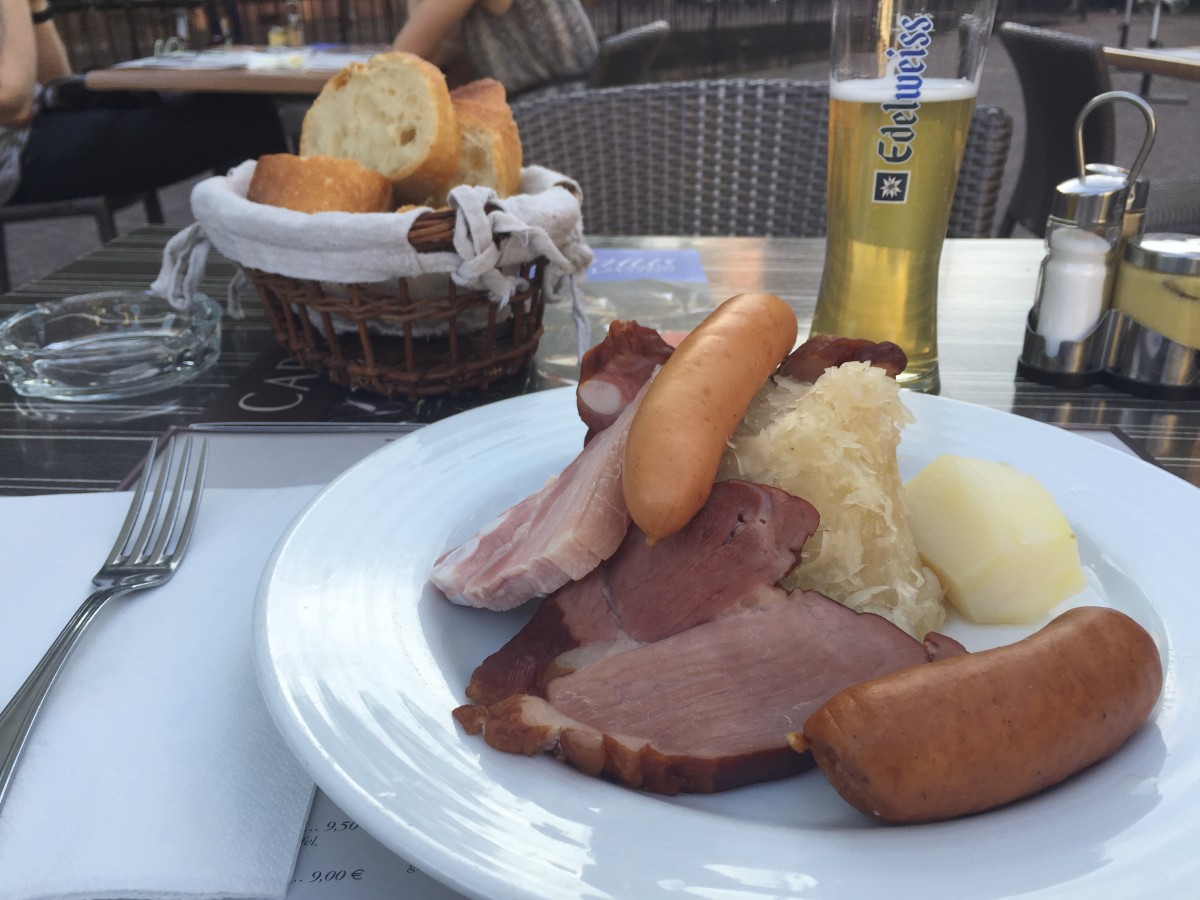
A very German meal of sauerkraut with sausage, ham, a boiled potato, and an Edelweiss served with a baguette of course. Everything here is.

There is a lot of German in influence on everything here in the Alsace region because it is right on the border of France and Germany. This area has been fought over for hundreds of years. But at the moment it is apart of France.


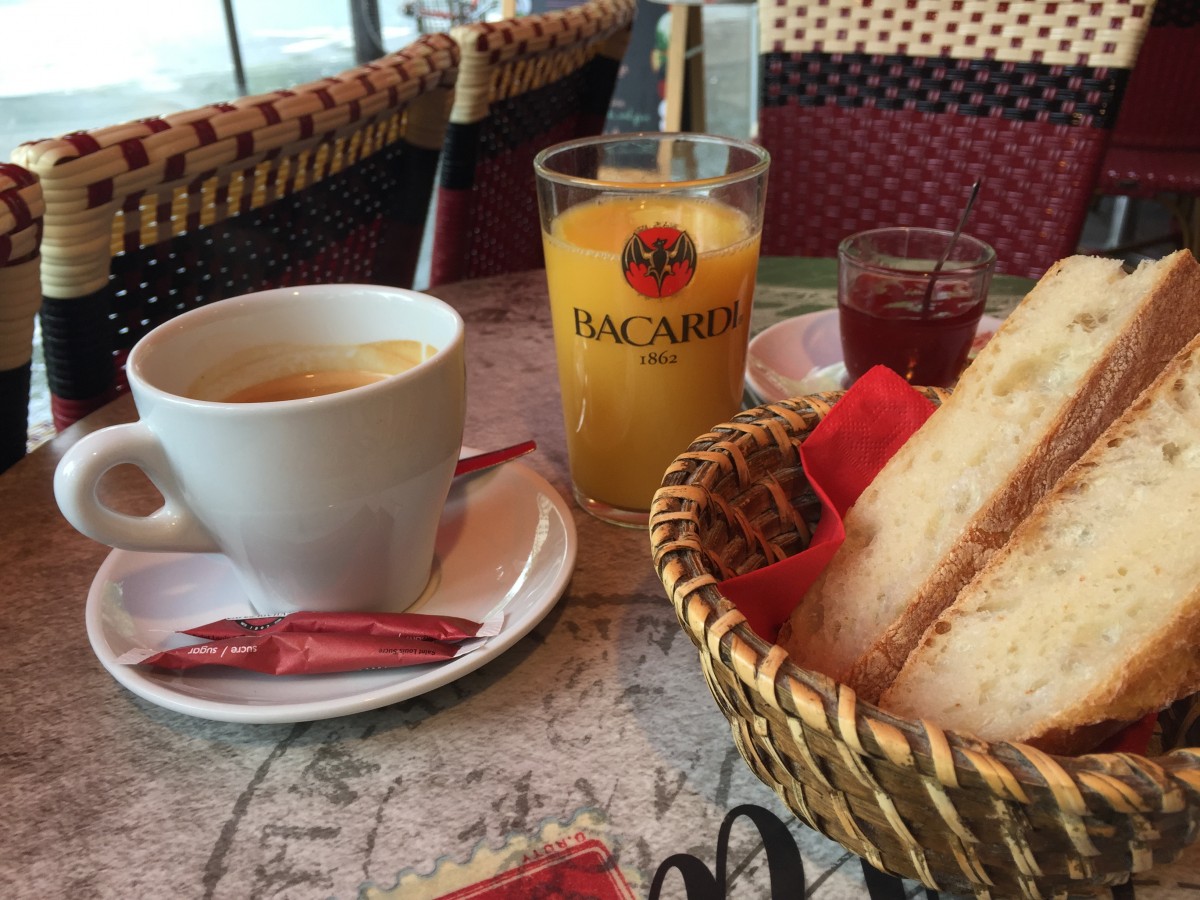
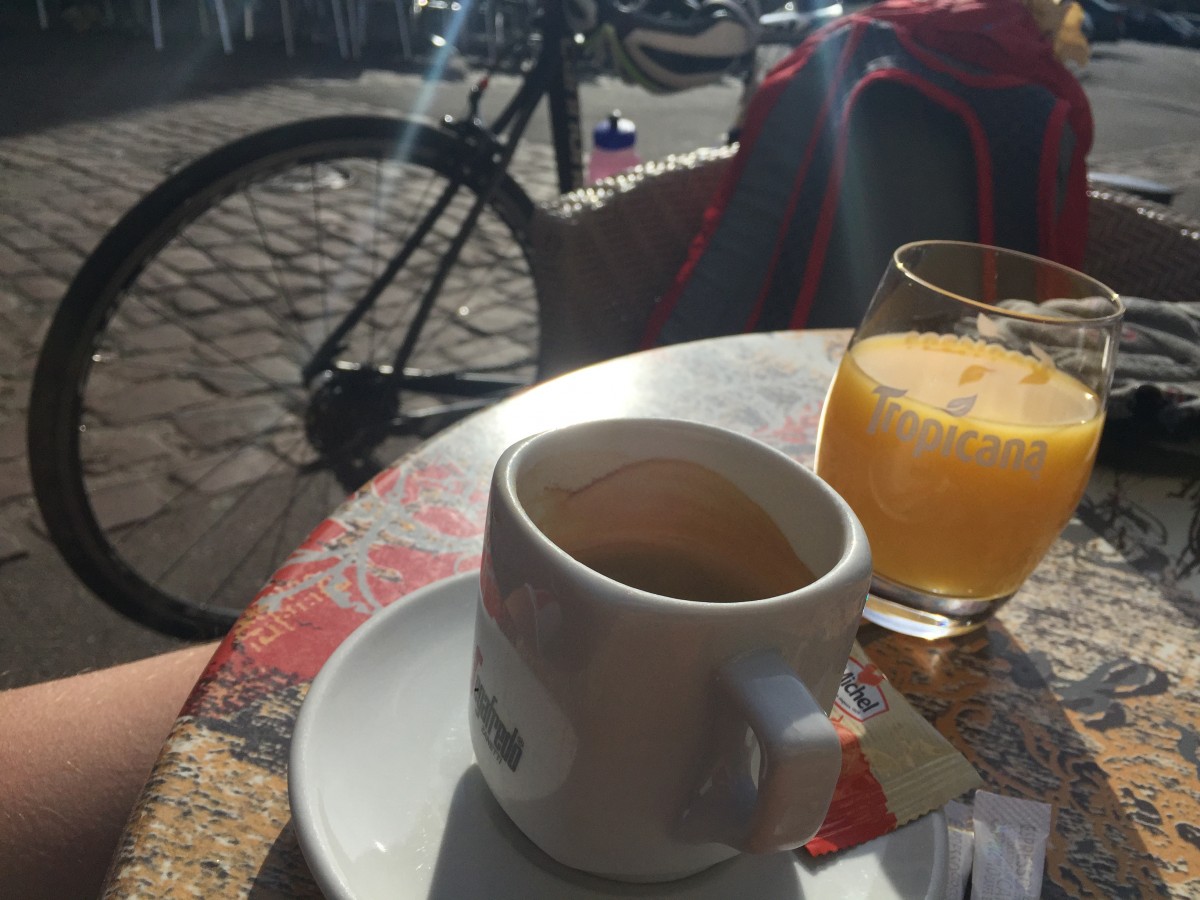
My last breakfast in Colmar before heading back to Strasbourg.


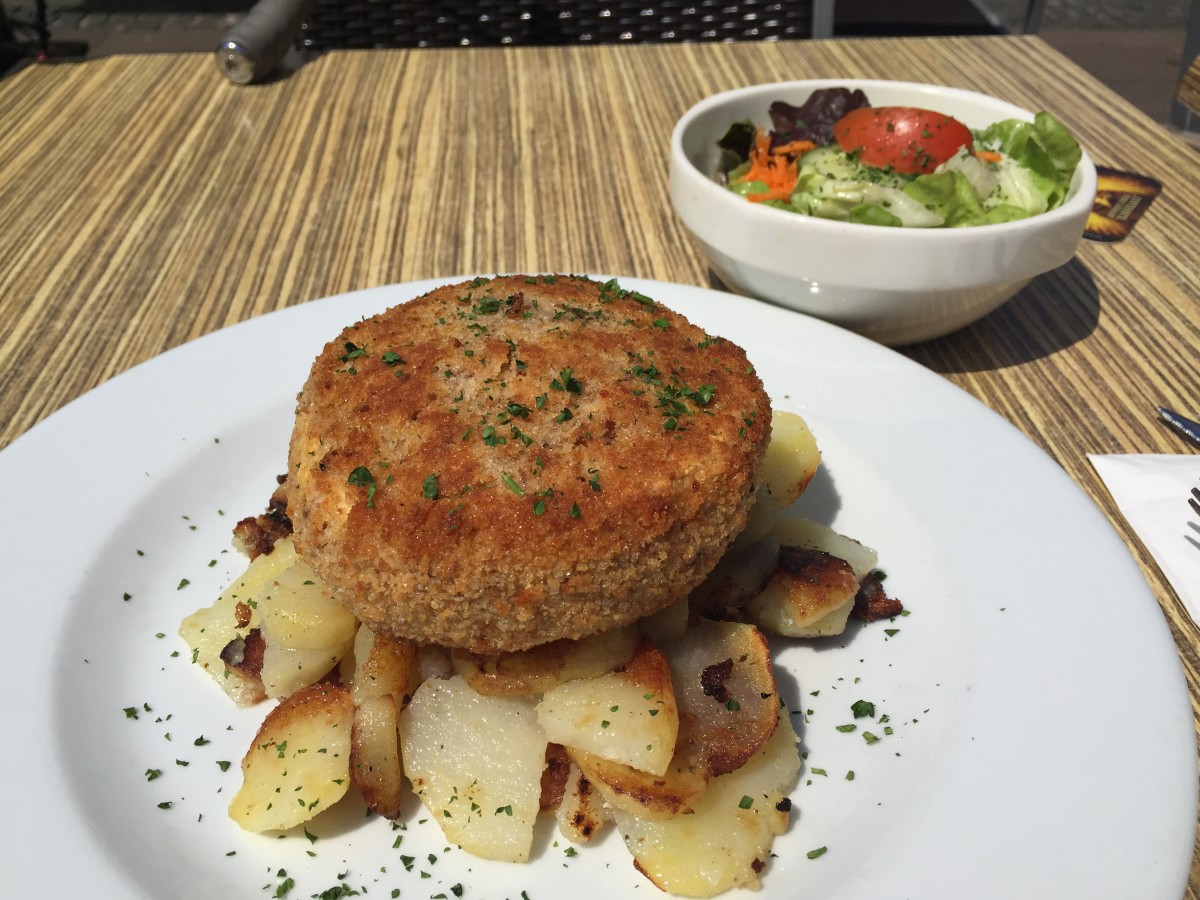
I couldn’t believe this was a thing so I had to get it. Its real……..

Its just a whole deep fried hunk of camembert served over roasted potatoes.


It was amazing. I can’t believe I ate a whole thing of camembert….


The more time I spend here is France, the more connection I make between the things that I perceive as very French. This week I am starting to see that French cuisine shares many of the same characteristics as French music. French cooking has always been known worldwide as the standard for good western cooking. It’s innovative, interesting, lively and much of it comes from such humble ingredients. And I think that most of that is true for French music as well.

Maybe French music and cuisine aren’t really that similar, but it’s been fun while I am learning about this wonderful culture to try and make connections between the things that I really love.

5/13

After several days in New Orleans, I decided to dedicate more of my time towards doing field work. I refreshed myself on my original research goal which was to learn more about the physical and social landscape of New Orleans and how the affects of Hurricane Katrina have influenced it. Although my approach this time was still largely interactive-based, I added another dimension to my work by preparing a survey which I could hand out to interviewees and generate data from. The survey I made was composed of several basic demographic-related questions followed a series of statements to which the respondent could answer according to a Likert Scale (a scale rated from 1-5, 1 being Strongly Disagree and 5 being Strongly Agree). My plan was to distribute this survey to as many random people as possible and hopefully gather enough substantial information to use in my work. Although I learned a lot from the survey’s, I learned even more about how to properly conduct this type of work.

I took a streetcar down to the French Quarter and only a few blocks down from my stop I approached my first interviewee. He was 24-year-old black man named Jeffrey. Before I approached him, Jeffrey was performing a style of spoken word similar to rapping but without any beat or accompaniment to go along with it. He was friendly and gladly obliged to fill out a survey and chat with me. He said he was not originally from New Orleans and that he didn’t move there until after Katrina had happened. He said he originally moved there for school but was now working as a tutor and performing around the French Quarter whenever his schedule allowed it. I thanked him for his time and moved onward.

A few surveys later, I realized that all the people I was approaching all shared something in common: they were all expressing or showcasing some type of art form. I realized that I was gravitating towards these people only and that in turn, I was subjecting my intended research methods to my own bias. Although I intended for the survey to be distributed randomly, there was no possible way to do this as long as I was going to be selecting and approaching each person myself. I worked around this slight complication and decided that I would just use artists and musicians as the focus group for my survey.

Several hours later, I had made my rounds through most of the French Quarter and had accumulated about 15 surveys from various musicians, painters, and street performers. By this point I was becoming aware of the fact that I had barely met a single artist or musician who had lived in New Orleans before and after Katrina. However, I soon met someone who completely changed my outlook on my research and affirmed my already forming skepticism about what I was hoping to find in New Orleans.

A couple blocks over from Jackson Square, I found myself gazing at vintage movie posters and art deco-style lithographs inside a small art gallery called, “Rue Royale”. There I introduced myself to the gallery’s director, Deborah. She was a middle-aged white woman who had been living in New Orleans since 1993 and was there to witness Hurricane Katrina, before and after. She assured me that the only street musicians I would find in downtown New Orleans were mere “wannabes” who conveniently swooped in on the work left behind by all of the city’s previous musicians who were displaced by Katrina. A painter I talked to in the French Quarter described this is as “cycling”. The native musicians and artists were washed away and younger musicians from around the country came to New Orleans while all of the permits were left available to them. Although some of the new artists I talked to described this as “not necessarily a bad thing” and maintained that it provided work for the next generation of artists and in some ways even refreshed the scene in New Orleans. Deborah argued that these people were entirely phony and just trying to capitalize on something that wasn’t theirs to begin with. She also described what it was like to be in the city during the hurricane and how she witnessed the dark side of humanity unfold outside her gallery window when citizens looted the streets and in panic and desperation, turned against one another. She felt that all of this was portrayed in the media as a giant spectacle that attracted the interest of national politicians, investors, and celebrities alike. I appreciated hearing this very candid and radical perspective.

Although I didn’t find the exact information I had originally sought after in my survey, it was through the process of interviewing and experimenting with the survey that I found answers to some of the “bigger picture” questions related to my project. I felt inspired to become more critical about my investigation of New Orleans and intrigued to delve deeper into the seedy undercurrent beneath all of the idealism and tourism on the city’s surface.

Musical Explorations

This week I was fortunate enough to be able to meet with Joe Kaharimbanyi who is a member of the Ugandan band Qwela. Qwela’s music is often described as afrofusion. Joe mentioned that his influences range from Rukiga music (the Bakiga are a group from Southwestern Uganda and Rwanda), Blues, Jazz and Reggae. This diverse range of influences can be seen in their instrumentation and choice of language. Their ensemble consists of typical ‘western’ instruments such as guitars, a drum kit, saxophone and keyboard/piano alongside traditional Ugandan instruments, particularly drums.

When I asked Joe about the bands selection of instruments and language he said that they intentionally try to use instruments and languages from different regions in Uganda. Their goal in representing different cultures from around the country in their music is to try and connect with a wider audience. This aligns with the Ndere Troupe’s goal (mentioned in a previous post) of promoting unity across cultures by presenting dances and music from diverse cultures.

Here is a song from Qwela’s album Afrotopia:

Qwela – Tendeko


On Wednesday night, I made it down to the National Theater for the opening performance for and event called DOADOA. DOADOA refers to itself as the ‘East African Performing Arts Market.’ Their goal is to provide networking and educational opportunities in order to develop the performing arts community in East Africa. Unfortunately the rest of the DOADOA events were taking place in Jinja. Although Jinja isn’t too far from Kampala, I wasn’t able to make it over there. However, I was able to learn a bit more by perusing their program.

The opening performance was by Annet Nandujja. She performs music and dance that is in the style of traditional music from the Baganda people of central Uganda. She sang entirely in Luganda which is the language of the Baganda. Kampala was also historically the center of the Buganda kingdom (from which Uganda got its name). As such, it is the most widely spoken of Uganda’s languages spoken in Kampala. In my conversation with Sylvia Nannyonga-Tamusuza, she identified the use of Luganda as one of the defining characteristics of the music created in Kampala.

Although I couldn’t understand the lyrics (I have been trying to pick up a bit of Luganda while I am here but haven’t gotten very far yet), the person sitting next to me mentioned that one of the reasons she really liked Nandujja was that she is a great storyteller. This emphasis on storytelling is a component of her music that she pulls from traditional Kiganda music.

Her band consisted of an endigidi (tube fiddle), amadinda (xylophone), and the Kiganda set of drums. The Kiganda set is a group of drums that is typically used in the Kiganda music. This set of drums includes the engalabi (tall, cylindrical drum), nankasa (high pitch), embutu (middle pitch) and empuni (low pitch). She also performs with a group of dancers called The Planets. They also derive their dances from tradition Kiganda dances.

On Saturday night, I went to a restaurant called Casablanca near where I am staying. There was a distinct contrast in the types of music played there. When I first arrived the were playing a fairly typical American and European pop. However, every 20 to 30 minutes a performer would come out to play live drums accompanied by several dancers. She would play without taking a rest for about 10 minutes and then the recorded music would resume.

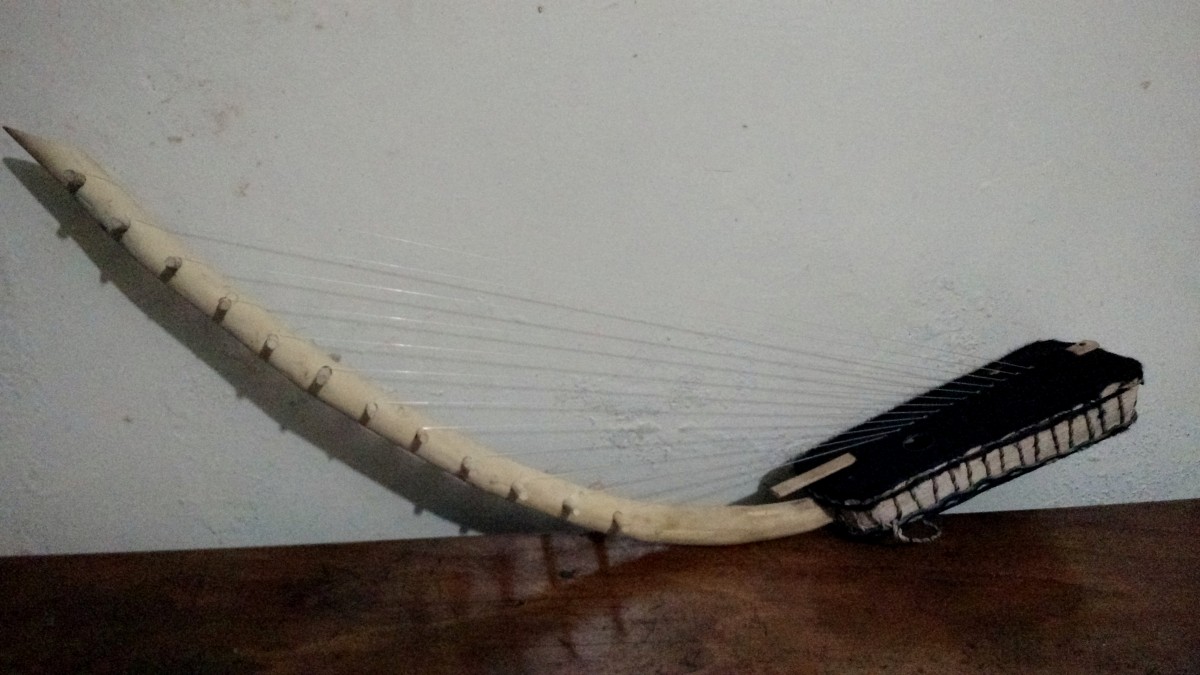
This week I also started learning how to play the adungu which is also known as the bow harp. The adungu originated in Northern Uganda mostly among the Alur and Acholi. It is now one of Uganda’s traditional instruments that is played in many different cultures throughout the country. The adungu seems to be one of the traditional instruments most commonly incorporated into contemporary music (I have mentioned it in previous posts as being featured in different bands).

Adungu

Adungu

Along with most forms of traditional music, the adungu was originally tuned in a pentatonic scale. However, along with the influence of colonialism it is now tuned to a diatonic major scale. Most adungus have 7 or more strings. The one that I have has 12 strings with the first 8 tuned to a major scale and the next 4 repeat the 5th, 4th, 3rd, and 2nd of the scale an octave lower. The adungu also comes in several different sizes ranging from the solo adungu (which has the highest pitch) to the bass adungu. I will be continuing to take lessons for the rest of my time here so I should have an update on my progress in my next post.

Back in the PNW (Week Six)

It is wild to me that one week ago I was just getting into Alabama and now I am back sitting in my room in Olympia. It was such an amazing experience to drive that far across the country and see so much of how the United States changes over such a large amount of land. Since I last posted I did a lot of river laying, eating, drinking, and a lot more driving; but I also did a lot of thinking and listening. The time I was in Alabama I mostly spent in a small home on the side of a river, it was an incredibly peaceful and relaxing place to stay. It was interesting to me how much could be similar to home but so very different while i was in the south. We have rivers in Washington that probably have a similar look, but if you dig deeper you see how different things are. The trees, the color of the water, the fish, the birds, the sounds the birds make were all much different than home. I kept thinking about these differences, I would eat a lot of fish I eat fish in Alabama just like home, but it wasn’t fish I was used to. This really sums up what my time in the south was like, it is very similar to home in a large vague way, but it’s the small things that make you remember just how far away you are, and how different everything really is.

Screen Shot 2015-05-12 at 11.52.14 PM

I have been to the south before so the environment was mind blowing, but I have never driven there. I have never seen the environment around me change so gradually along with the people and the culture in it. It was a crazy experience to be able to see change happen like that. The drive also again brought me back to the Ecotopia book by Ernest Callenbach and the idea of Cascadia. I am not the most patriotic person, I don’t always have a great sense of pride in my country, or even the view that we live in the greatest country in the world; but I do identify as an American. Except, this trip actually made me challenge that, because when I was traveling around America I wondered if I identify with the entirety of America or just the Pacific Northwest. This notion of taking more pride in the PNW than all America was mostly inspired by going to the south and really listening to how things are different. It is like the world moves in a different way in the south. Things felt slower, and older, and people more nostalgic. It very much felt like I could be in a different country. On the way back driving for hour, after hour, after hour; I kept thinking “Wow we could really split things up!” Western Texas looked nothing like Eastern Texas, and Louisiana felt much different from the rest of the South. All these places are so different from each other it reminded me of how every once in a while someone talks about splitting Western and Eastern Washington because the two sides seem to have little in common. It is really interesting to me we can be from such varied places and all be called American.


I started out this field study with the intention of looking for trends in Seattle music to see if there is a way the city effects what is being created there. However after this trip and my ever changing interest, I keep zooming out and looking at not just Seattle, not just Washington, but the overall Pacific Northwest. I think my field study has broadened not just to looking at a Seattle sound, but looking at the music from the Pacific Northwest as a whole. This next week I will be doing very little driving in comparison to the last couple, and I will be able to be in Seattle for an extended period of time for more research.


Week 6 Response

A man’s got to have a code.”


Whether it’s Sandor Clegane, Omar Devone Little, or John Wayne, it seems everyone is in agreement on the subject. Every person needs a code. What is the nature of this code though? What is it and why is it necessary? There are several other meanings of the word code which can grant us a some insight into this word: the code used to program a computer, your genetic code, a system of symbols (as in a cipher), or a body of law. A person’s code then may be seen as a set of rules or instructions which govern their interpretations and actions. In other words, its your personal philosophy, and it is necessary for determining the view, standard, and manner by which you choose to interact with the world and with yourself. Your philosophy is a part of every action you take, every thought you have, because it is the basis by which you choose which actions to pursue and which thoughts to develop. It then follows: do you form your philosophy, or do you allow your philosophy to form you? That is, is your code explicit or implicit? Have you consciously laid down the foundational steps by which you have come to identify yourself, or have you allowed yourself to be haphazardly formed according to circumstance?

It is this line of thought which has led me to pursue the realization of my own philosophy during the second half of this study. When I was originally outlining this study my intention was an exploration of my aesthetics concerning music. I was aware then that such an exploration would necessarily encompass other branches of philosophy to a certain extent, but I had not anticipated that my curiosity would lead me to take on something of this scope. I began by reading Philosophies of Art & Beauty; Selected Readings in Aesthetics from Plato to Heidegger. From the introduction, it became clear that many of these philosophies of art were tied to deeper philosophical questions, such as the nature of reality. This reminded me of Botton’s chains of questions, and I understood that, if I wanted to fully appreciate my own musical aesthetic, I would need to determine my philosophy from the foundations up. That’s not to say that my attention shall shift away from esthetics, as art, and more specifically music, is clearly an avenue by which I may readily connect with the subject of philosophy. In fact, the introduction of Philosophies of Art & Beauty points out that some philosophers see art as “one of the keys to philosophical understanding” (xviii). What I mean to say is that, while I explore philosophy from the side of esthetics, I endeavor to also explore the “central hub composed of a few blunt, large questions” (Botton, 116).

I’ve been unsatisfied with most of what I’ve been reading in Philosophies of Art & Beauty, and have been exploring other avenues by which I may supplement my learning. I’ve learned a bit about Plato’s theory of forms, for example, from an online resource referred to me by my room mate. I also find that, while reading about philosophical ideas is helpful, discussing ideas with other can be so much more engaging and illuminating. So if any of you are interested about learning more about your personal philosophies, I’d be happy to open up a dialogue with you. It’s a win win situation, we both learn!

All that being said, the focus of this study is still music. This past week I’ve been working on a slew of new songs with my band. We also played a show in Rochester, and I’m looking forward to playing two house shows later this week. I’ve been enraptured by the piano, and have been learning Beethoven’s Moonlight Sonata over the past few weeks. This past week I’ve been particularly focused on, and pleased with, the working up a new piano piece to add to my repertoire: Hirokazu “Hip” Tanaka’s Kraid’s Lair from Metroid. It’s a song I’ve really enjoyed for a long time, and it’s been very satisfying working out some of the more difficult fingerings for before slowly bringing them up to speed. In addition, I’ve been developing some ideas for a piano piece- a piece which I hope I will be able to eventually call my first piano sonata. I would like to eventually record myself playing each of these songs and post the recordings on this blog site. In the mean time, I’ve started learning how to use a free music notation software called MuseScore with which I’ve laid out the first bit of my sonata. Tomorrow I’ll designate what has, until this point, been my largely unused “Sketch” page as the place I’ll upload my creations/recordings to. Expect to see the first fragment of my sonata and the latest cut of the song I demo’d earlier on this blog.


Work Cited:


Botton, Alain De. The Art of Travel. New York: Pantheon, 2002. Print.

Rai’s Paris Memoir

I’ve always wanted to go to Paris, the romantic city that was the setting for many Saturday movies when I was growing up. So when I started to consider a trip seriously I made lists of places I’d visit, things I’d do, food I’d eat and the list was long. I worried about getting lost, spending too much money (I didn’t want to seem rude and ask how much an item costs – like one author advised me against [4]), missing an experience from my long list, offending someone, missing my flight home and of course I worried about communicating in French. But, all this was worth chancing to get to feel Paris, not just read about it or see it on the screen. Two of the young daughters had to work and couldn’t come with me. And another was not quite ready for the trip. So Taj, 21, who had studied French, was the lucky one.
We were instructed by loved ones to text when the plane landed so, when we couldn’t get our phones to work we got anxious and started snapping at each other. Here we were in Paris but, you couldn’t tell. The inside of the airport wasn’t built hundreds of years ago. It looked modern. And the Verizon voice on my cell was all too familiar. As I tried to follow the directions the rep just kept assuring me that they would be able to solve the problem. It took about two hours and Taj and I bickered the whole time. We even fought about calling the shuttle service. The anxiety ended when we got into our shuttle and made our way to the city. We began to relax, listening to American pop on the radio.

Our last day.

Our last day.

I was surprised that the buildings (maybe low-income housing) were real run down. Some had broken windows with curtains blowing out the window. I saw only only one mill. When landing I spotted many crop fields. Then boom! Paris was in front of us. Like a wall between the now and the past.
The buildings are cream colored stone with an occasional spot of color. Always a lot of detail in the stonework. Seemingly, an entry into Heaven with its calming quality. Our shuttle driver zipped around intersection circles through several arrondissements, dropping other visitors at their hotels. It rained but, the rain was falling on arches and palaces and boutiques! It just made the city that much more romantic. As the driver dropped us one block from Le Louvre I knew we were going to have a good time. Taj was unpacking when I opened the window in our room and my breath was taken away by the roof lines and courtyard that may have not changed since its construction hundreds of years ago. The sun came out and birds began to chirp. Disney would pay big bucks for footage of that moment. Then they’d ruin it by adding a squeaky voice. imageimageimage

The relaxed feeling built during our stay, for both Taj and I. We hit several museums, Le Louvre, being the most surprising for me. I crowded, aggressively, to see the Mona Lisa and took a picture, feeling I had accomplished something. Then I left the room and looked around…… Awwwww. Wow! The castle itself is magical. It’s so beautiful and the great halls and endless marble stairways are real. I touched the same walls and floors that royalty of the 12th century touched!

There's a mote in the back of Le Louvre.

There’s a mote in the back of Le Louvre.

Destinys Green Pen at the side of Le Louvre.

Destinys Green Pen at the side of Le Louvre.

Napoleon?

Napoleon?

Just one of the hallways in this old castle!

Just one of the hallways in this old castle!

Some of the doors are large.

Some of the doors are large.

All week we went to museums during the day. We ate creeps in the parks. There are plenty of places for children to play in Paris. They even have a trampoline park. I noticed several parents teaching their kids to ride bikes under the trees of the park and along the sidewalks of tiny streets. I hear birds everywhere. imageSometimes we ate at cafes. Then we napped or shopped for souvenirs. We chatted and laughed like we did when Taj was a four year old and I was her best friend. I know Shakespeare and Company was her favorite place in Paris. She was so deleted to linger in an unpopular small space of the bookstore where there were few people. It was really crowded. A quaint, old worn out shop and we left with a book in a cloth bag. We were on a ‘bookstore high’ (81).

At night we’d walk around the Latin Quarter or Montmartre and stop for snacks and drinks in different clubs. We were like locals visiting friends after a day of work, our work being sightseeing. Nearly everyone smokes there. It can be shoulder to shoulder at cafes and clubs and it hardly matters who’s puffing on the cig. The smoke is in your face, your mouth, your lungs. I smoked, Taj did too. Well, we did until it made since not to make ourselves sick. We took the metro from Arr to Arr. It was so fast and easy to figure out, apparently. I need glasses. Good thing we had Aaron and Tristan to show us around. Taj and I are well known for our lack of direction. Although I have to say that the grid of Paris is possible to get use to once you realize that the center of arrondissements are where the center of the intersection circles are. And they all have a monument. This makes it easy to remember where you are. Then there are so many streets jetting off from there. It did not matter whether we were lost though. Every turn gave us cafes and shops and people that spoke French.
Quite often there was someone playing music on the street or in the metro tunnels. I made sixteen recordings of people playing guitars, flutes, violins, trumpets and so many other instruments. I bought myself one souvenir, a crank music box that plays Le Vie En Rose. I like to be able to control the tempo with the crank.
There is so much more to tell. I’ll tell more next week. I hope you like the photos.
See you all soon.
Rai

Dam this post is looooooooooooooong as hell (hell’s pretty long dude)

I’m officially done being in Los Angeles. I’m driving home with my dad, taking our time. The only concluding thought I’ve come to, is that everyone’s encounter with LA is different. There’s excess everything; excess good, excess bad. Excess heat, excess use of water. Excess amazing people, excess douchebags, all with excess white noise in between. The epitome of the American dream, LA is whatever you make of it. I’m writing from downtown Santa Cruz right now, outside of Verve Coffee brewers, a recommendation from the dude working at the hotel. After being in the heart of Silver Lake for a month, what stands out about Santa Cruz is the space. The space between people, the space between cars, and the space between people’s words, there’s always more space. It’s slower, and refreshing. I loved my time in LA, but I was ready to be out of it. That city takes a lot of energy. While writing this, a woman walked over to the garbage can next to me and started rooting around.

I’m glad I took this trip, but it’s nothing I could have anticipated. Frankly, I couldn’t have known what to anticipate, I didn’t have much of a picture in my head of what this would be. It wasn’t like the trip to France with my mom or a week at summer camp. I didn’t plan for jack shit; I did shit, I just didn’t plan for shit. That would have been bad, if I’d had any real sort of questions to answer. But honestly, the questions in my prospectus were only there because something had to be there. This didn’t end up a time of data gathering. This was a time of heavy introspection, where I removed the majority of defining external variables of previous everyday life to see what would happen, simple as that. I picked fashion and music because that’s me, and I picked LA because it seemed cool. I don’t know, I just felt constrained and like I needed to go somewhere I could be with my thoughts about the future, uninterrupted.

Honestly, I don’t feel like giving anyone a recap of my past few weeks. As I’ve said, this was a heavily introspective time for me. Though I know in my heart that this trip has changed me and added more to my character, as I’ve learned from travel, nothing will go as far in emphasizing a point as experience itself. So it’s not that I have nothing to say right now, I just don’t know how to make any of this relevant to what we’ve learned in class in a well-articulated manner. It would be boring and irrelevant only to go over the concrete objective details of my time here. I went to stores, cafes; places to people watch and exist in LA. As simple as that sounds, it wasn’t hard to kill way too much time doing that. It takes a ton of energy getting around and often took twice as long as I estimated going from A to B.

The introspective part isn’t anything new. That’s always been me, I spend 95% of time inside my head. That’s why this paper is so introspective, so if you don’t like introspective papers, please get the fcuk out of my cyberspace. When you live like this, it’s easy for external circumstances to get away from you. For example, I rarely seek out new people. I generally end up with people who have picked to be around me. Though I’m comfortable with my introverted nature, as I’ve grown aware of the reasons that I’m with the people I’m with, I’ve started to resent my lack of control in that area of life. I suppose that may have been some of the subconscious reasoning behind this trip.

I picked LA knowing virtually nothing about it, so it’s funny that it worked out the way it did. You see, this town is heavily social, but neighbors are also heavily isolated from one another. In a way, I’m built for the way this town operates, and at the same time I’m the polar opposite of the ideal personality for the “L.A. lifestyle”, whatever that is. That’s appropriate, given what a paradox L.A. manages to be. So yes, I spent lots of my time with just me, in a city that pays no attention to people that don’t matter to it. It was great, people left me alone. What gets weird about such severe isolation is when you go days on end without speaking at all. You start to wonder if when you finally speak again, if you’re going to barf up smoke like an old car that hasn’t been started in a while. I visited all parts of my brain, and started to feel like I was going crazy. What’s interesting is that when you know virtually nobody, you don’t feel subconscious about thinking anything.

All that being said, I feel like now is a good time to reevaluate what brought me here, and what that can tell me about where I’m going next, because that’s all I really care about. I’m connecting the dots of my own path, not of critical academic ideas.


I joined this class because it seemed like the universe was speaking to me at the time. I went through the course catalogue, saw this class and felt like it combined two things I was interested in. Architecture + Music, yadda yadda yadda. More than anything, I wanted to go somewhere and do something completely different than anything else I’d done, and I wanted absolute creative freedom. I may not have had that on the syllabus, but I sure had it in the real world situation the class let me set up.

I spent the summer of 2014 studying architecture at UW. It wasn’t anything special; I’m not a genius or anything. It was an introduction class, but we worked our asses off. They were cramming 3 quarters of learning into one summer. Many of the students were already civil engineering majors looking for more creativity. I was there because I’d spent a year after high school at Wenatchee’s community college and I needed to get out of town. I picked architecture because I had fantasies of one day flipping houses, and it seemed more creative than something like construction management. I imagined I would be a creative genius and kill it on every project, blowing everyone else out of the water. I’m competitive like that I suppose. But the opposite happened, all of my projects inspired a similar what the fcuk kind of reaction.

They brought in grad students to peer review each of our projects, in front of the rest of the class. It was similar to our performance workshops; except we were judged on a more transparent good vs. bad basis, and it seemed like all of our judges had a bit of an inferiority complex. It was always humiliating in one way or another. What pissed me off was that these grad students weren’t our “peers”, they were arrogant older students, four years ahead of us with virtually 0 experience in dealing with beginner students in a class room setting. It felt like my older brother was making fun of my legos. I hated that class in some ways, but I value the experience. You don’t gain humility without humiliation.

I felt defeated by visual creativity and focused more on making music after that. I realized no matter what I pursued there would be a starting point and a learning curve and I needed to be doing something my heart was really in.

The exploration of architecture in Musical Cities was nothing like my summer course. I missed the first quarter, which from what I hear was more city than music, but regardless it was different. I had learned very little about history, the real focus was on spatial composition and the design process, which involves little fact memorizing. It’s about intuition, synthesis of ideas, and more than anything else trial and error. This class is about synthesis of ideas in an Evergreen sort of way, but not with regard to applying design concepts. I didn’t gain any knowledge about architecture itself really from my time at UW, other than learning a bit about Le Corbusier. And I actually learned about him from a Kanye West interview I watched that summer, not from any lecture. I got 3 months of practice solving problems with design thinking, that’s what it was, project after project, 0 tests. All practice.

So when I got to this class, I felt like a newb, and I didn’t bring any fact-based knowledge to the table. Any skills I’d developed in architecture were rendered useless, and though I’ve had years of violin lessons and dabble in different instruments, I felt nowhere near these other kids in terms of musical ability. I wanted to be a producer when I came to evergreen. I wanted to learn about music and make beats and get really extra good at it. Part of it was because of my love for music, and part because it was a fantasy I had. Don’t judge me for chasing my dreams mofo. So this trip, I ultimately imagined it would be time to hunker down and focus on picking up real practical knowledge that would facilitate the process of musical composition, while investigating some other interests of mine, fashion.


I wrote and wrote and wrote just to have a prospectus so I could make this trip happen. I didn’t know it at the time, but most of that was bullshit. At the heart of it, I was interested in understanding how creativity and capitalism can be successfully combined. Los Angeles is the capital of the intersection of creativity and the entrepreneurial spirit. I feel that I’ve learned something basic yet essential about creativity; it has to be intuitive enough to follow up consistently, and the process needs to supply some instant gratification. People might double take at that, but I think instant gratification gets a bad wrap. It may be bad to seek instant gratification with money, but I think being able to generate instant gratification from within is something we can all gain from. Being able to find joy in the process is gratifying. Not the same type we get from buying something, but instant and gratifying nevertheless.

I got here and it all hit me. For the past two years or so, work that felt redundant had finally put me in a place that was undeniably my own doing. No amount of words can express the weight of finding yourself in a situation like that. While I was proud of myself for finally managing to make something tangible happen, I felt equally stupid, like a kid who throws a fit until his parents buy him a bike, then goes and rides it into the canal like a fcuking idiot.

I’ve spoken with three entrepreneurs. Kosta being the first, Tony Reese and Roy Bank being the second two. Roy was my most recent interview, and he was an interesting character. He was a good guy, as Tony puts it, “Roy is good people.” Tony set me up with the interview, as he’s done editing work for Roy. Roy was a producer on “Are You Smarter than a Fifth Grader?” He also produces the Christina Milian Show on E!. I was most nervous for this interview. Kosta and Tony are family friends, but with Roy I felt like I was stepping outside my comfort zone. My preparation was mostly stress ridden. How was I supposed to figure out what to ask this guy? I don’t know shit about shit, meaning I don’t know where to start. In the spirit of showbiz, I decided to wing it. It’s an extroverted business, and I wanted to put some pressure on myself to be clutch and find something interesting to talk about without preparation. It proved successful, we had a great conversation and I felt like I learned a lot.

My readings have been all over the map this trip. I didn’t have some hypothesis put together that I could question him about, I wanted to observe the encounter and see what I could take away from having an interaction with a person like this. All I really wondered was, “What type of person does it take to do this?” So it’s safe to say it was more about seeing where the conversation went and learning from that, than it was about having any specific questions answered. Sure, my plan was ultimately founded on ignorance and laziness, but I improvised and it worked so I’m happy with how it went.


At the core of my being is an anxiety driven by the paradox of not knowing what my future holds, coupled with a need to be competitive, live to my full potential, and ultimately be successful. I’m aware of this and I love this about myself. So this trip has been me figuring out where my energies will be best focused in the months to come. My discussion with Kostantine was eye opening as I’ve written, because he embodies what I aspire to accomplish in whatever field I end up pursuing. I’ve read about and talked to successful people, and while looking into their personality reveals from a Malcom Gladwell perspective that it’s no surprise they’ve reached such heights, they still aren’t where they imagined they would be as teenagers. It’s more like they just ended up being where they are, and while it’s still a culmination of hard work and luck (opportunity met with preparedness), there are other factors that can still stop someone from reaching success, even with the work. You can have invested your 10,000 hours writing films, but if you don’t understand the art of networking, conversation, and what is fair in a basic business exchange, you likely won’t end up getting your movies where you want them to be. In other words, there’s more to success than the craft alone, there is the context of that craft in present day society. Of course, this all depends on how one defines success, but ultimately I’m speaking about it in terms of getting your work where you want it to be displayed, money aside. But not money aside for me though, I want money, and that’s my own thing…

I’ve realized that no matter how much man plans, god will still laugh and life will still happen. In other words, it’s not only about how we prepare for the next day of practice, but how we adjust when things inevitably go as unexpected at some point or another. My dad, the Zen master refers to this as the pivot. We need to be able to pivot, and to recognize when a pivot is necessary. This has me thinking about practice, and always planning to practice the next day. Whatever our practice is, it needs to be able to serve the role of a pivot as well. For me, that has become sketching. When life inevitably hits us with the unexpected, we need a way to cope. Life happening could mean a family member dying; it cold mean an earthquake happening and you get held up in your house for a week, or it could mean someone canceling plans. The point is to get great at anything we need an extraordinary amount of practice. I like to think I’m disciplined, but I don’t have the focus to force myself just to do something for three hours a day for ten years simply because “I want to master it”. It has to come natural at a certain point. So if the only thing we can count on is the unexpected, why not harness the unexpected? It’s necessary to have that one thing we naturally go back to every time shit hits the fan. For me, drawing fits the bill. It’s a method of disorganization that allows independent self-organization within the chaos of everyday life. Rather than constantly reassuring ourselves that this is the thing, I think we need to be open that what we want to be the thing simply might not fit our personality—that is if we want it to become our profession.

Drawing works for me because I learn more from doing than anything else. For me, it’s the most intuitive form of self-expression and creativity; simply looking at something for long enough can solve any problem. It’s basic enough that I can turn to it when shit hits the fan and it removes me from my own head, but it’s still something I can practice daily even when I don’t necessarily feel emotionally compelled to get something out there. While I didn’t go out and come back with hard fast data, I learned something invaluable about the way I work and what is necessary in deciding what you want to pursue, and the importance of it being true.

Regardless, I still feel juxtaposed between having found something true and important about my being, and not quite sure what this means about what’s next. Of course it’s reassuring, just having an experience like this under my belt. But I’m not sure what I’ll be presenting, or what any of this has to do with anything in class. This is all so personal. I suppose this class is musical cities, right? If nothing else, I can boil it down to the relationship between environments and creative outcomes. LA is the environment, what I do will be the outcome. Only time will tell. Peace!

 

A Sleepy Little Southern Oregon

It has been a wild week for sure. So much has happened since my last post it’s going to be hard to fit it all in (EDIT: I did not fit it all in). Been making all kinds of connections and while getting really great information from a variety of different people, and a variety […]

Piecing together Europe

Every city that I have seen in Europe has a church. Not just a church, but a large beautiful cathedral. Churches sing for God. The bells at 5:00 in London rang from Westminster Abbey for at least 5 minutes.It sounded like a grand celebration, like the coming of a new life, or like the feeling you get when work is done. In Paris, chanting in the Notre Dame was the drone that promoted a feeling of calm and silence within me. As Notre Dame prepared for an evening mass the organ introduced a piece of music that rang harmony and dissonance concluding in the center. The common ground to humanity is an underlying belief system. Whether it be taboo, sacred or anything in between. When did God become external? Was God ever internal? How do beliefs of a society affect the structure, laws, environment, and functionality of a group of people?

To begin this large, broad subject, I will use the Lourve as a way to gain insight. In looking at the Catholic based paintings beginning in the 12th century, capturing Jesus and Mary, there is a clear separation between Holy and unholy. Again and again Jesus is a higher beacon of light while the poor man is on his knees praying. What is odd is that Jesus was also sacrificed because the men in charge thought that they were of higher value and moral.  Within the Louvre I also saw a painting of a book burning. There where maps of stars and grids of time on the books. This is very curious to me. I also saw a room dedicated to science in the Louvre. There were telescopes, globes, maps, compasses, and various star charting tools. Astronomy is an ancient art. There was a room dedicated to the Kings, Architects, artists and oddly all 12 signs of the zodiac as well. With the book burning and banning of other gods during the 12th century I am very surprised that the zodiac was largely displayed. The French invaded Egypt.  Egypt was invaded for resources, but the French army surrendered in Cairo June 18, 1801. I can see that each country in Europe has shifted boarders and boundaries many times. Each country needs to protect itself and maintain balance of resources. This is a complicated task when some people believe that it is their divine right to slave others to get what they need. This is why religion is important. Religion is tied with the government and government is tied with regulation. Depending on the time period and version of the bible there are different moral codes about slavery, war, abuse, and ownership of the land. These are the concepts that shape the actions of the leaders.

Bringing the past into the current. Fast forward. It is 2015. It is the corporations job to make profit for themselves. It is the governments job to regulate that the profit of the corporation is not taking away from the lively hood of the people of their country. In America the Media is basically owned by 3 corporations that are the stem to a large umbrella of smaller businesses. This means that 3 corporations are teaching America what they know. Americas military budget is 50x larger than any other country combined. To me, the governments job is to check and balance powers. To me it seems that less money could be spent on nuclear bombs. And more knowledge could be spread about the amazingness of how other countries, such as Germany, the UK and France are ran. However, if other options are known by the majority of tax payers than people would want change, and when they don’t know what they don’t have, there isn’t much of a problem, and the leaders at hand have more control.


This ties into music because it is from the repression of education, voices, and philosophies that change the power at hand that creates enough passion to make music, revolutionary music. This ties into religion because underneath war is a belief system that justifies stealing from another country. Underneath religion is a belief that justifies the creation of boundaries to cut off another country from entering and working under a different monetary system. With the boundaries at hand it is easy for a country to lose money because of dollar value differences. It is also unfair to underpay people who are from a place where their dollar is less. For instance Norway has a very strong dollar that can’t compete with American dollars. One meal at the airport was 28$. If I made money in Norway and transferred those dollars to American, I would have a lot more money, and Norway would be losing those dollars from their monetary system. So checks and balances is the Governments job. There are a lot of governments, and a lot of religions. There are a lot of boarders. The more you know the less you know with this kind of a system.

In conclusion, understanding the history of Europe could take a lifetime. At least I am beginning now. By learning about the patterns of the past, we can prevent the same mistakes in the future. By trying something new, we can at least make new mistakes for the next generations to learn from. This is evolution. We have came a long way. At least we aren’t burning books, witches and beheading queens to marry another.


http://www.history.com/news/six-things-you-may-not-know-about-the-louvre

http://www.france.fr/en/outstanding-men-and-women/philip-ii-augustus-1165-1223.html

http://www.historylines.net/history/french/louvre.html

http://countrystudies.us/egypt/20.htm

« Older posts Newer posts »

© 2026 Musical Cities
The Evergreen State College
Olympia, Washington

Log inUp ↑