Musical Cities

The Evergreen State College

Tag: Uncategorized (Page 10 of 27)

Timeline of early Fyddic Kings

Timeline of Fyddic Monarchs


Gwynne I: Founder and first King of Fyde.

With the blessing of a Priest of unorthodox faith, Gwynne rallied several disparate petty Kingdoms and led a successful campaign across the frontier lands, cutting out a wide swath of territory to call his own. After his campaign, Gwynne raised the Castle Gollenfyde over nine years in the center of his new realm. He bolstered his northern borders by marrying the daughter of the Lord of Norbury. He ruled for nineteen years before dying of an unknown illness. He was survived by his wife and three children. The eldest, Angwyn, took the throne in 21 AL.


Angwyn I: Second King of Fyde.

Angwyn was fifteen years old when his father’s crown was placed upon his head in 21 AL. He married twice during his short rule of five years, but failed to produce any heirs. He is generally remembered as being a weak ruler, who struggled to maintain his lords’ loyalty, though he was liked by his people. Ships from the East bearing settlers began to land up and down the coast, and Angwyn remained indecisive on how to control or regulate his borders. Worse, Northmen from Ardunost came down in the winter of 25 AL, sensing that the fledgling kingdom was weak. Norbury and the Gwynnfort were besieged for several months. Angwyn died of cholera in 26 AL, and the crown went to Gwynne’s second son Perwyl.


Perwyl I: Third King of Fyde.

King Perwyl ascended the throne in 26 AL at a time of great turmoil and unrest, and many thought the Kingdom of Fyde would be undone so shortly after its inception. Cammoryn quickly proved himself more capable than his elder brother, though economy suffered during his rule. He lifted the siege at Norbury and routed the Northerners from the land but the Gwynnfort was reduced to a ruin in the process. He had many watchtowers and lighthouses built along the coast to solidify his control of the sea, and barracks in several towns to help them defend themselves from attackers. He was a selfish, indulgent man. He never married, fathering only bastards, and was killed by natives in Llangollen forest in 30 AL after attempting to hunt their women for sport, only to find out the women were the more dangerous ones. The mother of his eldest bastard, who had had lived at court with him, attempted to raise her son to power with the backing of a fickle ally, but in the end, both she and her infant son were put to death by loyalists to Gwynne’s elder brother, Cammoryn, who had conveniently already begun sailing West in 30 AL to assist in the ruling of his late brother’s kingdom.


Cammoryn I: Fourth King of Fyde

Cammoryn was sixty-four when he took the throne in 30 AL. He was responsible for many economic reforms. He enabled a system of taxation on his subjects requiring each family to give up a portion of their crop or livestock to their liege lord each year. He was a pious man, and did not allow any religion other than that of the old faith of Estravia. To this end he instituted a church that even the poorest could join, giving them a means to advance their position in society. He began construction of a huge ornate cathedral next to the palace in Gollenfyde. which created many jobs for peasants. However, many the natives who’d been assimilated into the kingdom were angry and resentful, since Gwynne had initially promised them freedom of worship. What’s more, Cammoryn’s own resentment of the natives was well known, since he blamed them all for the death of

His nephew. Cammoryn further expanded his territory by marrying Lady Alva of Waynmere, a strong economic kingdom to the west. Cammoryn desired access to the westernmost reaches of the frontier, so he could launch his own expeditions into unexplored lands. The aged King Havyl ruled Waynmere from the Vallarfort, an imposing stronghold that guarded the pass through the mountains to the lands beyond. Havyl was attempting to save his sinking kingdom, which was systematically being destroyed by a few well-placed spies and an insurgency of zealots. King Cammoryn settled the matter by imprisoning nearly all of Havyl’s court and replacing it with men of his choosing, though it is said he spared a few court nobles that his Lady Alva held dear. Most of those imprisoned were put to death. After this, the king began planning for a massive western expedition, but was forced to put his plans on hold due to the remnants of the old empire that was sailing to the new land to take back what they believed to be rightfully theirs.


Society of Fyde

Under the Fyddish feudal system, society is a multi-tiered pyramid. At the top is the King, who rules from the Emerald Throne in Gollenfyde, and has historically had absolute control over policy. Advising and serving the king are the members of his court, who have varying degrees of power, and with the exception of the High Cleric, answer directly to the King. The king’s council includes:

The Majordomo: The trusted head of the household staff that speaks or makes arrangements for the king.

The High Cleric: Head the Faith of Agin, a figurehead who ostensibly controls the church, its doctrines, and its policies.

Lord General of the Royal Army: Chief of military matters and organization of the armed forces or Fyde and its tributaries.

The Royal Judge: Handles matters deemed to important for judges in lesser villages. When a case is potentially very crucial, it is placed before the Royal Judge.
The Spymaster, who uses a network of informants and other contacts to detect threats to the King or the realm, and to bring to his highness’s attention matters that would otherwise not reach his ears.

The Royal Historian: The principal of the Annalist’s Guild, a faction that receives pensions from the crown in return for their carefully and accurately written timelines, maps, and chronicles.

The Mayor of Gollenfyde: This position ensures that the King is not required to rule both the entire realm and his own city. The mayor handles much of the day to day of ruling Gollenfyde, including changes in policy, but is often directly vetoed by the King.

The Treasurer: The treasurer handles the crowns funds, keeps accounts of the receipts and expenditures from the royal treasury, supervises collection of taxes, borrows money if needed, and is the “Caretaker of the King’s Scales.”

Lords and Nobles

Below the King and his council are his Earls and Lords, who have been granted lands and titles in return for the promise of service to their king. Each lord is expected to provide a certain number of soldiers to fight for a certain number of days per year, proportional to the size and population of that lord’s holdings. All lords are required to swear an oath of loyalty to the king and become his vassal before his title becomes official. In return, lords have fairly autonomous rule over their individual territories. Each lord can have his own policies or laws so long as they do not conflict with the interests of the crown. Lords grant land to knights who then fight for their lord when need be.
The lords of the land live well. Often a wealthy man lives in one large hall with the rest of his household. He likely would have a private room for sleeping. It is common for rest of a lord’s household, such as his servants, to sleep on the floor of the main hall. The rich use chimneys, often more than one, which is a luxury out of reach of the peasantry. Many lords can afford glass in their window, but it is an expense even for them. More common in the West are thin strips of linen or horn, which are then soaked in resin or animal fat (tallow) to make it translucent. The rich have toilets with stone seats, often built into closets that hang out over the moat of a castle to dispose of waste. Disease and infection is common in lords’ households, due to unsanitary conditions of their living space.
The rich enjoy luxuries that peasants can only dream of. Meat is common and easy to acquire for them, as hunting from horseback is a main pastime of the wealthy. Beef pork, mutton, and venison are all staples of their diet, as are many types of birds. Those who didn’t live near a body of water often have man-made fishponds so they can fish.

Peasants and Serfs

At the bottom of the societal ladder is the peasantry. Most commoners are either serfs or villeins, whose lives are more or less the property of their lord. They are not free, and are not allowed to leave their land without their lord’s permission. In addition to working their own farmland, serfs usually are required to work the lord’s land a couple days out of the week, and even more during busy times such as harvest. Families that can afford it will sometimes hire farmhands in exchange for lodgings. When a serf dies his children is required to give the lord their best animal. Most peasants are forced to grain their flour in the lord’s mill, and his oven to bake the bread. They also must relinquish a portion of their grain each time.
The living conditions of peasants’ homes are usually simple, one or two room huts with wooden frames or occasionally stone, filled in with wattle and daub. There would no panes of glass in windows, just wooden shutters meant to protect against some wind. Floors are typically hard mud covered in straw for extra warmth. Homes usually have a hold dug in the middle of the room to make a fire. Chimneys are uncommon, not only because of the cost or difficulty of making one, but because the fire was meant to heat the home as well as cook food.
If there is any furniture in a commoner’s house it is very basic. Chairs are expensive and it would be very rare that someone living off peasant’s wages be able to afford one. Stools or benches are used instead, usually around an uncomplicated wooden table for eating. Tools and such are usually kept on hooks or shelves. Peasants sleep on straw and do not have pillows, instead using wooden logs covered with more straw. Candles are expensive so it is common for people to use rushes dipped in animal fat as an alternative. In some areas, particularly in the West near the Llangollen Forest, the poor build small shrines to the strange pagan deities that were worshipped in Arcaeden before the arrival Gwynn and his followers.
The poor have a monotonous, uninteresting diet. Meat is a luxury than can likely only be afforded when a family is slaughtering their livestock anyway. Pork is therefore the most common meat in the diet of Fyddish commoners, followed closely by rabbits, which are abundant in the region. They catch and eat some birds, but never rooks, which are sacred in the local pagan faith Stale bread and cheese are eaten daily. Vegetables are sometimes available, but only with proper conditions. Normally this is an adequate amount of sustenance but even a small-scale famine could cause them to starve.

Royal Orleans

As the plane decended in broad sweeping circles above the muddy Mississippi, the elder couple next to me pointed out the fact that the river cuts an unusual curve north, south, west, then north again around the city which caused something in the city planning to fucked up (this my cousin would verify forty minutes later on the car ride home).

“The streets”  he says “run in a bicycle spoke out from the center (the river) and the side streets run in a curve across the main roads”.. hmmm no foolin. I really couldn’t tell. The south is a very flat place around the coast, and though this is my second trip to the south, first going to Florida. New Orleans is a whole other strange beast.

In two of the books I am reading; the first “Why New Orleans Matters” and the second book which I picked up and added to my list while I was down there, “One Dead in the Attic” both start ( One dead in the Attic is all about, actually) the hurricane Katrina back in 2005. Now when I was down there, about ten years later, at first sight I had totally forgot about the disaster that happened when I was knee high to a grass hopper, so the streets looked like a demilitarized zone, there was construction on almost every street in the Jefferson Parish area, thats where my cousin lives off the Jefferson highway across from the Lowes.

We where driving down the streets of St. Charles Avenue  on the second day and the road was beat to shit, there are all these nice houses, tall live oaks which I was told have a record in city hall where every oak was documented. Oh yeah, all the trees and powerlines and gates and other random tall petruding objects where infastated with a fake spanish lichen that grew in long plactic beads from the holy harvest of Mar di Gras… Where was I?..

Oh yeah, the decrepit roads! Damn, the roads are almost all battered to some extent, except this one night my cousin and I where leaving the Quarter and got lost en route to this psychedelic place called the church of pinball… Ill tell you more of that later, we drove through this nice, kinda not well light neighborhood where there where these newer houses and a nice paved road and my cousin looks over at me and he says “Hey see these houses? This is the ghetto of New Orleans”… No foolin.

Once I got off the plane we went back to his place. Showed me his pinball machines, I’m thinking about getting one now, their pretty bitchen and this one from the mid sixties called Williams Expo is the best, I hold the second and third highest score on there, beating his second highest and his fiances highest. So we shot pinball and the shit on music and art, that was mainly the topics of conversation, until his fiance came home, she’s studying gastro something at Tulane and interning at another hospital down there.. Anyway we went to this place to get Po Boys and let me tell you a soft shell crab (and the hot sausage) Po Boy, its too bad there are no Po Boy shops in Oly, that is what we are missing…


Week 5

As I approach the end of my time in Los Angeles, I reflect on just how much I have witnessed and learned over the course of three weeks. While studying the city prior to arriving was helpful, there was nothing like driving for 16 hours and arriving in an entirely new scenery. One element that has really thrown me off is the weather. It has been so sunny and warm practically every day since I’ve been here that I have begun to feel like time isn’t moving at all. After a week it began to feel like every day was the exact same day, and that time wasn’t really moving at all. Along with this, the nights here never get completely dark, which really stretches time out further for me, making the days feel endless. But as the final days are approaching, the reality of time passing as quickly as it has began to kick in.

On Wednesday, I saw Black Slate at The Echoplex.


Black Slate is a 1980’s dub/reggae band from London that regrouped within the last few years and has been touring the United States. While there sound is very easy listening and relaxed, their messages were piercing and politically charged throughout the set. They spoke of police brutality and the adverse effect that drug laws have on people of color. In between songs, he spoke of how drug laws targeted them as a whole religiously as well; being Rastafarians, they view marijuana as an essential medicine for freeing the body and mind, and spoke of their experiences with police brutality in their own lives. While they approached very heavy topics and focused the night on oppression, they constantly displayed positivity, laughing and thanking the crowd constantly. Repeatedly they talked about how much they loved playing in the United States, and how Los Angeles was one of their favorite stops. The crowd was extremely receptive, and was definitely the most active crowd I have seen in Los Angeles thus far. It was also the most diverse crowd as well; having gone to shows with a majority white crowd, this was a complete mix. Because the show was free before 10 PM, this allowed for a very socio-economically diverse crowd as well. Unlike many of the other shows where I felt like the crowd was more cohesive, the subject matter and accessibility of the show allowed for it to really reflect the diversity of Los Angeles in a way that I have not seen in shows prior.

As I mentioned in my last blog post, an interesting thing that I learned from the book Musical Metropolis was how the city of Los Angeles was built with the idea of satellite cities, in order to give local governments more power and to reduce corruption in the city. This, however, was definitely not the case. In the book that I’ve been focusing on this week, Sins of the City: The Real Los Angeles Noir by Jim Heimann, depicts the opposite picture from what the city projected to the world. This book displays a city historically known for murder, crime rings and corrupt police. In fact, the first time that Los Angeles made national news headlines was when race-fueled massacre of Chinese immigrants occurred in the Calle de los Negros, located on what is now Los Angeles Street and Union Station. While a forgotten piece of history, it is considered to be the largest incident of mass lynching in American history. This was an area known to be the seediest part of town, which at the time was described by Morrow Mayo in his 1933 book Los Angeles as, “a dreadful thoroughfare, forty feet wide, running one whole block, filled entirely with saloons, gambling houses, dance halls, and cribs… was a madhouse, filled with a mass of drunken, crazy Indians, of all ages, fighting, dancing, killing each other off with knives and clubs, falling paralyzed drunk in the street. Every weekend three or four were murdered” (Heimann, 5). The book then goes into the history of corruption within the city. Prohibition played a huge role, as gangs and bootleggers paid off the police to create speakeasy and casinos. This harboring of criminals made the city a hotbed of crime, where east coast mobsters found a safe haven to continue their dealings. Police arrested people for ‘appearing’ gay, as well as targeting minorities. In the 50’s during the Red Scare, the police began to question artists who were ‘suspicious’ of communism. Musicians, poets, painters, and hollywood stars all became under fire.

Today, there is still a history of crime and racial oppression that is evident in Los Angeles. I talked to a woman on Ventura Blvd, who discussed with me how corrupt she has seen the LAPD act and treat people of color within the city. She told me that she would never call the police if she was in danger, and that she was raised to think that even in the most dire situations it is best to handle things privately, because the police will escalate the situation. In a city still reeling from the Rodney King riots of 1992, this makes nothing but sense.

After seeing Black Slate, I felt like I got to see a very different perspective of Los Angeles than I had seen at previous shows. Hardship is a universal struggle, and the theme that rang through the set was not just specific to their experiences in London. I found it very powerful to listen to them openly speak against systems of oppression, engaging the crowd and fostering a good time. While this is not an issue that will go away any time soon, music is crucial to uniting communities.

April 28, 2015: More into the archival research.


Benches and a tree. Cubao, Manila.

Benches and a tree. Cubao, Manila.

Recording of a Jeepney:


This week I will delve more into the research data I have collected about José Macéda.

My research so far has led me to believe that in order to answer the question of how Manila, as a city, causally influenced Macéda’s “avant-gardism”, I should consider different broad categories or types of causal factors. These are, so far, Manila’s colonial history, political discourse, geographic location, intellectual atmosphere, technology, urban environment, and cultural values. All of these greatly overlap. But, Macéda himself saw in Southeast Asian indigenous life and music, opposition to a linear notion of logic and causality (Maceda 1986) – a “Western idiom” (defined in the next paragraph) of Greco-Roman origin. (This puts into question the nature of this field study itself).

Makati, Manila.

Makati, Manila.

It is an integral aspect of Macéda’s musical life that he was brought up wholly Western, socially subscribed and artistically trained under what he would later call the “Western idiom”.  He defined Western idiom as: “harmony, counterpoint, orchestration, and other elements in the finished forms of European music” (Macéda 1955). He is not necessarily saying that these elements are exclusive to the Western culture, but rather there is something distinct in how European culture has treated sounds. And similarly for Eastern cultures.

So why is this “integral”? Well, the westernized culture of modern Manila is not its native culture, contributing the city as cultural set of stark veneers. Ramon Santos, a colleague and friend of Macéda’s, wrote “It is perhaps in the very deprivation of a nativist cultural surrounding that later contributed to a dramatic self-conversion and cataclysmic transformation in Macéda’s maturing consciousness” (126). This “deprivation” is heavily attributed to Manila’s deep and underwritten history as a colonial capital, which officially began 1571 by Spain. I have found that Manila’s colonial history, the institutions that were established here, and the indoctrinations that were injected, reveal casual “branches” that connect Manila to Macéda’s artistic discourse.

IMG_20150430_100038

LRT station, Manila.

IMG_20150430_100055

Macabebe.


I will only bring up two aspects regarding colonialism: geographic location and hispanization. Spanish control over Manila tied the two hemispheres together for the European empires. D.R.W. Irving writes, “Due to its provision of a reliable maritime connection between Asia and the Americas, and by virtue of its strategic location close to China, early modern Manila attracted a diverse body of migrants seeking to trade, conquer, and proselytize” (Irving 19). In addition, efforts were put forth to suppress and transculturate indigenous culture, especially in the capital. Irving writes, “Shaping the culture of the inhabitants seemed as important to Felipe II and his advisors as molding the physical structure of urban space” (104). Music, in the context of religion (Catholicism), was an invaluable tool in evangelical transculturation. European instruments, liturgies, and pedagogues were a constant import, as well as the missions that housed them. And this is only the Spaniard’s control – I won’t dig into America and Japan’s occupations here. At the same time, many Filipino’s appeared well-receptive, perhaps naively, to the culture of the West. Manila proved fruitful for imperial impulses.

IMG_20150430_100107

Colonial processes that initiated in Macéda’s native city 346 years before his birth played a dominate factor in his insulation of Western culture from the native culture of his own country, one aspect leading to the composer’s defection. Eventually, he took an aggressive turn against the Western idiom of his upbringing and the state of the industrialized Western world in which he lived, seeing modern salvation in pre-colonial indigenous wisdom, demonstrated through their music. Macéda said that hearing the kinaban (Hanunoo Jews’ harp) for the first time “transformed his entire outlook on music” (Santos 128). This attitude guided the rest of his career – as an ethnomusicologist, a composer, and a philosopher, each field informing the other.

a kinaban being played. (http://www.bamboomusic.50webs.com)

Throughout his works, he rationalizes a dichotomy between the East and the West. “The West” appears to be a more homogeneous monolithic culture; whereas with non-western culture, he refers to both “the East” and “Southeast Asian”. The dominant subjects of this dichotomy in Macéda’s ideologies are the treatment of time, hierarchies of sound, and the relationship with nature and technology.

Reflecting its imperial ethos, Western music treats time as linear, finite, and something to control (counterpoint, harmony, etc.). Southeast Asian natives, in contrast, treats time as infinite, “measured by natural events such as migration of birds, flowering of plants, or sounds of insects in the dry season” rather than “fixed clocks”, and “immaterial”, “divided not as a record of man’s achievement” (Macéda 1976). These philosophies that Macéda proposed the urban person look to for well-being are similar to Baudelaire’s “nature corrective” in de Botton. Unfortunately, I must leave you incoherently. I want to share more details of Macéda’s ideas, but as it turns out colonial history has had to occupy most of the space on this post.


Mataguiti, Pampanga.

Mataguiti, Pampanga.

Works Cited

Santos, Ramon. Tunugan: Four Essays on Filipino Music. 2005.

Irving, D.R.W. Colonial Counterpoint: Music in Early Modern Manila. 2010.

Switch SF

Yesterday was what I had been preparing for this whole quarter– I had gotten asked by my friend Jenna Riot to DJ her party called Switch SF which is a queer women’s night in the Castro part of San Francisco at Q Bar. I basically spent all day working on the set (not to mention the practice I’d put into it before arriving to California), and then took the BART from Oakland where I am staying to my friend CJ’s house in SF. We grabbed some food and then I just went back to practicing until it was time for me to be at the bar for soundcheck.
I hadn’t seen Jenna since I’d been on tour 7 years ago when we played in SF, so it was really fun to get to see her DJ and hang out. She started the night out with a 45 minute set, then I followed, then her DJ partner DeeJay Andre. We swapped posts a second time around so I was able to close the night out when the bar was busier, and I played another 45 minute set with some heavier dance music to suit the mood. DJing at Switch SF was a blast, Jenna, Andre and her friends were all so friendly and fun to hang out with. I also got paid more than I ever had before for DJing which was nice.
Something that I have been wondering about is where I can move to after I leave Olympia that would allow me to have a sustainable DJ career, and I have been fortunate to have many friends here who are willing to hear what I want and give great feedback and advice on what might work best for me. I even got some helpful advice and support from Jenna and her friends who I’d just met last night! One person who bartends at Q Bar told me she really enjoyed the music I was playing, and went on to explain that in addition to bartending she also puts on events; she asked what I charge for my DJ services (to which I had no answer), and told me that if I did decide to move to the Bay, she would hire me often for her events! That was one of the best moments of the night, to know I can reach people beyond my friends and that they are responding well to what I do and want to collaborate and support what I’m doing with what they are.
To change gears a little, I want to comment briefly on the architecture of San Francisco: It is a compressed city and there’s lots of people, but the architecture is so appealing to me that it somehow seems to make it a little better than other congested cities. There are so many homes/apartments that are all different kinds of colors and shapes and sizes. Another thing I love is that there’s so many different little shops all over the place; a little sushi place next to a shoe repair shop with a great sign and a thrift store on the other side…a store selling watches, and San Francisco tagged items like shot glasses and shirts. Things like that so that you don’t have to go to one boring corporate store to get the one-stop shopping experience and everything is always the same. I love that about bigger cities.
I’m going to play a show here in Oakland tonight with a several other DJs, two of whom are friends who used to live in Olympia. I’m learning that the connections I have made with the transitory population of Olympia makes for a great time in other cities while visiting for various reasons like what I am doing. My friend Isador was able to throw a show together for me at a bar that has other notable shows, and she wants this one to be the jumping off show for a series of other ones she would like to throw. Since most of my friends live in this area of the Bay I’m excited to know that more of them will be able to make it out to this show.
Oakland, like SF, also has very diverse architecture and I have been trying my best to think about what is different. So far I have only come to the more obvious conclusion that Oakland is far more spread out than SF, and there’s some homes in SF that are so particular to that city (think Full House) which I haven’t seen here in Oakland. But there are some victorian buildings here as well, and again, as a lover of signs there’s some really great ones here too which I’m trying to remember to document when I can. I will do my best to post some good pictures of it all!image

Settling in…

ISU Campus

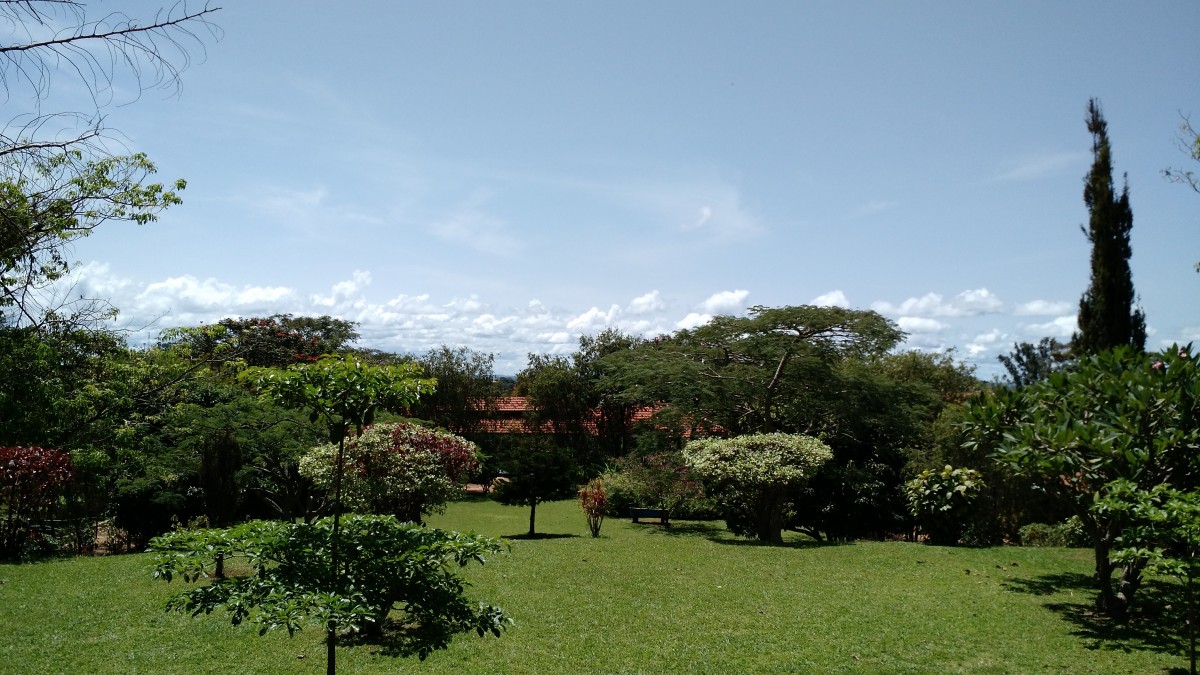
International School of Uganda’s campus

This week I started working at the International School of Uganda (ISU). I have been helping out Rita in the upper school (middle and high school) music classes. The classroom is a great example of the combination of musical styles in Kampala. There are shelves with guitars, flutes, clarinets, saxophones and trumpets alongside adungus, endingidis and a few drums.

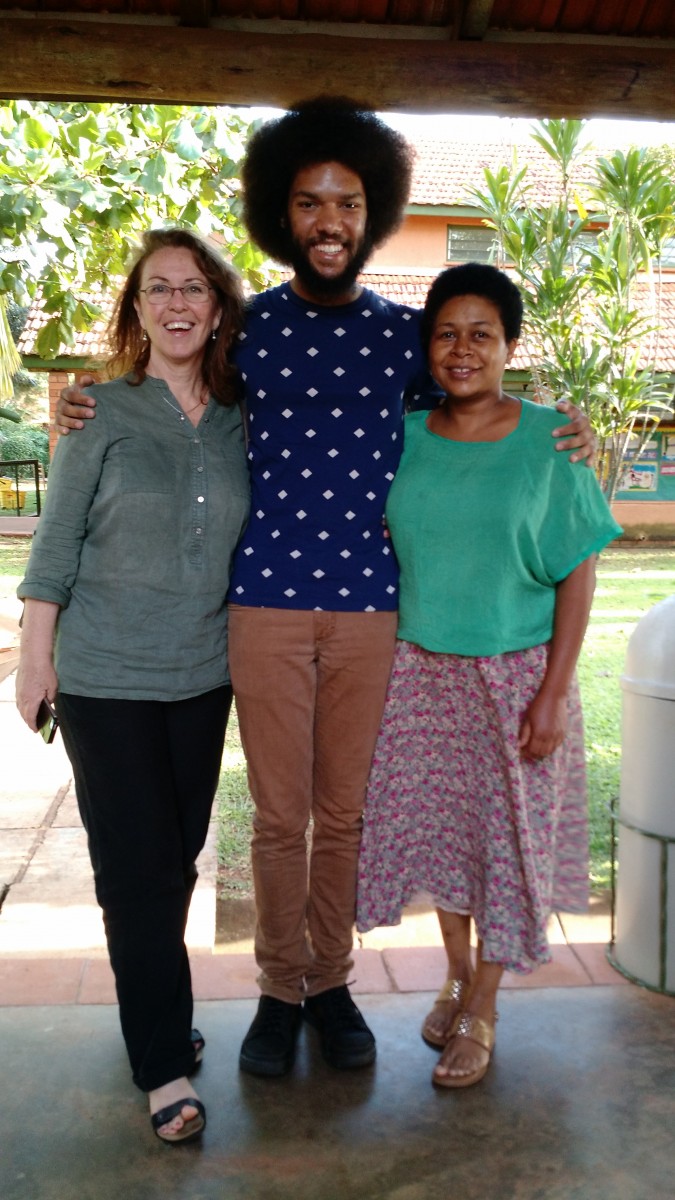
Me with two of my elementary school teachers!

Me with two of my elementary school teachers!

On Thursday of this week, I accompanied Jill, one of the teachers at ISU, to Makerere University. In addition to working at ISU, Jill also teaches dance at Makerere. One of the interesting projects she is working on at the moment is a collaboration between her dance class at Makerere and the Norwegian College of Dance. They are putting on a performance on the 2nd and 3rd of May which I am planning to attend. She also does an annual collaboration with the dance department at NYU.

After she finished her class at Makerere, I went with Jill to In Movement where they were rehearsing for the Norwegian College of Dance collaboration. In Movement is an organization that provides arts education to youth in Uganda. On the same property is ’32º East: Ugandan Arts Trust.’ This organizations goal is to provide resources for the development of an arts community in Uganda. They have several artists in residence and have held several exhibitions throughout Kampala over the years. One of the exhibitions I found particularly interesting was a mobile exhibit called ‘The Boda Boda project.’ Boda bodas are motorcycle taxis that provide a significant amount of public transportation throughout Kampala and other urban centers in Uganda. The project featured 20 artists who each created an installation utilizing a boda boda. The exhibition then traveled around Kampala and was on display in different locations over the course of the 2014 Kampala Contemporary Art Festival.

After returning to the University campus I was able to make an appointment to meet with Professor Sylvia Nannyonga-Tamusuza next week. The week I have been reading the book Ethnomusicology in East Africa: Perspectives from Uganda and Beyond which she edited along with Thomas Solomon. The article Professor Nannyonga-Tamusuza contributed to the book is titled What is “African Music”? Conceptualisations of “African Music” in Bergen (Norway) and Uppsala (Sweden). In her study, she focused on how people in Bergen and Uppsala perceive music from Africa and music that is marketed as such. Part of her argument is that “the term ‘African music’ is a brand name, an economic (popularised by the media as commercial product), political, and academic construct” (Nannyonga Tamusuza 204). I interpreted her analysis as a response to the use of the term as way of commodifying musics from Africa as “homogeneous, original, traditional, authentic, romantic, exotic, simple and natural” (Nannyonga Tamusuza 206). I am going to explore some of the sources she cites in her paper and try to provide further insights into this topic.

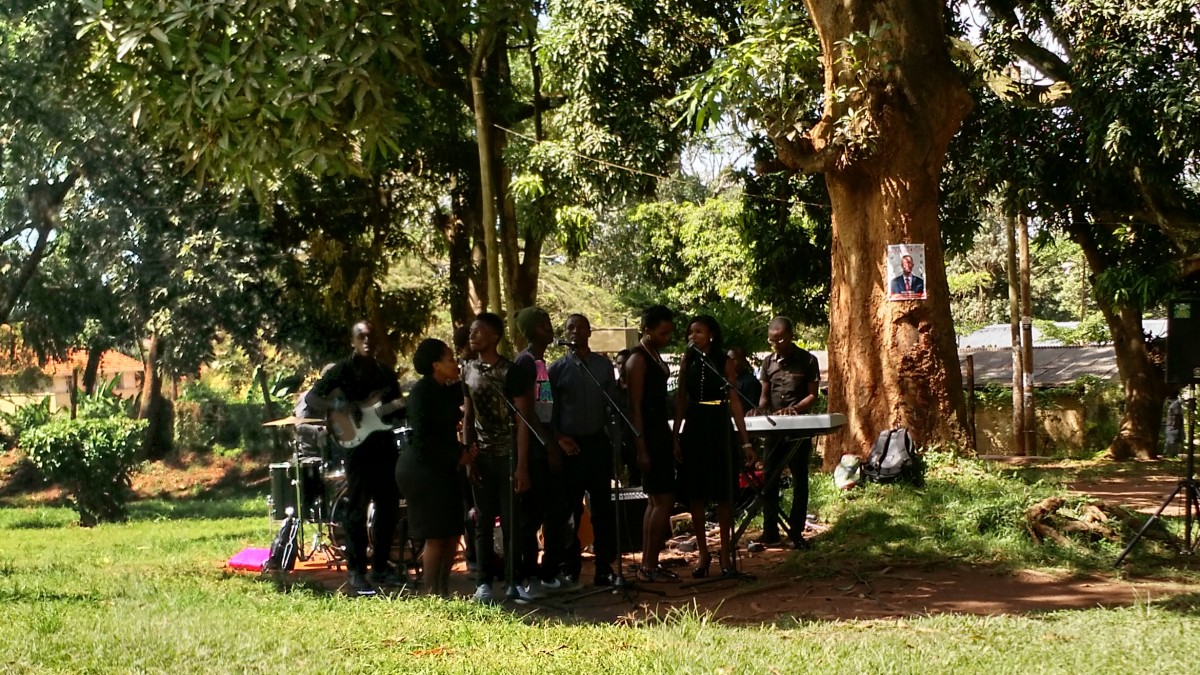
While on the Makerere campus, I was also able to hear a performance by a class studying popular music. The played an array of American and Ugandan popular music including a cover of Cindi Lauper’s ‘True Colors.’

Makerere students performing on the lawn

Makerere students performing on the lawn

I also made a trip to the Uganda National Museum. Fortunately the museum is pretty close to where I am staying so I was able to walk there. When I got there the first place I stumbled upon was the Library of the Uganda Society. The Uganda Society was “founded in 1923 as the Uganda literary and scientific society.” The librarian was extremely helpful and found a couple of books on Ugandan music for me. I spent some time looking over a book called African Music from the Source of the Nile by Joseph Kyagambiddwa. The book was published in 1955 so it is fairly old but had a lot of interesting information about Baganda music and had a rather large collection of scores and descriptions of the music. I am looking for a copy of the book online and will hopefully be able to find one that I can get back in the US. I also picked up a copy of Volume 53 of the Uganda Journal which is a publication released by the Uganda Society. There is an interesting article in this edition titled Music in the Sacred Forest of the Rwenzori by Vanna Viola Crupi. The article discusses how the Bakonzo people who live in the region relate to the environment through music and how this relationship has been altered by the designation of the Rwenzori mountains as a National Park.

After spending some time in the library, I made my way to the museum itself. One of the first exhibits I found was a display of the traditional instruments of Uganda. They had all the instruments arranged by type (drums, flutes, horns, bells, harps, etc.) and within each category they presented instruments from different tribes in Uganda. One instrument I am particularly interested in is the agwara from the West Nile region of Uganda. These trumpets are usually in a set of 7, each of which sound a different pitch. Each player plays a specific pattern which fit together to create a song. The Ndere Troupe played a song with the agwara at the performance I went to last week in which they broke the piece down into its individual components. Another really interesting instrument was a clay drum from the Bagisu of Eastern Uganda. I haven’t been able to find out anything else about it but I will continue digging.

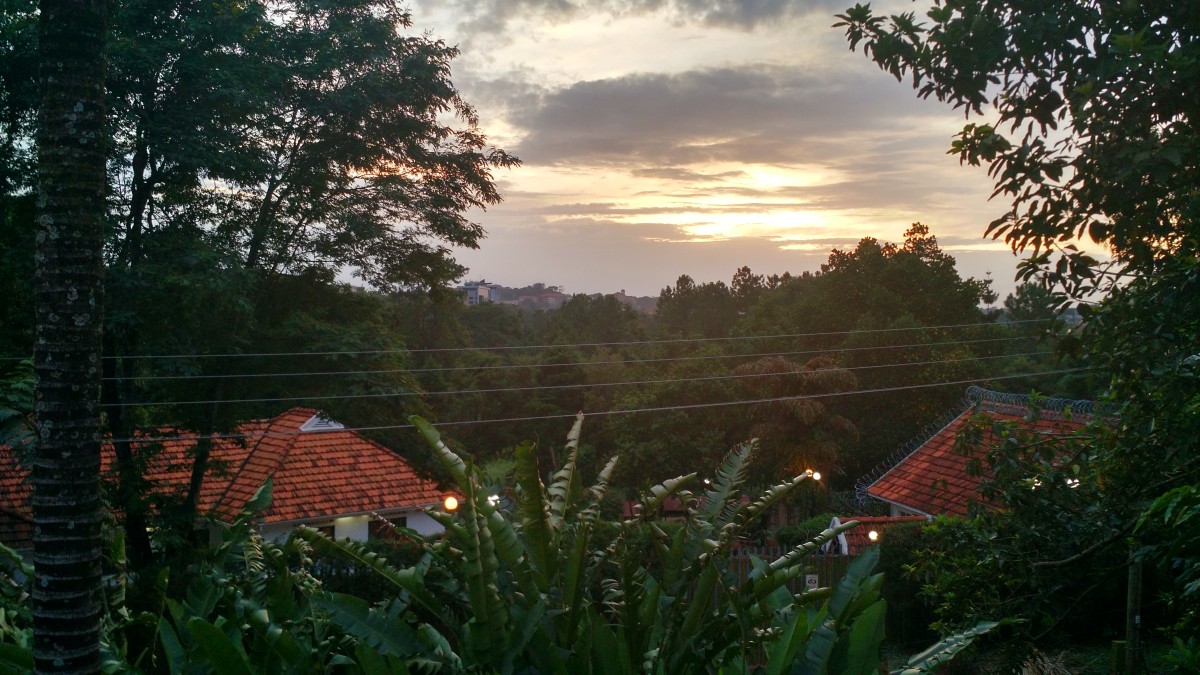
View from the balcony at dusk

View from the balcony at dusk

This week I also made some additional observations regarding the soundscape. All over the city I had been hearing this wonderfully rhythmic hooo hooo hoo-oo hoo hoo that always made me want to dance. I was able to look through a book of East African birds that I borrowed from Cathy (the friend I am staying with) and discovered that it was the red-eyed dove that was making the call. I have been having difficulty getting a good recording of it but I will include one once I can.

I have also begun to hear, in addition to the roosters and other birds I hear every morning, a Muezzin calling for morning prayer from one of Kampala’s mosques. I’m not sure exactly where this mosque is but I’m sure I will stumble upon it while wandering around the area.


Here are a few songs that I have listened to over the past week:

Bwendifa – Ndere Troupe


Abedo kena kena – Ndere Troupe

The Coming of Sound

Well here I am In Olmypia Washington trying to figure out what I’m doing with my travel arrangements and as I am sitting by the bay listening to the waves splash, and the birds speak, and the people playing I realize that I no longer felt as if I was at the bay enjoying the sun and the natural sounds scape but I had literally been transported to a point in my past of when I was child screaming an playing in the park back home. Remembering this meant that at that moment this familiar sound was actually triggering a moment in my past, making that very moment relatable to my present position. Except one small difference, that even though my mind was taken back to a place of familiarity that the experience I was having was still different. With out realizing every position of sound in and around us we all consistently making choices actually by the sounds we are hearing, weather or not it mentally registers or not, sound is energy that is moving and affecting us all in a physical way. This is where the idea of sound manipulation comes into affect, how corporations and even our own government take advantage of fear, happiness, sadness, and almost every emotional response that consumers can relate to. just like In one of the readings from winters quarter we talk about the city, how all cities seem to have similar qualities that remind a person of a city, that similarity still does not define the identity of every city. Tying that in my experience on the bay, Even though the feeling and experience was similar to that triggering moment from my past it still was not the same. So how do these large corporation draw consumers into buying or investing in said ideas, goals, or lifestyles if not every experience is the same? My theory is that the sounds that do not affect our minds due to exposure from multiple similar experiences/sounds then build stereotyped like muscle memory. Business use this Stereotyped “Sound” with in there advertising, film, and music, to portray an emotional response that these business are hoping most people will relate too. The thing though about these relatable triggers is that people do not tend to acknowledge that even though something about this piece of art is relatable and similar, the situations are not the same nor are they they in most cases real.

This all started with the coming of technology and large corporate mass media, also know as urban ethos’s. When Film first became popular it was entertaining by means of being in a quiet room watching black an white screen with subtitles and large facial expressions, until music was added to silent films as a way to portray sounds and emotional responses to the body language of said characters and scenes. As soon as sound hit the screen it changed the very art of film, there is a saying; that, that day film it self as an art died. relating this to programed music and absolute music to film, absolute film would be film itself, when it was silent, then there is programed film, this is where film no longer is just a silent film, but is using sound to help portray the meaning of the story by using sound to emulate the meaning of the films original story.

FullSizeRender

This is a picture of the capital building at night, not many people see this but late at night when its dark out the capital building has lights on it. There is a lighting design on the building that actually makes the capital building look like there is a giant smily face on it. When I see this at night I think about the artist who took the time to do the lighting for this building and what there intentions as a light designer was when they put the lights on the building, or did they even know that this would happen? Either way, I look at what this building, what it represents and where it is located. Only in one of the most open, liberal places in this country would have a lighting designer create a shadowed smily face on our states capital building.

« Older posts Newer posts »

© 2026 Musical Cities
The Evergreen State College
Olympia, Washington

Log inUp ↑