
Monday, December 2, 2024
Michael Craw
Greetings Evergreen MPA Alumni and Friends,
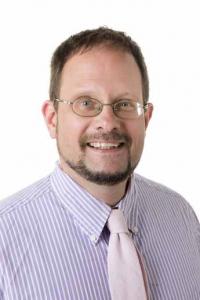
I very much appreciate having this opportunity to introduce myself in my roles as a scholar and a teacher in the MPA program. I have been a faculty member at Evergreen since Fall 2019 when I joined the MPA program as its director. Having stepped out of that role in Summer 2024, I have been developing new courses for our MPA program in election administration, metropolitan governance, social welfare programs, and local tax policy. I am also continuing to support our MPA staff, students, and faculty as associate director this year.
So often these days, public and nonprofit professionals are called on to advocate for their organizations and their clients. Thus, the most important goal I have as an MPA instructor is to help students develop the skills they need to make fair and persuasive arguments, supported with evidence. Early in my career as a faculty member in Michigan State University’s undergraduate public affairs program, James Madison College, I learned how important it is to prepare professionals in public administration with a broad toolkit in data analysis, policymaking, and critical thinking to contribute to decision-making at all levels of government. My teaching today reflects those early lessons, with a heavy emphasis on learning with case studies, using open and administrative data resources, and analyzing and presenting data with skill.
My experience as a faculty member in the University of Arkansas at Little Rock’s MPA program from 2012-2019 helped to foster a commitment to contributing faculty skills and support student experiences that help governments and nonprofits work better in our state and communities. To that end, I serve as a board member for Pierce County’s Continuum of Care, which administers federal funding to assist homeless households in the region. I also serve on the advisory board for Tacoma’s Institute for Black Justice, an organization that supports families of color navigating Pierce County’s family and child protection services. In this way, I help these organizations develop leadership training and to carry out in-depth analysis of the effectiveness of their programs.
Looking to the future, I am most excited about continuing the work of understanding how racial and income inequality persist in American cities. Over the past 10 years, I have analyzed data from cities as diverse as Tacoma, Little Rock, and Fort Worth to obtain a better understanding of how patterns of segregation persist across urban neighborhoods. My work here has found that the way governance happens at the neighborhood level plays an important role in creating differences in property values, housing quality, crime, and other outcomes that affect quality of life and opportunities for economic mobility. I am hopeful this work will help to guide city governments towards policies that will create more equitable futures for urban regions.