The Evergreen State College

Tag: sculpture (Page 3 of 3)

Jenny Heishman: Wednesday April 10, 2013 11:30-1:00, Lecture Hall 1

With a practice akin to an alchemist, Jenny Heishman creates approachable objects that elicit misunderstanding and require a shift in perspective. Using a variety of run-of-the-mill materials including aluminum foil, ceramic tiles, paper, tape, fabric and Styrofoam, Heishman alters the way we experience the use of these humble items. Encountering her works on paper and in sculpture, one recognizes her misuse of material and her interest in broken patterns, faux surfaces and optical illusions. Jenny Heishman grew up in Florida surrounded by theme parks, water flumes and golf courses. Nature was mimicked — much of her world was a reconstruction of some other place’s history and landscape. She writes: “Because we enjoyed year-round warmth, we built the seasonal changes with plastic autumn leaves, artificial snow, and unspoken agreements. This environment taught me how to use objects to create a fabricated reality.” Her work encourages us to find pleasure in the act of looking and her playful gestures reward us with multiple visual surprises. Heishman received the Betty Bowen Award and a Pollock-Krasner Foundationan grant in 2011. She received her MFA from Ohio State University in 1998.

Dan Webb: Wednesday, February 15, 2012, 11:30-1:00, Lecture Hall 1

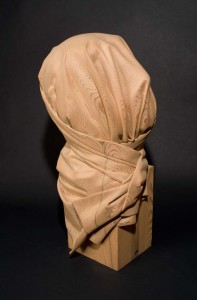
Dan Webb  Works in a variety of materials including wood, limestone and bronze. Two themes that have been sources of inspiration for the past several years. The first is the idea that much of the meaning of a work of art is elusive and, to an extent, hidden. Neither the artist nor the viewer can be aware of every possible meaning within a work since each interpretation is revealed only by the experience and perceptions of the individual. Webb carves, in stone and wood, objects seemingly covered by a material that hints at what is beneath. The subject of the work is the fact that so much in the image is covered up and unseen. The show’s second theme concerns the dandelion as a metaphor for resiliency. Despite man’s efforts to prevent its growth, dandelions always find a way to resist those efforts.

Dan Webb has won numerous awards including a Pollock-Krasner award, the Betty Bowen Award, and Artists Trust/Washington State Arts Commission Fellowship. His work is part of the permanent collection of the Seattle Art Museum as well as various public art commissions and private collections.  He is represented by Greg Kucera Gallery in Seattle. Dan received his BFA in 1991 from Cornish College of the Arts.

Katy Stone: Wednesday, February 1, 2012, 11:30-1:00, Lecture Hall 1

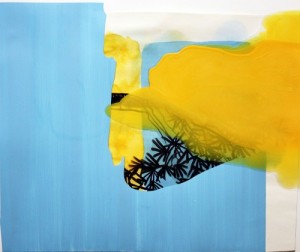
Katy Stone paints on a variety of materials and layers the elements into sculptural assemblages and installations that blur the boundaries between drawing, painting, and sculpture, engaging viewers with their complex fluidity. “I create objects with visual magnetism and distinct material presence that reflect the generative power of nature…Their exuberance and beauty shadow a longing: the desire for things to last, a wish against decay…The layers of tension between transience and permanence, nature and artifice, substance and ethereality, growth and decay are pivotal in the work.”

Stone has exhibited at nationally and internationally at galleries in New York, Los Angeles, San Francisco, Seattle and Vienna, and at museums including The McNay, and the Boise Art Museum and alternative spaces including Suyama Space in Seattle. Her work has been featured in group exhibitions across the US including “Art+Space” at Project4 in Washington, DC, “Other Worlds,” at the Jacksonville Museum of Contemporary Art in Jacksonville, Florida; “Earthly Delights,” at Mass Art in Boston; and internationally at The Chengdou International Biennale in Chengdou, South Korea. She has been reviewed in many publications including Artweek, New Art Examiner, Sculpture Magazine and Art in America. Her commissioned public artworks include projects at Conoco Phillips in Houston, King County Correctional Facility in Seattle, Ross School of Business at the University of Michigan, The Ascent in Cincinnati, designed by Daniel Libeskind, and at Twin Parks, in Taichung, Taiwan, among others. In 2011, she will complete her first commission for the GSA’s Art in Architecture Program, at a Federal Courthouse in Jackson, MS, designed by H3 Hardy Collaboration Architecture. Originally from Iowa, Stone received her MFA in Painting from the University of Washington in 1994.

Margie Livingston: Wednesday, January 25, 2012 11:30-1:00, Lecture Hall 1

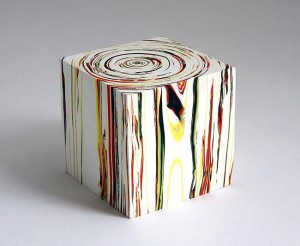
Most painters are, abstractly speaking, sculptors of paint, building images through the careful application of layered pigments. But Livingston pushes this idea to an extreme in her construction of three-dimensional forms. The result is a body of work that might prod paint off the palette, but nevertheless keeps it as a medium very much in the limelight.-Suzanne Beal
“Letting accident and discovery meet invention and experimentation, my goal is to make works that surprise me and pull me into new territory as I investigate the properties of paint pushed into three dimensions.”

Margie received an MFA in Painting from the University of Washington. Recent solo exhibitions include Luis De Jesus, Los Angeles, Greg Kucera Gallery, Seattle; LACE, Los Angeles; Richard Levy Gallery, Albuquerque, NM; and The Archer Gallery, Clark College, Vancouver, WA. She has won multiple awards including the Arts Innovator Award and the Neddy Artist Fellowship for Painting in 2010 and Betty Bowen in 2006. She is a member of SOIL Artist Cooperative and is represented by Greg Kucera Gallery. Her work is in the  collections of the Seattle Art Museum, The Henry Art Gallery and the Tacoma Art Museum.

Kelly Kaczynski: Wednesday, November 16, 2011 11:30-1:00, Lecture Hall 1

Kelly Kaczynski is a sculptor and installation artist. Her work, while
existing in a temporal-spatial platform, is deeply materials based.
She received an MFA from Bard College (‘03), NY and BA from The
Evergreen State College (‘95), WA. She has exhibited with Hyde Park
Art Center, IL (‘08), University at Buffalo Art Gallery, NY (‘06),
Rowland Contemporary, IL (‘06), Triple Candie, NY (‘05), Gallery 400,
University of Illinois at Chicago, IL (‘05), Islip Art Museum, NY
(‘03), Cristinerose/Josee Bienvenu Gallery, NY (‘03), DeCordova
Museum, MA (‘01), Boston Center for the Arts, MA (‘00). Public
installations include projects with the Main Line Art Center,
Haverford, PA (‘04), the Interfaith Center of NY, NY ‘(03), Institute
for Contemporary Art, Boston and the Boston National Historic Parks
(‘02), Boston Public Library (‘00). Kaczynski has taught at the School
of the Museum of Fine Arts, Boston, MA (‘02-‘04), the University of
Pennsylvania, PA (‘04), University of Illinois at Chicago, IL (‘04 –
’05) and University of Chicago, IL (‘06).  She is currently an
Assistant Professor in the Department of Art Theory and Practice at
Northwestern University, IL.
(Bio from http://kellykaczynski.com)

Eric Eley: Wednesday, January 12, 2011 12:15-1:30-Lecture Hall 1

Eric Eley sculpture

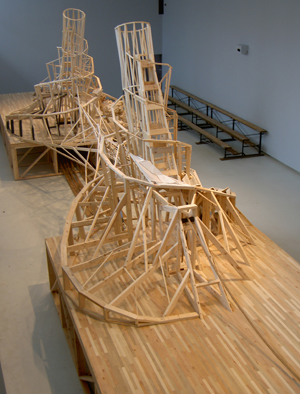
Eric Eley’s resin drawings, works on paper, and sculptures are informed by his fascination with the rational language used in physics and higher mathematics. His analytical use of lines and points allows him to arrange elements in space in order to provide a unique way of seeing. His materials are deceptively simple—string, wire, wood, dry pigment, graphite, resin. With these materials, the artist confronts the limitations of time, space, and physical effort while incorporating or discarding the benefits and drawbacks of those limitations. In his practice, Eley balances physical labor and intellectual work. He is truly an “analog” artist, one who physically moves in space, up and down a ladder, back and forth from wall to wall, rather than plotting elements on a computer screen. He is a thinker, delighting in the usually unseen connections that exist in any given atmosphere. His work is both landscape and architecture. Not a natural landscape but a landscape of articulated space. Not static architecture, but an exploded view of perspective and scale.

Eric’s work has been included in group shows in the Kunsthaus Hamburg and the Outdoor Sculpture Projects at Volta03 in Basel, Switzerland. He has also had solo shows at Gallery4Culture, the Hedreen Gallery at the Lee Center for the Arts, both in Seattle, and the Kolva/Sullivan Gallery in Spokane. He mounted a solo show at Art Agents Gallery in Hamburg, Germany in 2008 and his work was included in the group show “Unnatural Presence” at Platform in 2006. His solo exhibition, Prospect Fields, was shown at Platform Gallery in 2008 and his solo exhibition, Look Out, in 2010.  During January 2011, Eric will be creating an installation in Suyama Space (Seattle, WA).

www.ericeley.com

http://www.platformgallery.com/artist_pages/Eley/Eley_main.html

Matt Browning: Wednesday November 3, 2010 11:30 am to 1:00 pm, Lecture Hall 1

The work of Matt Browning calls attention to the ways ritual, conquest and competition inform identity.  Activated by observation and collection, Browning confronts the complexities of tradition and material expectation, generating pieces that operate somewhere between devotional objects and performative relics.

Description of recent exhibition in Lawrimore Project:

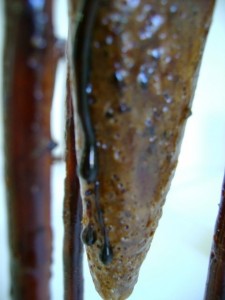
Matt Browning is taking his time.  More precisely, his new work is taking its own sweet time and asks the viewer to do the same.  It even takes time to simply locate his work within the gallery.  For his first major one-person exhibition with Lawrimore Project, Browning defies the typical expectations placed on a young artist given such an opportunity by presenting the entire body of work humbly unlit and almost-not-even-there, tucked in the very back corner of the gallery.  “Tradition As Adaptive Strategy” is a series of small sculptures similarly executed, though each unique, installed on what was formerly the gallery’s fireplace mantle.  Painstakingly carved from solid pieces of fir in the tradition of whittled ‘whimsies’, the 34, funnel-shaped objects were then filled and coated with pine sap the artist gathered and transformed into pitch through a process of heating and filtering.   Conceptually, the work flows from many sources—from folk art and native culture traditions to scientific and philosophical tracts on time, fire, homeostatsis, homeorrhesis, and Phlogiston Theory—but, most specifically, it was inspired by the “Pitch Drop Experiment”, the longest continuously running scientific experiment in the world.  Begun in 1927 by Professor Thomas Parnell to prove the viscosity of seemingly solid substances, the experiment simply consists of counting the number of drops of pitch flowing from a glass funnel.  In the 80 years since its inception the experiment has yielded just 8 drops, a minor return in terms of data: investment.  This glacial, ‘drop-per-decade’ notion can analogously be tied to Browning’s patience with the reception and ramifications of this body of work, recognizing that what takes time is the preparation, research and experiences leading up to the creative act and, now, perseverance in the spaces after and between the drops where we find meanings and become their steward.

Newer posts »

© 2026 Art Lecture Series

Theme by Anders NorenUp ↑