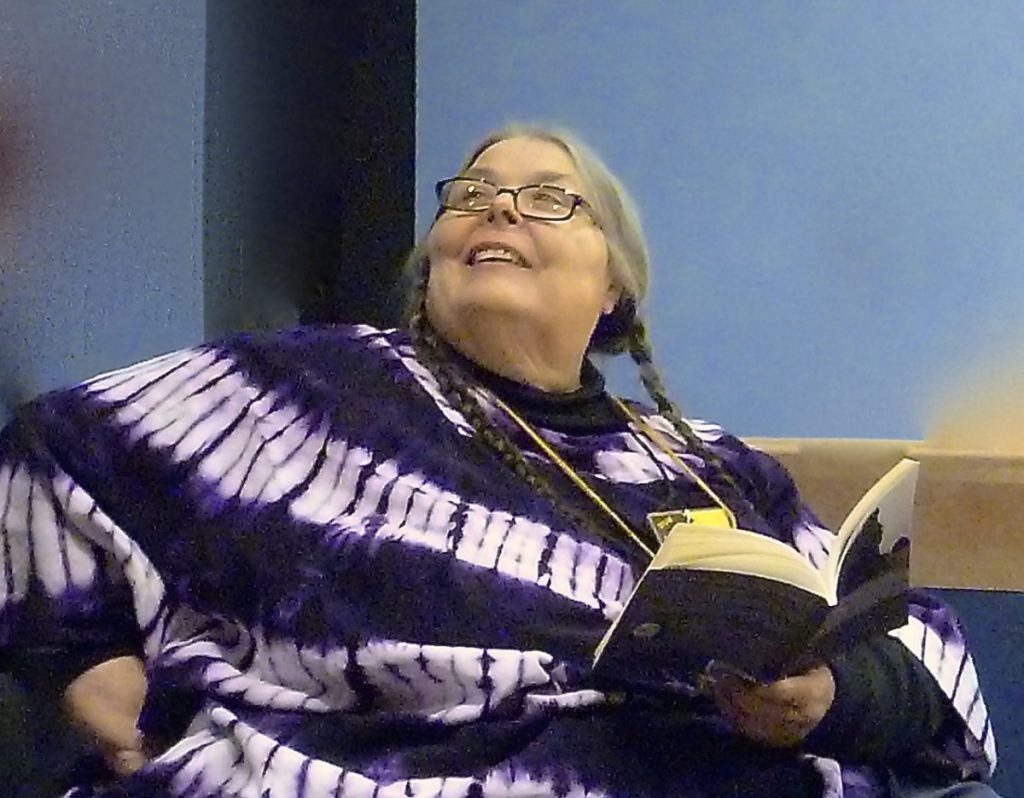
Catharina Manchanda is the Jon and Mary Shirley Curator of Modern and Contemporary Art at the Seattle Art Museum.
Originally from Germany, Catharina Manchanda received her Ph.D. in art history from the City University of New York (2005), where she wrote her dissertation on conceptual art and photography in 1960-70s German art.
Recent and current exhibitions include: Joyce J. Scott: Walk a Mile in My Dreams, the artist’s 50-year career retrospective, co-curated with Cecilia Wichmann at the Baltimore Museum of Art (October 17 2024-January 19, 2025); Elizabeth Malaska: All Be Your Mirror (November 17, 2023-June 16, 2024). Upcoming: Bethany Collins: At Sea (November 14, 2024-May 4, 2025); Following Space: Thaddeus Mosley & Alexander Calder (November 20, 2024-June 1, 2025).
Leah Modigliani is Associate Professor of Visual Studies at Tyler School of Art and Architecture. She is an artist and scholar with transdisciplinary engagements informed by fine arts, art history, critical geography, urban studies, and politics. Modigliani’s work represents the liberatory potential (right to the city) and neoliberal revanchism (displacement, punitive laws) of urban experience. In artwork she has dwelled upon eviction (“How long can we tolerate this? An incomplete record from 1933-1999,” 2016-17); cities destroyed by war (“The City in Her Desolation,” 2017) and natural disasters (“Cities of God” series 2021-22), and protests against injustices enacted in cities (“Washington D.C., 1939; Basel, 1957; Berkeley, 1969; Chicago, 1969; London, 1969; Windsor, 1982…,” 2015-2018). While often sculptural, her work increasingly cites the form and history of photography, especially photography’s role in constituting and deconstructing historical narratives online and in physical archives. Modigliani visual artworks are complemented and informed by her academic writing about photography and landscape (Engendering an avant garde: the unsettled landscapes of Vancouver photo-conceptualism, 2018), and public sculpture (Counter Revanchist Art in the Global City: Walls, Blockades, and Barricades as Repertoires of Creative Action (in press with Routledge, 2023).
Modigliani’s visual work has been exhibited at many galleries and museums including Pennsylvania Academy of the Fine Arts Museum (Philadelphia), Yerba Buena Center for the Arts (San Francisco), Colby College Museum of Art (Waterville, ME), the Art Gallery of Nova Scotia (Halifax), the Museum of Contemporary Canadian Art (Toronto). Her critical writing can be found in academic journals and contemporary art magazines such as Mapping Meaning the Journal, Anarchist Studies, Prefix Photo, Art Criticism and C Magazine.Her book, Engendering an avant-garde: the unsettled landscapes of Vancouver photo-conceptualism, was published by Manchester University Press’s Rethinking Art’s Histories series in 2018. Her second book, Counter-Revanchist Art in the Global City will be published by Routledge in 2023.
Dahlia Elsayed is an artist and writer who makes text and image-based work that synthesizes an internal and external experience of place, connecting the ephemeral to the concrete. She writes short fictions for created landscapes that take the form of narrative paintings, print and installation. Her work has been exhibited at galleries and institutions throughout the United States and internationally, including the 12th Cairo Biennale, Robert Miller Gallery, BravinLee Programs, The New Jersey State Museum and Aljira Center for Contemporary Art. Her work is in the public collections of the Newark Museum, the Zimmerli Museum, Johnson & Johnson Corporation, the US Department of State, amongst others. Dahlia has received awards from the Joan Mitchell Foundation, the Edward Albee Foundation, Visual Studies Workshop, the MacDowell Colony, Women’s Studio Workshop, Headlands Center for the Arts, and the NJ State Council on the Arts. She received her MFA from Columbia University, and lives and works in New Jersey. Ms. Elsayed is a Professor of Humanities at CUNY LaGuardia Community College in Long Island City, NY.
Andrew Demirjian is an interdisciplinary artist who works with remix, rhythm and ritual. He creates environments for critical reflection through scraping and recombining popular culture, making intricate collages of sound and language. His work is often presented in non-traditional exhibition spaces and takes the form of interactive installations, generative art, multi-channel videos and live performances. He is currently a Fellow at the MIT Open Documentary Lab, where he is working on a computational text analysis project for linguistic remixing of vast quantities of video files. Andrew’s work has been exhibited at The Museum of the Moving Image, Eyebeam, Fridman Gallery, Rush Arts, the White Box gallery, Cyberfest, Fieldgate Gallery, the Center for Book Arts, The Newark Museum and many other galleries, festivals and museums. He is the author of Pan- terrestrial People’s Anthem, a book of poetry and collection of music that remixes the lyrics and songs of 195 national anthems. The MacDowell Colony, Puffin Foundation, Artslink, Harvestworks, Diapason, The Experimental Television Center, The Bemis Center, LMCC Swing Space, The Visual Studies Workshop and the New Jersey State Council on the Arts are among some of the organizations that have supported his work. Andrew teaches theory and production courses in emerging media in the Film and Media Department and the Integrated Media Arts MFA program at Hunter College.
Bill Basquin, filmmaker (From Inside of Here), is a multi-modal artist who enjoys the lessons that come from working with people, living with a tiny cat, and continuing to attune to worlds both wild and domestic. Bill’s films have been shown at the Sundance Film Festival, the Ann Arbor Film Festival, the Mix Festival, Documenta, and the New York Museum of Modern Art.
Dave Kennedy’s works have been published globally in such magazines as Art21 and Numéro Cinq and exhibited both locally and internationally at such venues as the Brownsville Museum of Fine Art, Photo Center Northwest, Bellevue Arts Museum, Zhou B Art Center, Chicago Industrial Arts & Design Center, Escuela de Belle Arte in Spain, Rogers Park/West Ridge Historical Society Museum, and the Seattle Art Museum’s Gallery.
Represented by Bridge Productions in Seattle, WA, Kennedy is a recipient of a Yaddo Residency and Fellowship, 4Culture Individual Project Award, as well as, Artist Trust’s Grants for Artists Projects, the Joanne Bailey Wilson Endowed Scholarship, and the Vermont Studio Center Fellowship. He has presented multimedia presentations to the Society of Photographic Educators, Cornish College of the Arts, and the University of Washington on topics of marginalization and objectification. He received his MFA from the University of Washington in Interdisciplinary Arts and an undergraduate degree from Western Washington University in Visual Communication. Kennedy is currently working as an adjunct professor at Photo Center Northwest while keeping a full time studio practice in Seattle, WA.
Out of retirement to teach the first ever class from the new Fiber Arts Studio, Gail Tremblay has assembled a brilliant group of master weavers for you!
GAIL TREMBLAY
Writer, teacher, and mixed media artist Gail Tremblay (Onondaga and Mi’kmaq),was born in 1945 in Buffalo, New York. Tremblay taught English, Native American Studies, Art, and Art History at Evergreen State College in Olympia, Washington, where she joined the faculty in 1981. As an educator, she has influenced more than a generation of Native and non-Native students and has been instrumental in building Evergreen’s focus on Native arts and Native Studies.
In the 1980s, while she was teaching a Third World and Feminist Film Theory class, Tremblay began weaving baskets out of scrap 16mm film, old movie trailers, and outdated educational films. In perfect postmodern irony, Tremblay, who has been making baskets since childhood, utilized materials from a medium that often originated and propagated stereotypes of Indigenous people in order to create “traditional” baskets that critique those same stereotypes. Her titles often allude to the film source, which is frequently obscured by the weaving.
JOEFEDDERSEN…former Greener faculty member!
Joe Feddersen, who is Okanagan from the Colville Confederated Tribes, lives on the reservation in Omak, Washington. He taught art programs, from the early 1990’s until he retired, at the Evergreen State College. His work includes a suite of what he calls his Urban Indian baskets that use designs from things like car and truck tire tracks, electrical towers, parking lot designations, and other forms, objects, and structures that have moved from urban America onto American Indian reservations during the 20th and 21st centuries. Many non-Indian viewers often perceive his basket as having traditional Indigenous designs until they read the basket titles and come to see what he is saying about contemporary experiences in the Indigenous
JEREMY FREY
Jeremy Frey started weaving in his 20s, learning to make baskets from his mother Gal Frey. Gal taught him, drawing on what she had learned from her teacher Sylvia Gabriel. Sylvia was renowned for her basketry, especially her porcupine curlwork. Jeremy learned all aspects of the tradition from selecting brown ash to pounding and preparing basket stuff. His work fuses traditional shapes with the innovative use of both traditional and non traditional materials, as well as unique signature designs.
Jeremy was born in 1978 and raised in Indian Township. His work has received national recognition with the 2011 Best of Show award at the Heard Museum Guild Indian Fair and Market and the Santa Fe Indian Market. He was the recipient of a $50,000 United States Artists grant.
TERROL DEW JOHNSON
Terrol Dew Johnson started basketry weaving at the age of ten. He soon learned that he was a born natural and found that it was one of the few things in life that he found intrinsically effortless.
Johnson is a member of the Tohono O’odham nation of southern Arizona. The Tohono O’odham have a long history of basket weaving using a whole variety of techniques using natural materials and dyes. These are all used in order to tie the basketry in with the local landscape colours and flora, making the baskets part of the community and of the larger landscape.
The traditional basketry weaving techniques that Johnson learnt at such an early age, have allowed him to expand into the world of contemporary fine art basketry, while still keeping hold of his traditions, which he uses as a foundation or anchor point for his subsequent career as an artist.
LISA TELFORD
Lisa Telford (Everett) was born in Ketchikan, Alaska, in 1957. As a Gawa Git’ans Git’anee Haida weaver she comes from a long line of weavers including her grandmother, mother, aunt, cousins and daughter. Lisa harvests and prepares her own material, using red and yellow cedar bark and spruce root. The gathering of materials takes her hundreds of miles from home and hours of preparation that vary depending on the final product. Bark is traditionally stored for one year and then must be processed further. Her baskets may be seen in the collections of The Oregon Historical Society, Hallie Ford Museum of Art, The Smithsonian National Museum of the American Indian, The Heard Museum, The Portland Art Museum, and The Burke Museum.
I construct narratives, scenes, and stories which point to the tensions found between the individual and communities. I utilize autobiographical threads to inform larger universal fields of experience. Gestures of alienation and displacement are both the aesthetic and subject of much of my work. Often using landscapes and tableaus with day laborers or myself, I explore the way an image is inhabited, and the way that spaces, objects and people are translated into images. My work serves as an expressive and intimate point of contact between the broader realms of subjectivity and political contingency. Through my videos and photographs, I make images that feel at the same time familiar yet distant. I engage the viewer in questions concerning the ways in which the formation and experience of each work is situated—how they exist in and out of place.
Steffani Jemison was born in Berkeley, California, and is currently based in Brooklyn, New York. She holds an MFA from the School of the Art Institute of Chicago (2009) and a BA in Comparative Literature from Columbia University (2003). Jemison uses time-based, photographic, and discursive platforms to examine “progress” and its alternatives.
Jemison’s work has been exhibited nationally and internationally at venues including the Brooklyn Museum; the Drawing Center; LAXART; the New Museum; the Royal Danish Academy of Fine Art; the Studio Museum in Harlem; Laurel Gitlen; Team Gallery; and other venues. Her publishing project, Future Plan and Program, commissions literary work by artists of color and has published books by Martine Syms, Jibade-Khalil Huffman, and Harold Mendez, among others. She has participated in artist residencies at Smack Mellon, Brooklyn; the International Studio and Curatorial Program, Brooklyn; Project Row Houses, Houston; the Core Program at the Museum of Fine Arts, Houston; the Skowhegan School of Painting and Sculpture, Maine; and the Studio Museum in Harlem, New York. Jemison has served as a visiting critic in the graduate art programs at Columbia University, the University of Pennsylvania, and the University of Illinois-Chicago. She was a 2013 Tiffany Foundation Biennial Awardee and a 2014 Art Matters Grantee. In 2015, she presented her new multipart commission Promise Machine at the Museum of Modern Art.
Jemison is currently an artist-in-residence in the Sharpe-Walentas Space Program. She teaches at Parsons The New School for Design, the Cooper Union, and the School of the Art Institute of Chicago.
Wendy Red Star is an artist living and working in Portland, Oregon. Red Star received her B.F.A. from Montana State University-Bozeman and her M.F.A from UCLA in 2006. She has exhibited both nationally and internationally. Her exhibitions include shows at the Fondation Cartier pour l’Art Contemporain, Hallie Ford Museum, The Eiteljorg Contemporary Art Fellowship 2009, Utah Museum of Contemporary Art, Missoula Art Museum, St. Louis Art Museum, National Museum of the American Indian-New York, Portland Art Museum, Minneapolis Institute of Arts, Indianapolis Museum of Contemporary Art, Metropolitan Museum of Art, Bockley Gallery, and Haw Contemporary gallery. She has been a visiting lecturer at a range of respected institutions, including The Banff Centre, CalArts, National Gallery of Victoria (Melbourne), Portland State University, Dartmouth Hood Museum, Figge Art Museum, Fairhaven College, Fine Artworks Center-Provincetown, and I.D.E.A. Space-Colorado College.
JOHN FEODOROV
Born in Los Angeles of mixed Navajo (Diné) and Euro-American heritage, John Feodorov grew up in the suburbs of Southern California while making annual visits to his family’s land near Whitehorse, NM. The time he spent with his mother and grandparents on their homestead near the Anasazi ruins at Chaco Canyon continues to inform and impact his work.
John has been called a conceptual artist, a political artist, as well as a Native American artist, but he is still not sure how to define what he does. His work includes painting, drawing, assemblage, installation, video, music and songwriting. He also has engaged in experimental performance in the past, but not lately. Currently, he writes and performs with his art/pop band, The Almost Faithful.
John’s work as been widely exhibited and has been featured in several publications; most recently in Time and Time Again, by Lucy R. Lippard, and Manifestations, edited by Dr. Nancy Marie Mithlo. He was also featured in the first season of the PBS series, “Art 21: Art for the 21st Century”.
John has also worked with the Seattle-based afterschool arts program, Artscorps, and served as an Arts Commissioner for the City of Seattle. He is currently an Associate Professor of Art at Fairhaven College.
SARA SIESTREEM
Sara Siestreem (Hanis Coos and American, 1976-) is from the Umpqua River Valley in South Western Oregon. She grew up in Portland, Oregon. She is a Master Artist and Educator. She comes from a family of professional artists and educators and her training in both fields began in the home. Siestreem graduated Phi Kappa Phi with a BS from PSU in 2005. She earned an MFA with distinction from Pratt Art Institute in 2007. Siestreem is the weaving student of Greg Archuleta, Greg Robinson, and Nan MacDonald. She is represented by Augen Gallery in Portland and her work has been shown in museums and figures in prestigious private and public collections nationally.
Her studio work is multi-disciplinary. Her primary language is painting, but she also works in photography, printmaking, drawing, sculpture, video, and traditional weaving.
She teaches Foundations in Studio Arts and Indigenous Studies at PSU and Traditional Weaving Practices for The Confederated Tribes of Coos, Lower Umpqua, and Siuslaw Indians. She works as a consultant and free lance educator for museums and cultural groups regionally. Siestreem also serves various youth organizations and individuals in the role of mentor, workshop leader, promoter, public speaker and volunteer.
She lives and works exclusively in the arts in Portland, Oregon.
CORWIN CLAIRMONT
Corwin (Corky) Clairmont is a contemporary artist and enrolled member of the Confederated Salish and Kootenai Tribes. Living in Los Angeles, Corky pursued a contemporary exhibiting artist career as well as teaching and becoming department head of printmaking at the Otis/Parsons Art Institute located in Los Angeles, Ca. Upon his return to Montana in 1984, Corky began administrative work at the newly credited Salish Kootenai College located in Pablo, Montana on the Confederated Salish and Kootenai Reservation. This included the creation of the SKC Fine Arts Department and art degree program. Through work as a printmaker, conceptual and installation artist, Corky’s images discuss and explore situations or issues that effect tribal people such as sovereignty, colonization, giving a cultural and historical perspective. Corky’s artwork has been exhibited through out the United States and in several Countries including Germany Norway, New Zealand, France, and most recently at the US Embassy located in Kinshasa, Democratic Republic of Congo, Africa. Awards have included Ford and National Endowment of the Arts, the Eiteljorg Fellowship Award, and the 2008 Montana Governors Award for Visual Arts. He currently serves on the State Board of the Montana Arts Council.
Linda Weintraub is a curator, educator, artist, and author of several popular books about contemporary art. Her recent writing explores the vanguard intersection between art and environmentalism, including TO LIFE! Eco Art In Pursuit of a Sustainable Planet (University of California Press). Weintraub’s previous books on eco-art include the series, Avant-Guardians: Textlets in Art and Ecology (2007). Weintraub established Artnow Publications in order to apply environmental responsibility to the books’ material production. She is also the author of In the Making: Creative Options for Contemporary Artists and Art on the Edge and Over: Searching for Art’s Meaning in Contemporary Society. Weintraub served as the Director of the Bard College museum where she curated over sixty exhibitions. She was the Henry Luce Professor of Emerging arts at Oberlin College. Her current book projects include Art-is-an Environmental Health Clinic (author) and In The Making: Creative Options For Contemporary Architecture (editor).