The Evergreen State College

Tag: art writing (Page 1 of 2)

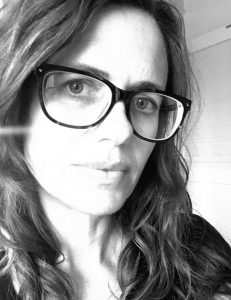
01/29, Week 4: Eleni Stecopoulos

Eleni Stecopoulos is the author of Dreaming in the Fault Zone: A Poetics of Healing (2024), a book of linked critical lyric essays; Visceral Poetics (2016), a hybrid of criticism and memoir; and Armies of Compassion (2010), a poetry collection. Her writing has appeared in Pamenar Magazine, Best American Experimental Writing, Somatic Engagement: The Politics and Publics of Embodiment, Kitchen Table Translation, The Encyclopedia Project, Open Space (SFMOMA), NO GENDER: Reflections on the Life & Work of kari edwards, Datableed, ecopoetics, and elsewhere. In recent years she has given talks on poetry and psychotherapy at the University of Plymouth; on poetics and experimental ethnography at the University of Texas, Austin; on “outsider writing” at the University of Chicago; and on translation and healing at the Paros Symposium in Greece. Stecopoulos holds a PhD in literature and an MFA in creative writing. She taught at Bard College and the University of San Francisco and now works with writers as an independent editor and mentor. From New York, she lives in Northern California.


https://nightboat.org/bio/eleni-stecopoulos/

Gregg Horowitz: Wednesday, May 2, from 11:30 to 1:00 pm in Purce Hall 1

Gregg Horowitz is Professor of Philosophy at Pratt. He writes on aesthetics, the philosophy of art, theories of art history, psychoanalysis, and political theory. His publications include the books Sustaining Loss: Art and Mournful Life (Stanford, 2001) and The Wake of Art: Philosophy, Criticism and the Ends of Taste (Routledge, 1998, with Arthur C. Danto and Tom Huhn) and articles on “Robert Pippin’s After the Beautiful: Hegel and the Philosophy of Pictorial Modernism” (Platypus Review, 2014).“Tradition” (Art Bulletin, 2013), “A Made-to-Order Witness: Women’s Knowledge in Vertigo” in Katalin Makkai, ed., Vertigo: Philosophers on Film (Routledge, January 2013), and “The Homeopathic Image, or, Trauma, Intimacy and Poetry,” (Critical Horizons, 2010). He is also a past Fellow of the American Academy in Berlin.

Anna Moschovakis: Week 7, 11/9, 2016 from 11:30-1:00 pm in the Recital Hall of the COM Building

Anna Moschovakis’s most recent books are They and We Will Get Into Trouble for This (poems) and Bresson on Bresson (interviews with Robert Bresson, translated from the French). She is the author of two previous books of poems, You and Three Others Are Approaching a Lake and I Have Not Been Able to Get Through to Everyone, as well as numerous chapbooks. Other translations include books by Annie Ernaux, Albert Cossery, and Marcelle Sauvageot.

She has received grants from the Howard Foundation, New York Foundation for the Arts and The Fund for Poetry, the James Laughlin Award from the Academy of American Poets, and residency fellowships from Ledig House/Writers OMI and The Edward Albee Foundation; in 2009 she was the recipient of an apexart “outbound” residency grant to Addis Ababa, Ethiopia. She teaches in the MFA programs at Pratt Institute and Milton Avery Graduate School of the Arts at Bard College and was the 2016 Holloway Lecturer in the Practice of Poetry at U.C. Berkeley. She is a longtime member of Brooklyn-based publishing collective Ugly Duckling Presse, for which she edits several books a year and heads up the Dossier Series of investigative texts, and she recently co-founded Bushel, an art and community space in Delhi, NY. Her first novel, The Rejection of the Progress of Love, is forthcoming from Coffee House Press.

https://youtu.be/t7V6BDSFq3k

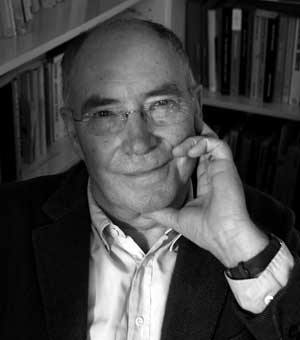
Thierry de Duve: Monday, November 9th, 2015, 5:30-7:00 pm in the 2nd floor Recital Hall in the COM Building

Historian and philosopher of art, Thierry de Duve, is Professor emeritus from the University of Lille 3, and was Kirk Varnedoe Visiting Professor at the Institute of Fine Arts, New York University, for the fall semester of 2013. His English publications include Pictorial Nominalism (1991), Kant after Duchamp (1996), Clement Greenberg Between the Lines (1996, 2010), Look—100 Years of Contemporary Art (2001), and Sewn In the Sweatshops of Marx: Beuys, Warhol, Klein, Duchamp (2012). He is presently finishing a book of essays on aesthetics, forthcoming from the University of Chicago Press.

Alejandro de Acosta: Wednesday, April 29th, 2015, 11:30-1:00 pm in Lecture Hall 1

Alejandro de Acosta describes his Art Lecture  as”a discussion of the work of Argentine poet Antonio Porchia (1885-1968), and his translation of Porchia. Porchia developed and wrote solely in a singular form he called voces (voices). His single book, named, precisely, VOCES, was little known when it appeared, due in part to his distance from literary circles and to its unclassifiable short, aphoristic poetry. Alejandro will discuss Porchia’s poetry and poetics, his finished and unfinished voices, and his approach to sharing them; their influence on subsequent Argentine poets; and the process of his current collaborative translation of them, opening out onto a larger set of ideas about language and translation, poetic forms and how they are circulated and made public.”

Alejandro was born in Buenos Aires in 1972, and grew up in Caracas, Madison (Wisconsin) and Cleveland (Ohio).  Tertiary education in Amherst, MA (Hampshire College, bachelor’s degree) and Binghamton, NY (doctorate at Binghamton University).  A onetime participant in the zine and mail art milieu, in Austin, Alejandro founded mufa::poema, a micropress that freely distributed a dozen poetry and prose chapbooks. Long standing interest in sound art and poetry reading led to a two-year radio and podcast project, “Sector Phy,” on KPWR-FM, as well as numerous audio performances under the moniker JANO (THING) SELECTOR.

Back in Binghamton, study of the history of Western philosophy and contemporary continental thought brought Alejandro to write a dissertation on Spinozan themes, not without a discussion of exhortatory graffiti.  These studies subsequently displaced themselves in the direction of, first, Latin American philosophy, and second, an articulation of (for lack of a better word) anarchist ideas in various genres of prose.  An outcome of this second trajectory, informed by continued engagement with poetry and poetics, are his two recent collections of critical and experimental essays: The Impossible, Patience (Ardent Press, 2014) and How to Live Now or Never (Repartee/LBC Books, 2014).

For many years, Alejandro taught philosophy and poetry at Southwestern University (Georgetown, TX), as well as in popular education settings.  Readings, lectures, and presentations in Albany, Austin, Berkeley, Denver, Morelia, Portland, Seattle and elsewhere.  With Joshua Beckman, Alejandro has translated the poetry of Jorge Carrera Andrade (Micrograms, Wave Books, 2011) and Carlos Oquendo de Amat (Five Meters of Poems, Ugly Duckling Presse, 2010).  Most recently, Alejandro translated Fabian Luduena’s H.P. Lovecraft: The Disjunction in Being (Schism Press, 2015).  Two current projects are an anthology of writing by and about Antonio Porchia and The Ponge Stone, a manuscript of translations, essays, and letters emerging from the study of Francis Ponge’s Pour un Malherbe.  Alejandro’s ongoing research is in U.S. and Latin American poetry, and, still, philosophy.  Alejandro de Acosta currently lives in Olympia, WA.

Linda Weintraub: Wednesday, April 22nd, 2015, 11:30-1:00 pm, Lecture Hall 1

Linda Weintraub is a curator, educator, artist, and author of several popular books about contemporary art. Her recent writing explores the vanguard intersection between art and environmentalism, including TO LIFE! Eco Art In Pursuit of a Sustainable Planet (University of California Press). Weintraub’s previous books on eco-art include the series, Avant-Guardians: Textlets in Art and Ecology (2007). Weintraub established Artnow Publications in order to apply environmental responsibility to the books’ material production. She is also the author of In the Making: Creative Options for Contemporary Artists and Art on the Edge and Over: Searching for Art’s Meaning in Contemporary Society. Weintraub served as the Director of the Bard College museum where she curated over sixty exhibitions. She was the Henry Luce Professor of Emerging arts at Oberlin College. Her current book projects include Art-is-an Environmental Health Clinic (author) and  In The Making: Creative Options For Contemporary Architecture (editor).

Johanna Gosse: Wednesday, March 4th, 2015, 11:30-1:00 pm in Lecture Hall 1

Bruce Conner, BOMBHEAD, 1989, Courtesy of The Conner Family Trust, San Francisco

“Bruce Conner’s Atomic Sublime Cinema”

San Francisco-based artist Bruce Conner made his first experimental film, A MOVIE, in 1958, at the height of national anxiety about the atomic threat. Over the following decades, his films continued to address the cultural and political fallout of the Cold War. This talk examines Conner’s filmic output over two and a half decades, from his pioneering works of “found footage” montage, to his participation in psychedelic expanded cinema performance, to his more intimate portraits of female friends and later interest in music video. It argues that these works are expressions of the “atomic sublime,” an aesthetic that captures the paradoxical experience of “terrible beauty” that is generated by witnessing an atomic explosion. By attending closely to the historical and cultural context of Conner’s apocalyptic cinema, this talk proposes a reconsideration of postwar American art’s engagement with the aesthetics of “the sublime.”

Johanna Gosse is an art historian specializing in the postwar American avant-garde, with an emphasis on experimental film and media practices. She earned her PhD in the History of Art from Bryn Mawr College in 2014 with a dissertation on the experimental films of San Francisco-based artist Bruce Conner. Her writing has appeared in journals such as Camera ObscuraMIRAJ: Moving Image Review & Art JournalRadical History ReviewThe Journal of Black Mountain College Studies, various exhibition catalogues, and Abstract Video: The Moving Image in Contemporary Art, an edited collection forthcoming from the University of California Press in 2015. You can read more about past work and current projects at: www.johannagosse.com.

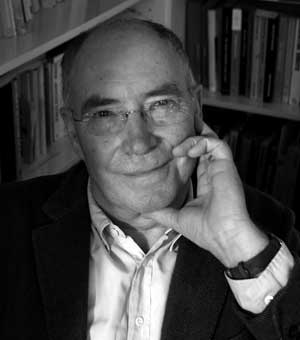
Thierry du Duve: Wednesday, February 4th, 2015, 11:30-1:00 pm in Lecture Hall 1

Historian and philosopher of art, Thierry de Duve, is Professor emeritus from the University of Lille 3, and was Kirk Varnedoe Visiting Professor at the Institute of Fine Arts, New York University, for the fall semester of 2013. His English publications include Pictorial Nominalism (1991), Kant after Duchamp (1996), Clement Greenberg Between the Lines (1996, 2010), Look—100 Years of Contemporary Art (2001), and Sewn In the Sweatshops of Marx: Beuys, Warhol, Klein, Duchamp (2012). He is presently finishing a book of essays on aesthetics, forthcoming from the University of Chicago Press.

Amaranth Borsuk and Andy Fitch: Wednesday, January 21st, 2015, 11:30-1:00 pm in Lecture Hall 1

Amaranth Borsuk is the author of Handiwork (Slope Editions, 2012), and, with Brad Bouse, Between Page and Screen (Siglio Press, 2012). Abra, a collaboration with Kate Durbin forthcoming from 1913 Press, recently received an NEA-sponsored Expanded Artists’ Books grant from the Center for Book and Paper Arts at Columbia College Chicago and will be issued in 2014 as an artist’s book and iPad app created by Ian Hatcher. Her collaborative digital projects include an erasure bookmarklet, The Deletionist, with Nick Montfort and Jesper Juul, and Whispering Galleries, a site-specific LeapMotion erasure work for the city of New Haven. Another collection of poems is forthcoming from Kore Press. Amaranth is an Assistant Professor of Interdisciplinary Arts and Sciences at the University of Washington, Bothell, where she also teaches in the MFA in Creative Writing and Poetics.
Andy Fitch’s most recent books are Sixty Morning Talks and (with Amaranth Borsuk) As We Know. Ugly Duckling soon will release his Sixty Morning Walks and Sixty Morning Wlaks. He recently published a critical book, Pop Poetics: Reframing Joe Brainard, with Dalkey Archive Press. With Cristiana Baik, he is currently assembling the Letter Machine Book of Interviews. He has a collaborative book forthcoming from 1913 Press. He is a founder of The Conversant and currently edits Essay Press. He teaches in the University of Wyoming’s MFA program.

Tisa Bryant: Wednesday, May 21st, 2014, 11:30-1:00 pm in Lecture Hall 1

Tisa Bryant is the author of Unexplained Presence, a collection of fiction-essays focused on myth-making and black presences in film, literature and visual art. Archival research, montage and collage and various forms of retelling and reenactment feature prominently in both her creative and critical practice.  She is co-editor and publisher of the cross-referenced journal of narrative and storytelling possibility, The Encyclopedia Project, and co-editor of War Diaries, an anthology on black gay men’s desire and survival, and nominated for a 2010 LAMBDA Literary Award.  She recently completed a year-long reunion tour with the poets and writers of The Dark Room Collective, celebrating the 25th anniversary of their nationally-renown African diasporic arts exhibition and reading series. Her writing has recently appeared or is forthcoming in Animal ShelterBlack ClockBombay GinMandorlaMixed Blood, The Reanimation Library’s Word Processor Series, and Viz, as well as in the catalogues and exhibits for visual artists Laylah Ali, Jaime Cortez, Wura-Natasha Ogunji and Cauleen Smith. A board member for the newly inaugurated Thinking Its Presence: Race & Creative Writing annual conference, Tisa Bryant fiction and hybrid forms in the MFA Creative Writing Program at the California Institute of the Arts, where she also serves as Interim Co-Director of Equity & Diversity.   She lives in Los Angeles.

« Older posts

© 2026 Art Lecture Series

Theme by Anders NorenUp ↑