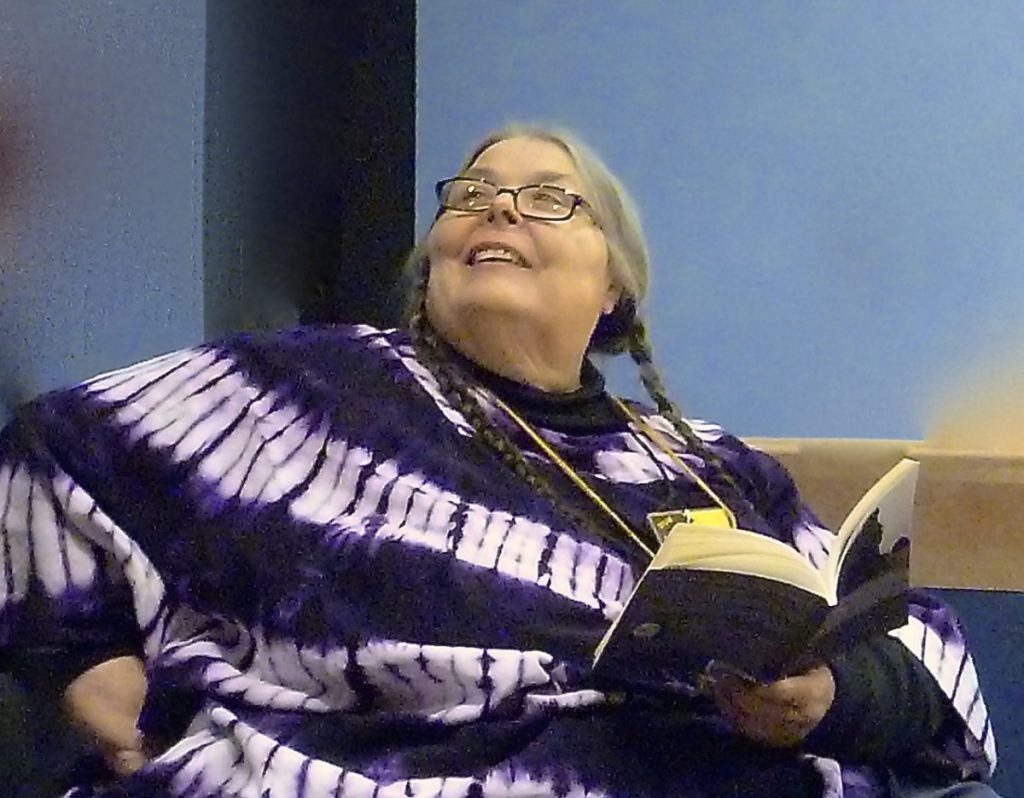
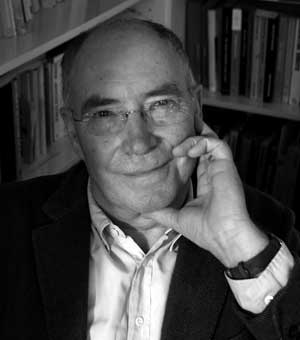
Ellen Levy is the author of A Book About Ray (MIT Press, 2024), the first full-length survey of the career of the collagist and correspondence artist Ray Johnson (American, 1927-1995). Her other writings include Criminal Ingenuity: Moore, Cornell, Ashbery, and the Struggle Between the Arts (Oxford UP, 2011), and essays and reviews on poetry, visual art, theater, and television in such publications as Dissent, Genre, Modernism/Modernity, The Nation, Parkett, and Twentieth-Century Literature. She has taught at Pratt Institute, the School of Visual Arts, and Vanderbilt University.
Out of retirement to teach the first ever class from the new Fiber Arts Studio, Gail Tremblay has assembled a brilliant group of master weavers for you!
GAIL TREMBLAY
Writer, teacher, and mixed media artist Gail Tremblay (Onondaga and Mi’kmaq),was born in 1945 in Buffalo, New York. Tremblay taught English, Native American Studies, Art, and Art History at Evergreen State College in Olympia, Washington, where she joined the faculty in 1981. As an educator, she has influenced more than a generation of Native and non-Native students and has been instrumental in building Evergreen’s focus on Native arts and Native Studies.
In the 1980s, while she was teaching a Third World and Feminist Film Theory class, Tremblay began weaving baskets out of scrap 16mm film, old movie trailers, and outdated educational films. In perfect postmodern irony, Tremblay, who has been making baskets since childhood, utilized materials from a medium that often originated and propagated stereotypes of Indigenous people in order to create “traditional” baskets that critique those same stereotypes. Her titles often allude to the film source, which is frequently obscured by the weaving.
JOEFEDDERSEN…former Greener faculty member!
Joe Feddersen, who is Okanagan from the Colville Confederated Tribes, lives on the reservation in Omak, Washington. He taught art programs, from the early 1990’s until he retired, at the Evergreen State College. His work includes a suite of what he calls his Urban Indian baskets that use designs from things like car and truck tire tracks, electrical towers, parking lot designations, and other forms, objects, and structures that have moved from urban America onto American Indian reservations during the 20th and 21st centuries. Many non-Indian viewers often perceive his basket as having traditional Indigenous designs until they read the basket titles and come to see what he is saying about contemporary experiences in the Indigenous
JEREMY FREY
Jeremy Frey started weaving in his 20s, learning to make baskets from his mother Gal Frey. Gal taught him, drawing on what she had learned from her teacher Sylvia Gabriel. Sylvia was renowned for her basketry, especially her porcupine curlwork. Jeremy learned all aspects of the tradition from selecting brown ash to pounding and preparing basket stuff. His work fuses traditional shapes with the innovative use of both traditional and non traditional materials, as well as unique signature designs.
Jeremy was born in 1978 and raised in Indian Township. His work has received national recognition with the 2011 Best of Show award at the Heard Museum Guild Indian Fair and Market and the Santa Fe Indian Market. He was the recipient of a $50,000 United States Artists grant.
TERROL DEW JOHNSON
Terrol Dew Johnson started basketry weaving at the age of ten. He soon learned that he was a born natural and found that it was one of the few things in life that he found intrinsically effortless.
Johnson is a member of the Tohono O’odham nation of southern Arizona. The Tohono O’odham have a long history of basket weaving using a whole variety of techniques using natural materials and dyes. These are all used in order to tie the basketry in with the local landscape colours and flora, making the baskets part of the community and of the larger landscape.
The traditional basketry weaving techniques that Johnson learnt at such an early age, have allowed him to expand into the world of contemporary fine art basketry, while still keeping hold of his traditions, which he uses as a foundation or anchor point for his subsequent career as an artist.
LISA TELFORD
Lisa Telford (Everett) was born in Ketchikan, Alaska, in 1957. As a Gawa Git’ans Git’anee Haida weaver she comes from a long line of weavers including her grandmother, mother, aunt, cousins and daughter. Lisa harvests and prepares her own material, using red and yellow cedar bark and spruce root. The gathering of materials takes her hundreds of miles from home and hours of preparation that vary depending on the final product. Bark is traditionally stored for one year and then must be processed further. Her baskets may be seen in the collections of The Oregon Historical Society, Hallie Ford Museum of Art, The Smithsonian National Museum of the American Indian, The Heard Museum, The Portland Art Museum, and The Burke Museum.
Amjad Faur currently teaches photography and visual arts at The Evergreen State College, in Olympia, Washington. He came to Evergreen from the University of Arkansas, where he primarily taught art history and critical theory. His current research involves the overlapping visual languages of colonial Europe in the Middle East and the tropes/signifiers scattered throughout Western art history that harmonize with these expansionist tendencies.
Alejandro de Acosta describes his Art Lecture as”a discussion of the work of Argentine poet Antonio Porchia (1885-1968), and his translation of Porchia. Porchia developed and wrote solely in a singular form he called voces (voices). His single book, named, precisely, VOCES, was little known when it appeared, due in part to his distance from literary circles and to its unclassifiable short, aphoristic poetry. Alejandro will discuss Porchia’s poetry and poetics, his finished and unfinished voices, and his approach to sharing them; their influence on subsequent Argentine poets; and the process of his current collaborative translation of them, opening out onto a larger set of ideas about language and translation, poetic forms and how they are circulated and made public.”
Alejandro was born in Buenos Aires in 1972, and grew up in Caracas, Madison (Wisconsin) and Cleveland (Ohio). Tertiary education in Amherst, MA (Hampshire College, bachelor’s degree) and Binghamton, NY (doctorate at Binghamton University). A onetime participant in the zine and mail art milieu, in Austin, Alejandro founded mufa::poema, a micropress that freely distributed a dozen poetry and prose chapbooks. Long standing interest in sound art and poetry reading led to a two-year radio and podcast project, “Sector Phy,” on KPWR-FM, as well as numerous audio performances under the moniker JANO (THING) SELECTOR.
Back in Binghamton, study of the history of Western philosophy and contemporary continental thought brought Alejandro to write a dissertation on Spinozan themes, not without a discussion of exhortatory graffiti. These studies subsequently displaced themselves in the direction of, first, Latin American philosophy, and second, an articulation of (for lack of a better word) anarchist ideas in various genres of prose. An outcome of this second trajectory, informed by continued engagement with poetry and poetics, are his two recent collections of critical and experimental essays: The Impossible, Patience (Ardent Press, 2014) and How to Live Now or Never (Repartee/LBC Books, 2014).
For many years, Alejandro taught philosophy and poetry at Southwestern University (Georgetown, TX), as well as in popular education settings. Readings, lectures, and presentations in Albany, Austin, Berkeley, Denver, Morelia, Portland, Seattle and elsewhere. With Joshua Beckman, Alejandro has translated the poetry of Jorge Carrera Andrade (Micrograms, Wave Books, 2011) and Carlos Oquendo de Amat (Five Meters of Poems, Ugly Duckling Presse, 2010). Most recently, Alejandro translated Fabian Luduena’s H.P. Lovecraft: The Disjunction in Being (Schism Press, 2015). Two current projects are an anthology of writing by and about Antonio Porchia and The Ponge Stone, a manuscript of translations, essays, and letters emerging from the study of Francis Ponge’s Pour un Malherbe. Alejandro’s ongoing research is in U.S. and Latin American poetry, and, still, philosophy. Alejandro de Acosta currently lives in Olympia, WA.
Bruce Conner, BOMBHEAD, 1989, Courtesy of The Conner Family Trust, San Francisco
“Bruce Conner’s Atomic Sublime Cinema”
San Francisco-based artist Bruce Conner made his first experimental film, A MOVIE, in 1958, at the height of national anxiety about the atomic threat. Over the following decades, his films continued to address the cultural and political fallout of the Cold War. This talk examines Conner’s filmic output over two and a half decades, from his pioneering works of “found footage” montage, to his participation in psychedelic expanded cinema performance, to his more intimate portraits of female friends and later interest in music video. It argues that these works are expressions of the “atomic sublime,” an aesthetic that captures the paradoxical experience of “terrible beauty” that is generated by witnessing an atomic explosion. By attending closely to the historical and cultural context of Conner’s apocalyptic cinema, this talk proposes a reconsideration of postwar American art’s engagement with the aesthetics of “the sublime.”
Johanna Gosse is an art historian specializing in the postwar American avant-garde, with an emphasis on experimental film and media practices. She earned her PhD in the History of Art from Bryn Mawr College in 2014 with a dissertation on the experimental films of San Francisco-based artist Bruce Conner. Her writing has appeared in journals such as Camera Obscura, MIRAJ: Moving Image Review & Art Journal, Radical History Review, The Journal of Black Mountain College Studies, various exhibition catalogues, and Abstract Video: The Moving Image in Contemporary Art, an edited collection forthcoming from the University of California Press in 2015. You can read more about past work and current projects at: www.johannagosse.com.
Historian and philosopher of art, Thierry de Duve, is Professor emeritus from the University of Lille 3, and was Kirk Varnedoe Visiting Professor at the Institute of Fine Arts, New York University, for the fall semester of 2013. His English publications include Pictorial Nominalism (1991), Kant after Duchamp (1996), Clement Greenberg Between the Lines (1996, 2010), Look—100 Years of Contemporary Art (2001), and Sewn In the Sweatshops of Marx: Beuys, Warhol, Klein, Duchamp (2012). He is presently finishing a book of essays on aesthetics, forthcoming from the University of Chicago Press.
A native of New York City. Susan Noyes Platt is a freelance art historian and art critic, as well as a political activist, based in Seattle, Washington. She has published articles, essays and reviews on the intersections of art and politics. Her primary concern is to alter the critical discourse to embrace the many different ways in which artists explore this intersection. Over the course of her career she has shifted from a focus on American Art to an exploration of art in the Middle East, particularly in Turkey. She has also published reviews of contemporary art from China, Latin America, and Europe.