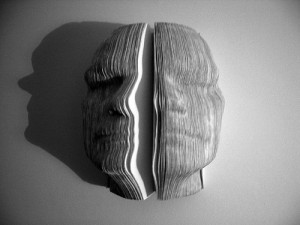
The work of Matt Browning calls attention to the ways ritual, conquest and competition inform identity. Activated by observation and collection, Browning confronts the complexities of tradition and material expectation, generating pieces that operate somewhere between devotional objects and performative relics.
Description of recent exhibition in Lawrimore Project:
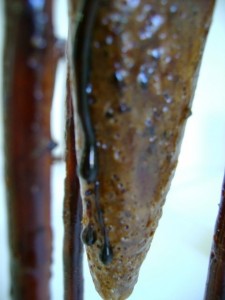
Matt Browning is taking his time. More precisely, his new work is taking its own sweet time and asks the viewer to do the same. It even takes time to simply locate his work within the gallery. For his first major one-person exhibition with Lawrimore Project, Browning defies the typical expectations placed on a young artist given such an opportunity by presenting the entire body of work humbly unlit and almost-not-even-there, tucked in the very back corner of the gallery. “Tradition As Adaptive Strategy” is a series of small sculptures similarly executed, though each unique, installed on what was formerly the gallery’s fireplace mantle. Painstakingly carved from solid pieces of fir in the tradition of whittled ‘whimsies’, the 34, funnel-shaped objects were then filled and coated with pine sap the artist gathered and transformed into pitch through a process of heating and filtering. Conceptually, the work flows from many sources—from folk art and native culture traditions to scientific and philosophical tracts on time, fire, homeostatsis, homeorrhesis, and Phlogiston Theory—but, most specifically, it was inspired by the “Pitch Drop Experiment”, the longest continuously running scientific experiment in the world. Begun in 1927 by Professor Thomas Parnell to prove the viscosity of seemingly solid substances, the experiment simply consists of counting the number of drops of pitch flowing from a glass funnel. In the 80 years since its inception the experiment has yielded just 8 drops, a minor return in terms of data: investment. This glacial, ‘drop-per-decade’ notion can analogously be tied to Browning’s patience with the reception and ramifications of this body of work, recognizing that what takes time is the preparation, research and experiences leading up to the creative act and, now, perseverance in the spaces after and between the drops where we find meanings and become their steward.